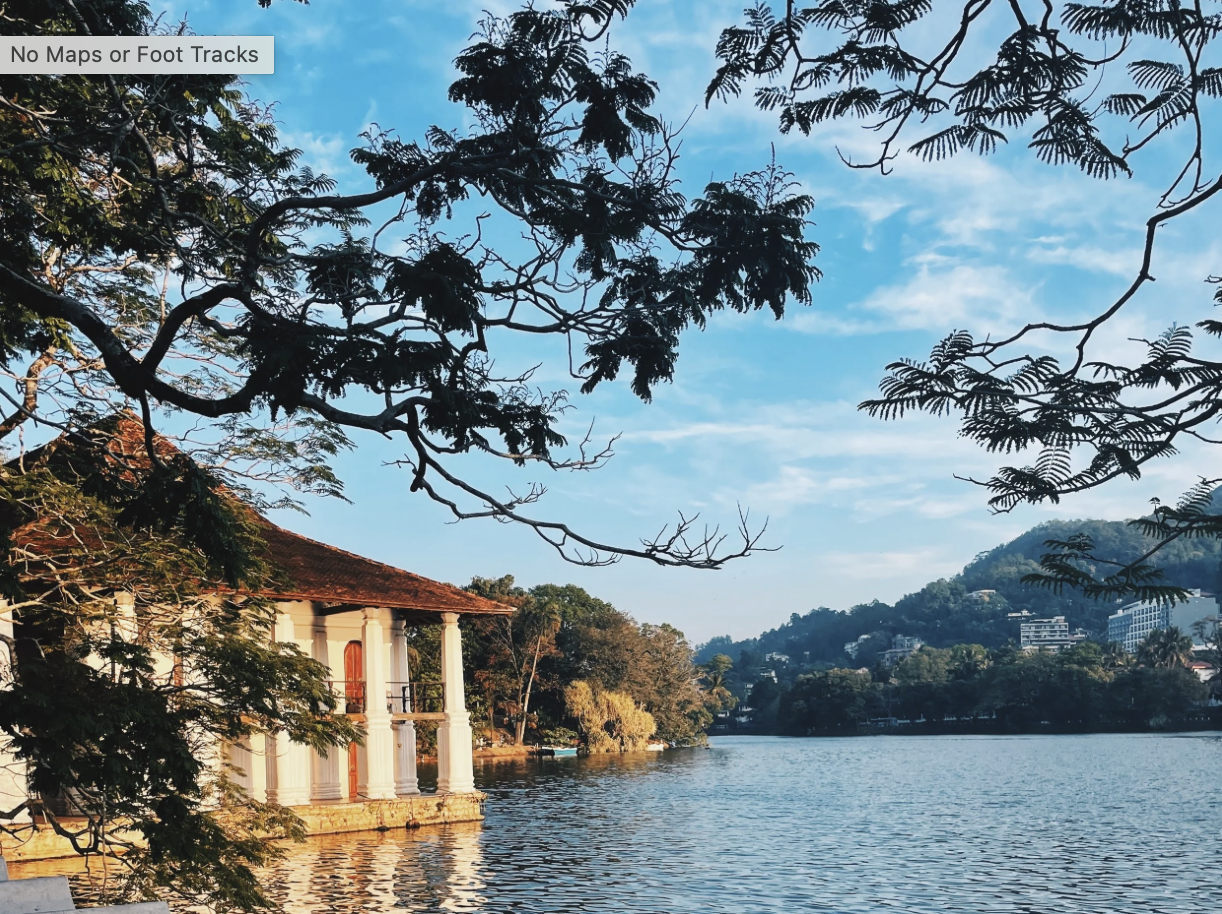
A Traveler’s Guide to Kandy, Sri Lanka: Where to Eat, Stay, & Explore
Buddha relics, lake walks, local food, and everyday city rhythms, here’s how to spend a few meaningful days in Kandy, Sri Lanka.
This page may include affiliate links. This just means that I make a small commission at no additional cost to you if you make a purchase through any of my links.
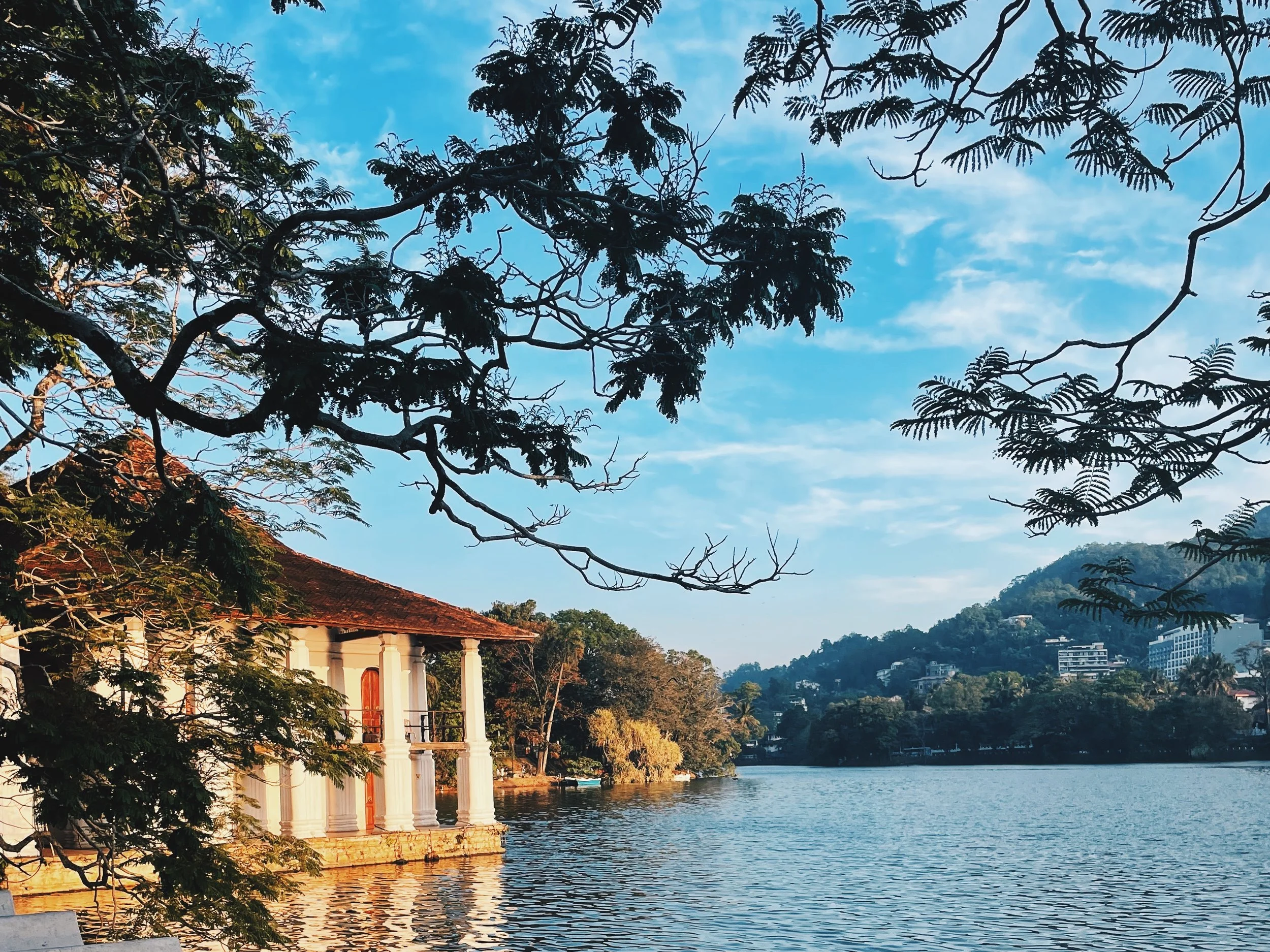
Kandy is Sri Lanka’s spiritual heart and a city best experienced slowly. Beyond its famous temples and Kandy Lake, you’ll find a local food scene that rival Colombo’s, forest escapes where you’d least expect them, and nearby villages that reveal how life actually unfolds here day to day. Stay for a night or two or an entire week. Either way, you can expect your days to be rich with options for things to do, taste, and experience. That’s just the sort of place Kandy is.
This Kandy travel guide covers where to stay, what to do, and how to explore the city with an emphasis on cultural context, nature, and unhurried travel.
Where to Stay in Kandy
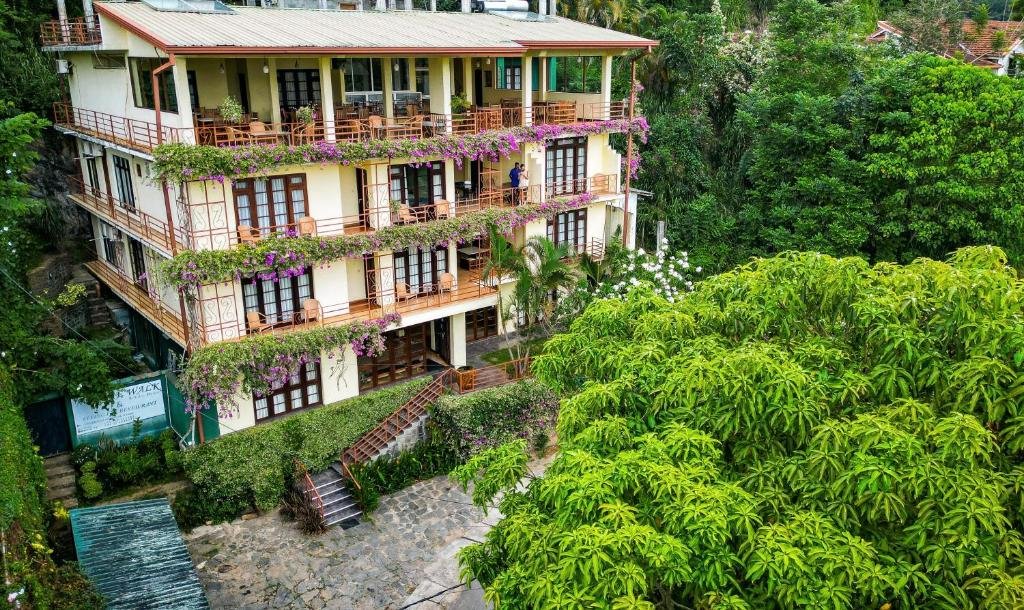
Where I Stayed: Nature Walk Resort
Nature Walk Resort is a peaceful, budget-friendly spot tucked just outside the bustle of central Kandy. It’s a great option if you want to be close to the action but still have a quiet place to retreat to at the end of the day. The property is set on a hill with leafy surroundings and occasional monkeys passing by, and it’s just a short walk (about 15–20 minutes) from the Temple of the Tooth and Kandy Lake. The vibe here is simple but comfortable. I stayed in one of their private en suite rooms, which had a fan and a little balcony with views of the treetops and the hills beyond. Hot water and decent Wi-Fi were both reliable during my stay and the staff were kind and helpful without being overly hands-on.
Check Availability - rooms from $18USD per night
Other Great Kandy Hotels & Hostels:
Budget-Friendly Places to Stay in Kandy:
Funk Bunks - By The Lake Hostel: Vibrant lakeside hostel with free breakfast & dinner, shared dorms from $10USD
Sun Dove Suite: Stylish homestay with breathtaking views just steps from Kandy’s historic center, private rooms from $33USD
Hotel Topaz: Affordable hilltop boutique with two outdoor pools and a spa, private rooms from $37USD
Mid-Range Hotels in Kandy:
Heritage Boutique: Charming heritage hotel steps from the Temple of the Tooth, private rooms from $100USD
Mount Randholee Resort & Spa: Boutique resort steeped in Kandyan art and heritage, private rooms from $100USD
Ru Boutique: 5-star heritage hideaway with plunge pool and courtyard bar, private rooms from $150USD
Luxury Hotels in Kandy:
Santani Wellness Resort & Spa: Ayurvedic spa hotel with jungle views, private rooms from $390USD
Where to Eat & Drink in Kandy
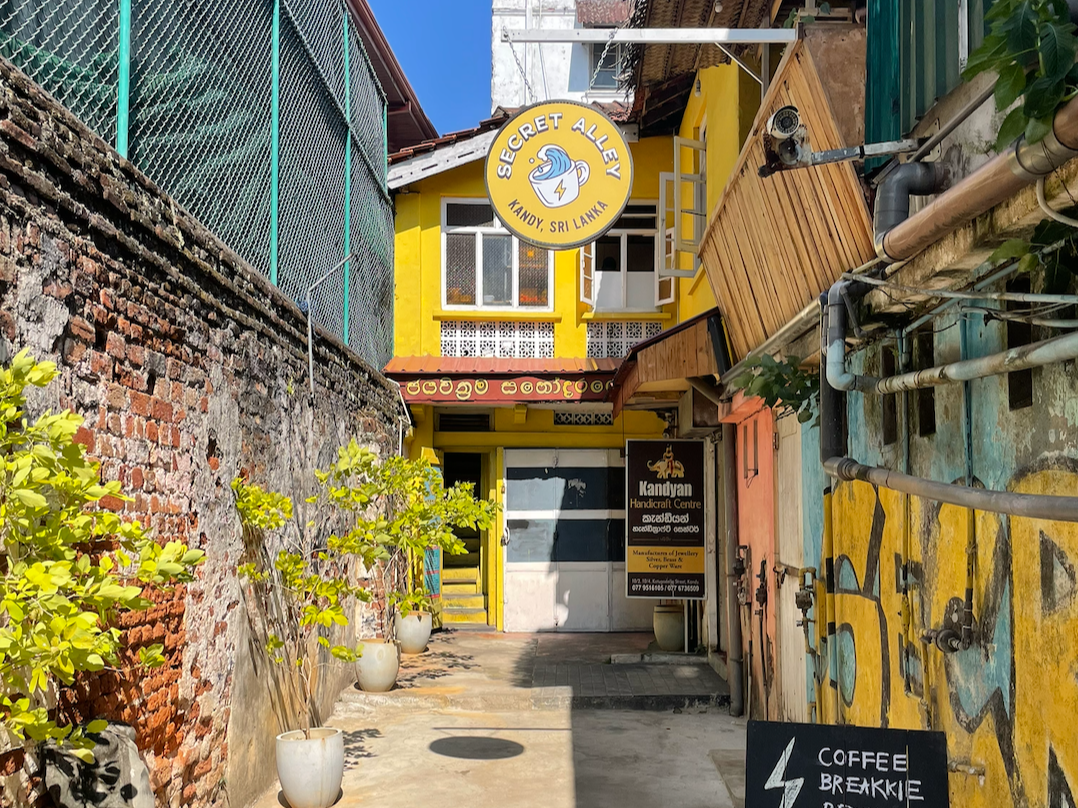
Some of my favorite places to eat and drink in Kandy include:
Balaji Dosai: This spot is a no-fuss, local favorite just across from the Temple of the Tooth. I loved how quick and affordable it was—perfect for a filling dosa or two between sightseeing. The portions are generous, and it’s a great place to get a taste of authentic South Indian flavors without breaking the bank.
Hideout Lounge: Hideout Lounge has this chill, leafy courtyard vibe that’s perfect after a long day of exploring Kandy. The menu mixes local Sri Lankan dishes with comfort food favorites, and I really enjoyed relaxing there with a fresh smoothie and some wood-fired pizza. It’s got a friendly, social atmosphere, especially if you like meeting other travelers.
The Empire Cafe: I stopped by The Empire Café for breakfast and loved the calm, colonial-style setting right near the Temple of the Tooth. Their coffee was strong and smooth, and the coconut roti and egg hoppers made for a delicious and hearty start to my day. It’s the kind of place where you can take your time and soak in the morning.
Sunset: A friend of mine discovered Sunset for its vegan-friendly menu. Instead, it became our go-to spot for a cold beer on the rooftop after a day of exploring. The food’s okay, but the rooftop views are hard to beat; that’s why I had to include it here. If you go, maybe stick to the wood-fired pizzas and not the rather flavorless rice bowls.
Buono: While Buono definitely caters to a western palate, it’s still a high-quality spot to grab a coffee, brunch, or even a sweet treat off their dessert menu. The cozy, intimate atmosphere inside is nice for a change of pace, but good luck snagging a seat during its busiest midday hours.
Other Great Restaurants in Kandy:
Cafe 1886 by Salgado Bakers: known for its freshly baked bread and pastries, but also Sri Lankan and international fare
Fab Ceylon: popular spot for young locals with burgers, shuffle rice, and milkshakes on the menu
Cafe Secret Alley: amazing coffee and vegan brunch fare, but don’t bring your laptop (wifi was a bust when I was there)
What to See & Do in Kandy

Walk the Perimeter of Kandy Lake at Golden Hour (but mind the crows!)
At the heart of Kandy is Kandy Lake, an artificial body of water built in 1807 by the last Kandyan king. While many visitors snap a quick photo from the road and move on, walking the full (or partial) loop around the lake at golden hour offers a much deeper sense of the city’s rhythm. The full loop is 3.2km (about 2 miles) and takes about 40 minutes.
As the heat softens in the late afternoon, locals emerge for evening walks, couples sit along the low walls to talk, monks pass quietly in saffron robes, and fruit vendors begin setting up for the night. The views across the water toward the hills and the Temple of the Tooth change constantly as the light fades, making this one of the most grounding ways to experience Kandy beyond its landmarks.
The walk is mostly flat and can be done at your own pace. You don’t need to complete the full circuit to enjoy it—even a slow stroll along one stretch offers a window into daily life in the city. Start near the Temple of the Tooth and walk away from the busiest entrance points for a quieter experience.
Tip: Maybe wear a hat or bring an umbrella for the sunset hours, not so much for sun protection as for crow protection. Around sunset, hundreds of crows love to roost in the trees around the lake, meaning chances are high the white stuff might land on you.
Cost: Free
Visit the Temple of the Sacred Tooth Relic During a Daily Puja
The Temple of the Sacred Tooth Relic is one of the most important pilgrimage sites in Sri Lanka and the entire Buddhist world, believed to house a tooth relic of the Buddha. While it’s often presented as a must-see attraction, the temple is best experienced not as a monument, but as a living place of worship.
Rather than rushing through the complex, plan your visit around one of the daily puja (prayer) times, when devotees arrive with lotus flowers and incense, drums echo through the corridors, and offerings are made in ritual procession. Even if you’re not Buddhist, standing quietly among worshippers provides essential context for understanding Kandy’s spiritual and cultural center. But do be aware that it will be shoulder-to-shoulder crowded inside at these times.
You won’t see the relic itself—it’s kept inside a casket—but that’s beside the point. What matters here is getting the chance to witness devotion as part of daily life in Sri Lanka, not as performance.
The daily puja times are:
Morning Service (Alms Offering): 5:30 a.m. – 7:00 a.m.
Midday Service (Buddha Pooja): 9:30 a.m. – 11:00 a.m.
Evening Service (Gilanpasa Pooja): 6:30 p.m. – 8:00 p.m
Your entrance ticket to the Temple of the Sacred Tooth Relic in Kandy also includes free entry to the nearby World Buddhism Museum, so be sure to leave enough time to visit both in the same day to save yourself the otherwise 500 LKR entrance fee to the museum.
Tip: Dress modestly (covered shoulders and knees are mandatory for entry) and arrive early to avoid the densest crowds during the pujas.
Cost: ~1500 LKR (slightly more during the daily pujas)
Wander Udawatte Kele Sanctuary for a Quiet Break from the City
Just a short walk from Kandy’s busy center, Udawatte Kele Sanctuary feels like stepping into another world entirely. Once reserved as a royal forest, this protected sanctuary is now one of the best places in the city to slow down and reconnect with Sri Lanka’s natural environment, not to mention drink in some fresh air.
Shaded trails wind through dense forest, past giant bamboo, towering trees, and small ponds where birds and monkeys are often spotted. The paths are easy to follow and suitable for a gentle walk rather than a hike, making it accessible even if you’re short on time or energy.
Udawatte Kele offers something you wouldn’t expect to find in Kandy: quiet. It’s an ideal place to decompress after sightseeing or to balance out the sensory intensity of Kandy’s streets.
Tip: Go earlier in the day for cooler temperatures and better wildlife sightings. Bring mosquito repellent and wear comfortable walking shoes.
Cost: ~600 LKR
Other Great Things to Do in Kandy
Sign up for a Cooking Class: Learn to cook Sri Lankan food in a village setting just outside Kandy, starting with a guided visit to a local market to source ingredients. You’ll prepare a full traditional meal in a home kitchen, then sit down together to eat and get a brief glimpse into everyday village life — from $25 USD on Viator
Hire a Tuk Tuk Driver and Explore Beyond Kandy: This private, customizable day tour lets you explore Kandy’s surrounding landscapes and cultural sites on a flexible schedule. You can visit Ambuluwawa Tower for sweeping views, with optional stops like the botanical gardens, a tea factory, and the Temple of the Tooth. — from $18 USD on Viator
Trek the Knuckles Mountain Range: This full-day guided trek from Kandy moves through tea estates, forest trails, rice terraces, and small villages, offering a gradual transition from cultivated land to quieter mountain landscapes. Along the way, you’ll pass waterfalls, spice gardens, and traditional homes, making it a good fit if you want to experience Sri Lanka’s countryside on foot rather than from a vehicle. — from $85 USD on Viator
Kandy Street Food Tour: This private food walk introduces Kandy through the places locals actually eat, from markets and juice stands to small street food stops. It’s a relaxed way to understand the city’s flavors and rhythms while moving through everyday spaces rather than hopping between “must-try” spots. — from $87 USD on Viator
Day Trip to Kandy’s Waterfalls: A private waterfall hike outside Kandy that combines short forest walks with time to swim and rest at several natural pools. Lunch and transportation are included, making it an easy way to spend a full day outdoors without planning logistics yourself. — from $62 USD on Viator
If you’re already in the habit of booking your tours and experiences through sites like GetYourGuide, Viator, or TripAdvisor, doing so through the links you see here and on my Travel Resources page helps send a bit back to the blog at no added cost to you - Thank you for your support!
How To Get To, From, & Around Kandy
How to Get To & From Kandy
By Public Transportation
From Colombo: The easiest and most scenic way to get to Kandy from Colombo is by train. Services run regularly from Colombo Fort Station to Kandy and take around 2.5 to 3 hours. You can choose between 1st, 2nd, or 3rd class, with or without seat reservations—reserved 2nd or 3rd class tends to offer the best balance of comfort and value. It’s a popular route, so it’s a good idea to book ahead, especially during weekends or holidays. You can do so at the station or via sites like 12go or Bookaway. Buses are also available from Colombo’s Bastian Mawatha Bus Terminal. Look for intercity services to Kandy, which typically take 3–4 hours depending on traffic. AC buses are a bit more comfortable and only slightly more expensive.
From Sigiriya: I took a local bus from Sigiriya Junction to Dambulla (about 30 minutes), and then transferred to an intercity bus heading to Kandy. The whole trip took just over 2.5 hours, including a short wait in Dambulla, and cost less than 1000LKR total. It’s a pretty straightforward journey—just ask the driver or anyone at the Dambulla station to point you toward the right bus. Some travelers also catch a tuktuk to Dambulla or Habarana and start their onward journey by bus to Kandy from there.
From Ella: The train from Ella to Kandy is the most scenic option and takes about 6–7 hours. It’s worth booking a reserved seat in advance if possible, but unreserved tickets can also be bought at the station on the day. Tourist buses and shared minivans are also available—they’re faster (about 5 hours), more expensive, and usually more comfortable. These can often be booked through your guesthouse or online via sites like 12go or Bookaway.
By Private or Shared Shuttle
In Sri Lanka, 12go and Bookaway are king when it comes to finding and booking a private or shared shuttle transfer to pretty much anywhere in the country. You can also book your train and bus tickets through them as well. Both sites have thoroughly vetted the on-the-ground local companies and drivers they work with, so you can trust who you’re getting in the car, shuttle, bus, or train with and have the peace of mind of 24/7 support should anything go wrong.
Rent a Tuktuk, Car, or Scooter
If you’re comfortable sharing the road with Sri Lanka’s sometimes chaotic drivers (mostly the bus drivers), consider renting a car, scooter, or tuktuk. For car rentals, I recommend checking out DiscoverCars.com. It’s an award-winning car rental comparison site where you can find, compare, and rent a car. They include all mandatory fees, taxes, and extras in the quoted price and offer 24/7 support and free cancellation. For something more local and maneuverable, I recommend a scooter or tuktuk. For tuktuk rentals, check out the social enterprise tuktukrental.com and use code NOMAPS for 5% off your booking.
How to Get Around Kandy
Kandy is a fairly compact city, and much of it can be explored on foot—especially around the lake, the Temple of the Tooth, and the main market streets. That said, the city is hilly, and traffic can get hectic, so sometimes it’s worth saving your energy and hopping in a tuk-tuk.
Tuk-tuks are everywhere and generally affordable, but prices can be inconsistent. Short rides within the city should cost around 300–600 LKR, depending on the distance and your bargaining skills. Always agree on a price before getting in, or look for metered tuk-tuks (less common but possible).
For trips just outside the city (like to the Botanical Gardens in Peradeniya or the Bahirawakanda Buddha statue), a tuk-tuk is still your best bet. Expect to pay 800–1500 LKR for longer return trips, and don’t be shy about negotiating.
There are also local buses that run around the city and to nearby attractions. They’re super cheap but a bit tricky to navigate if you don’t know the route—still, a fun option if you're up for a bit of chaos.
Found this helpful?
I spend a lot of time in coffee shops putting together content like this. If you’d like to support my work, consider buying me a coffee to show some love and to just say thanks ❤️
What to Read Next


Support the Blog While You Travel
Travel and give back to the blog by booking things like your hotels, tours, and trip insurance through the links below. When you use these links, they send a bit back my way at no additional cost to you. Your support is much appreciated!
Accommodations: Booking.com for hotels, HostelWorld for hostels, and Vrbo for vacation rentals
Tours & Experiences: Viator, GetYourGuide, and TripAdvisor for tours and experiences or GuruWalk for free walking tours
Flights: Going for flight deal alerts
Buses, Shuttles & Trains: Bookaway or 12Go for shuttles and trains and BusBud for bus tickets
SIM Cards & eSIMS: SIM Local for eSIMS or Drimsim’s universal SIM card if your phone doesn’t accept eSIMs
Trip Insurance: Squaremouth, WorldTrips, and World Nomads
Visit my Travel Resources page for even more ways to support the blog with your travel purchases.

A Traveler’s Guide to Sigiriya, Sri Lanka: Where to Eat, Stay, & Explore
Ancient temples, wild elephants, home-cooked meals, and serene homestays, here’s how to spend a few solid days in Sigiriya, Sri Lanka.

This page may include affiliate links. This just means that I make a small commission at no additional cost to you if you make a purchase through any of my links.
Sigiriya’s no secret spot these days, with its iconic Lion Rock and ancient hilltop fortress, but it’s still a slice of serenity in Sri Lanka’s Cultural Triangle. Spend your days cycling its sandy streets, eating at its smattering of authentic family-run eateries, and digging into the history both in Sigiriya and beyond the city limits. In this handy Sigiriya travel guide, I lay out not only where to stay, where to eat, and some of Sigiriya’s top things to do, but also how to get to it from Colombo and Kandy and around by train, bus, and tuktuk once you’re here. Let’s go!
Don’t have time to read the full guide? Here's a quick synopsis:
Where to Stay: I recommend Passion Ray Villa & Tree Hut (from $12 USD) if you’re on a budget and love the homestay concept. Otherwise, Back of Beyond Jungle Hideaway (from $66 USD), Heritance Kandalama (from $138), and Water Garden Sigiriya (from $350 USD) are all great sustainable and responsible stay options too.
Where to Eat: My best meals in Sigiriya took place at Soul Food and Sigiriya Rock View Point - The Restaurant, but Kenoli Restaurant, Liya Restaurant, and Wihara Restaurant come well-reviewed as well, with a menu full of all the Sri Lankan classics made fresh.
Things to Do: A sunset (or sunrise) hike up Pidurangula Rock is a must, a cooking class with a local family is a good idea, and day trips to Dambulla Cave Temple, Minneriya National Park (for elephant sightings!), or the ancient city of Polonnaruwa are worth the trip. Check GetYourGuide or Viator for guided options that handle logistics.
How to Get To/From Sigiriya: From Colombo, you can go by train to Habarana Station or by bus to Dambulla or Habarana. From there, negotiate a tuktuk ride the rest of the way. From Kandy, bus is best. There’s a direct bus to Sigiriya or an indirect bus to Dambulla. You can check your bus, train, and even shared and private shuttle options on Bookaway.
If you need more detail on any of these recommendations, keep scrolling!
Where to Stay in Sigiriya

Where I Stayed: Passion Ray Villa & Tree Hut
Passion Ray Villa & Tree Hut is a really quiet, well-kept, budget-friendly place to stay in Sigiriya. It’s a homestay-style stay, which mostly means you’re staying on the property of the family who runs it. It includes an amazing breakfast spread each morning and there are bikes you can rent for the day. I stayed in one of their air-conditioned private en suite rooms, but they also have a tree hut that I would have loved to stay in had it been available.
Check Availability - rooms from $12USD per night
Other Great Sigiriya Hotels & Hostels (Eco & Community-Focused)
Budget-Friendly Places to Stay
Another World Hostel: This is a great backpacker-friendly option that connects guests directly with local farmers and promotes low-impact hiking excursions and rural farming experiences. They offer dorms from $11 USD and privates from $41 USD.
Back of Beyond Jungle Hideaway: If you want total immersion in nature, this is a great budget-friendly option. It’s low-impact and you’ll be sleeping in open-air treehouses (with mosquito nets) that are built completely around the existing forest canopy. No trees were cleared to create this beautiful Sigiriya stay. Treehouses start at $66 USD per night.
Kuwera Eco Lodge: If you’re looking for a stay that specifically supports rural villages, this is the one. It’s also eco-friendly. There’s a single-use plastic ban and all of the organic produce they serve is sourced from neighboring local homes. Rooms are from $60 USD per night.
Mid-Range Hotels
Heritance Kandalama: Stay here for perhaps Sigiriya’s most iconic green architecture. Heritance is the global benchmark for green hospitality, boasting Travelife Gold certification and a zero-waste-to-landfill mandate. Prices per night start at $138 USD.
Atha Resort: This traditional village-themed sanctuary features an active guest-accessible organic garden. Rooms start at $130 USD per night.
Luxury Hotels
Water Garden Sigiriya: For the ultimate in eco-luxury in Sigiriya, stay here. Their massive self-sustaining on-site paddy fields harvest rice for both guests and local staff. The price per night is from $350 USD.
In the map below, you can see where each of these are located as well as what’s available for your dates:
Still need travel medical insurance for your trip to Sri Lanka? When I visited Sri Lanka, it was part of a greater South and Southeast Asia itinerary that spanned three months. In my opinion, Safety Wing’s travel medical insurance is a good way to go for travel medical coverage for longer-term or multi-country trips. Their Nomad Insurance Essential plan covers everything from lost luggage and travel delays to emergency evacuations, urgent care, and hospital stays, no matter where your adventure takes you. Whether you’re traveling for a week, a month, or much longer, you’ll want to learn more about SafetyWing’s affordable, flexible, and borderless insurance plans.
Where to Eat & Drink in Sigiriya

Some of my favorite places to eat and drink in Sigiriya include:
Soul Food: While there are a few restaurants in Sigiriya with the same view of Lion’s Rock, Soul Food is the one with the best menu and vibes. Serving only vegan and vegetarian fare, it’s also a healthy reprieve whenever you need a break from Sri Lankan cuisine.
Mr. Caffeine Cafe & Eatery Restaurant: I popped into Mr. Caffeine Cafe for a coffee and something sweet and was surprised by the quality of their pour. The staff is really friendly too and everything they make has that extra special flavor of being homemade.
Rastarant: For a bar-like atmosphere, but a full food menu, Rastarant is an excellent option, especially come nightfall when the outdoor space lights up with string lights and lanterns. It’s such an inviting spot that it’ll have you finding excuses to order another beer or sip your current one more slowly.
Sigiriya Rock View Point - The Restaurant:This delicious Sigiriya eatery broke records for how long it took to get our meal, but that could have something to do with our 12-strong group. Sigiriya Rock View Point - The Restaurant has everything you’d expect on a Sri Lanka menu and the flavor is all there - a must-visit in Sri Lanka for dinner…if you can get a table.
Other Great Restaurants in Sigiriya:
Kenoli Restaurant: an unassuming, simple spot run by and incredibly kind husband-and-wife duo who treat every diner like family, try their traditional rice and curry or their egg and vegetable kottu (some say it’s the best they’ve tried in Sri Lanka)
Sigiriya Wew Thawulla Restaurant: a popular eatery situated in a picturesque setting with a great view of Lion’s Rock, beloved for its massive portions, remarkably attentive staff, and for being one of the best places in town to sample fresh meat and seafood barbecues, like their grilled prawns and fish served alongside Chinese-style fried rice
Liya Restaurant (also known as Sigiriya Liya Rest on some Maps apps): a peaceful, rustic gem inside of a lush garden (in the evenings they turn on the outdoor fairy lights), family-run and best known for their fantastic traditional string hoppers, vegetable kottu, and a rich, comforting dhal curry
Little Hut Sigiriya: a small family-run restaurant with views of Sigiriya Rock, best known for its local vegetable curry, freshly brewed ginger-cinnamon tea, and the heartwarming gesture of complimentary fresh fruit at the end of your meal
Wihara Restaurant: a spotlessly clean, woman-owned roadside eatery where everything is cooked entirely fresh and on demand with ingredients sourced locally and sustainably, try their vegetable kottu and curries
What to See & Do in Sigiriya

Climb Pidurangula Rock
As a cheaper alternative to Lion’s Rock, Pidurangula Rock offers similar 360-degree panoramic views for a fraction of the cost. Time your climb for sunrise or sunset to make it even more breathtaking. The 30-minute climb to the summit is straightforward and you do not need a guide, though independent local guides are available at the entrance if you want to get more of a historical and ecological perspective of the site. If you are a solo traveler or want the security of an experienced group leader for a pre-dawn hike, you can secure an excellent local guide ahead of time by booking a Pidurangula Rock Guided Sunrise Tour on GetYourGuide.
Insider Tip:When you hire your tuk-tuk to get you the 5km north of town to Pidurangula’s base, be sure to arrange it so that they also take you back to town when you’re done. A couple of people in our group struggled to get a ride back and almost had to walk in the dark along a stretch of road known for its wild elephant crossings. If you prefer to bypass haggling with tuk-tuks altogether and want a seamless, safe round-trip journey, consider a fully organized Sigiriya Rock Sunset Hike via GetYourGuide, which covers all your local transit. Otherwise, you should expect to pay around 1,000 to 2,000 LKR for a standard roundtrip tuk-tuk arrangement.
Cost: 1,000 LKR (about $3 USD)
Visit Sigiriya Lion Rock & Its Museum
Perhaps the most iconic thing to do in Sri Lanka is to visit the ancient fortress atop Sigiriya Lion Rock. This 180-meter-tall granite column is where King Kassapa I (477-495 CE) built his fortress-palace. It’s an architectural marvel bearing the UNESCO World Heritage badge, complete with intact frescoes, symmetric water gardens, and a massive set of lion’s paws guarding the final staircase. The views from the summit are breathtaking, if you haven’t already seen them from the summit of Pidurangula Rock just next to it. Because the site is massive and lacks extensive signage, the best way to truly uncover its complex history is with an official expert; you can reserve an open slot on a highly rated Sigiriya Rock Fortress Private Guided Walking Tour through GetYourGuide to skip the on-site ticket lines and have more insight as you explore.
Included in your main entrance ticket is access to the Sigiriya Museum at the base—an equally impressive modernist structure housing deep context for the fortress through its collection of artifacts, scale models, and interactive displays. You also have the option to save yourself a few bucks and skip the strenuous climb up Lion Rock entirely by purchasing a standalone museum-only ticket for $6 USD.
Cost: $35 USD for non-SAARC international visitors (includes entry to both the fortress and museum)
Visit the Dambulla Cave Temple
While not in Sigiriya itself, the Dambulla Cave Temple is just a half-hour down the road, making it an easy half-day trip from town. At over 2,000 years old, this sprawling temple complex features more than 150 statues of Buddha and elaborate frescoes painted across five massive caves. It is widely considered to be one of Sri Lanka’s most important and visually impressive Buddhist sites, a UNESCO World Heritage site, and an active pilgrimage destination. The best time to go is right when it opens or just before it closes to avoid the intense midday heat and the heavy tour bus crowds. If you are staying further out of town or don't want to arrange multiple individual rides, a highly popular option is to bundle your logistics into a comprehensive Sigiriya Rock Hike and Dambulla Tuk Tuk Day Tour via GetYourGuide, which seamlessly handles your entry tickets and driving routes.
Insider Tip: Start your tour at the cave furthest from the entrance and work your way back toward the gate from there. This simple trick allows you to avoid the tight crowds that collect at the first few caves and lets you experience the chronological evolution of the artwork, saving the most elaborate and intricate cave for last!
Cost: 1,500 LKR
Other Great Things to Do in Sigiriya
Sign up for a Cooking Class: Learn how to prepare a traditional Sri Lankan meal from start to finish during this private, half-day organic cooking workshop in Sigiriya. Relax in the home of a local family as you gather fresh ingredients from their backyard garden, learn about local spices, and aid in the preparation of a multi-dish clay-pot curry dinner. Then, simply sit back and enjoy the feast. You can check daily availability and lock in your reservation for this highly rated Organic Cooking Class with Kumara & Family on Viator. (Price: From $55 USD)
Go for an Elephant Safari in Minneriya National Park: Enjoy a thrilling look at Sri Lanka and the world’s largest seasonal gathering of wild Asian elephants at Minneriya National Park, observing these giant creatures from your open-air 4x4 jeep as they drink, feed, and congregate near the tank. To guarantee an ethical game driver who respects the park's wildlife boundaries, I highly recommend pre-booking a Private Jeep Safari at Minneriya National Park on Viator (Price: From $35 USD)
Visit the Ancient City of Polonnaruwa: Discover the ancient wonders of Polonnaruwa, Sri Lanka’s medieval capital, where history comes alive through towering ruins and intricate stone carvings. Explore iconic sites like the majestic Gal Vihara rock sculptures and the remains of the Royal Palace, all set against a backdrop of lush greenery. Wander through centuries-old temples and serene ruins, experiencing one of Sri Lanka’s most impressive UNESCO World Heritage sites without the crowds. You can comfortably combine your exploration of Polonnaruwa with an afternoon elephant safari on this popular Polonnaruwa & Minneriya Safari Day Tour on GetYourGuide (Price: From $74 USD per person).
Embark on a Nocturnal Loris-Tracking Jungle Walk: If you are looking for a truly unique night activity, skip the standard bars and take a guided hike into the pitch-black forests surrounding the base of Pidurangala. Led by expert local naturalists, this low-impact walk uses specialized red-spectrum headlamps to spot the highly elusive, endangered Grey Slender Loris without disrupting their nocturnal behavior. Along the trail, your guide will also help you spot nesting owls, civets, chameleons, and unique jungle insects. Because this tour is operated by the conservation team at Back of Beyond, your ticket directly funds local wildlife preservation. Space is strictly limited to small groups to protect the habitat, so I highly recommend pre-booking a Sigiriya Slender Loris Night Walk on Viator. (Price: From $29 USD)
How To Get To, From, & Around Sigiriya
How to Get To & From Sigiriya
By Public Transportation
From Colombo: I took a train from the Colombo Fort Station to Habarana (about 5 hours), and then a tuktuk from there to my lodging in Sigiriya. It was pretty painless, save for negotiating a rate with the waiting tuktuks at the Habarana Station. Try to pay no more than 1500-2000LKR for the 15km journey to town. You could also take a bus from Colombo to Dambulla or Habarana. Those buses depart out of Colombo’s Bastian Mawatha Bus Terminal. Bus numbers 15, 48, and 49 should get you in the direction of Sigiriya by way of Dambulla or Habarana.
From Kandy: There is a direct bus from Kandy’s main bus station to Sigiriya (and vice versa) that takes about 2 hours and costs at most 1000LKR. There’s also an indirect bus that will get you as far as Dambulla. From there, you can get a tuktuk for 1500-2000LKR to Sigiriya, about a 25-minute drive.
By Private or Shared Shuttle
In Sri Lanka, 12Go and Bookaway are king when it comes to finding and booking a private or shared shuttle transfer to pretty much anywhere in the country. You can also book your train and bus tickets through them as well. Both sites have thoroughly vetted the on-the-ground local companies and drivers they work with, so you can trust who you’re getting in the car, shuttle, bus, or train with and have the peace of mind of 24/7 support should anything go wrong. Sometimes 12Go has the cheaper price and other times Bookaway, so check both sites.
Rent a Tuktuk, Car, or Scooter
If you’re comfortable sharing the road with Sri Lanka’s sometimes chaotic drivers (mostly the bus drivers), consider renting a car, scooter, or tuktuk. For car rentals, I recommend checking out DiscoverCars.com. It’s an award-winning car rental comparison site where you can find, compare, and rent a car. They include all mandatory fees, taxes, and extras in the quoted price and offer 24/7 support and free cancellation. For something more local and maneuverable, I recommend a scooter or tuktuk. For tuktuk rentals, check out the social enterprise tuktukrental.com and use code NOMAPS for 5% off your booking.
How to Get Around Sigiriya
The town of Sigiriya is relatively spread out. Many of the homestays and hostels have a few bicycles available for rent and I highly recommend that you rent one, not only to make exploring easier, but to save you from walking in the heat and/or having to negotiate with the often overpriced tuktuks in town. You’ll also find locals are extremely friendly in Sigiriya, so don’t be surprised if someone offers to give you a free lift to your destination if you happen to be heading the same way they are.
You can also try to use apps like Uber and PickMe, but oftentimes your request for a ride will go unanswered. If and when that happens, either ask your host to call a trusted tuktuk for you and negotiate a fair rate or arrange a ride with one of the drivers sitting at the center of town (but let that be a last resort, as those guys almost always overcharge).
It’s important to note that there are wild elephants in the vicinity of Sigiriya. While the daylight hours seem to be safe, after dark can be a bit riskier. After dark, it’s best to avoid walking and instead get to and from your destination in town by way of tuktuk or car. Stumbling across a wild elephant may sound cool, but it’s definitely not a situation you want to find yourself in.
Small Request
If you have found this guide helpful in any way, there are a few things you could do that would really help:
1) Share this guide with the next traveler you meet headed to Sigiriya
2) Give me a follow at @nomapsorfoottracks on Instragram and say hi! I love connecting with those who find my content.
3) Book your next hotel, tour, or transfer using my links. They’re affiliate links which means they send a small amount back my way at no additional cost to you.
Booking.com or HostelWorld for hotels and hostels
Viator or GetYourGuide for guided experiences
Bookaway and 12Go for train tickets, transfers, and long-distance buses
Thank you for your support!
Check Out My Other Sri Lanka Travel Guides & Content
Kandy Travel Guide - from where to stay away from the noise to rooftop dining recs and forest hikes you can walk to from town
Colombo Travel Guide - this is the guide I wish I had before landing in the chaos of Colombo
Hiriketiya Travel Guide - from coworking spots to parties and surf spots, this guide to my favorite South Coast beach town has it all
Sri Lanka South Coast Surf Guide - a primer on the best surf on Sri Lanka’s South Coast for beginners all the way up to advanced
Read my full Sri Lanka Destination Guide for more tips, visa extension instructions, and even a few Sri Lanka-set reads to take with you for your trip
How To Travel With Empathy in Destinations With a Difficult Past - I interviewed the founder of Empathy Travels in advance of my own trip to Sri Lanka, knowing it’s a destination still recovering from a Civil War and economic recession.
Heading to Indonesia Next? Here’s some trip inspiration.


A Traveler’s Guide to Hiriketiya, Sri Lanka: Where to Stay, Eat, & Explore
From surfing the bay to open mic nights and World’s 50 Best Restaurant bites, here's how to spend your time in Hiriketiya, Sri Lanka - my favorite South Coast Sri Lanka surf town.

This article may contain affiliate links. This means if you click a link on my blog and make a purchase, I may earn a commission at no additional cost to you.
The laid back and tranquil beach town of Hiriketiya is one of my favorite places in Sri Lanka (with Kandy as a close second). Its assortment of restaurants, cafes, yoga studios, live music venues, and consistent surf make it a hard spot to ever say goodbye to. In this travel guide to Hiriketiya, I share where to stay, where to eat, and what to do with your time when you venture to this dreamy South Coast Sri Lanka beachfront oasis.
Don’t have time to read the full guide? Here's a quick synopsis:
Where to Stay: I recommend The Yard or Dots Bay House if you’re on a budget. Otherwise, House on the Bend (from $75 USD), Salt House (from $120 USD) and Ronaya Surf Waves (from $160 USD) are all great sustainable and responsible stay options too. For an all-inclusive surf camp stay in Hiriketiya, see if The Salty’s 4-day or 8-day surf, meditation, and yoga retreat still have room.
Where to Eat: My best meals in Hiriketiya took place at Smoke + Bitters and Lemon Grass Cafe, but Mond also came in clutch for a solid brunch while Roti Hut was always there for me with delicious kottu or roti post-surf.
Things to Do: Surf the bay, practice yoga at Salt House or Serene Villa, sunbathe and swim at Pehembiya Beach, and track down the hand-painted flyers posted on coconut palms around the main drag to see which local bar or cafe is hosting live acoustic sets, vinyl DJs, or community trivia throughout the week.
How to Get To/From Hiriketiya: From Colombo, you can go by train to Wewrukannala Station, then take a taxi the rest of the way. From Ella, catch the 31 bus to Matara, then a local bus or tuktuk from there to Hiriketiya. If you’re already on the South Coast in places like Galle, Ahangama, or Weligama, just hop on the 350 bus to Matara, and follow the rest of the local bus instructions in the How To Arrive section later in this post. You can also explore your bus, train, and even shared and private shuttle options on Bookaway.
If you need more detail on any of these recommendations, keep scrolling!
Where to Stay in Hiriketiya
Hiriketiya’s the sort of place where everything is within walking distance, which makes choosing a place to stay in Hiriketiya a little easier. This little surf town has everything from budget hostels to five-star hotels, private villas, and surf camps, so choose your price point and preferred corner of town and enjoy the laid-back and nature-oriented vibes of Hiriketiya for awhile.
Where I stayed: Pranaya Hiriketiya

With air conditioning, solid bunk beds that don’t rattle you awake, and an ideal location within walking distance of everything, Pranaya was a spot I kept extending my stay at. I loved its location and the gorgeous jungle walk to the beach. There’s an on-site cafe and bakery and the staff is really friendly and accommodating.
Check Availability - dorms from $13 USD
Other Great Hiriketiya Hotels & Hostels (Eco & Community-Focused)
Budget-Friendly Stays (Under $60 USD)
Bappa’s Place: This is a fantastic backpacker-friendly option that connects you directly with authentic village life. It is 100% locally owned, meaning your travel dollars go straight toward supporting a resident family rather than a foreign hospitality chain. It is located just a two-minute walk from the primary surf break and offers dorms from $18 USD and privates from $50 USD. — Check Availabilty
The Yard Hiriketiya: If you want a minimalist, quiet escape tucked back from the beach noise, this is a great budget-friendly option. They have built sleek container cabins that leave a minimal footprint on the surrounding jungle terrain, and they actively hire regional staff at fair hospitality wages. Private rooms start at $55 USD per night. — Check Availability
Dots Bay House: If you’re looking for a stay that serves as the social epicenter of the beach community, this is the one. It was founded by a passionate Sri Lankan entrepreneur and proudly champions local creative talent through live acoustic nights and community events. They offer dorms from $30 USD and privates from $110 USD. — Check Availability
Mid-Range & Eco-Wellness Stays ($60–$120 USD)
House on the Bend: Stay here for some of Hiriketiya's most intentional green architecture. This design-forward sanctuary runs entirely on solar energy, enforces strict plastic-free and recycling policies, and acts as a hospitality training ground for local youth looking to enter the industry. Prices per night start at $75 USD. — Check Availability
Salt House: This jungle-chic wellness hub features a beautiful open-air treetop yoga shala and a strict zero-single-use-plastic mandate. They partner directly with neighboring organic farms to source all the ingredients for their on-site café, making it an incredible base for eco-conscious surfers and yogis. Rooms start at $120 USD per night. — Check Availability
Premium Culture-Forward Stay (Over $150 USD)
Ronaya Surf Waves: For the ultimate in community-first premium luxury in Hiriketiya, stay here. This striking property replaces the westernized beach clubs on the strip with high-end, indigenous Sri Lankan hospitality and traditional architectural design. It sits right on the edge of the bay, giving you immediate access to the waves and panoramic ocean views from your suite. The price per night is from $160 USD. — Check Availability
In the map below, you can see where each of these hotels and hostels are located as well as what else in the area is available for your dates:
Best Surf Camps in Hiriketiya

The Salty Surf & Yoga Retreat
This place is an absolute dream. Tucked into a quiet patch of jungle right between Hiriketiya Bay and Dikwella Beach, it operates as a deeply social wellness haven tailored perfectly for solo travelers and digital nomads. The beauty of booking here is the absolute flexibility. You can choose a room-only stay on Booking.com and add on independent surf lessons and poolside massage treatments whenever you feel like it, or you can go all-in by signing up for their inclusive 4-day or 8-day surf, meditation, and yoga retreats. Mornings here start with yoga on a deck surrounded by jungle canopy, and days end with poolside tacos and catching sunsets with a global community.
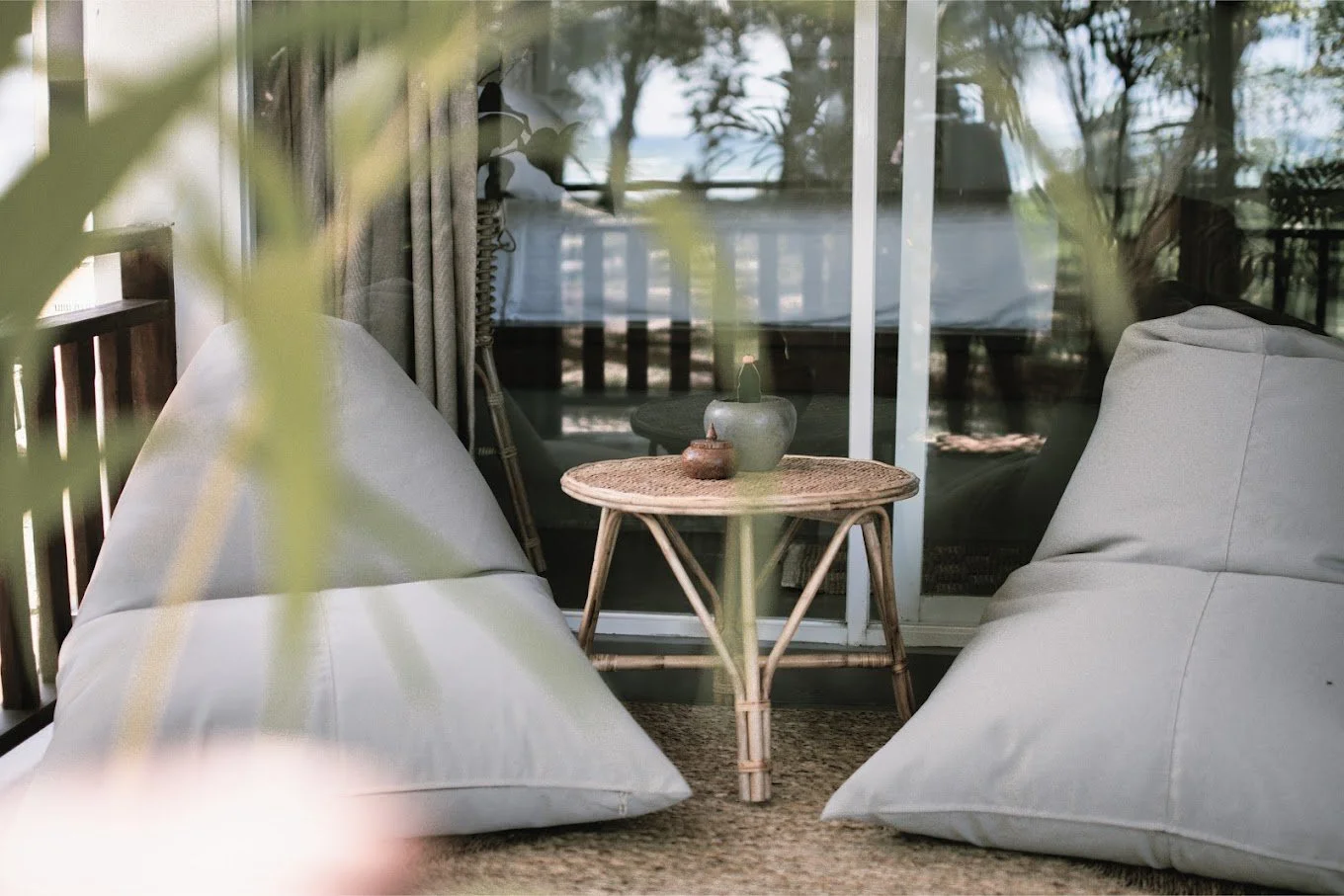
Calma Café - Surf, Stay, & Yoga
If you want a structured surf camp vibe but prefer to escape the dense crowds of the main bay, this is the ultimate alternative. It is located just a short 5-minute tuk-tuk ride down the road on the pristine and much quieter Kudawella Beach. It functions as a gorgeous, community-first oasis that perfectly pairs daily open-air yoga and top-tier surf coaching with an on-site healthy cafe. Booking here means you can completely skip the rigid, locked-in weekly packages of traditional camps and just seamlessly pick your own dates on Booking.com. Private, design-forward rooms start at $65 USD per night.
For more surf camp options in Hiriketiya (and Sri Lanka), check out BookSurfCamps.com.
Where to Eat & Drink in Hiriketiya

Named one of Asia’s 50 best bars in 2022, Smoke & Bitters is more like a gastronomic experience and one you’d better make a reservation for. Everything on the menu stays true to the smoke and bitters theme, from the pulled pork to the smoky cocktails.
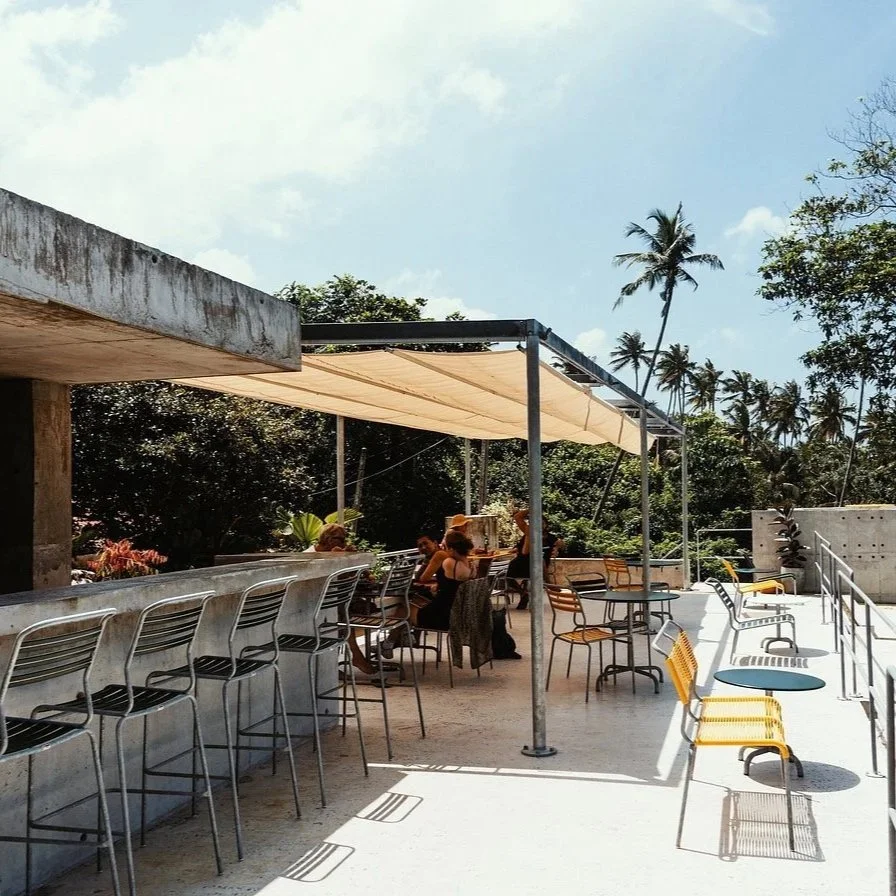
Perched right on the rocky cliffs of the eastern headland, Mond is an architecturally stunning, minimalist concrete oasis that feels worlds away from the busy beach crowds. Go for some of the finest specialty coffee on the south coast and a brilliant, seasonal breakfast menu that’s centered around fresh, regional ingredients.

This family-run restaurant was another daily staple for me in Hiriketiya, be it for breakfast, lunch, or dinner. Lemon Grass Cafe has all of the Sri Lankan classics on the menu, but their kottu and curry is some of the best I had in all Sri Lanka.

What to See & Do in Hiriketiya
1. Surf Mindfully in the Bay
Hiriketiya is famous for its horseshoe-shaped, palm-fringed bay that delivers waves for every single experience level. Beginners should stick to the gentle, sandy-bottomed western end, intermediates take the middle, and advanced surfers head to the eastern point where the wave peels fast over a shallow reef.
The Reality Check: Because Hiri has grown so popular, the lineup can get incredibly crowded and chaotic. Try to practice strict surf etiquette as best you can, mind the reef, and respect the local Sri Lankan instructors who know these waters best.
The Cost: Expect to pay around 1,500 to 2,000 LKR per hour (roughly $5–$6 USD) for a board rental right on the sand. If you want to fast-track your skills responsibly, I highly recommend booking an immersive local surf camp or structured retreat like the 4-day or 8-day retreats at The Salty.
2. Practice Yoga in a Beautiful Studio
The wellness scene here is thriving, making it incredibly easy to find daily movement. Salt House remains a local staple, offering great open-air treetop yoga sessions followed by vibrant community brunches. If you want a hidden jungle oasis with sweeping sea views, head up to the gorgeous shala at Serene Villa.
3. Escape the Crowds at Pehembiya (Dikwella Beach)
When the main bay of Hiriketiya feels a bit too cramped, take a short, 10-minute walk west over the hill to Pehembiya Beach—which is actually the stunning, wide-open eastern curve of Dikwella Beach. This massive stretch of golden sand is practically surf-free and entirely swim-friendly. The shoreline is dotted with humble, locally run beach shacks serving up ice-cold lion beers and fresh caught fish plates. Buying a drink or a meal from a local family scores you a complimentary sun lounger for the entire afternoon.
4. Catch Live Music & Open Mic Nights
Hiriketiya truly shines after dark with a incredibly laid-back, community-centered nightlife scene. Instead of massive corporate clubs, the town relies on independent venues taking turns hosting the evening's entertainment. The legendary open mic nights every Saturday at Dots Bay House are still the absolute blueprint for a good night out. Keep your ears to the ground and look out for hand-painted flyers posted on coconut palms around the main drag to see which local bar or cafe is hosting live acoustic sets, vinyl DJs, or community trivia throughout the week.
Best Culture & Adventure Day Trips From Hiriketiya
Mulkirigala Rock Temple (Mulgirigala Raja Maha Vihara)
Mulkirigala Rock Temple is an ancient, jungle-shrouded monastic cave complex climbing up a massive 205-meter solitary rock formation. It gives you all the dramatic, towering energy of Sigiriya’s Lion Rock but with a fraction of the heavy crowds and a deeply peaceful, spiritual atmosphere.
You will hike up a series of stone steps through five distinct terraced levels to explore ancient caves adorned with vibrant 18th-century Kandyan murals and beautifully preserved reclining Buddha statues. Reaching the very top reveals a striking whitewashed dagoba and sweeping, panoramic views across the endless canopy of the southern jungle.
How to Get There & What To Know: It is located roughly a 40-minute tuk-tuk ride inland from Hiriketiya, requires your shoulders and knees to be covered, and costs 500 LKR (roughly $1.65 USD) for entry. If you’d prefer
Udawalawe National Park Safari
If you want to see magnificent wild elephants in their natural habitat, the raw, wide-open wetland and grassland sanctuary of Udawalawe National Park offers arguably the most reliable, ethical sightings in all of Sri Lanka. Renting an open-air 4x4 jeep allows you to cruise past vast herds of wild Asian elephants grazing along the water's edge, alongside water buffalo, crocodiles, and wild peacocks.
I highly recommend this over Yala National Park, as Udawalawe is far less congested with tourist vehicles, making it a much lower-stress environment for the animals.
How To Get There & What To Know: The park sits a 1.5-hour drive north of Hiriketiya. While you could hire a tuk-tuk or private transfer to get you to the gates and negotiate with a guide from there, I recommend just booking a half-day Udawalawe Safari Tour on GetYourGuide that takes care of your roundtrip transport from Hiriketiya and the private 4×4 jeep tour in the park.
Alternatively, if you’re planning to head to Ella after Hiriketiya you could book any of these GetYourGuide experiences that work in a visit to either Udawalawe or Yala en route to Ella from Hiriketiya:
Hummanaya Blowhole & Kudawella Fish Market
This powerful coastal geology excursion takes you to witness the only natural blowhole in Sri Lanka, which is widely recognized as the second largest blowhole on earth. A short, scenic path leads you through a local village to a rocky outcrop where roaring sea waves are forced into a deep underwater cave, generating a massive buildup of pressure that shoots a spectacular fountain of ocean spray up to 100 feet straight into the air. The eruption is accompanied by a deep, thunderous boom that you can hear echoing through the cliffs long before you see it.
You can also easily combine this with a stop at the nearby working harbor to see independent fishermen bringing in the morning's sustainable catch.
How To Get There & What To Know: It is an easy 15-to-20-minute scooter or tuk-tuk ride east toward Tangalle, eruptions are at their peak during the rougher sea conditions of the monsoon months (May to September), and entry is 500 LKR for foreigners.
How to Get To, From, & Around Hiriketiya
Getting To & From Hiriketiya
By Public Transport
To get to Hiriketiya from anywhere on the south coast, or even Ella, Kandy, or Colombo, chances are you’ll need to get to Matara first. Whether you come by train or bus to Matara, from there you can take either a public bus to the Dickwella Bus Stand, or if you’re even luckier, to the Dodampahala Junction, just a few minutes walk from the center of Hiriketiya. I’ve laid out the full instructions by starting point below.
From Colombo: There are a few ways you can get to Hiriketiya from Colombo. The most direct option is to take a train from the Colombo Fort Station to the Wewrukannala Station in Tangalle. Check the schedule and buy your tickets on Bookaway. It’s about a 4-hour journey that puts you just 10 minutes by car from Hiriketiya. From the Wewrukannala Station, you can take a taxi to Hiriketiya. Pay no more than 300LKR for a tuktuk and no more than 900LKR for a taxi. Alternatively, you could take a train (about 4 hours) or express bus (about 3 hours) to Matara (for this check 12Go for your best option), and from Matara catch a local bus (1 to 1.5 hours) or a tuktuk (30-40 minutes) the rest of the way to Hiriketiya. Find those directions below in the “From Matara” section.
From Ella: Find the Wellawaya Bus Stop in Ella town and catch the 31 bus from there to Matara. It passes through town multiple times a day starting at 6:40am (but verify the latest schedule). The journey is anywhere from 5 to 6 hours and should cost around 650LKR (about $2USD). In Matara, you’ll catch a bus or hail a tuktuk or taxi to get you the rest of the way. Find those instructions below in the “From Matara” section. Alternatively, you could round up a group and book a direct transfer to Hiriketiya on Bookaway.
From other South Coast spots (Galle, Ahangama, Weligama, etc.): Hop on the 350 bus (or any bus heading to Matara) from all points west of Matara, be it Galle, Ahangama, Weligama, or Mirissa. Take it to Matara and then follow the instructions below from Matara.
From Matara: At the Matara central bus station, ask for the next departing local bus headed for Dickwella (more likely) or Hiriketiya (less likely). Bus 32-1 and 32-2 are supposed to be the buses that go by Hiriketiya, but I personally never had any luck getting on one and instead had to get on a bus headed for Dickwella (get off at the Dickwella Bus Stand). It’s approximately an hour journey to Dickwella from Matara and should cost no more than 200LKR. Alternatively, you could get a 30 to 40-minute tuktuk or taxi from Matara to Hiriketiya. Pay no more than 2000LKR for a tuktuk and no more than 5500LKR for a taxi.
Leaving Hiriketiya: To catch a bus to Matara, you’ll stand at the Dodampahala Junction and take any bus that passes that is heading for Matara or Pettah (if looking to get down the south coast towards spots like Weligama and Galle). Just flag it down and ask the driver if that’s where they’re headed. It should cost no more than 200LKR for the 1 to 1.5-hour journey to Matara. At the Matara bus station, you can transfer to your next bus or get a tuktuk to the Matara train station (150-200LKR).
By Private or Shared Shuttle
In Sri Lanka, 12go.com and Bookaway are king when it comes to finding and booking a private or shared shuttle transfer to pretty much anywhere in the country. You can also book your train tickets through them as well. Both sites have thoroughly vetted the on-the-ground local companies and drivers they work with, so you can trust who you’re getting in the car with and have the peace of mind of 24/7 support should anything go wrong.
Rent a Tuktuk, Car, or Scooter
If you’re comfortable sharing the road with Sri Lanka’s sometimes chaotic drivers (mostly the bus drivers), consider renting a car, scooter, or tuktuk. For car rentals, I recommend checking out DiscoverCars.com. It’s an award-winning car rental comparison site where you can find, compare, and rent a car. They include all mandatory fees, taxes, and extras in the quoted price and offer 24/7 support and free cancellation. For something more local and maneuverable, I recommend a scooter or tuktuk. For tuktuk rentals, check out the social enterprise tuktukrental.com and use code NOMAPS for 5% off your booking.
Getting Around Hiriketiya
Hiriketiya is entirely walkable, but if the heat gets to you, you can always call a taxi or tuktuk via Uber or PickMe.
Small Request
If you have found this guide helpful in any way, there are a few things you could do that would really help:
1) Share this guide with the next traveler you meet headed to Hiriketiya
2) Give me a follow at @nomapsorfoottracks on Instragram and say hi! I love connecting with those who find my content.
3) Book your next hotel, tour, or transfer using my links. They’re affiliate links which means they send a small amount back my way at no additional cost to you.
Booking.com or HostelWorld for hotels and hostels
Viator or GetYourGuide for guided experiences
Bookaway and 12Go for train tickets, transfers, and long-distance buses
Thank you for your support!
Check Out My Other Sri Lanka Travel Guides & Content
Kandy Travel Guide - from where to stay away from the noise to rooftop dining recs and forest hikes you can walk to from town
Colombo Travel Guide - this is the guide I wish I had before landing in the chaos of Colombo
Sigiriya Travel Guide - for tips on where to stay, the sunset hikes not to miss, and the best day trips to take from Sigiriya
Sri Lanka South Coast Surf Guide - a primer on the best surf on Sri Lanka’s South Coast for beginners all the way up to advanced
Read my full Sri Lanka Destination Guide for more tips, visa extension instructions, and even a few Sri Lanka-set reads to take with you for your trip
How To Travel With Empathy in Destinations With a Difficult Past - I interviewed the founder of Empathy Travels in advance of my own trip to Sri Lanka, knowing it’s a destination still recovering from a Civil War and economic recession.
Headed to Indonesia next or in search of more surf trip inspiration? Read these next:

A Traveler’s Guide to Colombo, Sri Lanka: Where to Eat, Stay, & Explore
Here’s exactly how to maximize your time in Colombo, from navigating this bustling city’s tuktuks, train stations, and markets to finding a peaceful moment at its digital nomad-friendly cafes, waterfront parks, and tea lounges.

This article may contain affiliate links. This means if you click a link on my blog and make a purchase, I may earn a commission at no additional cost to you.
As Sri Lanka’s largest city (but not its capital), Colombo is a whirl of activity at all times. While some big cities aren’t always worth the trip, I dare to say Colombo deserves at least a couple days of your itinerary before you head off to Sigiriya, Kandy, or the South Coast. In this travel guide to Colombo, I offer you some tips on how to maximize your time in Colombo, from navigating its tuktuks, train stations, and markets to finding a peaceful moment at its digital nomad-friendly cafes, waterfront parks, and tea lounges.
Where to Stay in Colombo
Over the course of my two-month stay in Sri Lanka, I passed through Colombo three different times. Each stay was spent at a different hostel in a different part of town. Of the three spots, I’d recommend staying anywhere along or within walking distance of Galle Face Green - a true and necessary oasis in the chaos of the city.
The spots I stayed that I’d recommend are:

Another great option within walking distance of Galle Face Green, but also within walking distance of the train station, is C 1 Colombo Fort Hostel, a slightly more luxe hostel option in the city.

This budget hostel has a relaxed atmosphere, air conditioned dorms, and above all a location that nearly fronts the beautiful Galle Face Green.
Search for more Colombo hotel, hostel and vacation rental options using the links below. Booking through these links helps support the blog. Thank you!
Where to Eat & Drink in Colombo
Some of my favorite bites and beverages I had all trip were in Colombo. A few of the spots I would proudly point you to are:

t-Lounge by Dilmah
Escape the heat with an iced tea at t-Lounge by Dilmah. Their menu of infusions, mocktails, and even a few Dilmah tea-inspired cocktails runs long, so don’t be afraid to ask for a recommendation at the counter. t-Lounge by Dilmah has three locations in Colombo: Chatham Street, Horton Place, and One Galle Face.

Masala Island
Located inside the Dutch Hospital, Masala Island has a menu of mostly Indian food, but also some Sri Lanka classics as well. I had an amazing chicken tikka masala here.

Barefoot Garden Cafe
Go to Barefoot Garden Cafe on a Sunday afternoon between 12:30 and 4pm, snag a seat in the courtyard, and listen to the live jazz while you eat.

What to See & Do in Colombo
All of my personal favorite things to do in Colombo happen to be free as well. They are:

Go on a Free Walking Tour
I spent my first afternoon in Colombo on a free walking tour via GuruWalk and I highly recommend you do too. Not only did it give me some background on Colombo, its history, culture, and landmark sites, but it also meant that when the tour visited the quintessential sites like the Gangaramaya Temple and the Pettah Market, I had a guide by my side to walk me through each. This made all of it that much less overwhelming and more interactive than had I gone to either alone.
Price: Free, but tip your guide

Shop the Saturday Good Market
If you happen to be in Colombo on a Saturday, definitely check out the Saturday Good Market located in the nuga tree car park at the Colombo Racecourse (see on map). It runs from 9am to 5pm every Saturday rain or shine. What started as a local initiative to support the city’s most sustainable and responsible small businesses, social enterprises, farmers, and artists is today a farmer’s market-style shopping destination for ethical fashion, organic products, and locally produced goods, like spices, tea, and coffee.
Price: Free

Visit the Seema Malaka Temple on Beira Lake at Sunset
Built in 1976 by the acclaimed Sri Lankan architect Geoffrey Bawa to replace the sinking former temple that was there, the Seema Malaka Temple is a gorgeous minimalist style, over-water Buddhist meditation temple seemingly floating on Beira Lake. Time your visit for sunset and find yourself in one of the most beautiful scenes this city has to offer. If you do visit outside of golden hour, be sure to bring a pair of socks as the brick platforms of the temple have been known to burn a barefoot sole or two under the midday sun.
Price: Free
Interested in more of a guided tour or experience? Check out these sites for a few ideas:
Found this helpful?
I spend a lot of time in coffee shops putting together content like this. If you’d like to support my work, consider buying me a coffee to show some love ❤️
What to Read Next

Everything you need to know for your trip to Sri Lanka, from city guides to pre-trip reading recommendations, where to find the best surf, how to extend your visa, and more.
Go to the Guide
Support the Blog While You Travel
Travel and give back to the blog by booking things like your hotels, tours, and trip insurance through the links below. When you use these links, they send a bit back my way at no additional cost to you. Your support is much appreciated!
Accommodations: Booking.com for hotels, HostelWorld for hostels, and Vrbo for vacation rentals
Tours & Experiences: Viator, GetYourGuide, and TripAdvisor for tours and experiences or GuruWalk for free walking tours
Flights: Going for flight deal alerts
Buses, Shuttles & Trains: Bookaway or 12Go for shuttles and trains and BusBud for bus tickets
SIM Cards & eSIMS: SIM Local for eSIMS or Drimsim’s universal SIM card if your phone doesn’t accept eSIMs
Trip Insurance: Squaremouth, WorldTrips, and World Nomads
Visit my Travel Resources page for even more ways to support the blog with your travel purchases.
What To Read Next
Ancient temples, wild elephants, home-cooked meals, and serene homestays, here’s how to spend a few solid days in Sigiriya, Sri Lanka.