Salvador, Bahia (Brazil) Travelogue
Welcome to my Salvador travelogue, where as much as I can, I’ve been penning a few updates from inside this profound city. The way to read this chronologically is to scroll all the way down to the bottom-most entry. If you’ve been keeping up, you can find my latest update just below that photo there below.
April 24, 2026
It’s a few days later now and one of them was spent bedridden with what I think was food poisoning. All I can say is thank goodness it passed quickly and that I had an ensuite bathroom and not a shared one down hall, like sometimes happens when I choose hostel over hotel. I’m feeling so much better as I write this. I even stepped outside today for the first time since the sickness struck.
The hills here though! Let me tell you, when your body has been put through the ringer and then you attempt to navigate the hills and cobblestones of Pelourinho just after, it makes you wonder if maybe you should just go back to bed. Instead, I just moved slower.
My mission today was to finally visit the Lower City, and specifically the basement of the Mercado Modelo where an art gallery is located. It was a seriously cool space with vaulted and arched ceilings of brick 160 years old. The route through the gallery was low-lit and on platforms surrounded by water.
I hadn’t realized this going in, but one of the purposes behind the gallery was to correct a myth that’s been circulating in Salvador about their original use. It’s been said that slaves were stored in these vaults before being sold at the market above. Apparently, the only thing that was ever stored in these vaults was wine imported from Portugal. There’s no dark history in this particular corner of Pelourinho, as convincing as the setting might seem.
Today, the art gallery is a way to give this space a new reputation, to correct the false claims, and celebrate the works of Afro-Brazilian artists. And I’d say they’ve done a lovely job of that.
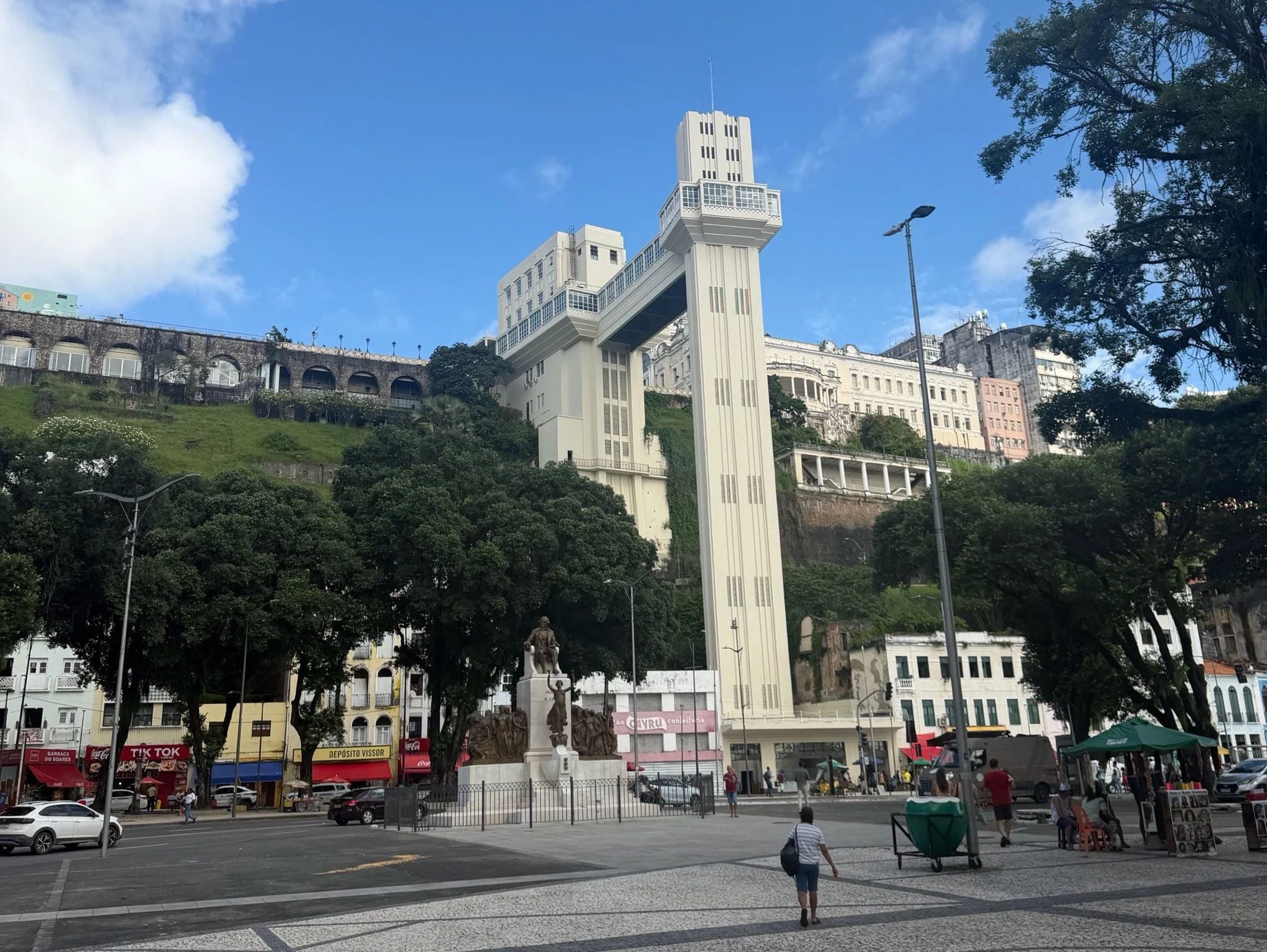
Getting to this basement gallery required that I take the Elevador Lacerda (pictured above), a literal elevator that connects the Upper City (where Pelourinho is) from Lower City and that’s been doing just that job since the 1930s. There’s nothing too special about it—no view or reminders of the orginal cars—but there is something fun about descending an elevator that was designed to connect two parts of a city and not floors of a building.
I really didn’t try to do too much this first day back to almost full health, despite the knowing that tomorrow will be my last day in Salvador. That’s okay. I got a really good sample of this city in the 8 days I’ve been here. I’ve eaten well, museumed hard, attended tours I loved, and started to understand the meaning of Afro-Brazilian in a way that I didn’t when I first arrived.
I really like Salvador. The longer I stay the more I do. But tomorrow I move on, one last stop in Bahia before I switch states and pen you a new travelogue from there.
If you’d like to follow my journey on Instagram, you can find me at @nomapsamber. Otherwise, stay tuned for a new post soon from a place where coffee, trekking, and waterfalls are some of its better known traits.
April 21, 2026
I’m on here as much for myself as for you, the one reading this. So much happens in a day when you’re out in the world. I don’t want to wait until I have a polished travel guide to share it with you. I want to log it now. In the moment. While it’s fresh. While the feelings that go with the experiences are there for me to share.
Quick Interruption: Future Amber here with a link to that polished travel guide to Salvador in case you’re interested in the stays, eats, and things to do I recommend in Salvador.
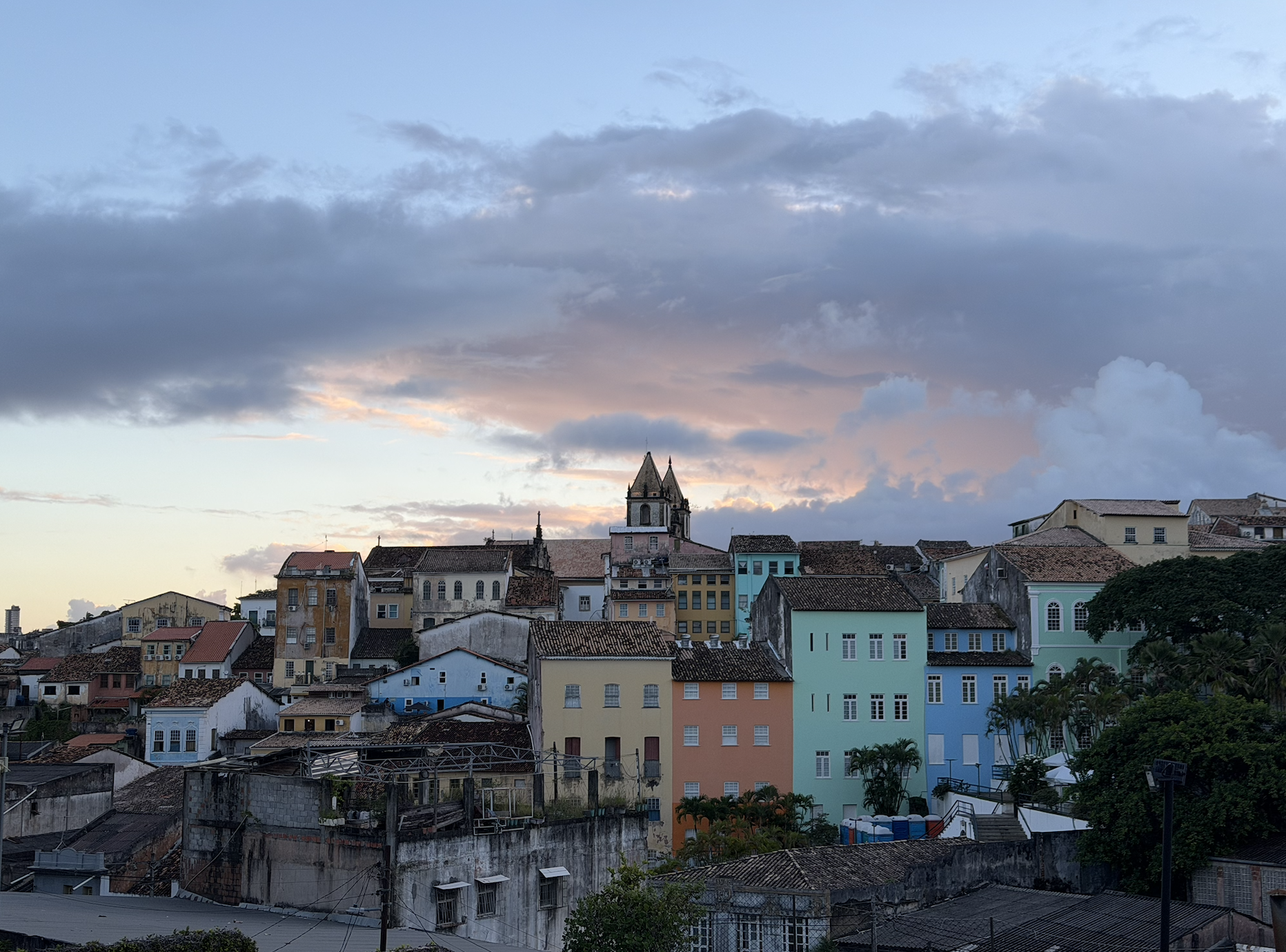
I’ve been in Salvador for nearly five days now, but it was yesterday I moved from Barra to Pelourinho, two very different Salvador neighborhoods. Barra is the classicly “safe” neighborhood, the one where you can let your guard down a bit more. Pelourinho is the one where you really do need to stay on the indicated streets, and not stray. It’s one where the military police stand on corners for your protection. But it’s also where, in my opinion, the beating heart of Salvador lives, the root of its history.
I’m in Pelourinho now. I feel the risks, and I don’t really love them, but I’m willing to accept them for what my days here so far have gifted me with. Today, for example, I hopped from 18th century church to 17th century church, asked if I could peek inside a historic hotel with a secret Jewish mikveh inside, built during the days when the Inquisition was a real threat, and was waved over to a group playing the berimbau on the street. Drumming followed me everywhere, afoxé drifted from balconies, and the Candomblé orixas kept popping up on store shelves, street art, and in conversation.
The Bahian / Afro-Brazilian culture is loud here, as loud as it gets. It’s like that in Barra too, but here in Pelourinho it’s proudly weighted with the African influence. It’s where you can see it, feel it, taste it, and dive deeper into it in endless ways. Order an acarajé from the Baiana in the turban and fluffy skirt, bob to the bloco passing by beating their drums, visit MAFRO, MUNCAB, and the Church of Our Lady of the Rosary of the Black People.
Pelourinho is a place where you just step outside and see what you find, because find you will. Find I did. I’m ending this day feeling so satisfied with all of the ways my contact with this place grew today, the number of times I entered a church or a shop or a cafe with zero expectations and found myself fully engaged with each one, struck by its beauty, texture, history, humanity, or new nugget of information. These weren’t checklist items. These were truly destinations worth visiting. And I never planned to visit a single one.
