Before You Go to Bahia: An Introduction to Brazil’s Afro-Brazilian Heart
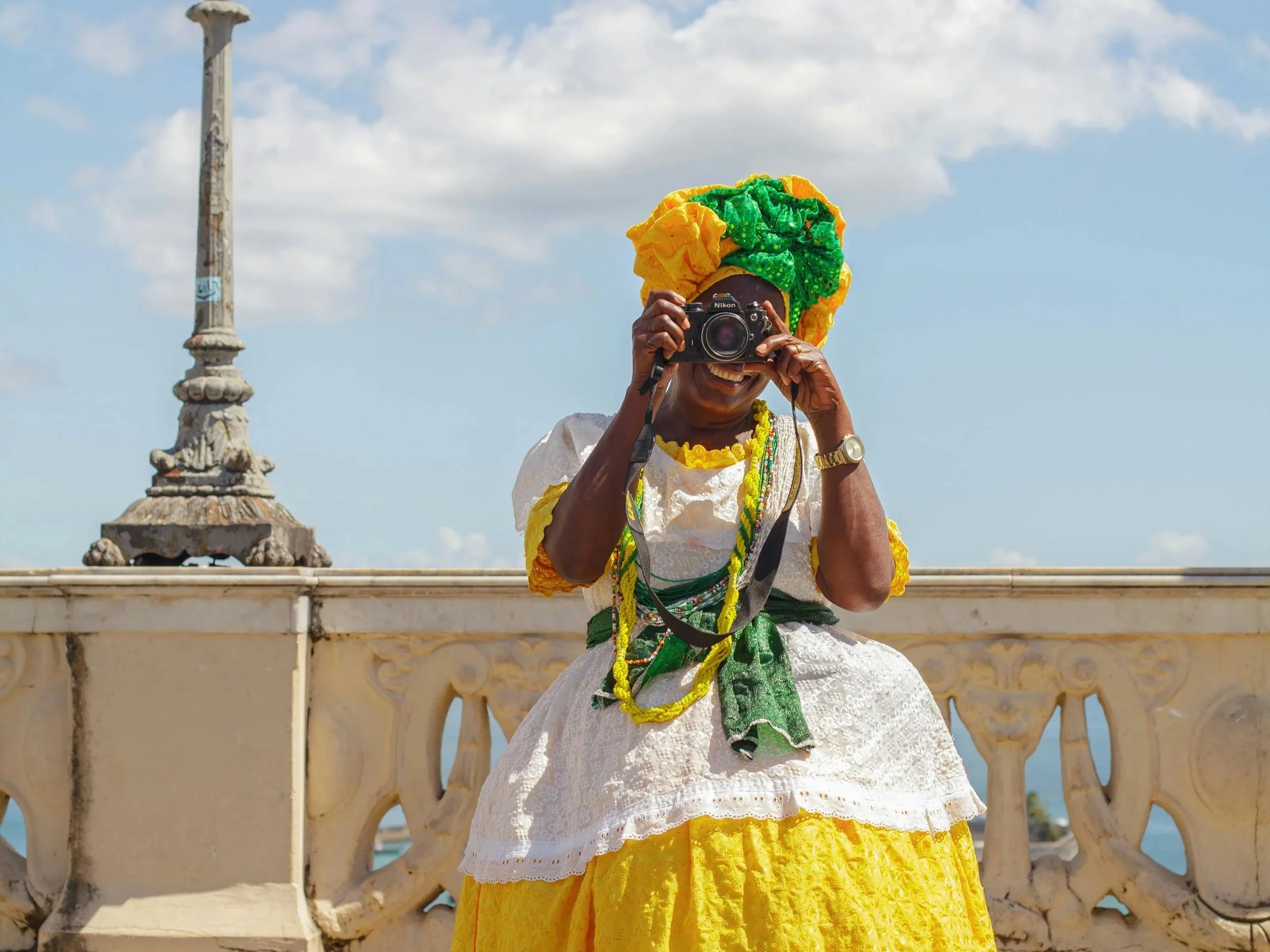
Photo by Leonardo Dourado
Before you book the pousada, before you pin the surf spot, before you learn how to pronounce acarajé, there are a few things you should know about Bahia, the northeast Brazilian state that’s at the epicenter of Afro-Brazilian culture.
To visit Bahia without first digging into some of its history and cultural inheritance is to set yourself up to skim only the surface. Beyond the beaches, capoeira circles, and acarajé stands is a spirit shaped by centuries of defiant resistance, layered faith, and relentless creative force. It was in Bahia, along Salvador’s shores and beneath its cobblestones, that the soul of a nation was forged, the soul that is Brasil.
Which is why, personally, before I visit, I want to understand Bahia better, even before I sort out the more logistical aspects of traveling Brazil.
As I type this, I’m literally headed to Bahia in a week’s time. This post is part of my own preparation before my feet ever touch sand and cobblestone. I want to know the layers that shaped this place—not just so I know what to look for, but how to engage with it, how to connect with it, how to move through it with intention and empathy. So besides the surf wax and sunscreen (which I’ll also need), the most important thing I’m packing for my trip to Bahia, Brazil is context.
Let’s start at the beginning.
Bahia is where Brazil literally began
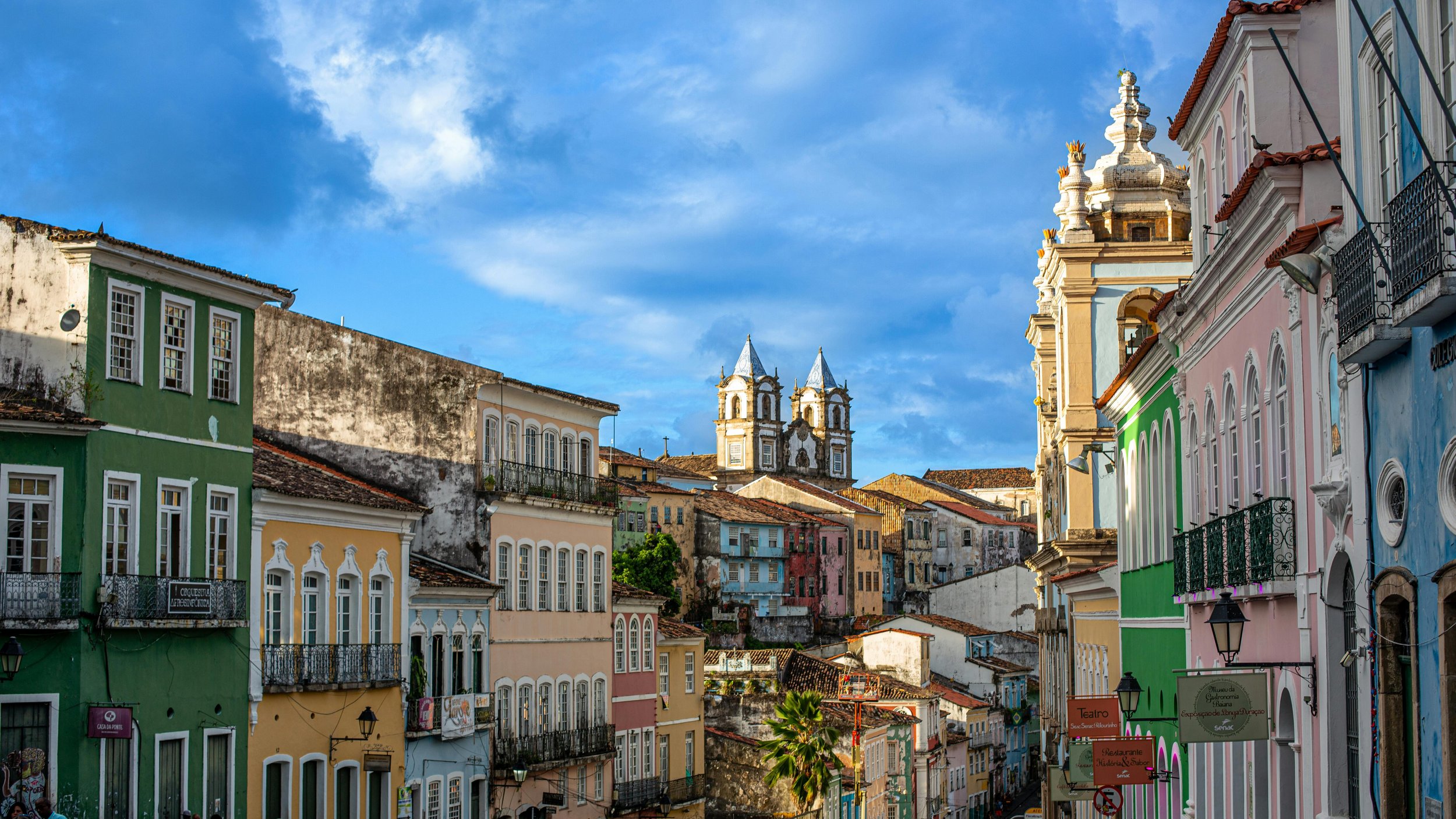
Photo by Leonardo Dourado
Long before Rio or Brasilia took center stage, Salvador—today the capital of the state of Bahia—was Brazil’s first capital and the administrative heart of Portuguese colonial rule. Sadly, it was also one of the main ports through which enslaved Africans were forcibly brought to the Americas.
Related Content: Read my Salvador Travel Guide for tips on cultural threads to follow, where to safely and strategically base yourself in the city, and some of the best restaurants I came across during my 12-day stay.
The arrival of the Portuguese to Salvador’s shores meant that the Indigenous peoples, including Tupinambá communities and other coastal groups whose relationship to the land had been shaping the region for centuries, experienced an overnight and irreversible shift in life and the land as they had known it. Their displacement, enslavement, and decimation by the Portuguese are part of Bahia’s story too, revealing just how layered the region’s history truly is.
From the 16th to the 19th centuries, Bahia received more enslaved Africans than any other region in Brazil, many from West Africa—including present-day Benin and Nigeria, which begins to explain the rich Afro-Brazilian cultural heritage that still persists in Bahia today. And while colonial systems across the Americas were on a mission to erase the identities of slaves and fracture their sense of community, Bahia’s enslaved never gave them the pleasure. African culture survived and reshaped the region in the process.
Today, the majority of Bahia’s population identifies as Black or mixed-race, giving it the highest proportion of Afro-descendant residents of any Brazilian state. That legacy still hums beneath the cobblestones of Pelourinho in Salvador and along the Cocoa Coast. It’s present in the region’s language, movement, food, faith, and sound. As I said at the start, to move through Bahia without understanding this is to see only the surface of this place, one with such a complex, but also proudly defiant history.
Bahia developed a reputation for being the center of resistance. Enslaved and formerly enslaved Africans here didn’t simply endure colonial rule—they challenged it constantly through uprisings, revolts, and acts of defiance, including the Malê Revolt of 1835 that was led largely by African-born Muslims in Salvador.
This resistance also took territorial form. Runaway enslaved people established autonomous settlements known as quilombos—self-governed communities built in defiance of colonial authority. Many of these communities still exist today in areas like Chapada Diamantina, near Salvador, and along the coastline in places like Boipeba. The descendants of these communities, known today as quilombolas, are still fighting for land rights and legal recognition and facing challenges from industrial agriculture and development.
The legacy of colonialism, forced migration from Africa, and resistance still pulses through Bahia—in its music, its faith, and in the ways it continues to assert itself on its own terms.
Music in Bahia is inheritance.
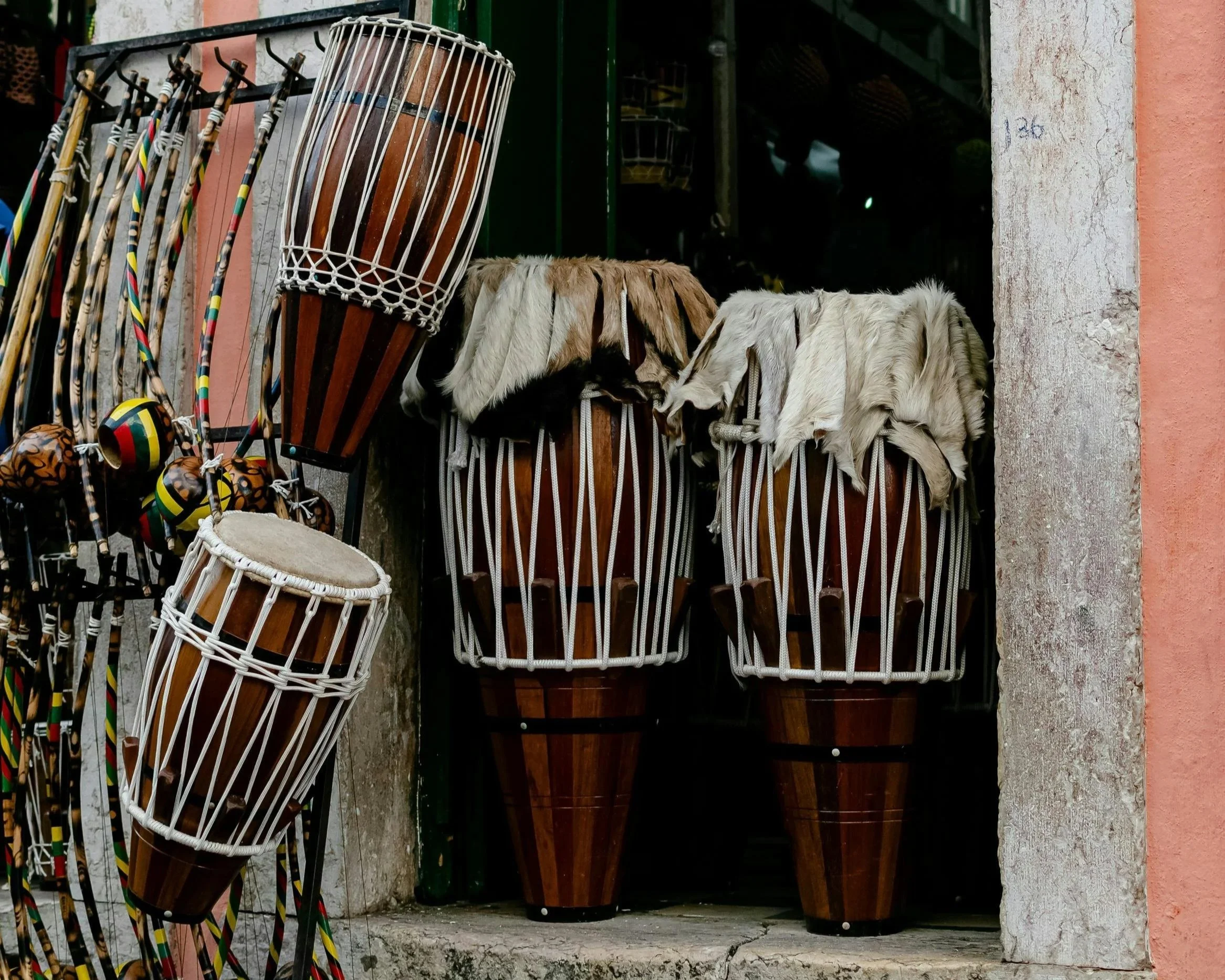
Photo by Vinícius Vieira
In Bahia, music is more than performance. It’s preservation of what’s been handed down through the centuries.
Enslaved Africans brought with them their complex musical traditions—polyrhythmic drumming, call-and-response singing, and ritual percussion tied to their spiritual practice. These weren’t just casual expressions or entertainment. They were systems of communication and cosmology.
Colonial authorities understood that power, and so drumming and large gatherings were often restricted or surveilled, especially after uprisings like the Malê Revolt of 1835. Rhythm, the colonists realized, could organize people. It could summon community and it could carry messages without written language. But knowing their music was being watched and suppressed, the slaves adapted it.
In rural Bahia, the now-famous samba de roda emerged in Afro-descendant communities as a circle-based, participatory form that kept African musical roots and traditions alive in plain sight. With no fixed stage and no clear divide between performer and audience, it looked, from the outside, like an everyday gathering rather than a formal ceremony. It preserved rhythmic structures and communal storytelling in ways that felt social rather than overtly defiant.
Afoxé groups later carried the sacred rhythms of Candomblé into the public sphere of Carnival. What had once been confined to terreiros—the houses of worship in Candomblé—moved into sanctioned festival space. Under the cover of celebration, African cosmology could still be heard.
By the 1970s, blocos afro in Salvador made that preservation explicit, taking African musical tradition from adaptation to open affirmation. These neighborhood-based Carnival groups formed during Brazil’s military dictatorship (1964-1985), at a time when racial exclusion was at a peak. With the same spirit of resistance now many generations deep, blocos afros embodied their Afro-Brazilian history, pride, and aesthetics in defiant response.
This is also why Carnival in Bahia feels different from Carnival in Rio de Janeiro. In Rio, the Sambadrome creates this clear division between performers and spectators, making it feel more like a choreographed spectacle designed for viewing. In Salvador, the street is the stage. Blocos move through neighborhoods, and spectators become participants, blurring the line between musician and neighbor. Carnaval in Bahia is less about performance and more about just being there and being part of it.
Remember that as you sway to samba, catch a street performance in Pelourinho, or, if you’re really lucky, attend Carnaval. In Bahia, what has survived musically is pure strategy—rhythm shaped under pressure and carried forward despite the obstacles. The percussion you’re sure to hear echoing through Salvador’s streets isn’t just a reenactment of a timeworn rhythm, but the continuity of something that very easily could have been lost.
Bahia is one of the most spiritually layered places in the Americas
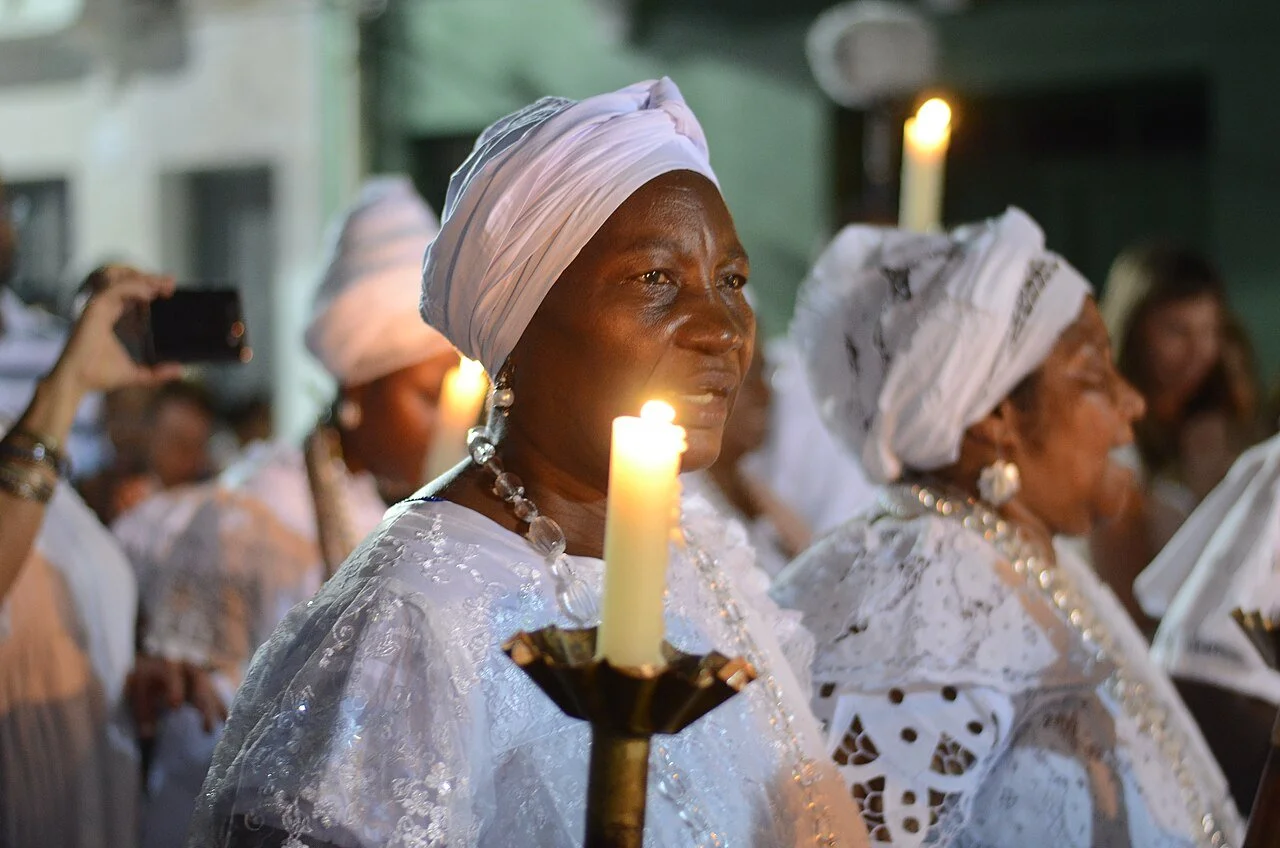
Photo by Caiquefialhoo
Before colonial borders, the Indigenous peoples of coastal Bahia—including the Tupinambá communities—practiced spiritual traditions rooted in land, ancestry, and nature. Their spirituality was inseparable from territory. It was cosmology and ecology intertwined.
Then came the Portuguese in the 1500s, bringing Catholicism to the territory as both faith and instrument of control. Churches rose in Salvador, conversion wasn’t a choice, and baptism became administrative as much as spiritual.
But colonization did not replace belief systems. Instead, it collided with them.
From the 16th through 19th centuries, enslaved Africans arrived in Bahia carrying their own religious cosmologies. Many came from Yoruba-speaking regions of West Africa, bringing their traditions that honored what are known as orixás —divine forces tied to rivers, storms, fertility, and justice. Others were Muslim, literate in Arabic, and part of organized Islamic communities. In 1835, it was many of those Muslims would lead that Malê Revolt I mentioned earlier—one of the most significant slave uprisings in Brazilian history.
Like their music, colonial authorities suppressed indigenous spirituality, African religions, and Islam. Drumming was policed, ceremonies were banned, and, after the Malê Revolt, Muslim leaders were executed or deported. Public African worship was officially criminalized well into the 19th century.
But African belief systems did not disappear. They adapted. Just like their music.
African spiritual traditions began to mask themselves behind the Catholic iconography being imposed on them. Orixás started being associated with the Catholic saints, and what eventually emerged was a new kind of faith—not pure Catholicism, not preserved West African religion, but something distinctly Afro-Brazilian called Candomblé.
Candomblé is not folklore. It is a living religion practiced today in terreiros across Bahia. Rituals honor the orixás through drumming, dance, white garments, and offerings tied to the elements of nature. Many practitioners actually identify as both Catholic and Candomblé, reflecting this collision of culture and necessary cohesion.
Today in Salvador, Catholic churches still anchor the city’s colonial plazas and Candomblé continues—resilient, visible, and foundational to Bahian identity—but Evangelical Christianity has also grown significantly. Watch Petra Costa’s documentary Apocalypse in the Tropics (available on Netflix) to learn more about that rise.
Food in Bahia is history you can taste
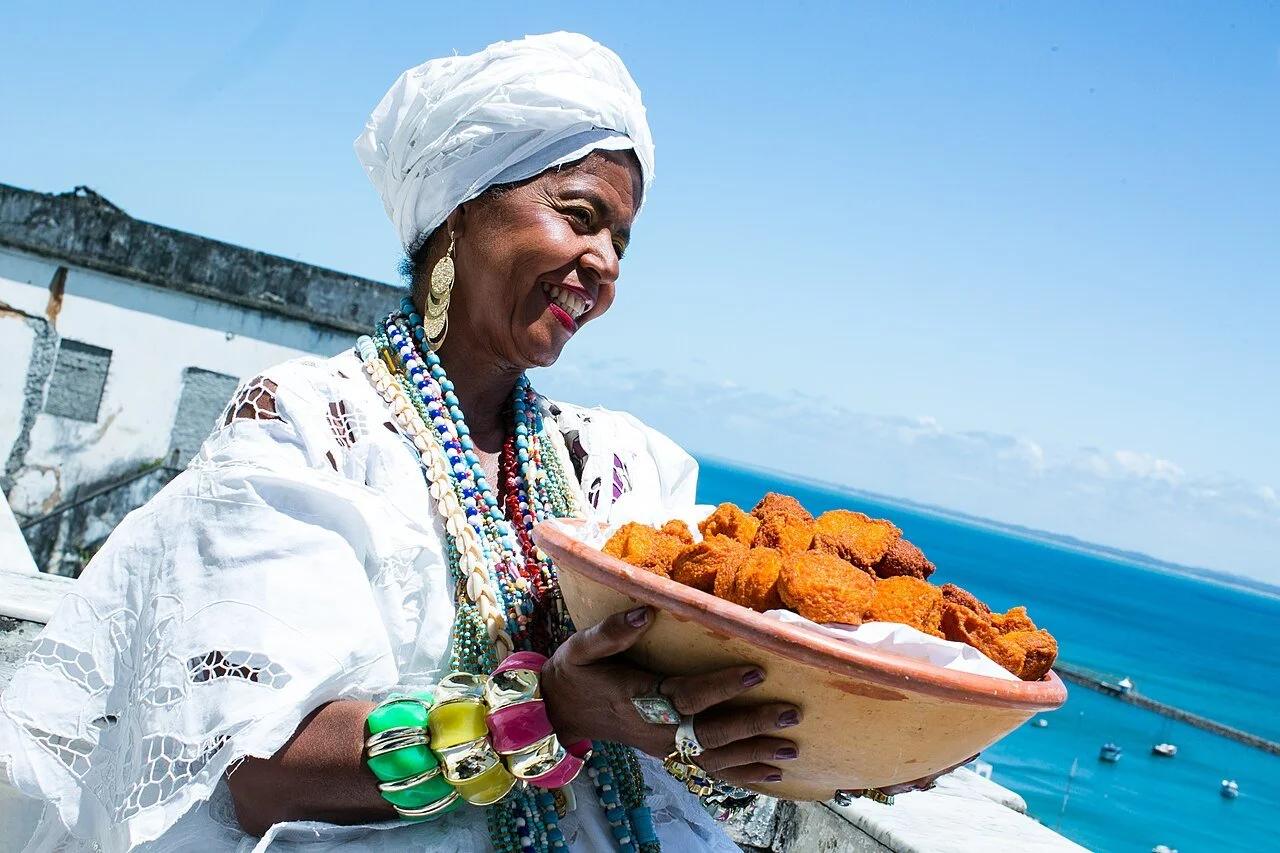
Photo by Ministério da Cultura
In Bahia, food carries the region’s history, like its rhythms carry the memory.
Before colonization, Indigenous communities relied on cassava—or mandioca—as a staple crop. Farinha, the toasted cassava flour still found on nearly every Bahian table, is an inheritance of those early agricultural traditions.
Then came the Portuguese, bringing livestock, sugarcane, and new cooking methods tied to colonial trade. And alongside them, the enslaved Africans, who carried their culinary knowledge from West and Central Africa, including techniques for frying in palm oil, layering spice, working with okra, black-eyed peas, and seafood.
What emerged wasn’t just fusion, but survival cuisine.
Acarajé—fried black-eyed pea fritters cooked in dendê oil—traces its roots to West African street foods and remains sacred within Candomblé, where it is offered to specific orixás. You’ll see it Salvador traditionally prepared and sold in the streets by Baianas in white dress.
Moqueca baiana, another Bahian delicacy, simmers seafood with dendê, coconut milk, peppers, and herbs. This coastal stew is probably the best example of African technique, Indigenous ingredients, and Portuguese maritime trade in one bite.
In Bahia, what’s on your plate literally reflects who survived long enough to cook. And to eat is not just to taste something regional. It’s to encounter that record of adaptation—Indigenous crops, African methods, European impositions—all of it still visible in the kitchens and street food stalls you’ll soon meet.
Tip: If you make it to Boipeba, don’t miss a meal at Chef Sarah Barbosa’s Querido Querino, a cultural landmark in the making. Her menu revives 19th-century Bahian recipes collected by ethnologist and intellectual Manuel Querino in the early 20th century. Read all about it in my Boipeba Travel Guide.
The Bahia You’re Visiting Is Still Becoming
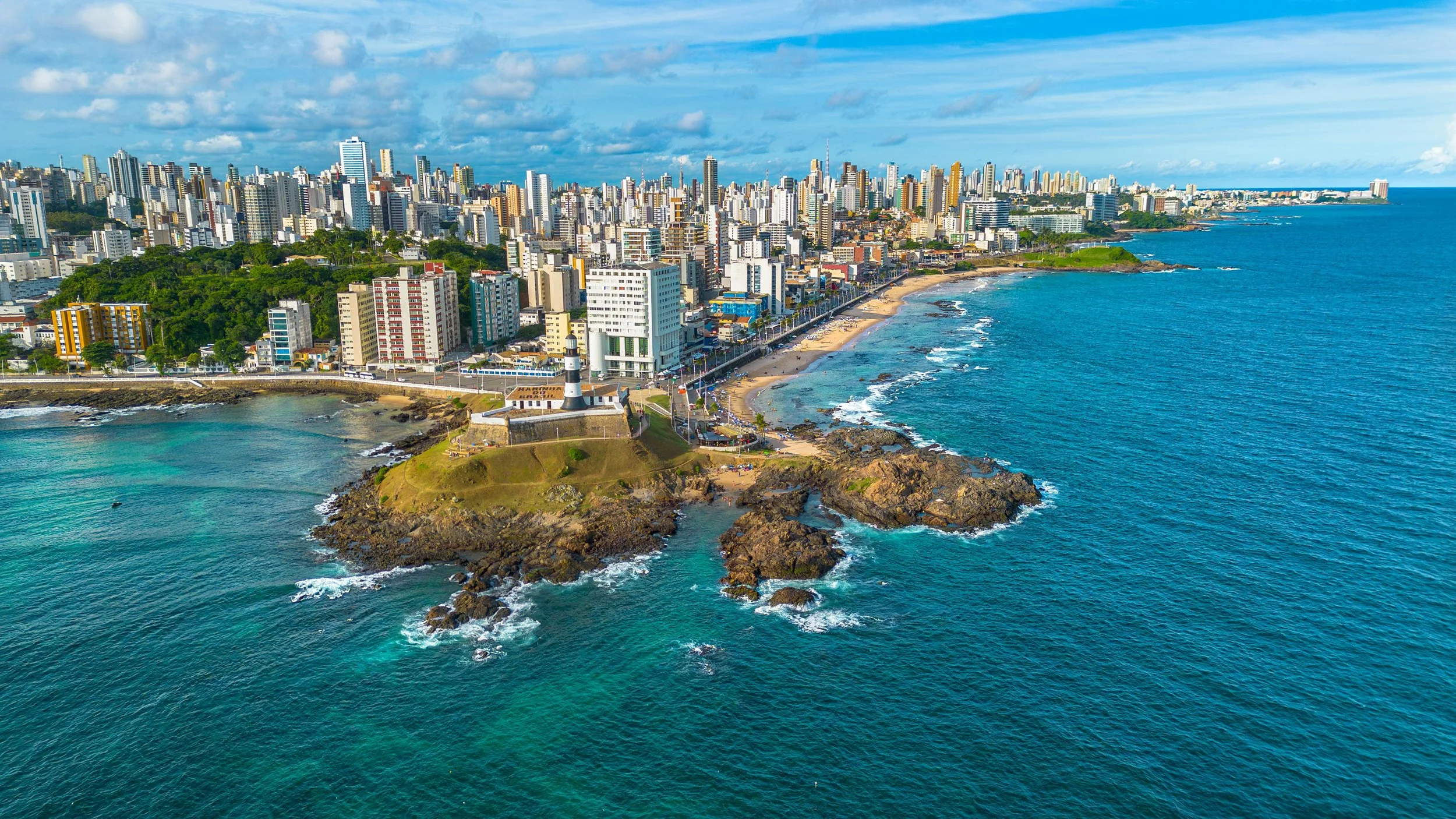
Photo by Leonardo Dourado
Bahia is alive. Its story is ongoing. And like many places shaped by deep history, it is still negotiating who gets to define it—and who benefits from it.
Today, Bahia remains one of Brazil’s poorest states, despite being one of its most culturally influential. Salvador is majority Black, yet racial inequality and income disparity remain visible across neighborhoods. Afro-Brazilian religious communities continue to face discrimination. Quilombola and Indigenous communities are still fighting for land recognition. And as tourism expands along the coast, development pressures reshape fishing villages and historic districts alike.
Your tourism brings opportunity—but it also brings rising costs, outside investment, and the risk of reducing a place forged through resistance into an aesthetic. Coastal communities, historic neighborhoods in Salvador, and Afro-Brazilian religious houses all experience that tension differently.
This is a region built on Indigenous foundations, African survival, and centuries of adaptation. That story did not end in the 19th century. It continues in policy debates, land claims, neighborhood preservation efforts, and everyday decisions about who gets to belong.
So before you go, understand this: Where your money goes matters. Who tells the stories matters. Which businesses you support matters. How you photograph—and what you choose not to—matters.
You don’t have to arrive with answers. Just arrive with awareness, and if you’ve read this far, you’ve already got that packed too.
Plan and Prepare For Your Trip With My Brazil Travel Guides & Content
Brazil Travel Tips: What to Know Before You Go (Visa, Transport Apps, Safety, & More)
How to Buy a SIM Card in Brazil: What To Know & Need for Purchasing a Local SIM Card in Brazil
Salvador Travel Guide: The Cultural Threads to Follow, Best Neighborhoods To Stay & How To Stay Safe
Boipeba Travel Guide: What to Do, Where to Stay & How to Visit Responsibly
Itacaré Travel Guide: The Tips I Wish I’d Had, Best Beaches, & Where to Stay
Maraú Peninsula Travel Guide: A Primer on Bahia’s Still Under-the-Radar Dendê Coast (Surf, Stillness & Stunning Beaches)
Rio de Janeiro Travel Guide: 13 Things To Do After Sugarloaf, Christ the Redeemer, & The Beach
Vale do Pati Trek Guide: A First-Timer’s Guide to Trekking One of Brazil’s Most Beautiful National Parks
How This Kind of Content Is Made Possible
If this kind of travel writing resonates with you—writing that takes time to research, listen, and contextualize before arrival—one of the simplest ways to support it is by using the affiliate links found throughout the site and on my Travel Resources page as you book your trip.
They don’t cost you anything extra, but they allow me to continue creating thoughtful, context-first travel content like this—work that prioritizes history, culture, and community over quick recommendations.
Thank you for reading, for caring, and for helping make this kind of travel content possible.
What To Read Next
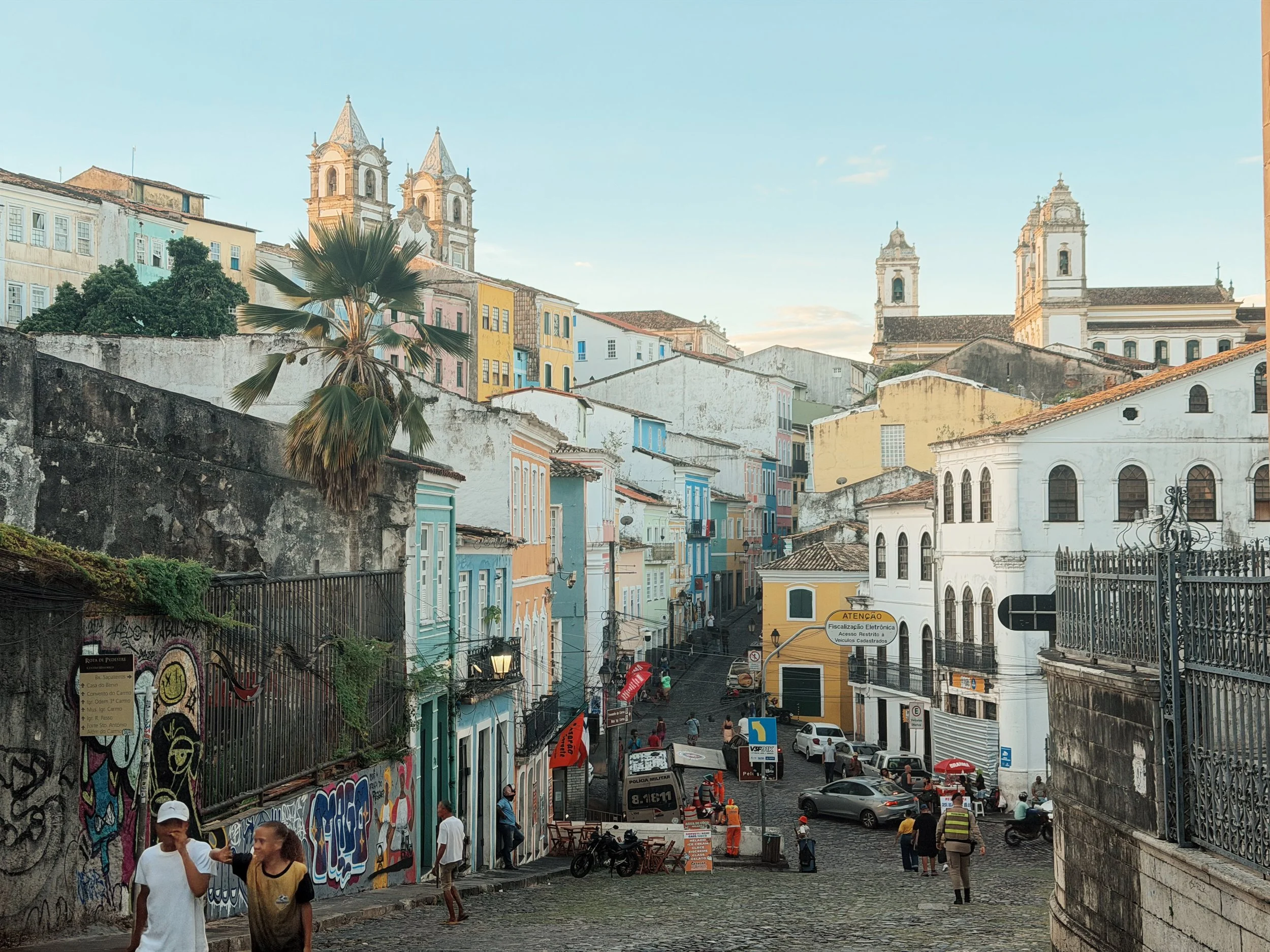
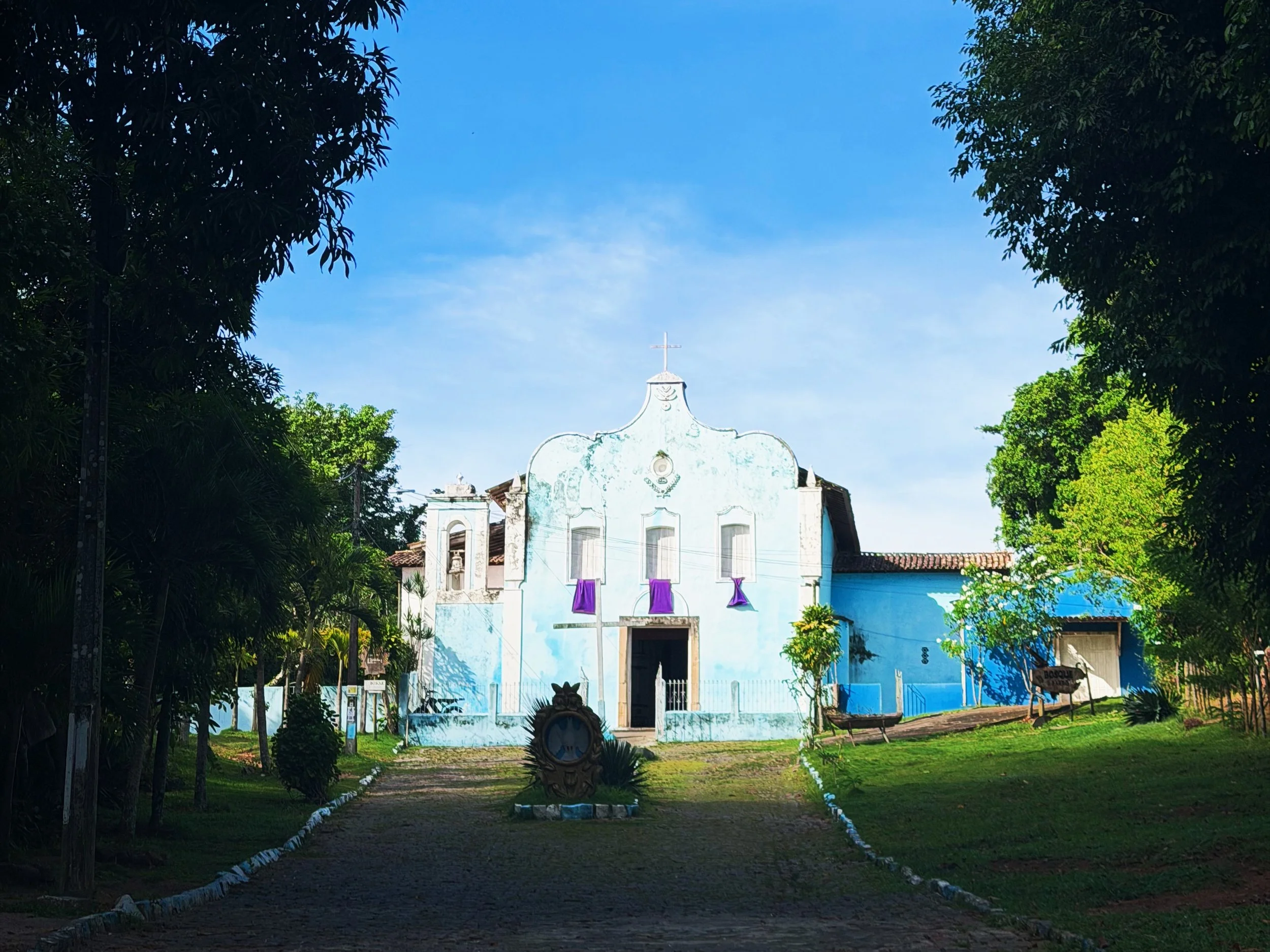

The Vale do Pati trek in Chapada Diamantina National Park is one of the most spectacular treks no one’s ever heard of. In this guide, I share what it’s like to do the four-day trek, everything you need to know to do it yourself, and why it’s worth every blister and back ache.