Southwest Road Trip Travelogue: Shaking off the Jitters, Sleeping with the Saguaros, & Crossing into California
Read about the first three days of my solo nine-day road trip through the desert Southwest in a campervan, from Phoenix to Joshua Tree National Park.
On December 1, I embarked on my second solo road trip of 2025, this time trading the forests and coastline of the Pacific Northwest for the twisted Joshua trees and saguaro-studded deserts of the American Southwest. It was a wild ride, where no two days of this nine-day adventure panned out to be even remotely alike.
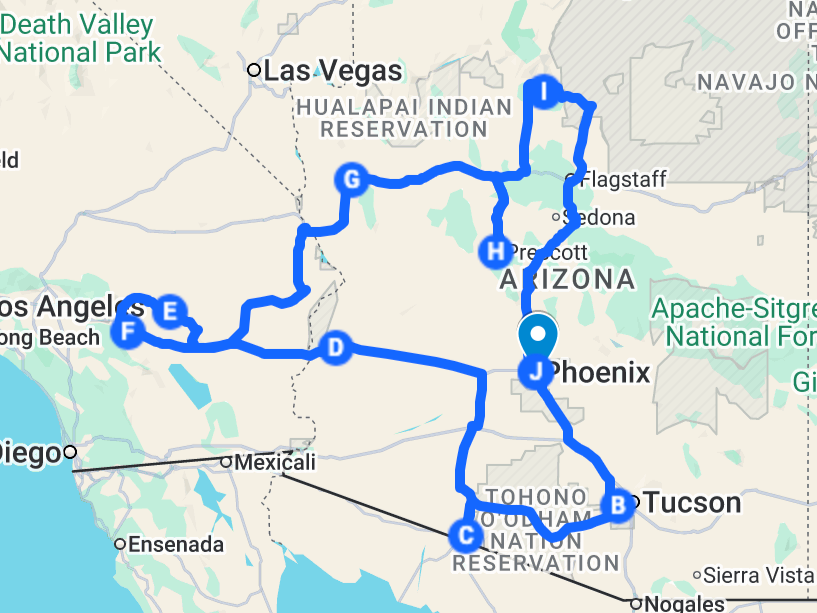
This post, Part 1 of a three-part travelogue series, chronicles the first three days of my solo winter road trip through Arizona and California in a campervan. It’s not a laid-out itinerary or a how-to (though I did create that too), but a day-by-day account of what it actually felt like to move through these landscapes alone—learning the rhythms of van life for only the second time, literally racing winter’s early sunsets each and every day, and noticing the growing and permanent grin on my face as the days ticked by.
Traveling by campervan is probably one of my favorite ways to explore. And though it triggers every alarm bell in my nervous system in the lead up, I always find myself ending the adventure feeling more empowered, confident, and alive. This is why—beyond the practical stuff—I wanted to share with you this side of the adventure too. The travelogue from the open road.
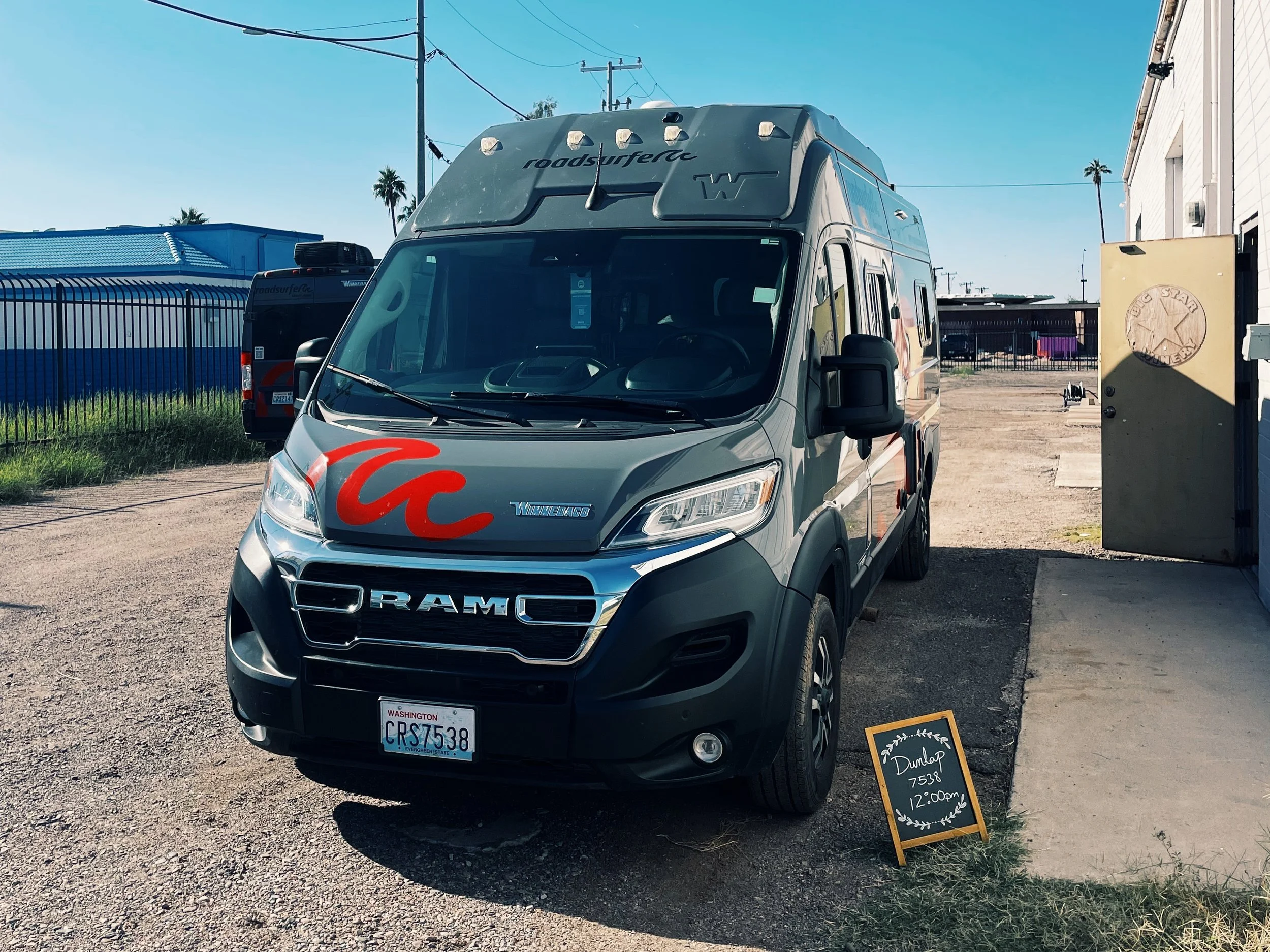
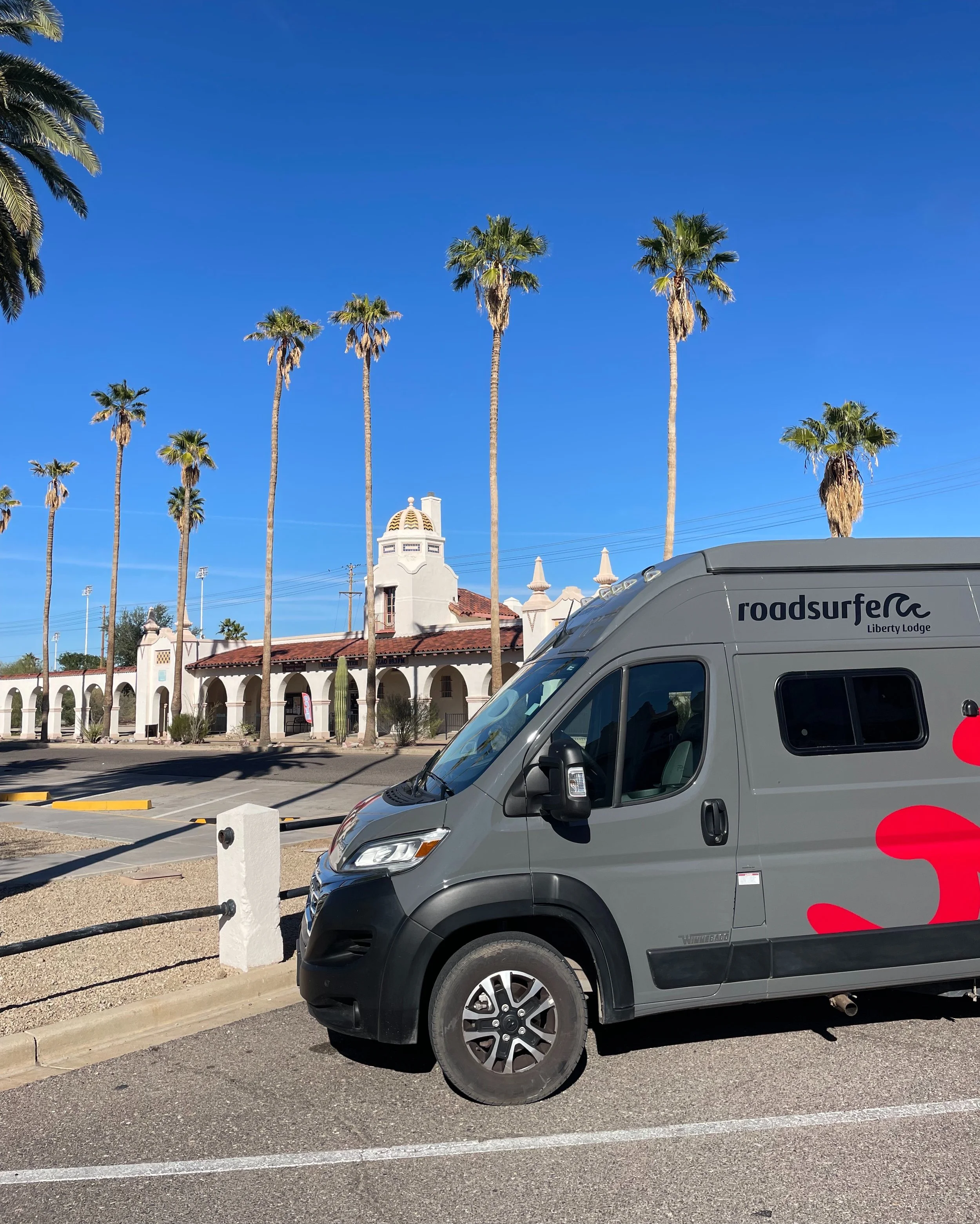
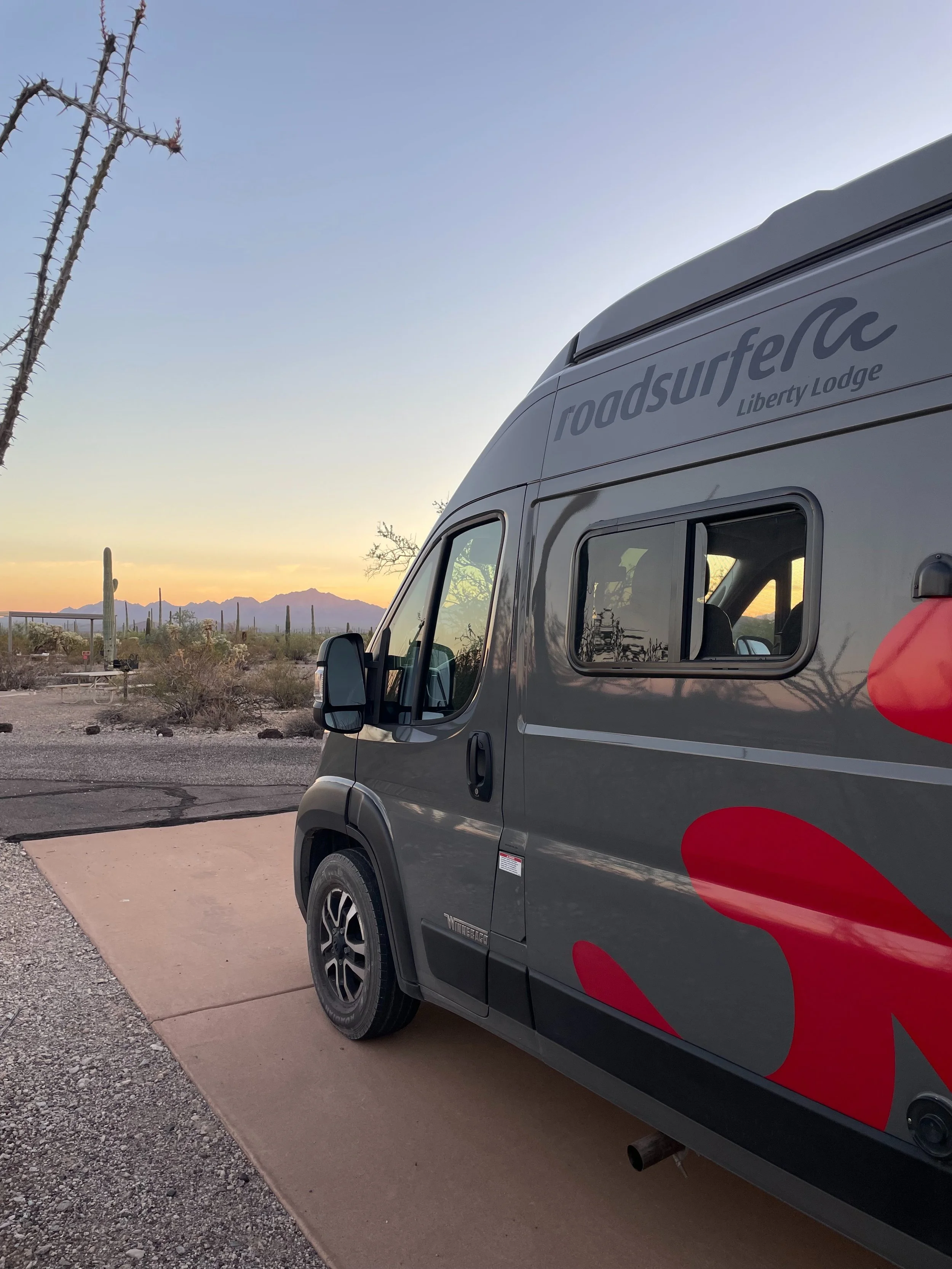
I partnered with a van and RV rental company named Roadsurfer, who provided the campervan—a Class B sprinter-style home on wheels (see specs)—that made this journey possible, but the route and experiences I share below were entirely mine to decide. If you’re entertaining the idea of road tripping the U.S., Canada, or Europe in the coming year, I can vouch for Roadsurfer’s vans and service.
Okay, back to the story. Let’s start at the beginning.
Day 1: Phoenix to Tucson & Saguaro National Park
Day 1 at a glance: solo van trip jitters, Florence detour, Tucson grocery/gas stop, sunset over towering saguaros.
Shaky—despite this not being my first solo campervan road trip—I cautiously rolled out of the Roadsurfer lot in Phoenix, still getting used to the height, length, and sheer mass of the 21-foot campervan that would serve as my home for the next eight nights (though at the time I only thought it would be 7—more on that in a later post). I could feel the weight of the converted campervan behind me: a jangling kitchen, a sloshing toilet, and a folded-up bed traveling wherever I directed these four wheels to go. Ready or not, I had to be. The steering wheel was in my hands now and my ambitious and meticulously pieced together route—one that would eventually take me as far as the foothills of California’s San Jacinto Mountains—required that I shake the nerves and just start moving.
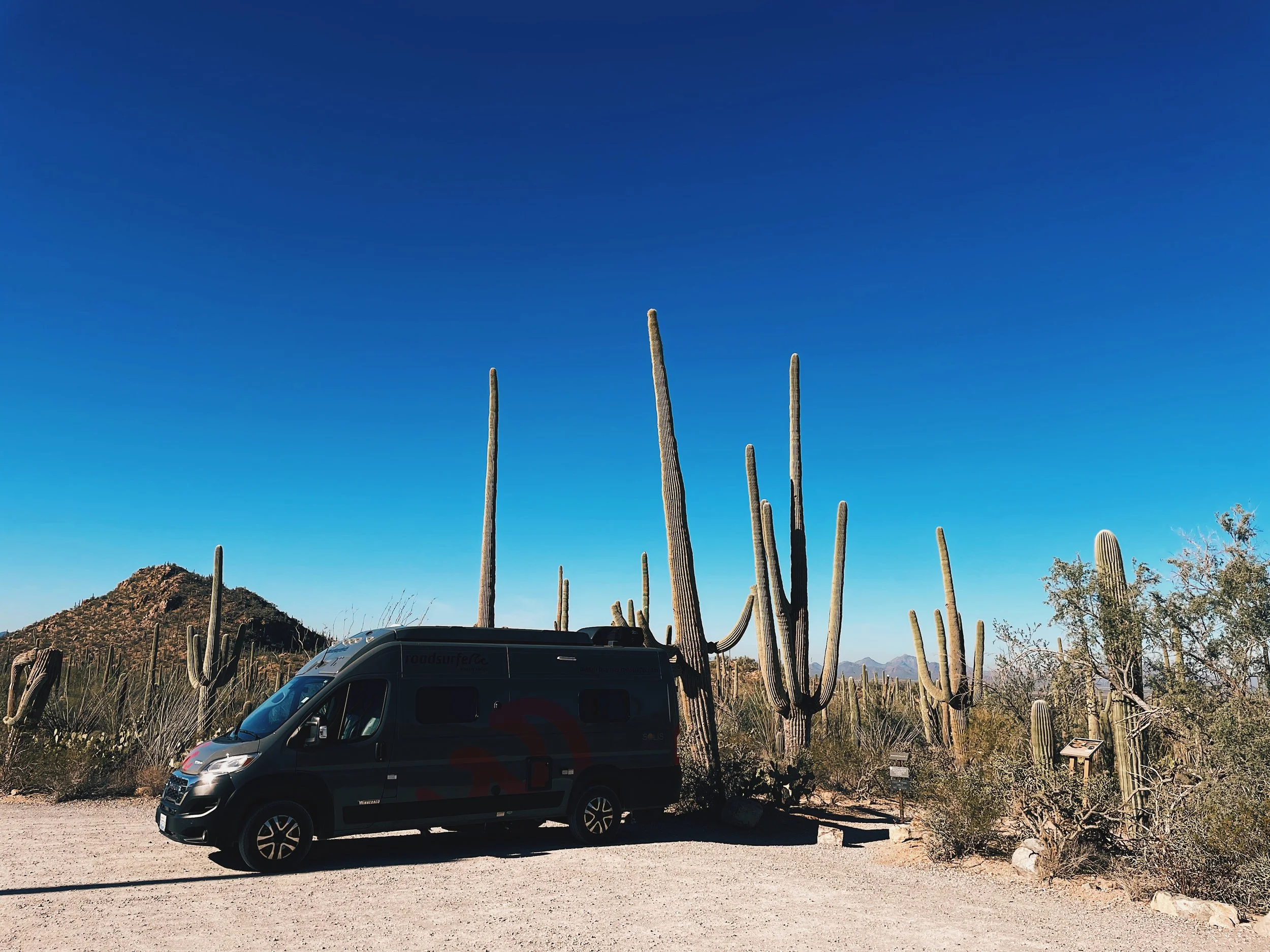
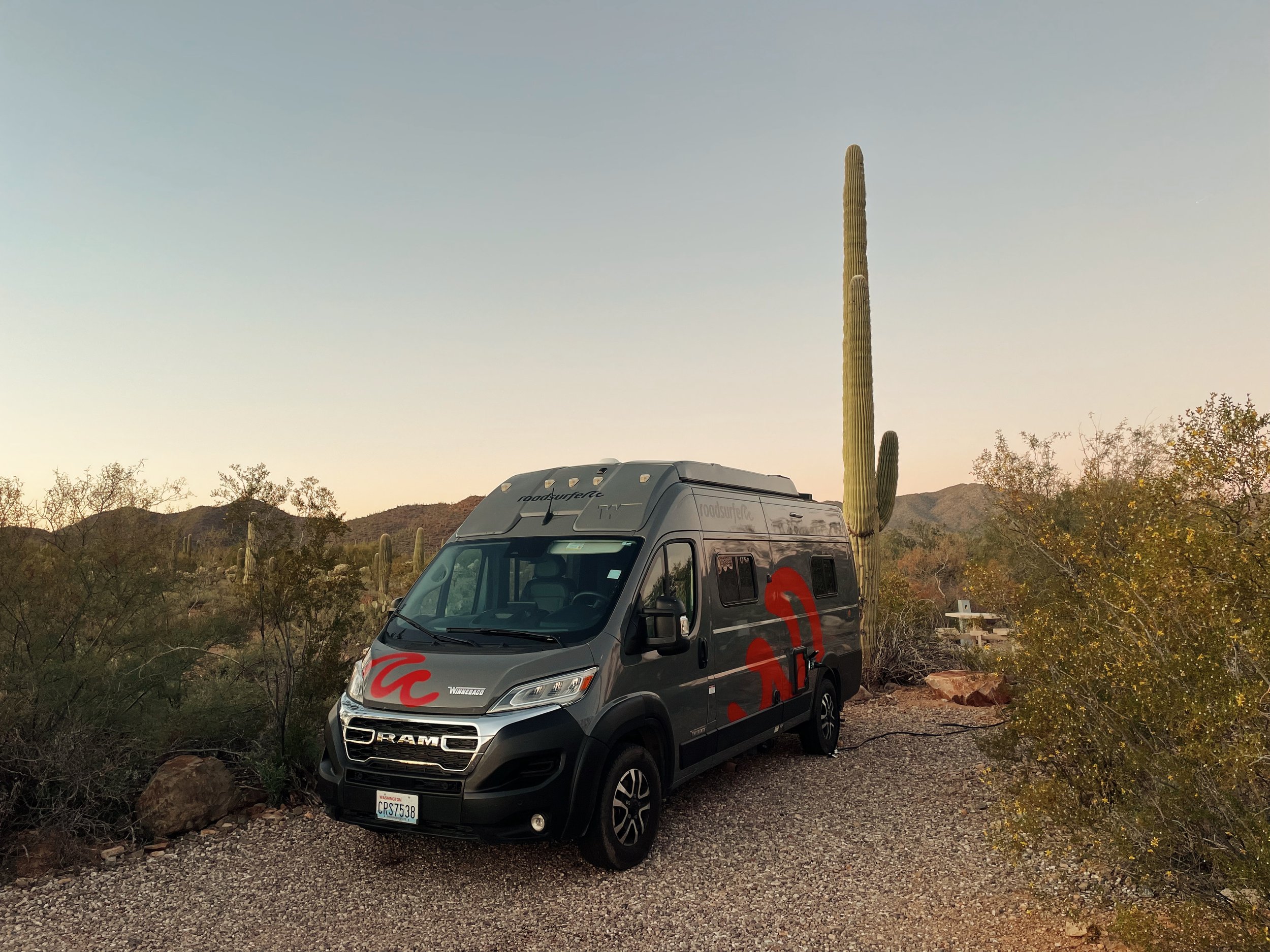
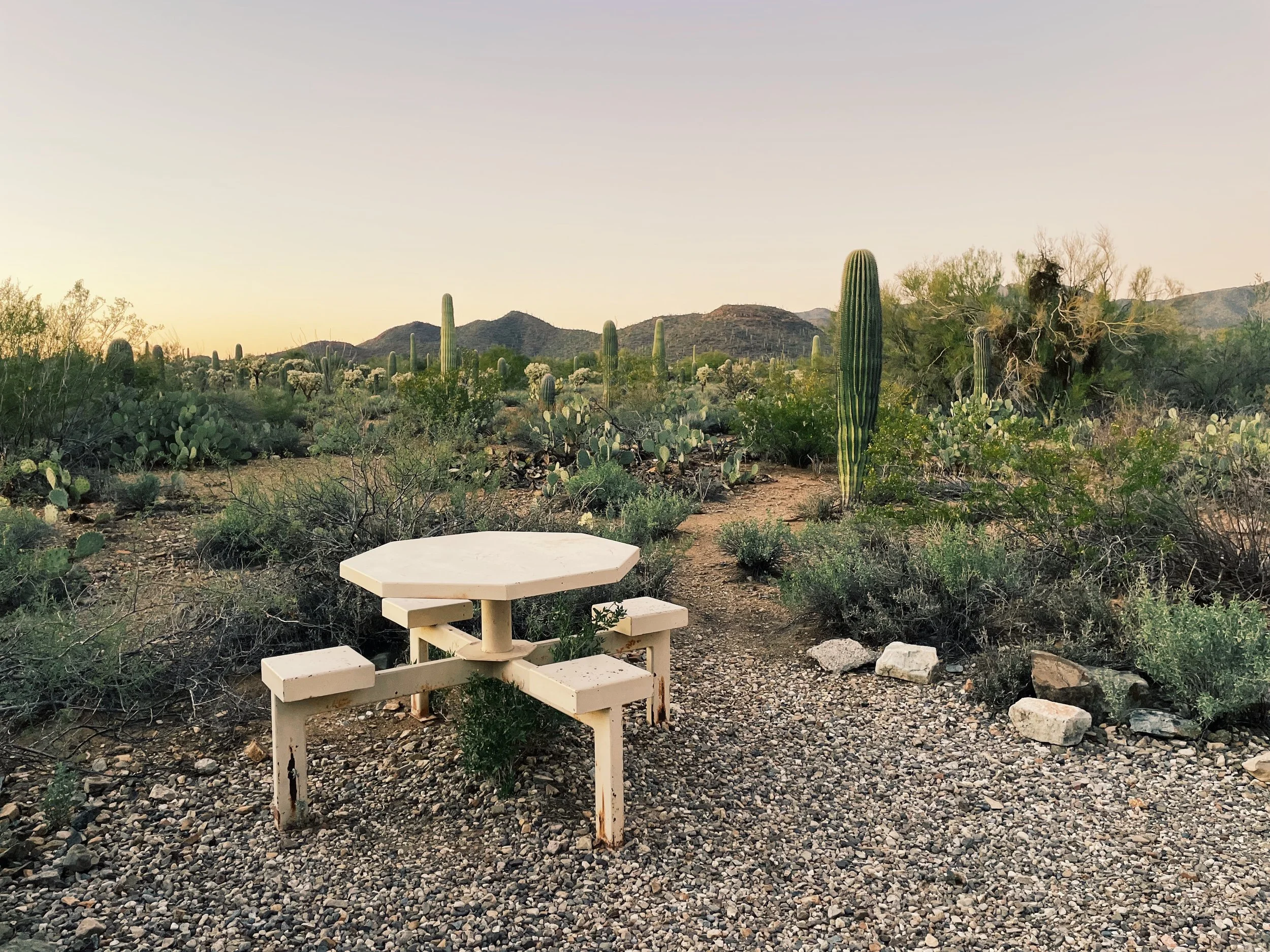
It was already 1:30 p.m., which meant I had roughly three, maybe four, hours to get myself to Gilbert Ray Campground near Saguaro National Park before dark. I’d reserved my site (C12 if you’re taking notes) specifically for its more private, desert-facing position, while still offering the comforts of an established campground: running water, a toilet I didn’t have to empty myself, and, ideally, a few quiet neighbors.
I had chosen to go for campgrounds over the more wallet-friendly BLM land because van lifing solo in a landscape I knew nothing about, so close to the border with Mexico, was stretching me way outside my comfort zone. There were just so many unknowns that I needed this one stabilizer: a well-researched and safe, host-staffed campground to help me fall asleep each night with just a little bit more peace. That, and my other non-negotiable: be immersed in nature. None of that crowded RV park stuff for me. Campgrounds inside national parks or those listed on Recreation.gov were the only places I’d park for a night.
The other stress on my mind, besides wildlife and proximity to “dangerous” borders, was the fact that the December sun sets at 5:30 p.m. From my last road trip, I knew how much daylight can dictate the schedule and this early winter sunset meant fewer hours in the day to squeeze it all in—the hikes, the spontaneous pull-offs, the wanders through random towns en route. And, as I learned as soon as day 1, I was right to consider the light. This quiet daily race against the sun became my ticking clock the entire way through, the one whispering in my ears at all moments to say keep moving!
According to Google Maps, Phoenix to my campground for the night was only a two-hour drive. In road trip hours—at least for me—that would take four. In my book, a road trip is as much about the journey as the destination, so you pull over at all the cute towns, random roadside art, and signs that point to scenic views, you spontaneously go for a hike mid-drive when a trail appears, and you sit down for lunch, not gulp it down one-handed with your other on the steering wheel. You take your time. That’s the whole point. You’re slowly going fast, if that makes any sense.
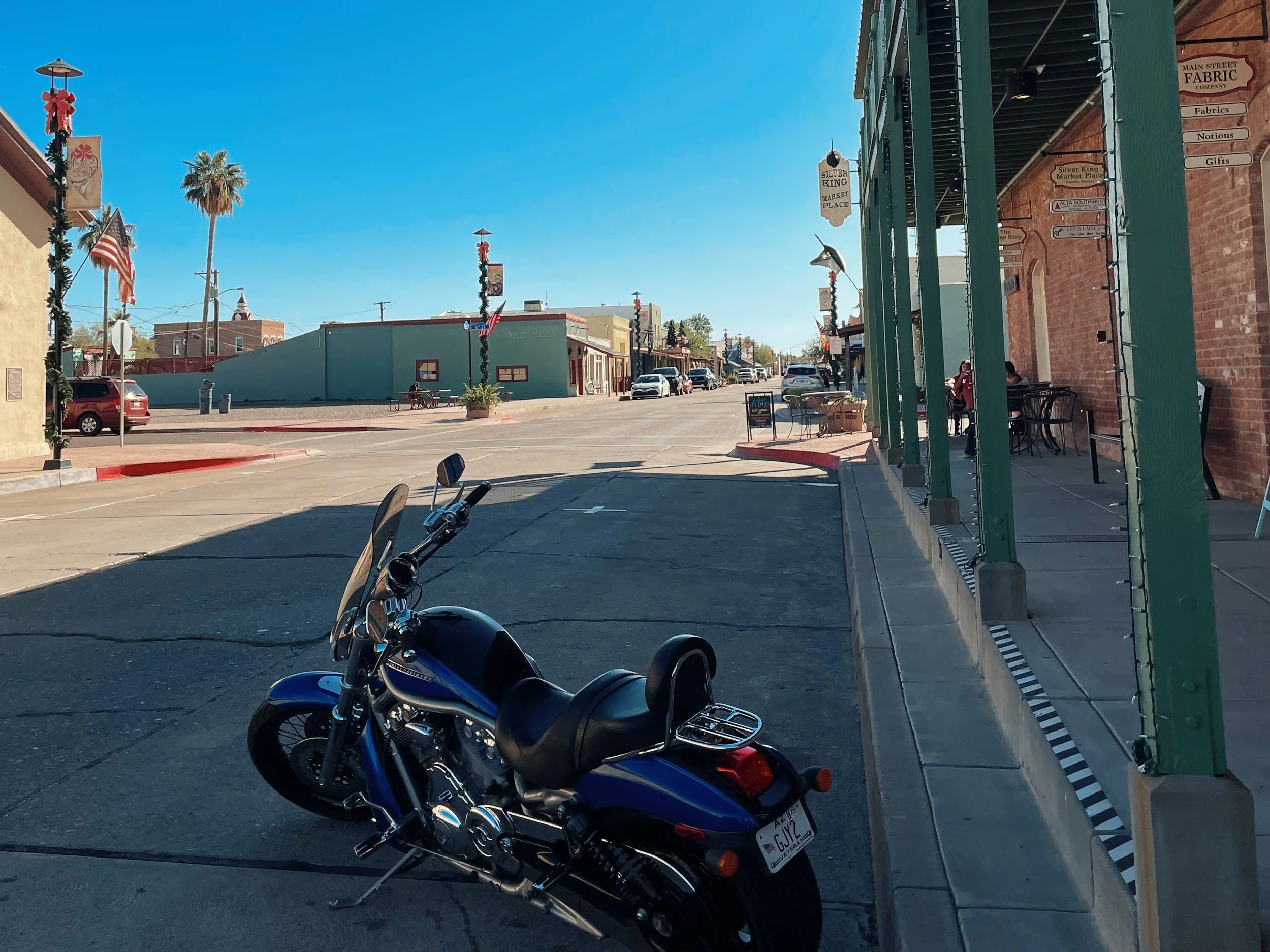
With close to four hours until sunset, I had enough time to veer off I-79 about an hour in for Florence, Arizona—a true Old West town and one of the state’s oldest settlements. Its holiday-decorated Main Street, lined with locally owned eateries, leather shops, art galleries, and saloons, was surprisingly deserted at 2:30 p.m. on a Monday. Several storefronts were sandbagged, as if a recent flood threat had passed through, adding a layer of more mystery to this sleepy desert town I really didn’t know much about.
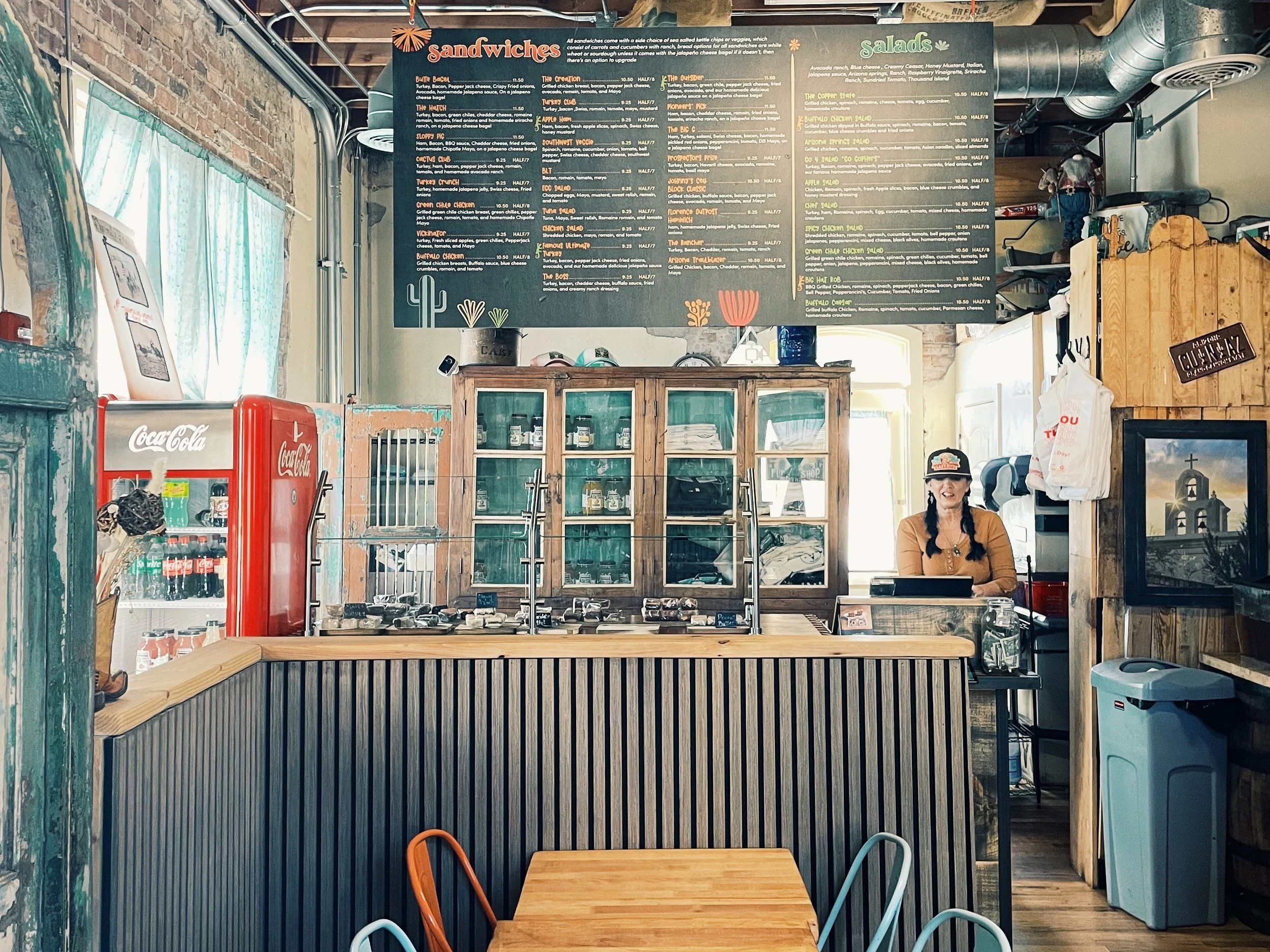
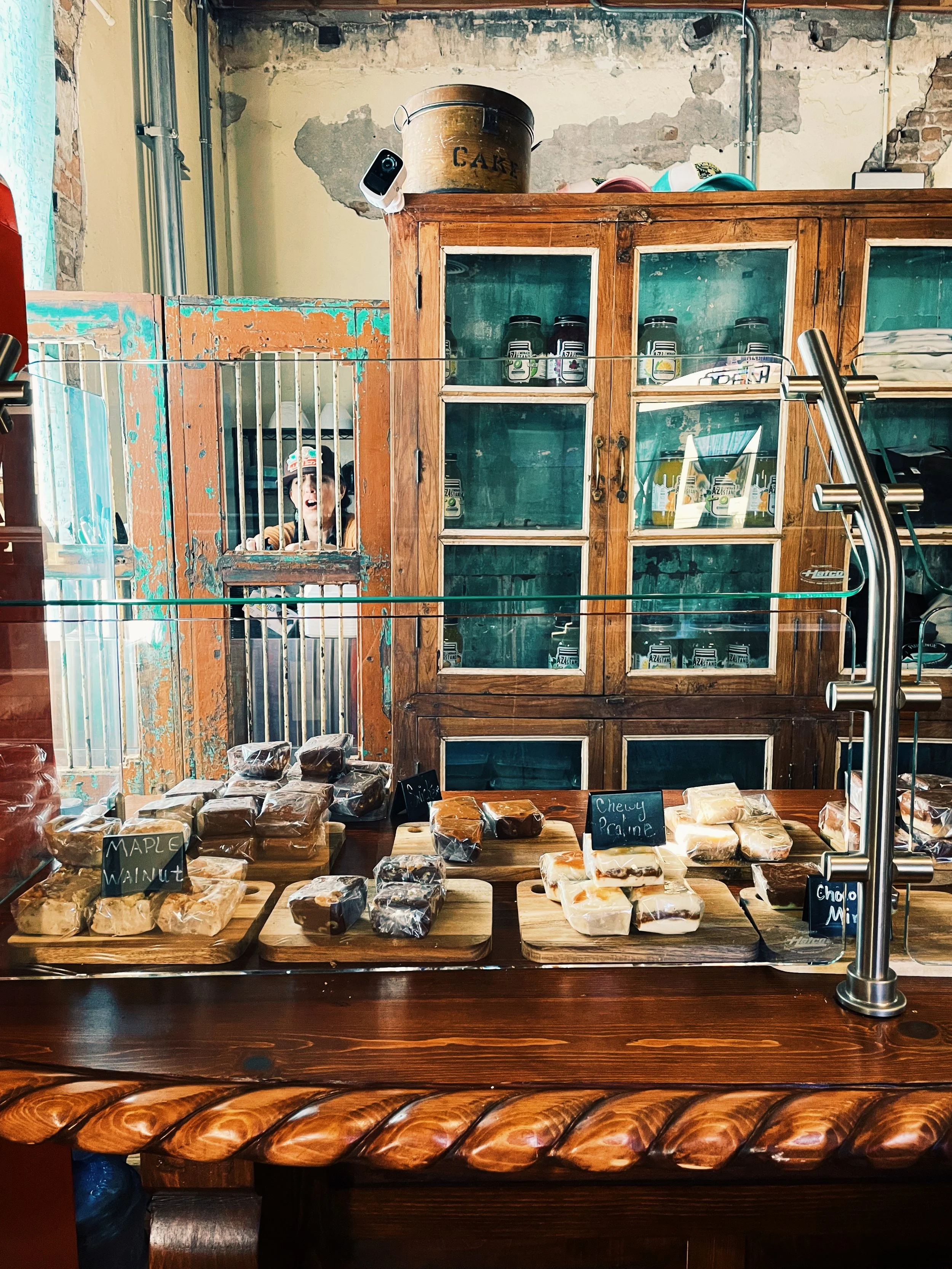
As I walked down Main Street, I searched for more clues, more explanations. Eventually, I passed a boarded-up gift shop displaying a T-shirt that read “Florence: A Gated Community,” stamped over the image of a jail cell. There’s one. At the far end of the street, I finally found something open and stirring with life: the Florence Fudge Shop & Cafe. Inside, there was a table of police officers on their lunch break, a young family mid-sandwich, and a couple lingering over soup and cornbread. It was cozy and inviting, and there was, in fact, fudge.
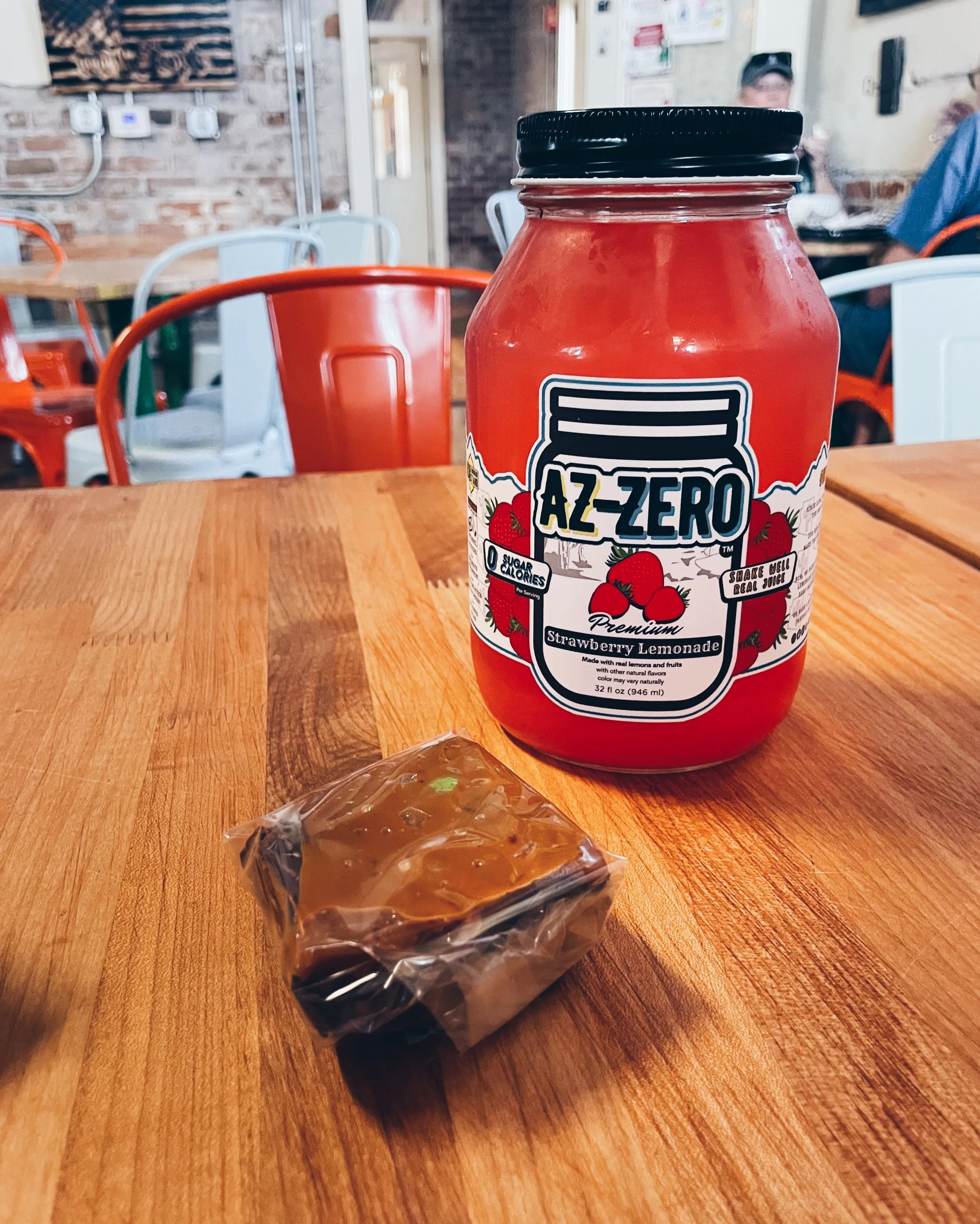
As I was taking all of this in, the jingling door I’d just entered through drew every head in the place in my direction. Clearly, this small town wasn’t expecting an unfamiliar visitor on a random December Monday, but the warm smiles that followed reassured me I was welcome anyway. Hoping for coffee (which they didn’t have), I instead walked out with a jar of strawberry lemonade and a square of chocolate caramel fudge I’d save for dessert later. Somewhere between the warmth of my interactions and the sugar pick-me-up, the nerves I’d been carrying up to this point completely disappeared. I am doing this. I’m road tripping.
An hour later, I pulled into a Safeway in Tucson to stock up on groceries and refill the gas tank. While a wander around downtown Tucson had also been in my plans, I had to reconsider when I saw how dangerously low the sun was in the sky. I guess Tucson would be for another time, another trip—a give-and-take that comes with the road and a life in perpetual forward motion.
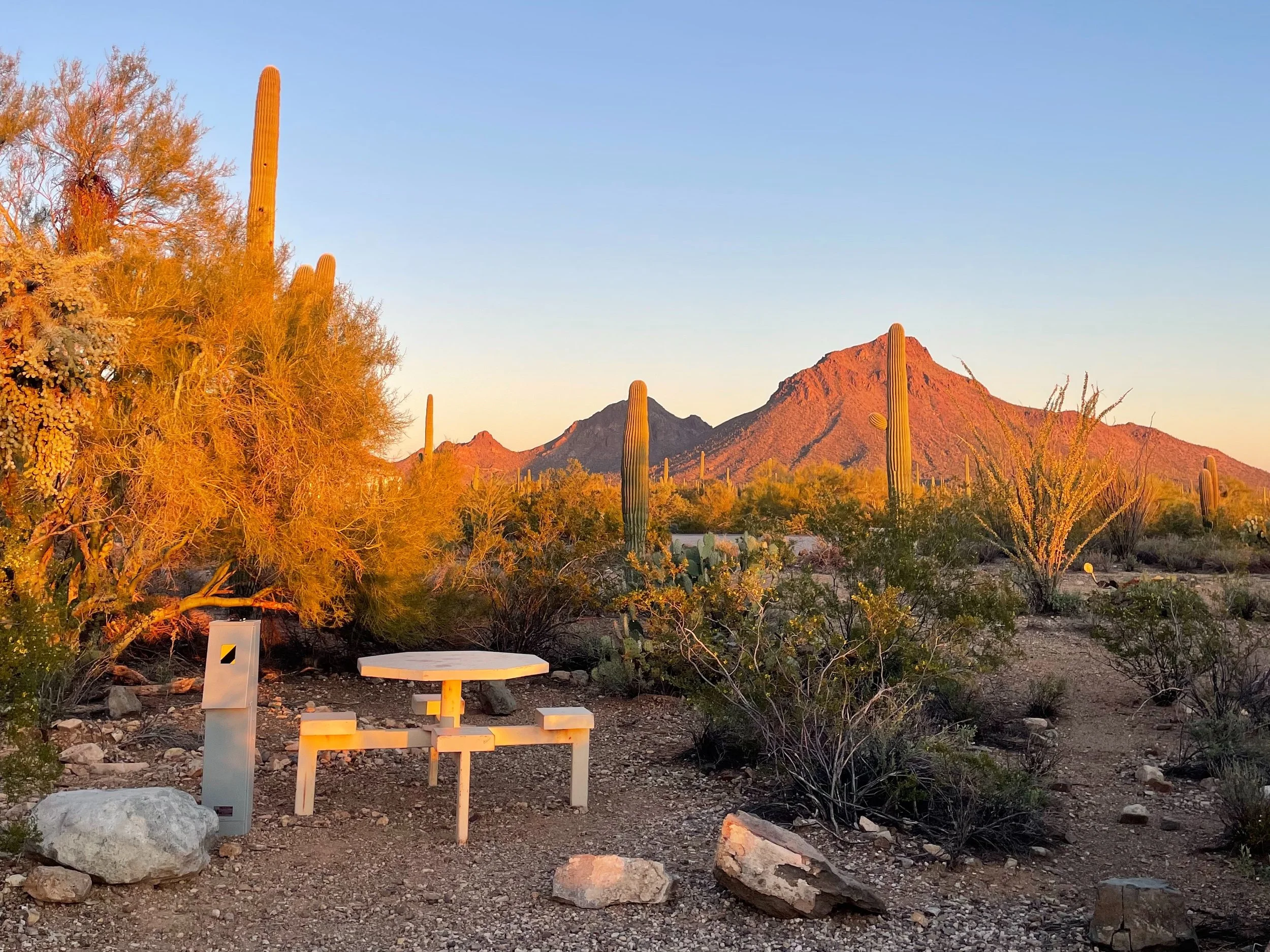
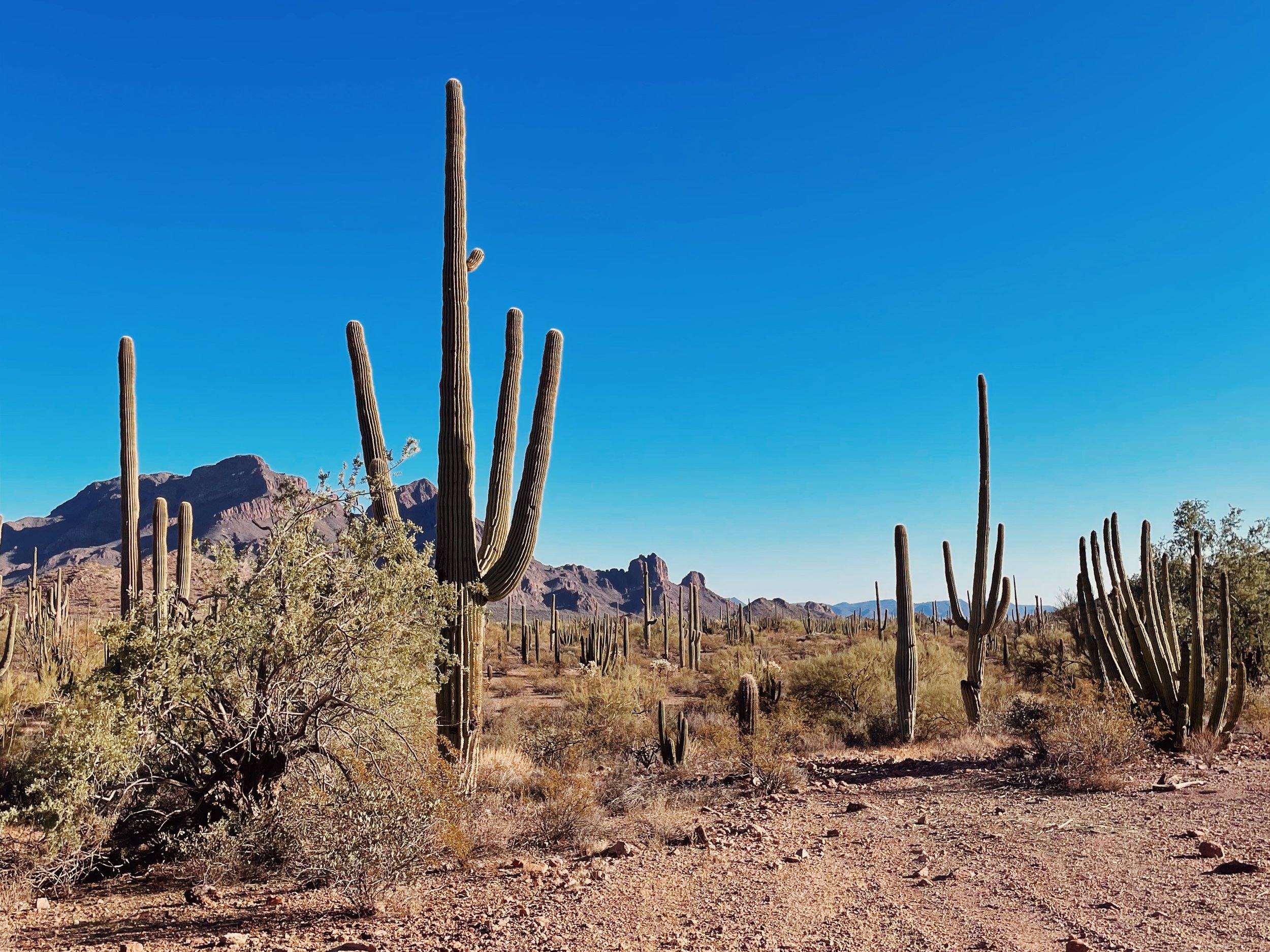
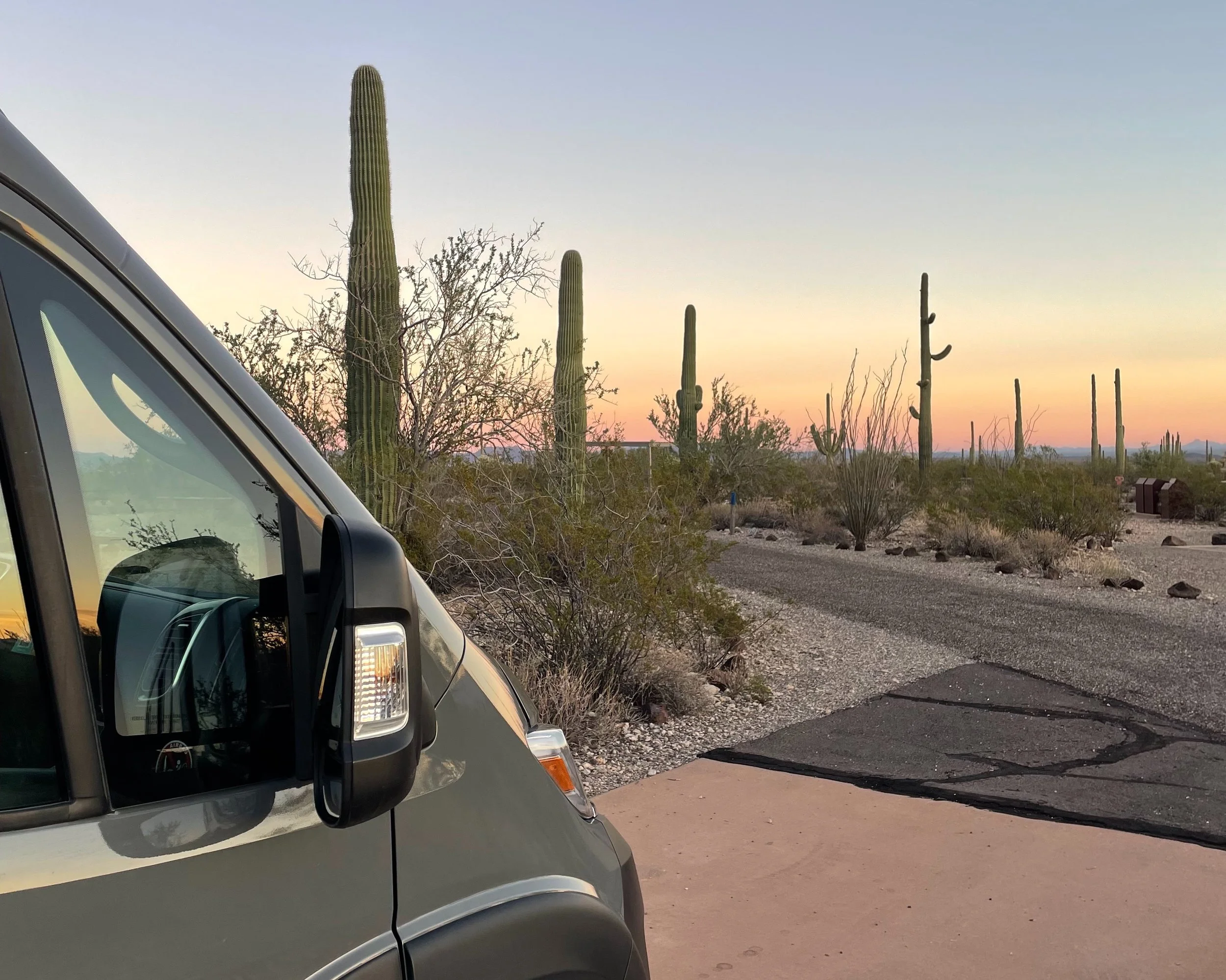
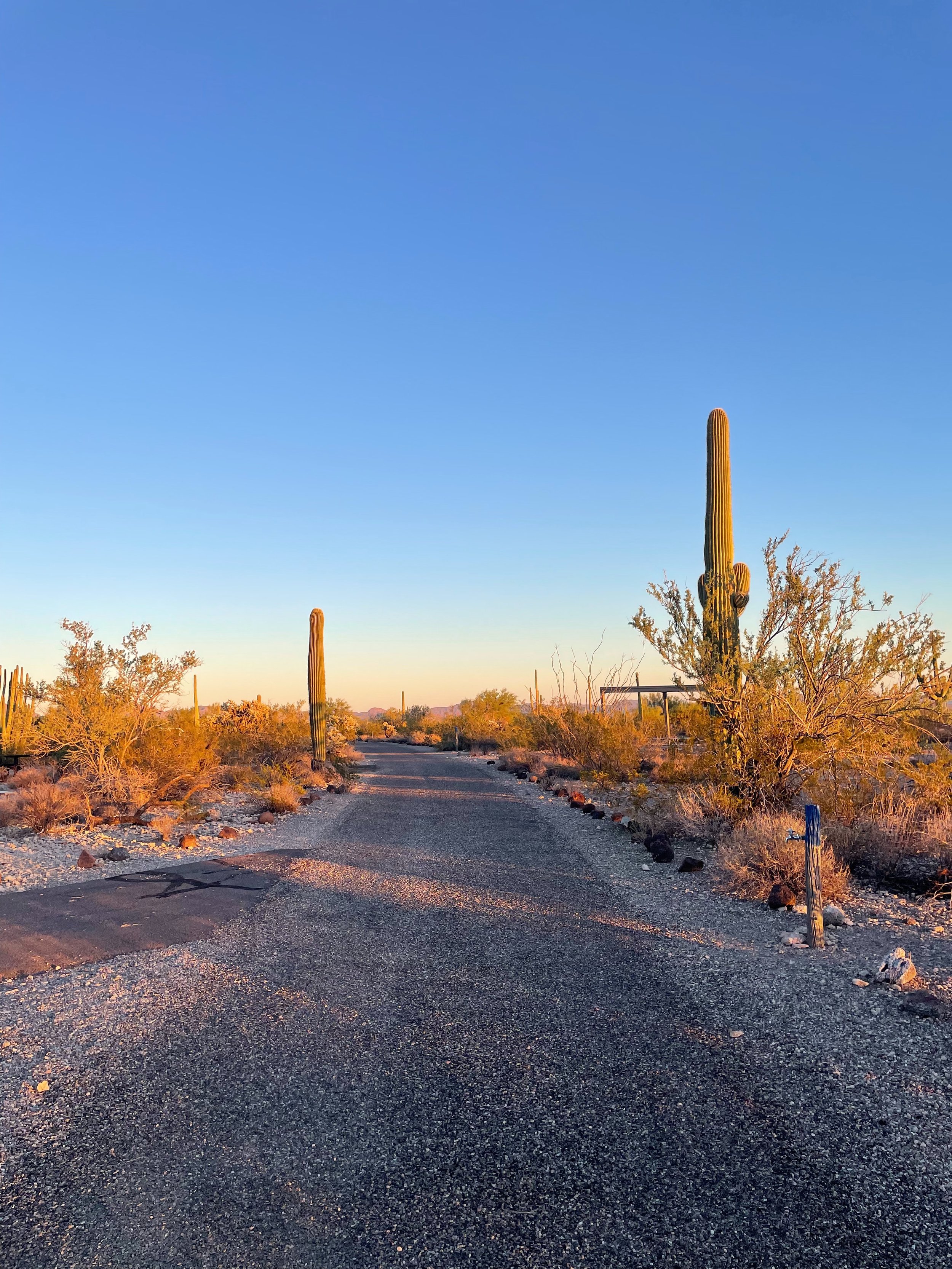
When I finally arrived at my campsite, the timing couldn’t have been better. The sky was glowing, washing the massive saguaro cacti and open desert that surrounded it in a gorgeous golden light. It was perfect. Immersed in nature: check!
Day 2: Saguaro National Park to Organ Pipe Cactus National Monument
Day 2 at a glance: A colder-than-anticipated desert night and morning, Indigenous lands, Ajo coffee & art stop, and an unforgettable off-grid scenic drive near Mexico.
I stirred awake after a December desert night that was much colder than I’d anticipated and pulled the comforter tighter around my neck. I couldn’t tell you the exact temperature (maybe somewhere in the upper 30s), only that I learned quickly that more layers—and socks on my feet—would be non-negotiable before crawling into bed from this night on. The route I had mapped was meant to chase the winter warmth of the American Southwest, but that warmth by day still carried cold by night.
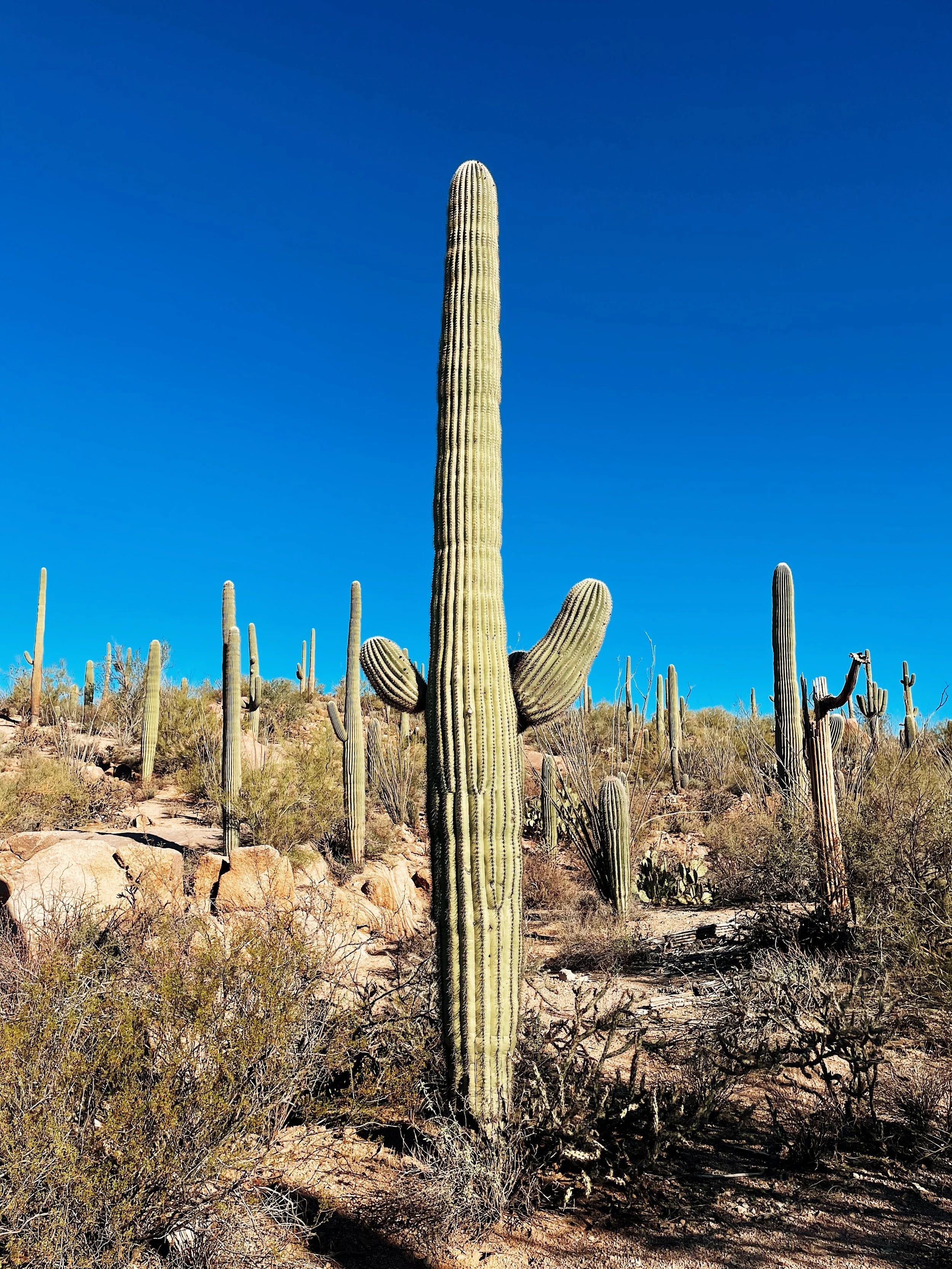
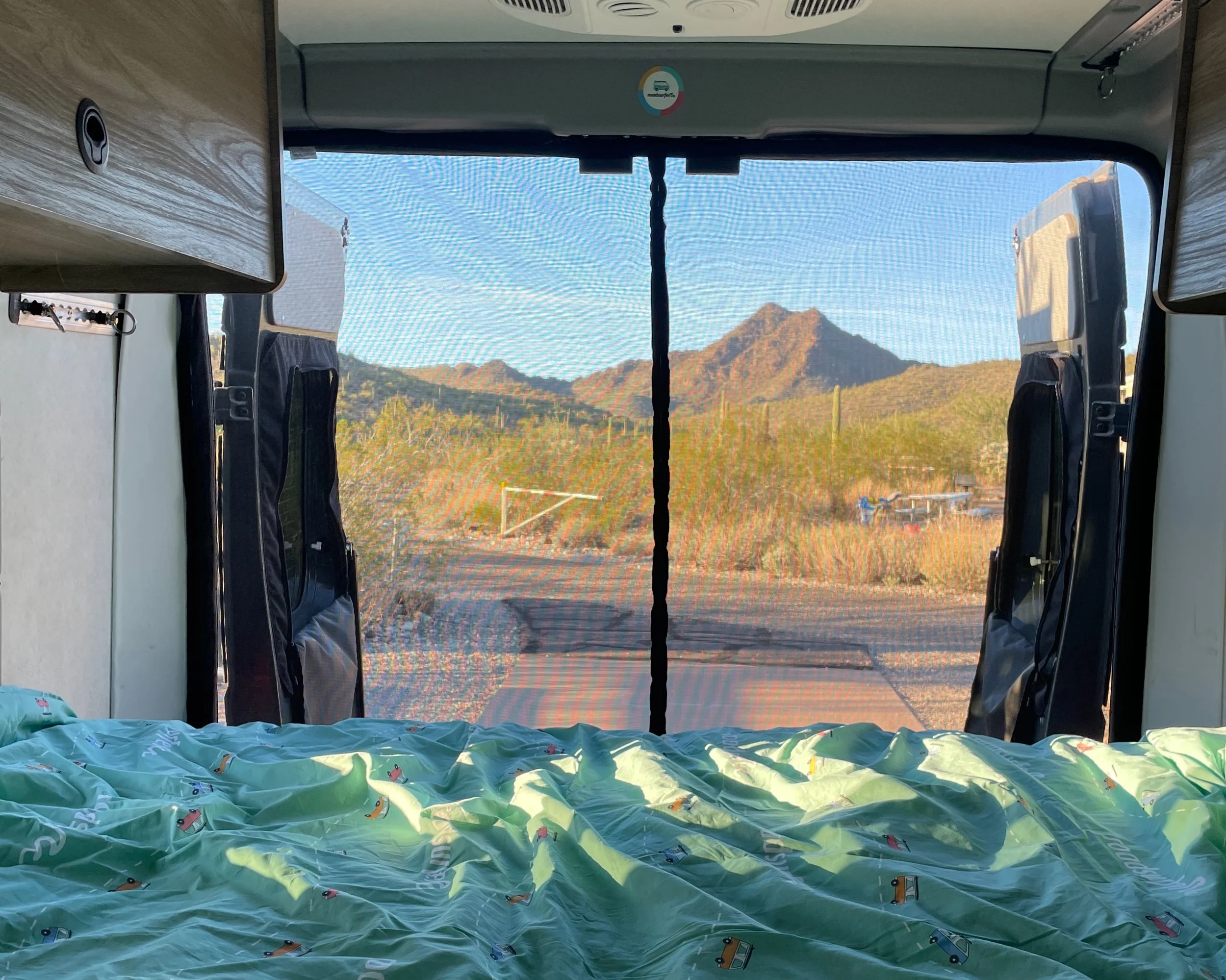
Too eager to wait another second to see the view out each window, I pulled back all of the blackout curtains I’d placed for privacy the night before. The scene was breathtaking. While last night had bathed it all in a soft golden glow, the morning light emphasized all of the desert textures—patches of prickly pear pads, thin and studded; creosote bushes softening the desert floor in loose, quiet clusters; and the saguaros rising above it all, ribbed and towering, their long vertical lines drawing my eyes straight up to the already deep blue sky above.
This was my first morning waking up in the van, and I knew to savor what I was seeing because every day for the next eight, the view on the other side of my blackout curtains would be different.
I put some water on to boil, dug out a mug and a French press from the box of dishes Roadsurfer had stocked the van with, and eventually poured myself a steamy cup of coffee that I decided to enjoy back in bed, under my cozy covers. A whole day on the desert highway awaited, but for now, it could be this simple: sipping coffee under blankets in bed and watching this particular desert scene wake up.
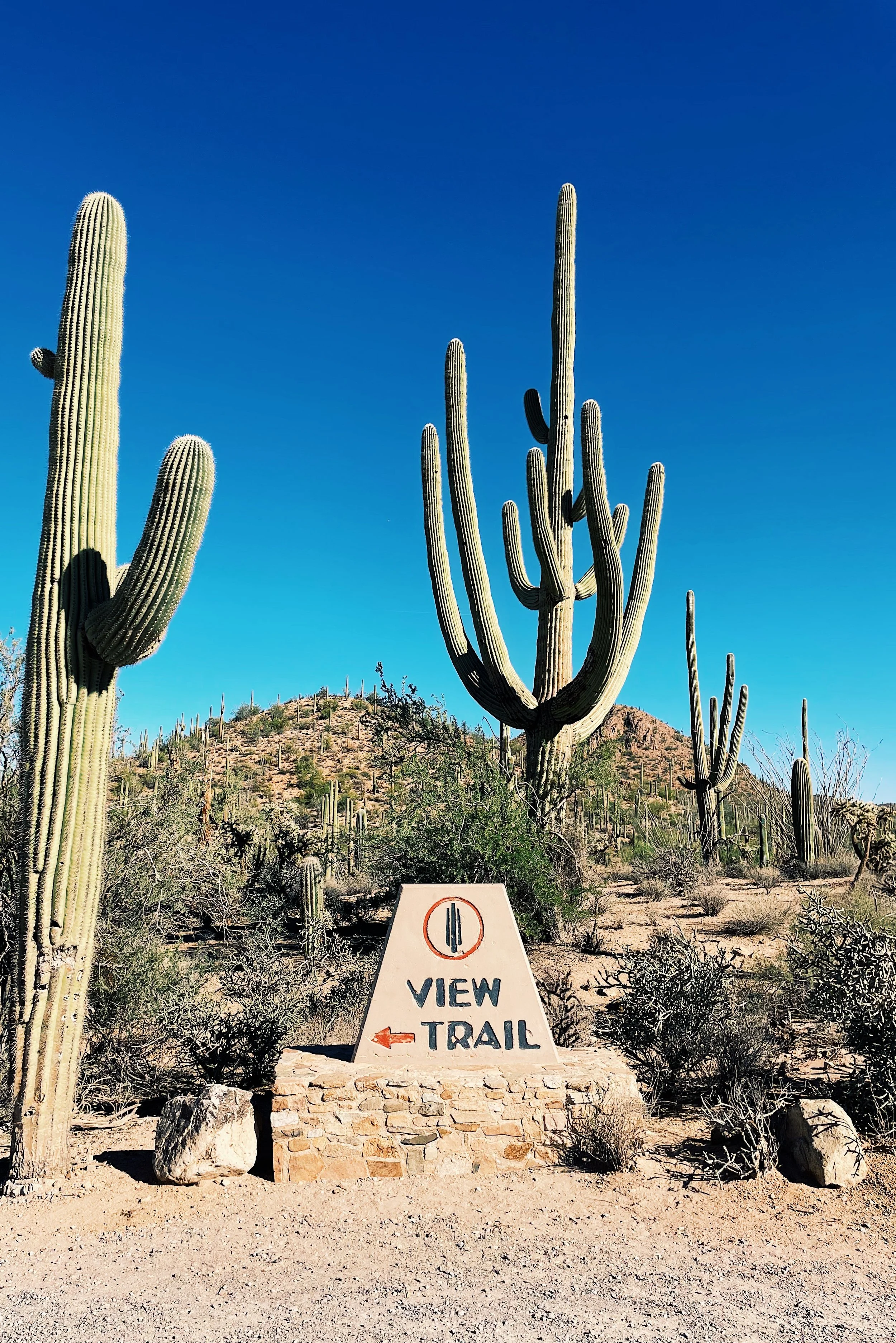
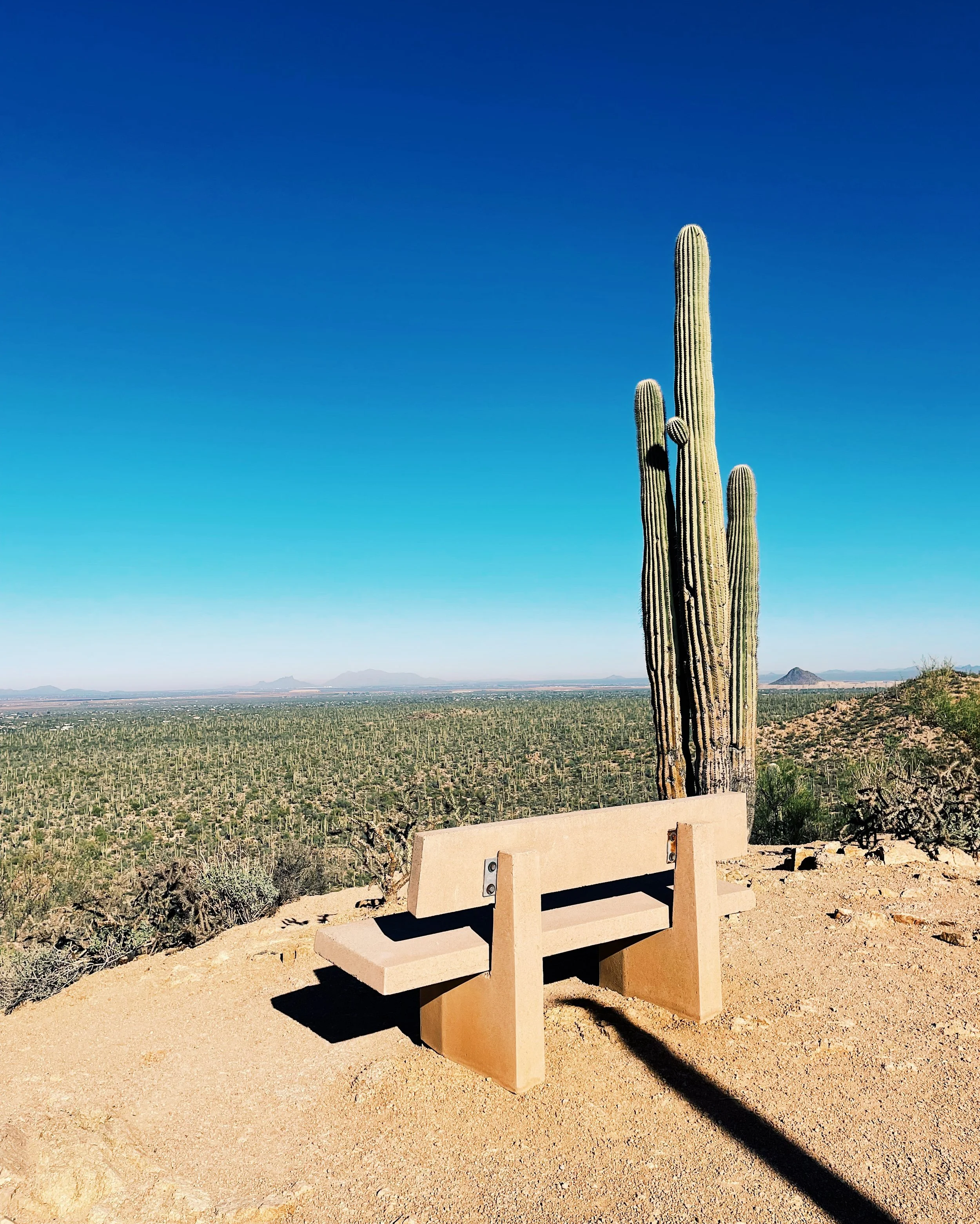
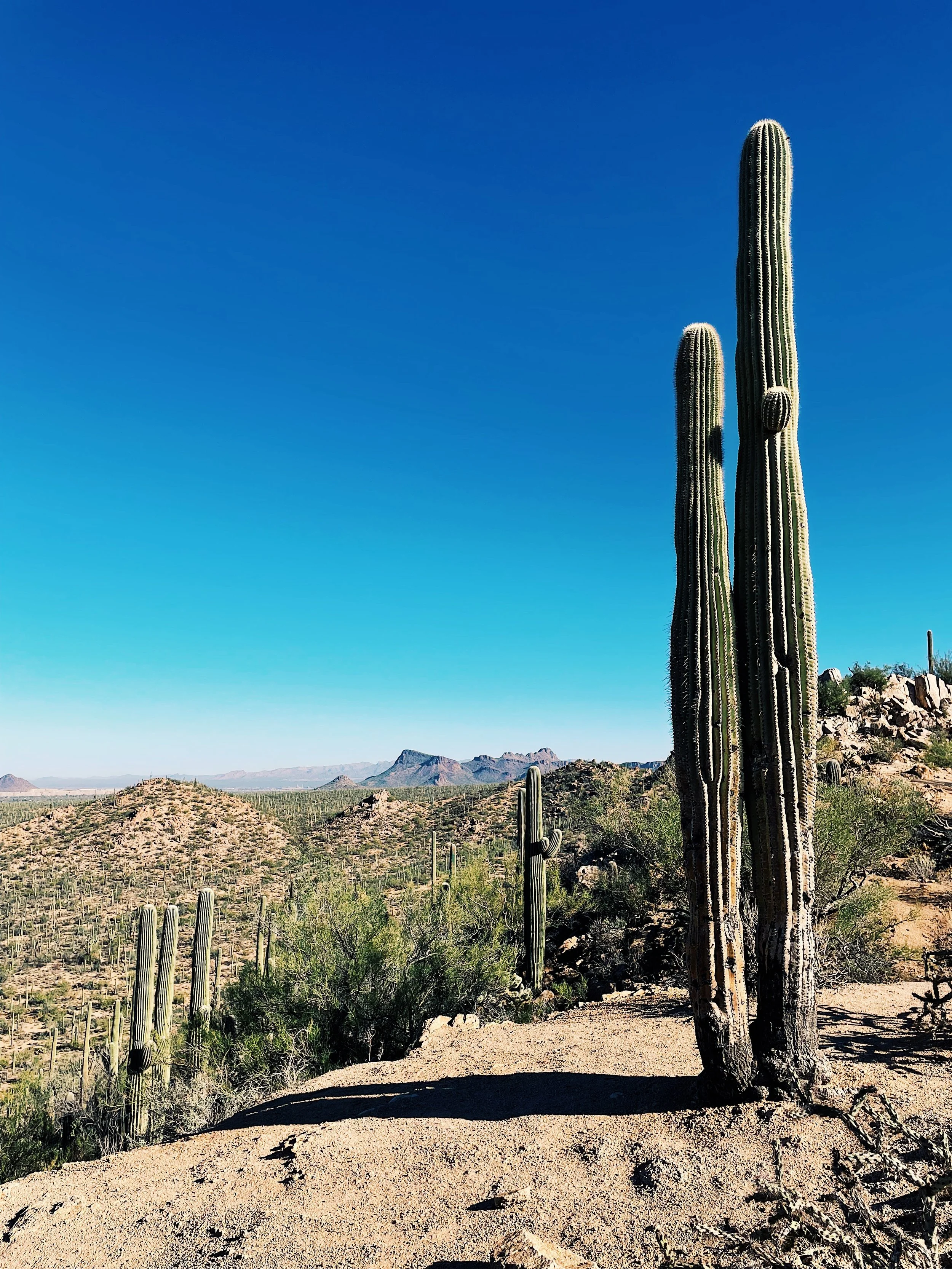
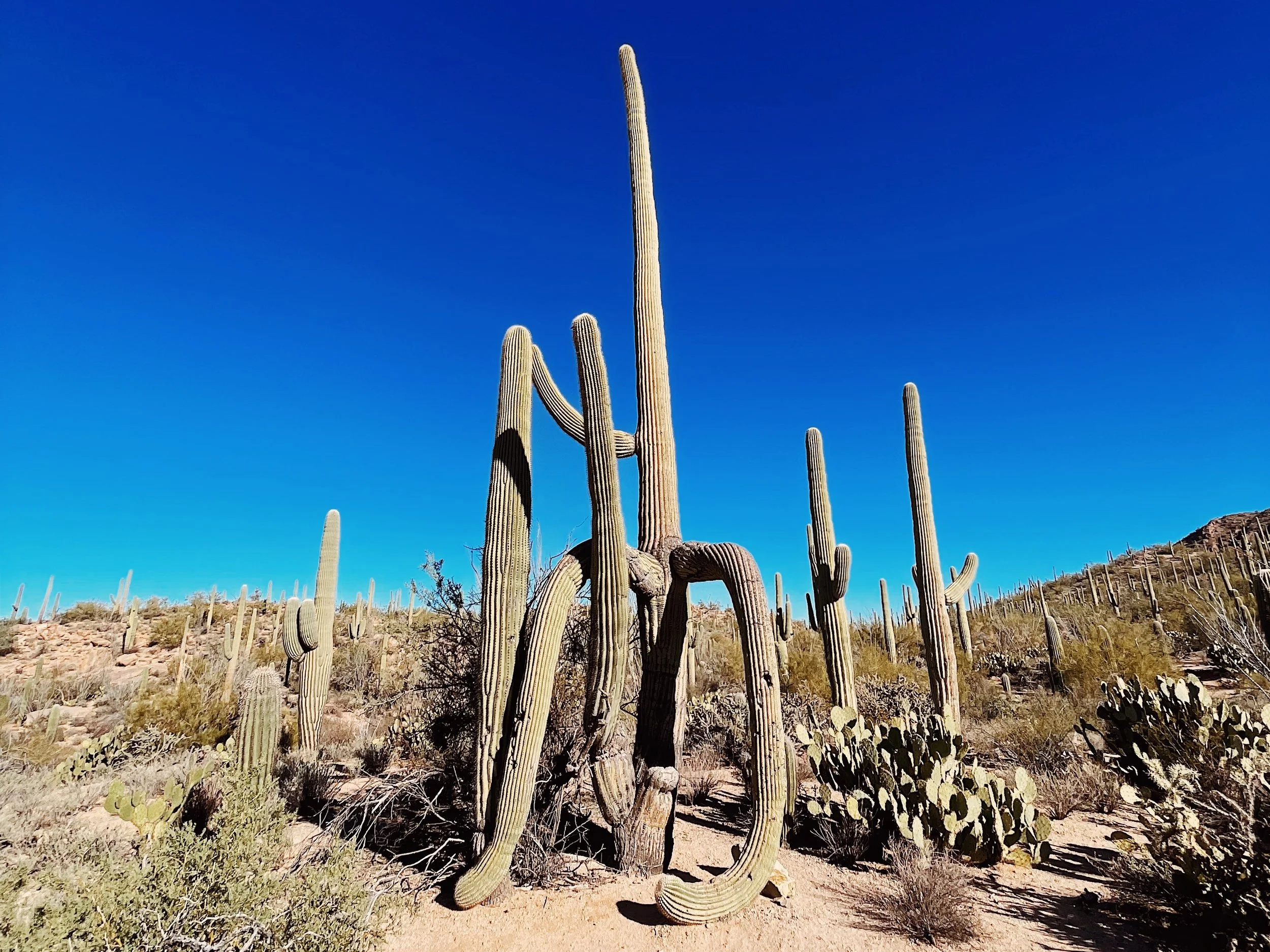
An hour and a half later, I’d packed up and was back on the road, the morning chill still clinging to the air. My first stop was Valley View Overlook Trail, just twenty minutes from the campground and inside of Saguaro National Park. The short out-and-back hike wound through a densely packed field of saguaros—some reaching nearly thirty feet tall—and up to a viewpoint overlooking a valley covered in thousands of these prickly giants. Between the coffee in bed and now this morning exercise in a landscape like this one, I felt myself easing further and further into my new road trip rhythm. This really was the life.
From the trailhead, the drive stretched west along Highway 86—two uninterrupted hours through the heart of the Tohono O’odham Nation and into the town of Ajo. As the miles passed, the landscape subtly kept shifting, and with it, my awareness of where I was traveling. Billboards in a language I didn’t recognize and other roadside clues made it clear I wasn’t on just another American highway. Looking to connect with it, I swapped my road-trip playlist—Ocie Elliott, The Lumineers, and The National Forest—for Electric Pow Wow Drum and the cedar flute music of Carlos Nakai.
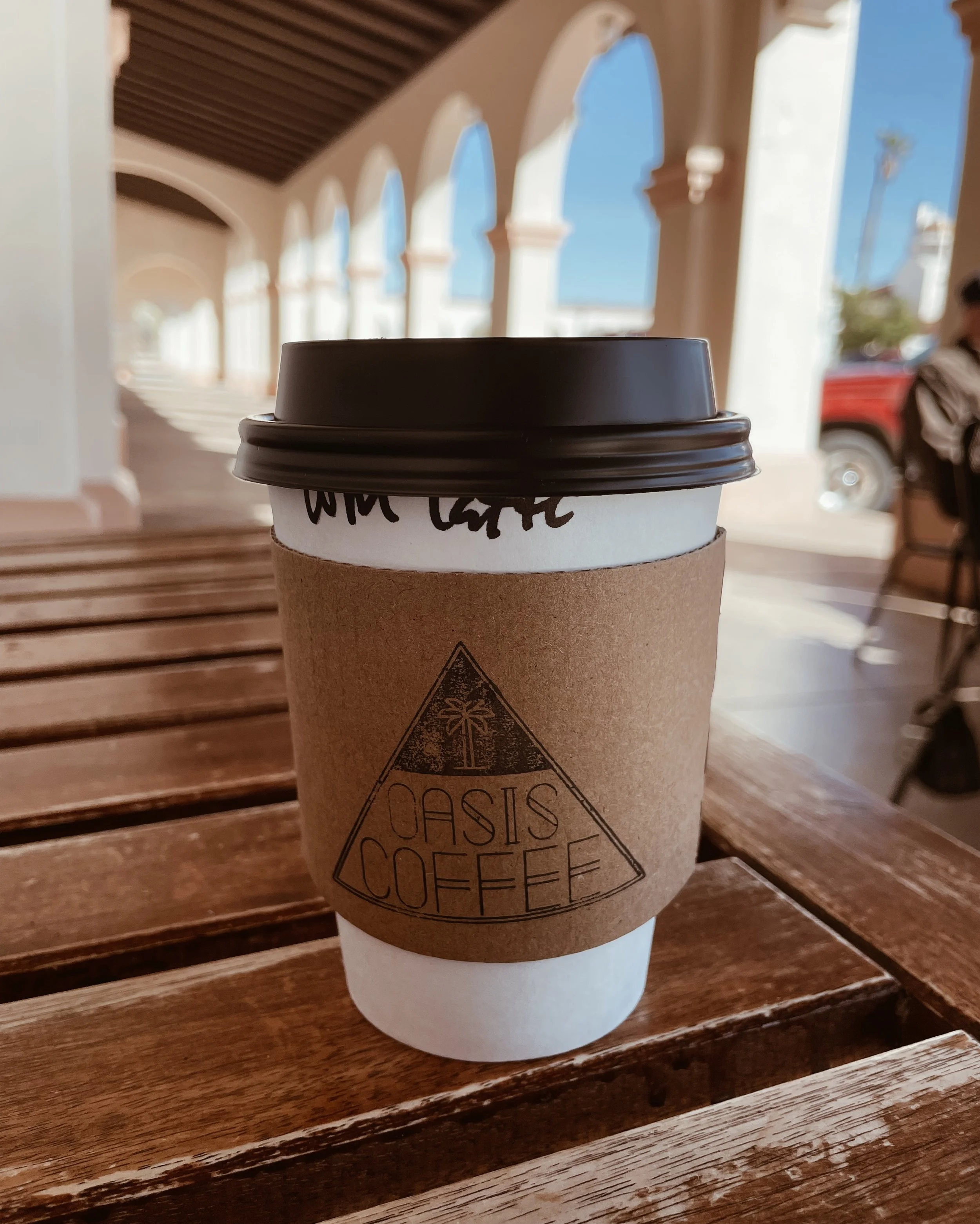
In Ajo, I parked near the town’s Spanish-style plaza and crossed the manicured square to Oasis Coffee, where I ordered a white chocolate mocha and immediately pulled up Google Maps to see what else was nearby to check out. Just around the corner: Artist Alley Murals. Perfect.
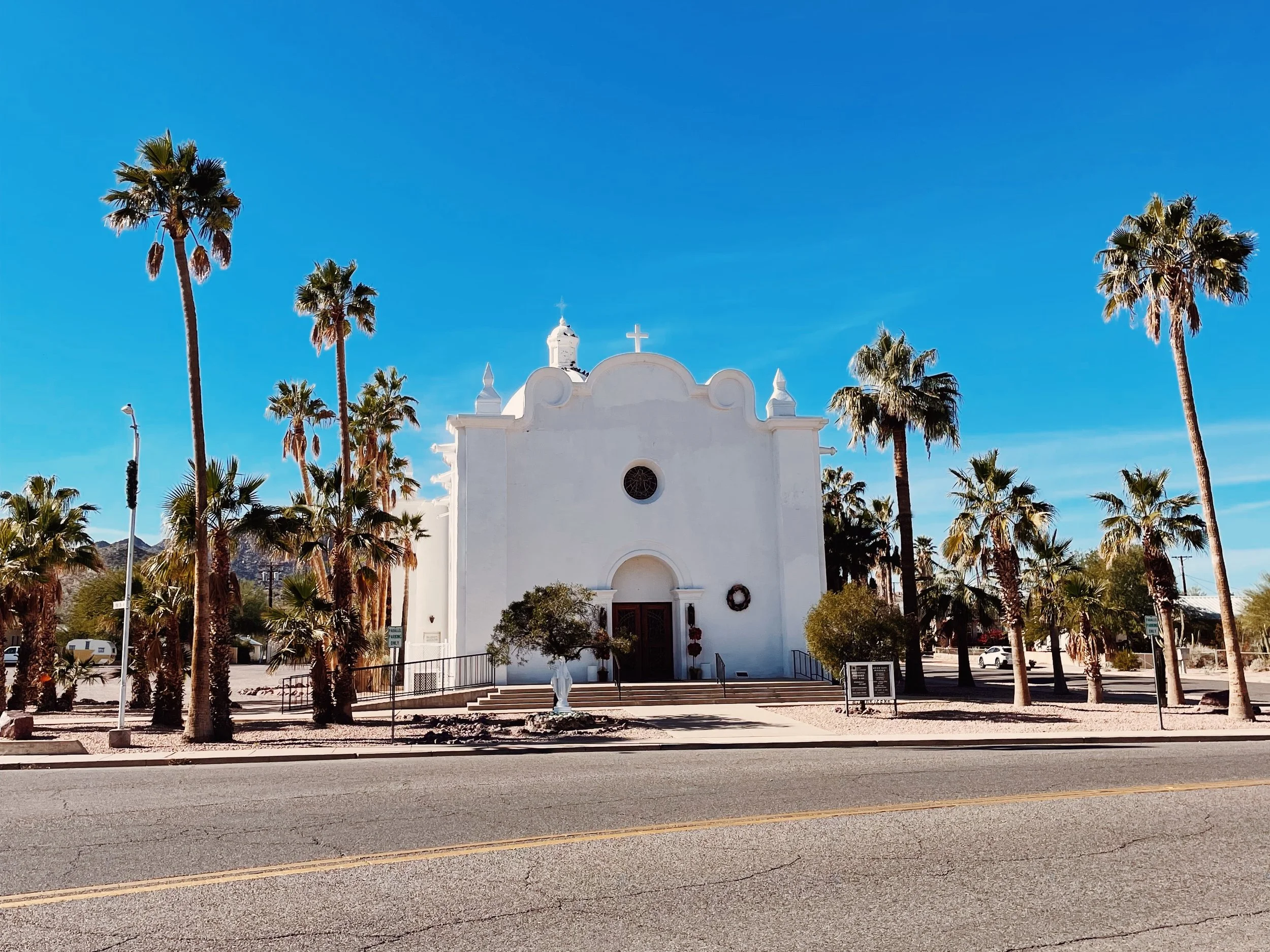
Ajo is a strange and fascinating place. The town is meticulously arranged around its grand central plaza, flanked by Spanish Colonial Revival buildings and slender palm trees that reminded me of Morocco’s date palms. Reading a few plaques in Ajo Plaza, I gathered that Ajo was originally a company town, built in the early 1900s by the Phelps Dodge Corporation to support nearby copper mining operations. The now-closed New Cornelia Mine—once one of the largest open-pit copper mines in the world—looms just south of town. I’d noticed it on the drive in, its exposed rock face streaked with surreal bands of red, green, and gold, its colors so captivating I nearly swerved out of my lane when I first glimpsed it.
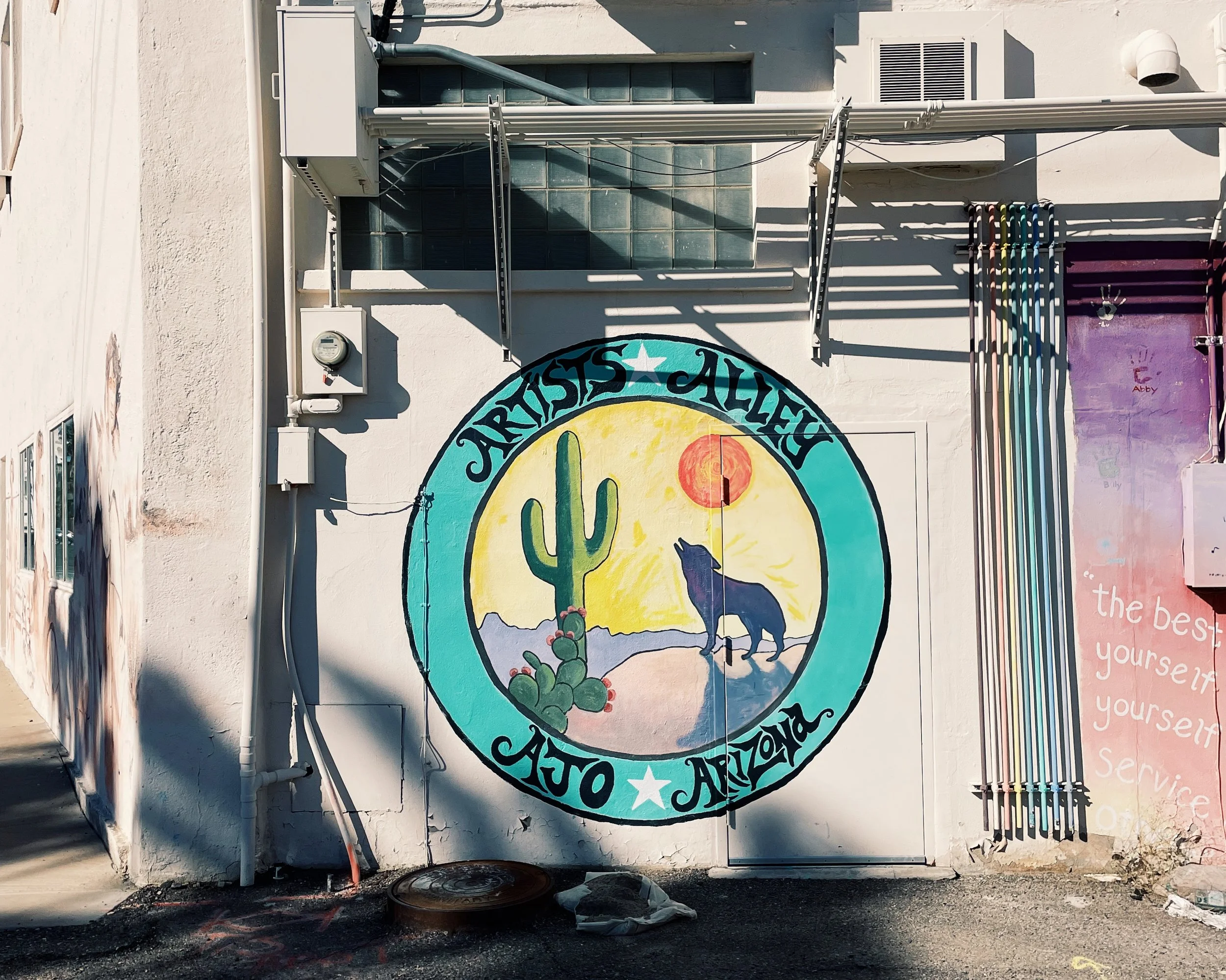
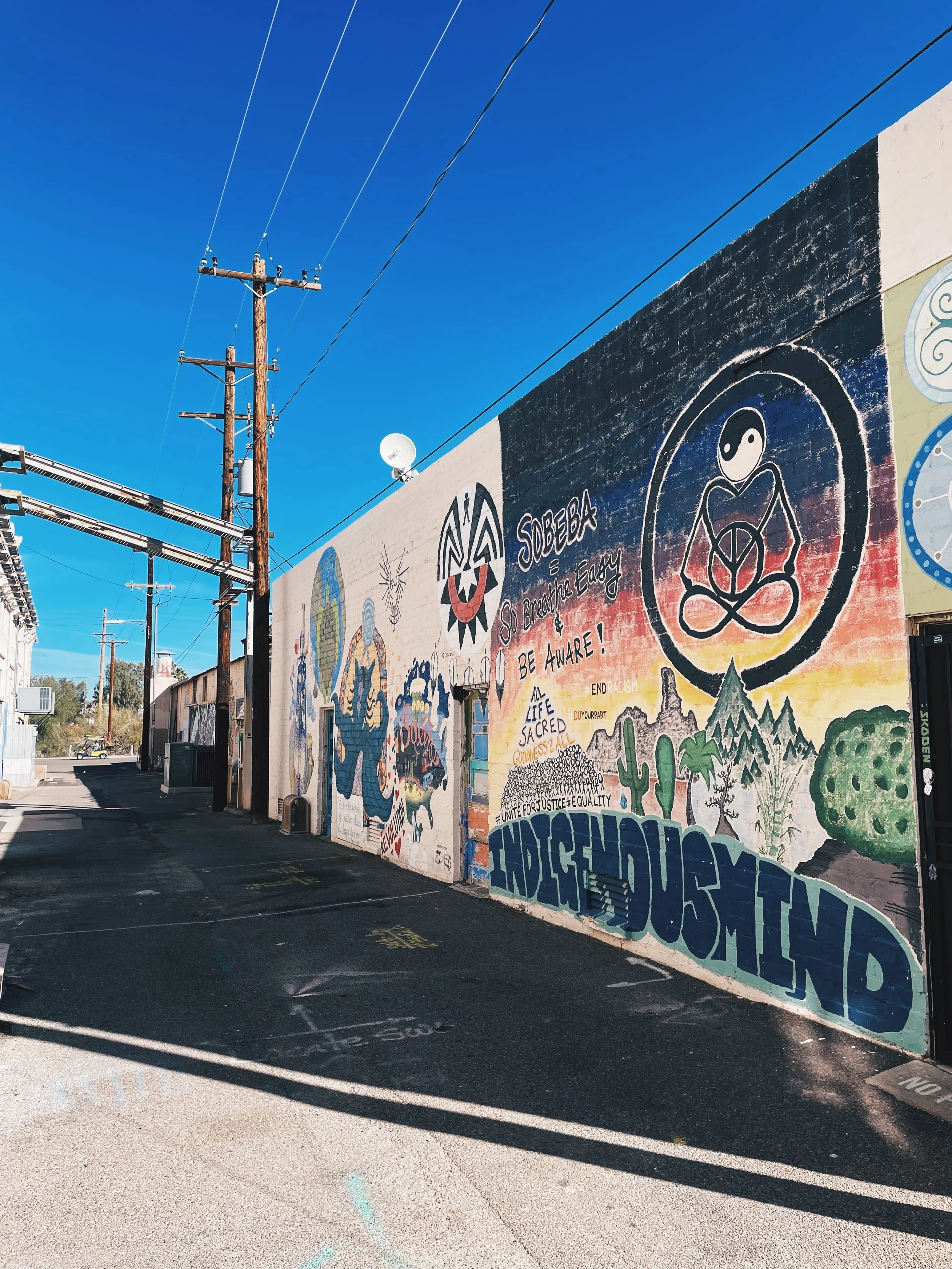
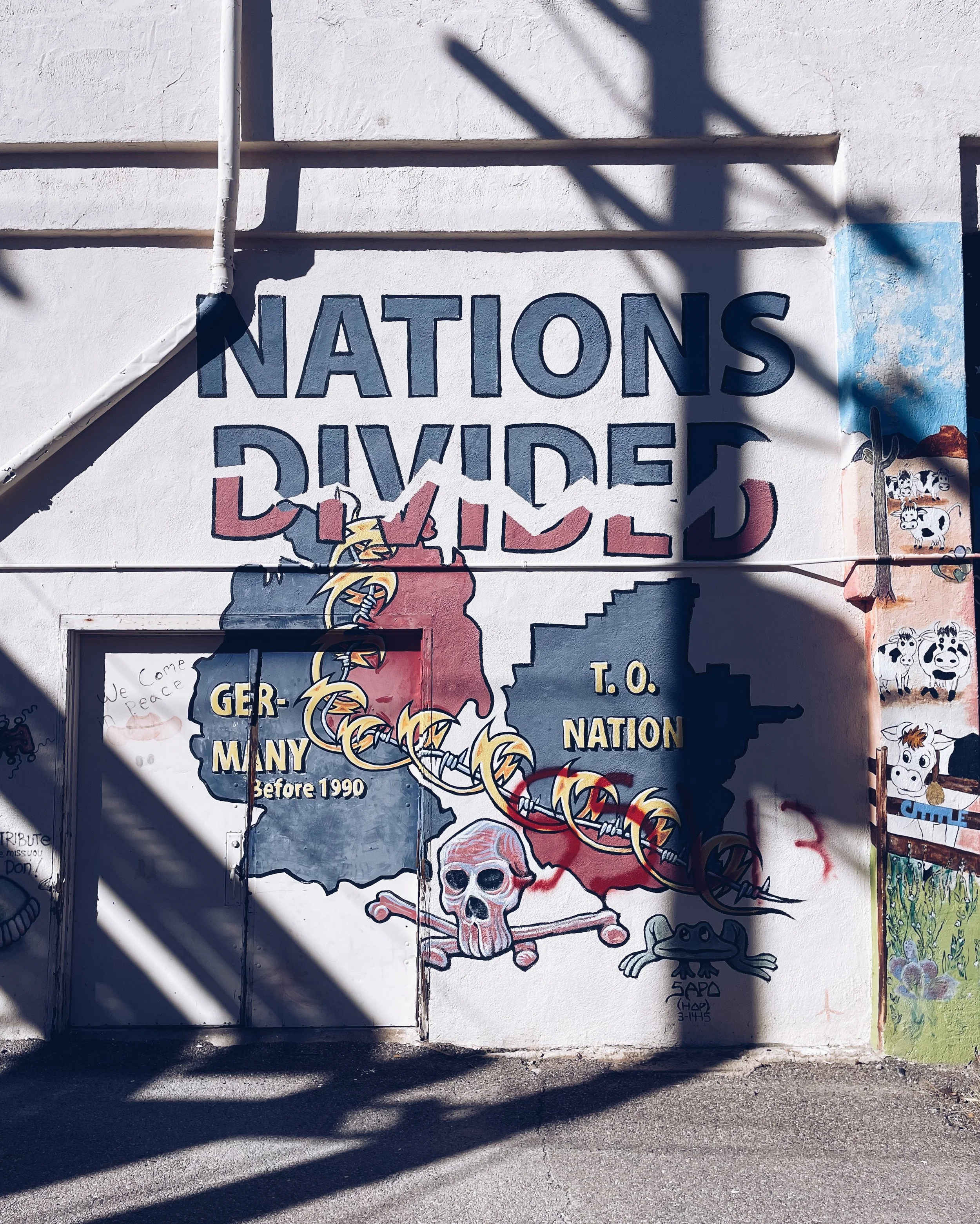
Artist Alley told the rest of the story. Along a short back alley one block from the plaza, I found murals depicting Ajo as it truly is: a crossroads of Indigenous land, Mexican culture, mining labor, migration, and an ongoing reinvention of itself. Faces of Native elders, miners, migrants, and desert imagery overlap and collide down both faces of the alley, reflecting the tensions baked into the town both then and now, each artist’s unique point of view making it ever more clear. Standing there in that open-air gallery, coffee in hand, I felt like I’d stumbled into a town that left me with more questions than answers.
Nevertheless, I had to keep moving. Tick tick, the sun shouted from the sky.
The highway now pointed straight toward the Arizona-Mexico border. My destination sat just shy of it: Organ Pipe Cactus National Monument. With still three hours of daylight to work with, I decided not to head straight to my campground and instead stopped at the Kris Eggle Visitor Center to ask about something that had caught my eye on the map: the Ajo Mountain Scenic Loop, a 21-mile one-way dirt road winding through desert washes and going deep into the Ajo Mountains.
Everything written online about it claimed vehicles up to 25 feet could handle the route’s steep grades and sharp turns, but I wanted confirmation from a ranger before committing to a two-hour off-grid drive. Cell service, I was told, was spotty at best. But with the ranger’s blessing—and a paper map in hand—I went for it, gripping the steering wheel with far more tension than I had when leaving the Roadsurfer lot just 24 hours ago.
Here I was: a solo female road tripper, still getting used to the size of this van, about to navigate narrow dirt roads stamped with warning signs for wildlife, flash floods, and yes—smugglers. If I got a flat tire, crossed paths with an armed smuggler, twisted my ankle on one of the trails I planned to try out, it would be awhile, if at all, before help arrived. But that’s part of the adventure, right? Calculated risk, tempered by awareness, hoping for the best?
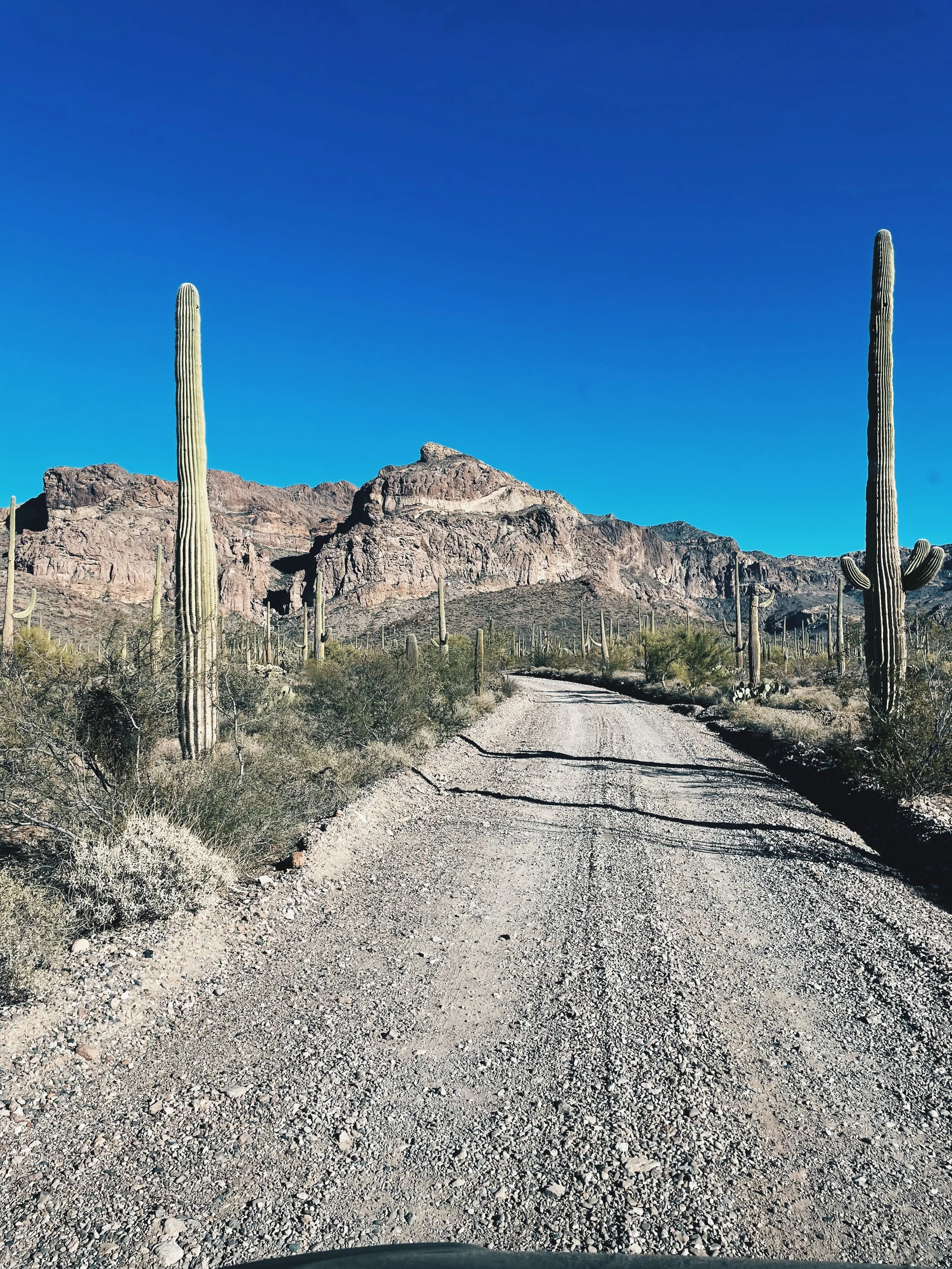
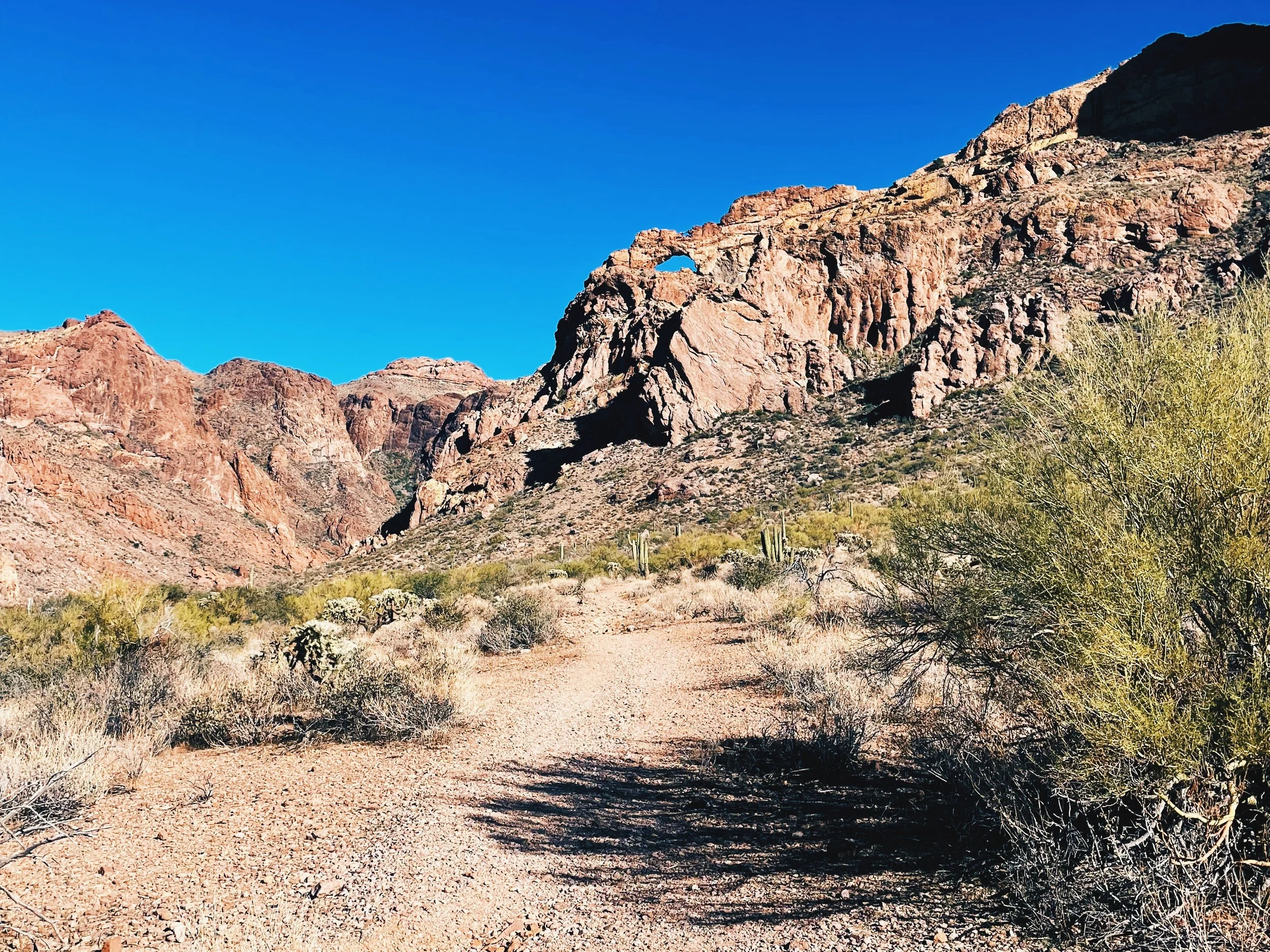
Committed, and with the van and all of its contents rattling as soon as the pavement gave way to dirt, I cautiously proceeded to the start of the loop. Within minutes, I was surrounded by towering organ pipe cacti, desert mountain vistas, and wind-carved rock walls rising from the washes. It was stunning. I drove slowly, heart pounding, eyes scanning both the road and the landscape I was on this risky road to see. Eventually I stopped and parked at the Arch Canyon trailhead to walk a short stretch toward its namesake rock formation, again measuring risk with responsibility. Standing on the empty desert terrain, silence wrapped around everything. Besides one other parked and empty car at the trailhead, I was truly all alone. No cell bars. Just wind, rock, cacti, and my own deep breath of reassurance mixed with awe.
As much as I wanted to fully relax into the beauty of it all, I always had to keep one eye on the clock, one thought of consideration for my safety. Solo travel in places like this is a constant negotiation between awe and caution, between wanting more and knowing when to turn back. But two hours later, when I was back on pavement and the Ajo–Sonoyta Highway, I felt only exhilaration. That was so worth it, I said aloud through an ear-to-ear grin.
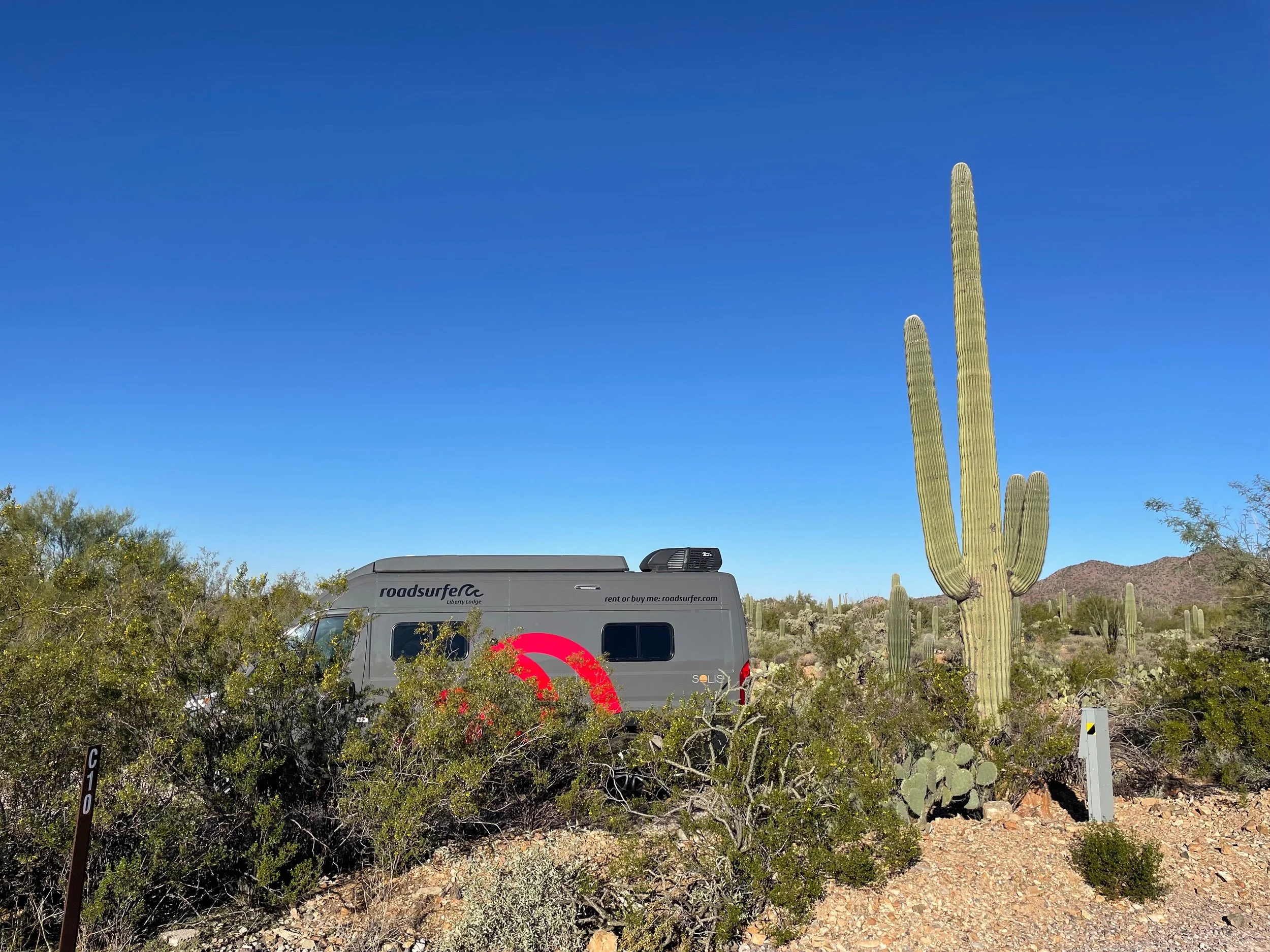
Twin Peaks Campground was only a few minutes from where the loop spit me back out onto highway. I headed straight there, settled into my site and pulled out my camp chair, positioning it so I was staring at the very same Ajo Mountains I’d just driven through. It was time to exhale. I felt like I hadn’t all day. Between the risk assessments and the race against the sun, days are a marathon of forward movement at speed. But oh what a day this one shaped up to be.
As darkness fell and the stars started popping in the now dark sky, distant city lights flickered on with them—not from Arizona, I realized, but from Mexico, a land, though less than 10 miles from me, I couldn’t access without my passport. Just as I was piecing together my position, a Border Patrol vehicle rolled through the campground, reinforcing the seed that had been planted earlier while driving through Tohono O’odham country, then in Ajo staring at those murals, and now here at this campground so close to Mexico I can see it. The seed: how interwoven—and divided—this landscape I’m road tripping through really is.

Day 3: Organ Pipe National Monument to Joshua Tree National Park
Day 3 at a glance: A near pre-dawn start, more desert highways, snowbird towns, a state-line crossing, and a golden-hour arrival in Joshua Tree.
As a one-woman operation, mornings were busy by default—dishes from breakfast had to be washed, loose items secured, the cassette toilet emptied, a rough idea for the day determined—and this morning was no exception. I woke before sunrise, partly from another 30-degree night, partly from knowing the most ambitious drive of the trip lay ahead. Still, I allowed myself one small luxury, one I’d allow myself each and every day no matter what: coffee in bed, bundled in blankets, soaking up what was likely going to be the last still moment of the day until sunset.
Today meant crossing state lines—from Arizona into California—and a six-hour drive to my reserved campsite at Jumbo Rocks Campground inside Joshua Tree National Park. It also meant a time change and an even earlier sunset by a full hour. Fantastic.
To break up the haul, I mapped out strategic stops: gas in Gila Bend, lunch in Quartzsite, and one final Arizona fill-up before the California border. I’d been warned that California gas prices could be as much as $5 a gallon. No, thank you.
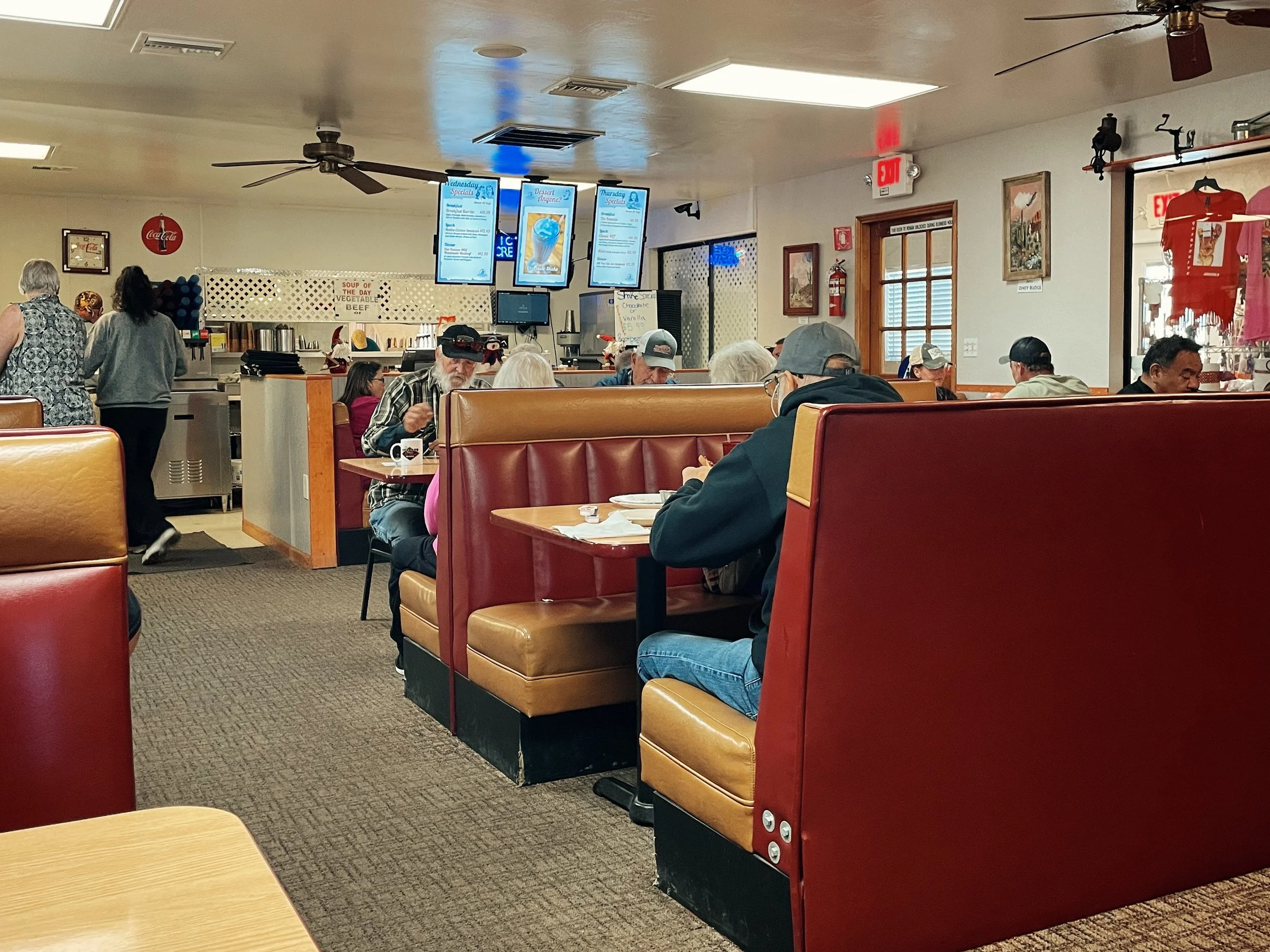
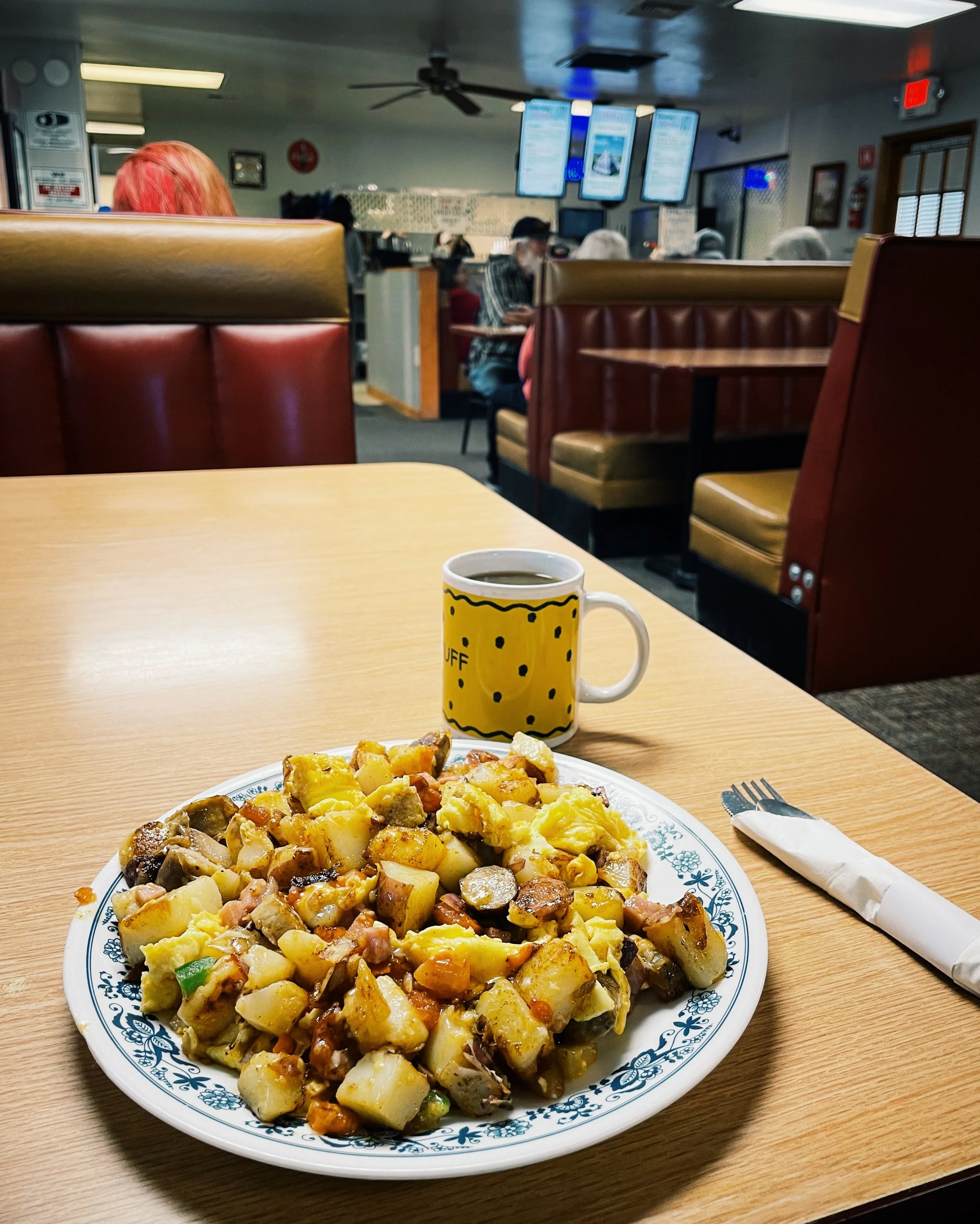
Quartzsite was… strange. Known as an RV mecca, it swells with snowbirds and van-lifers every winter, many of them drawn by the surrounding BLM land, months-long boondocking possibilities, and the massive gem and mineral shows that temporarily turn this quiet desert town into a pop-up city. Temporary and permanent all at once, it really just felt like a place where people pulled up in their rigs and forgot to leave. Curious to know it a little bit more, I stopped at Mountain Quail Cafe for lunch, slid into a booth, and ordered a breakfast hash along with bottomless coffee. The cozy, classic American diner vibe was exactly what I needed at this halfway point.
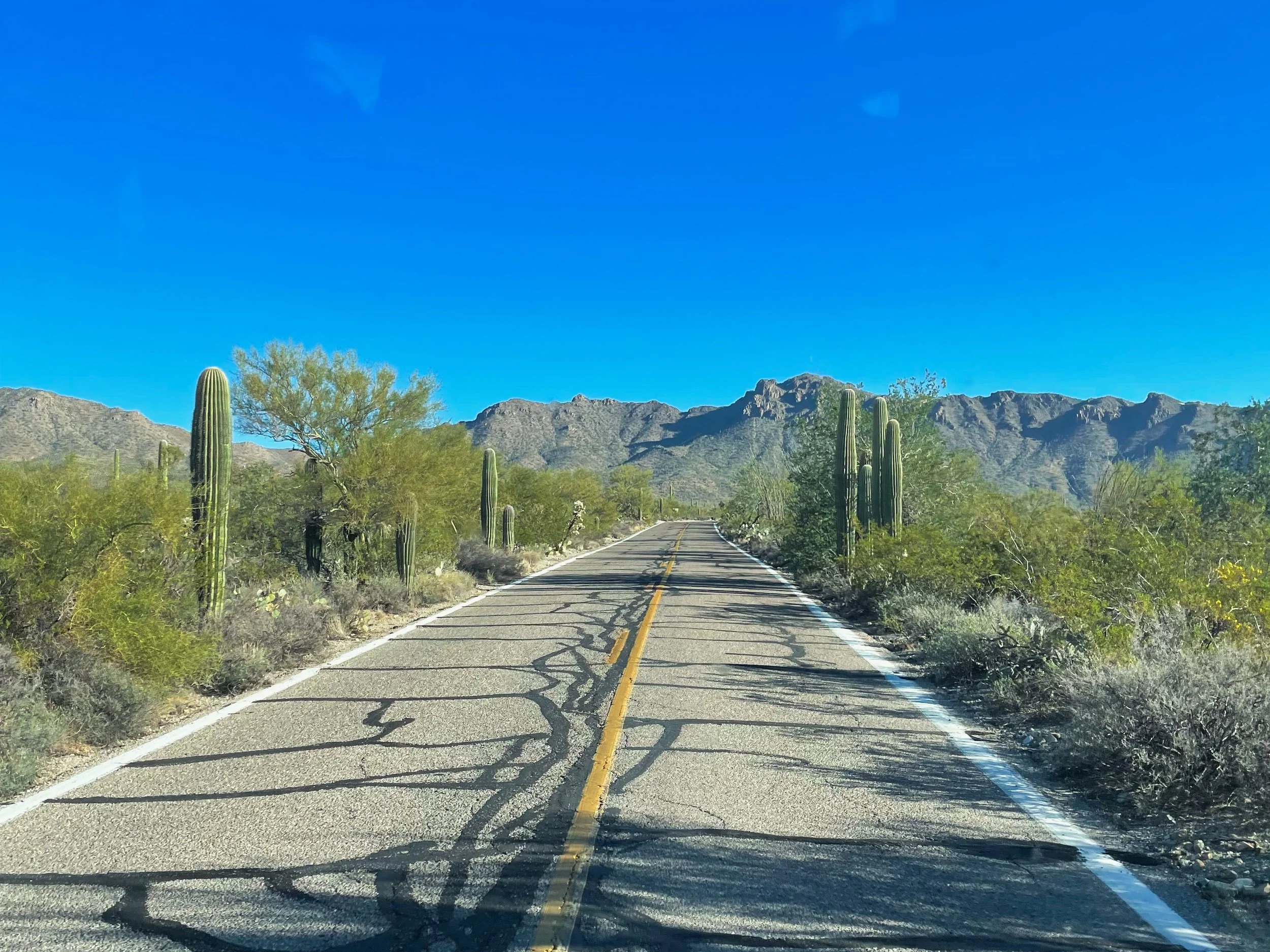
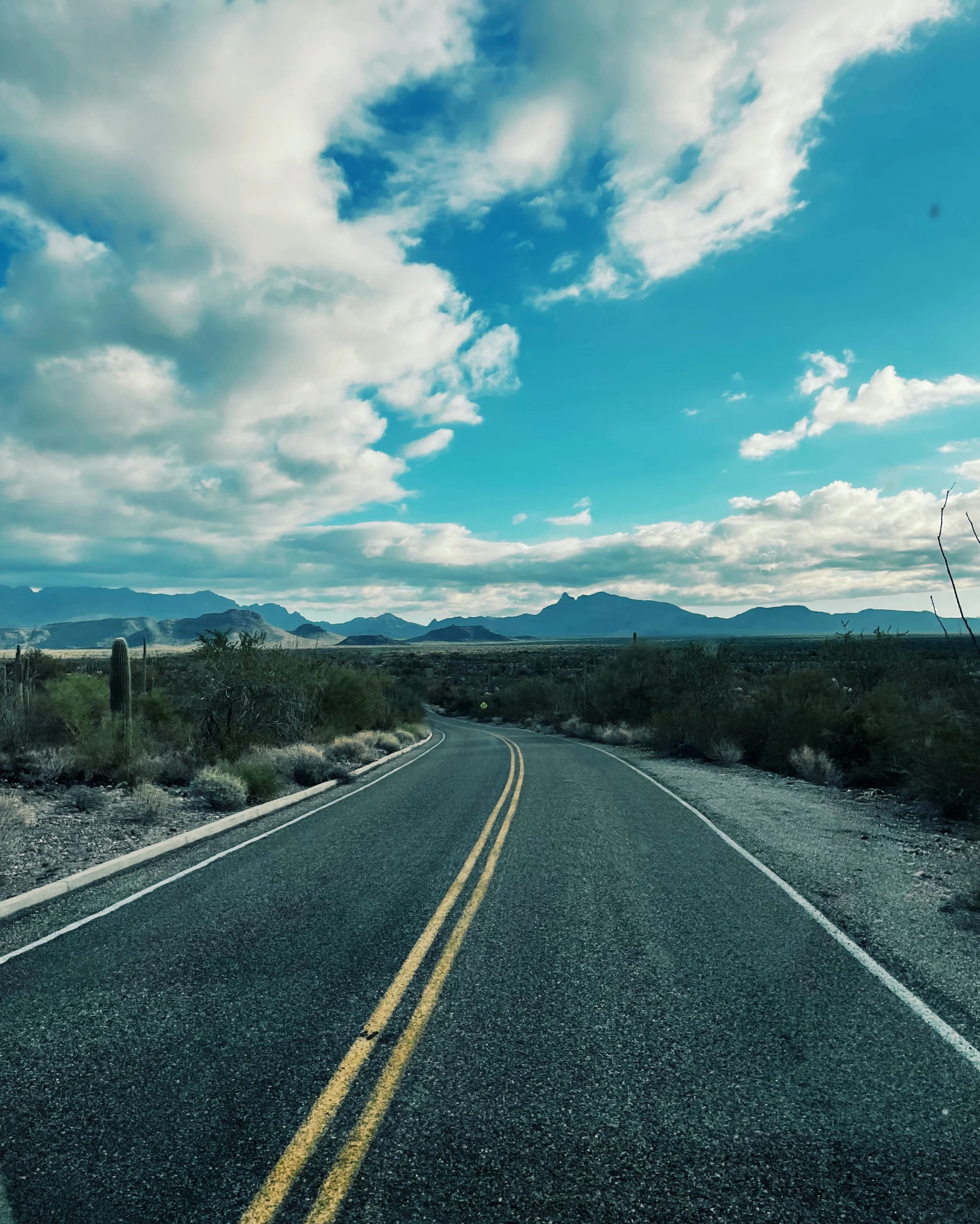
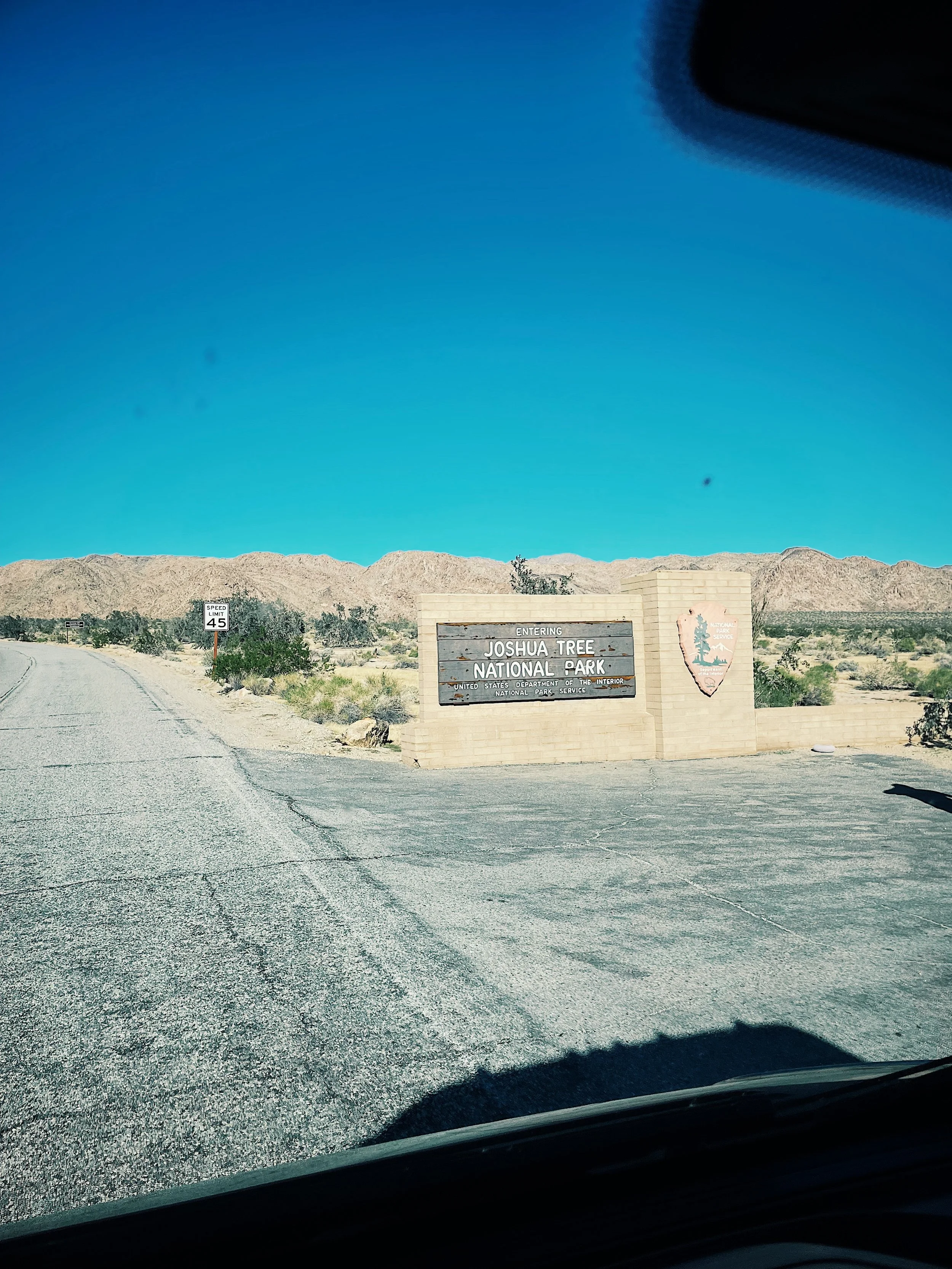
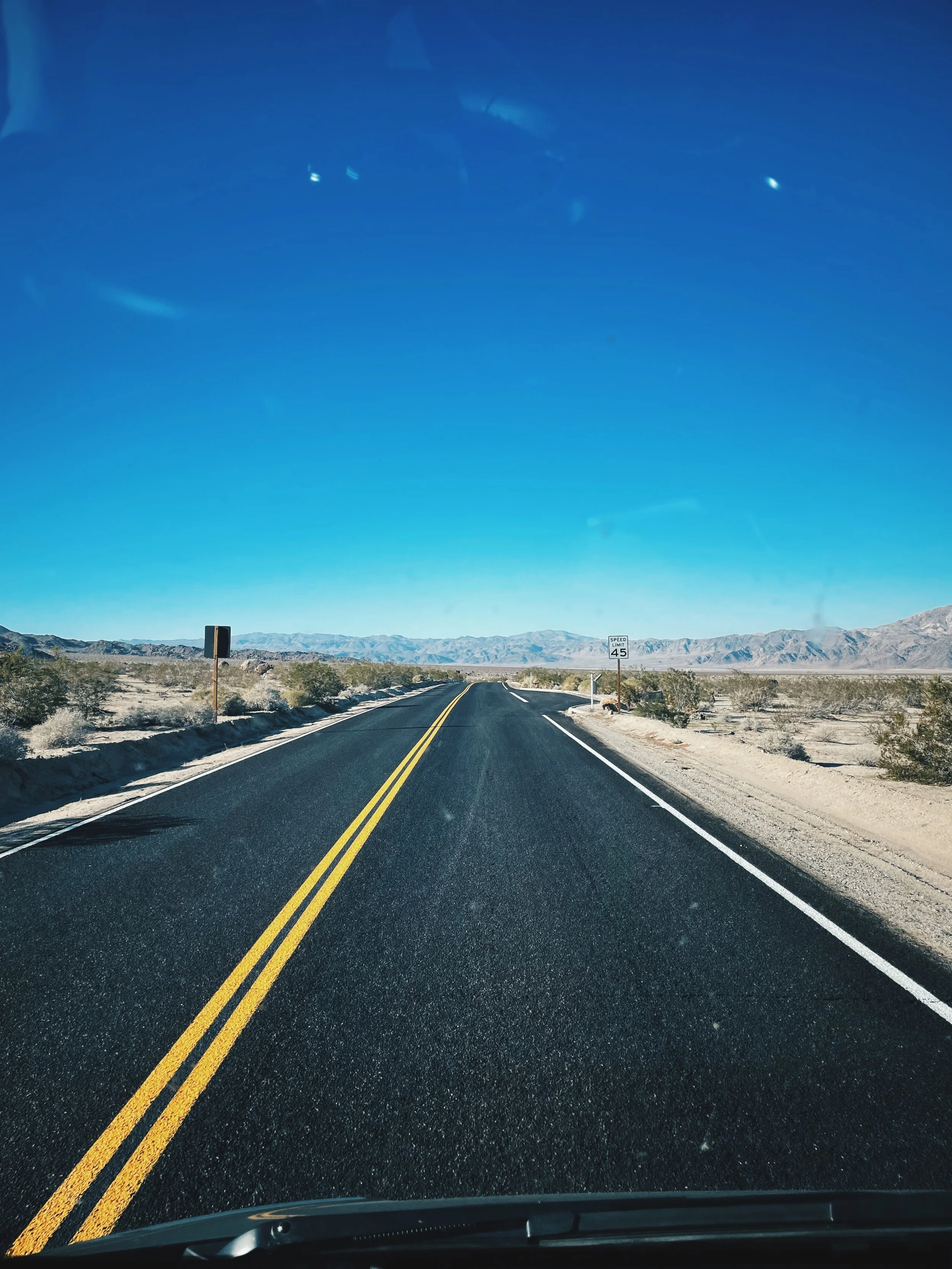
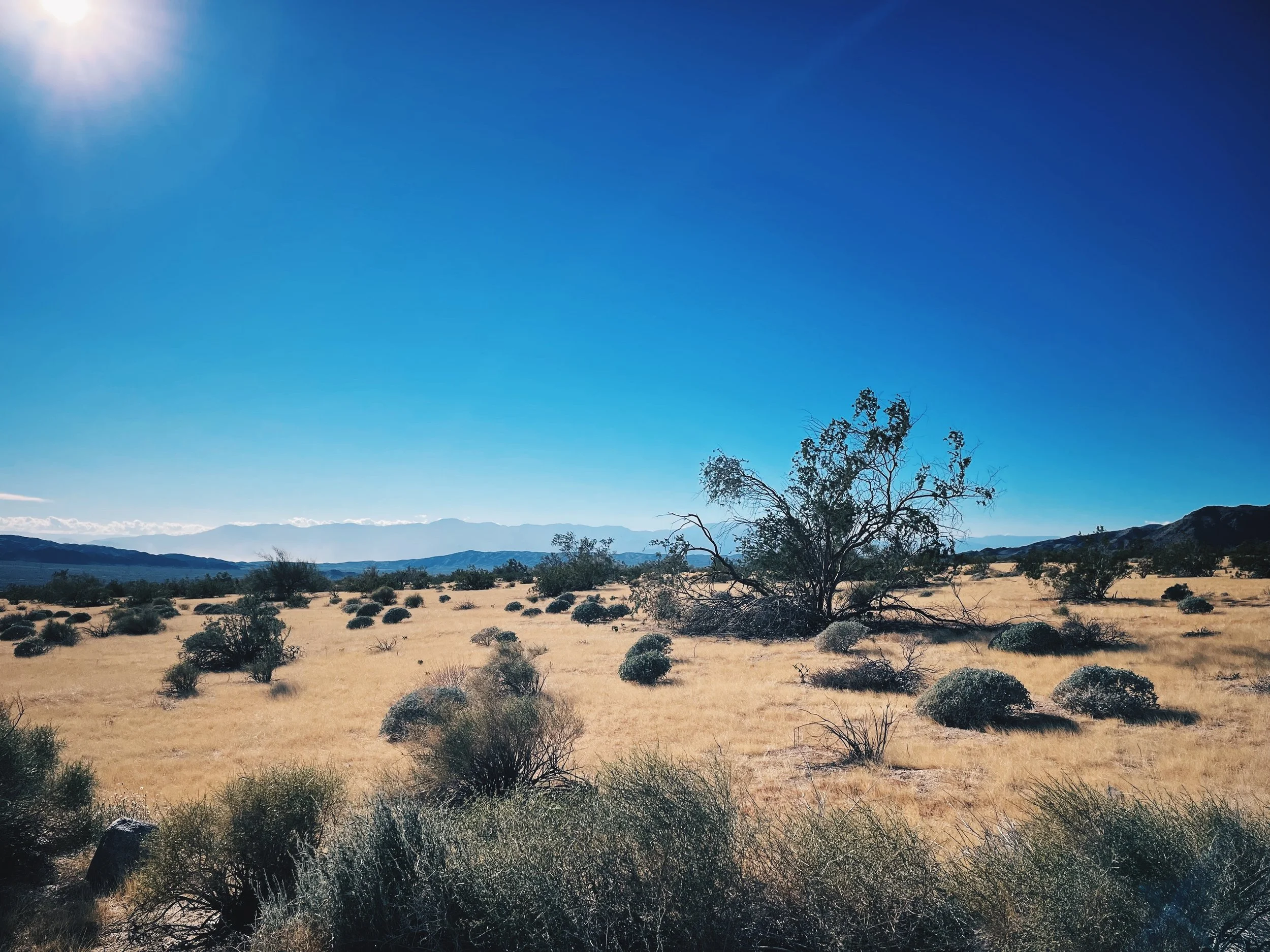
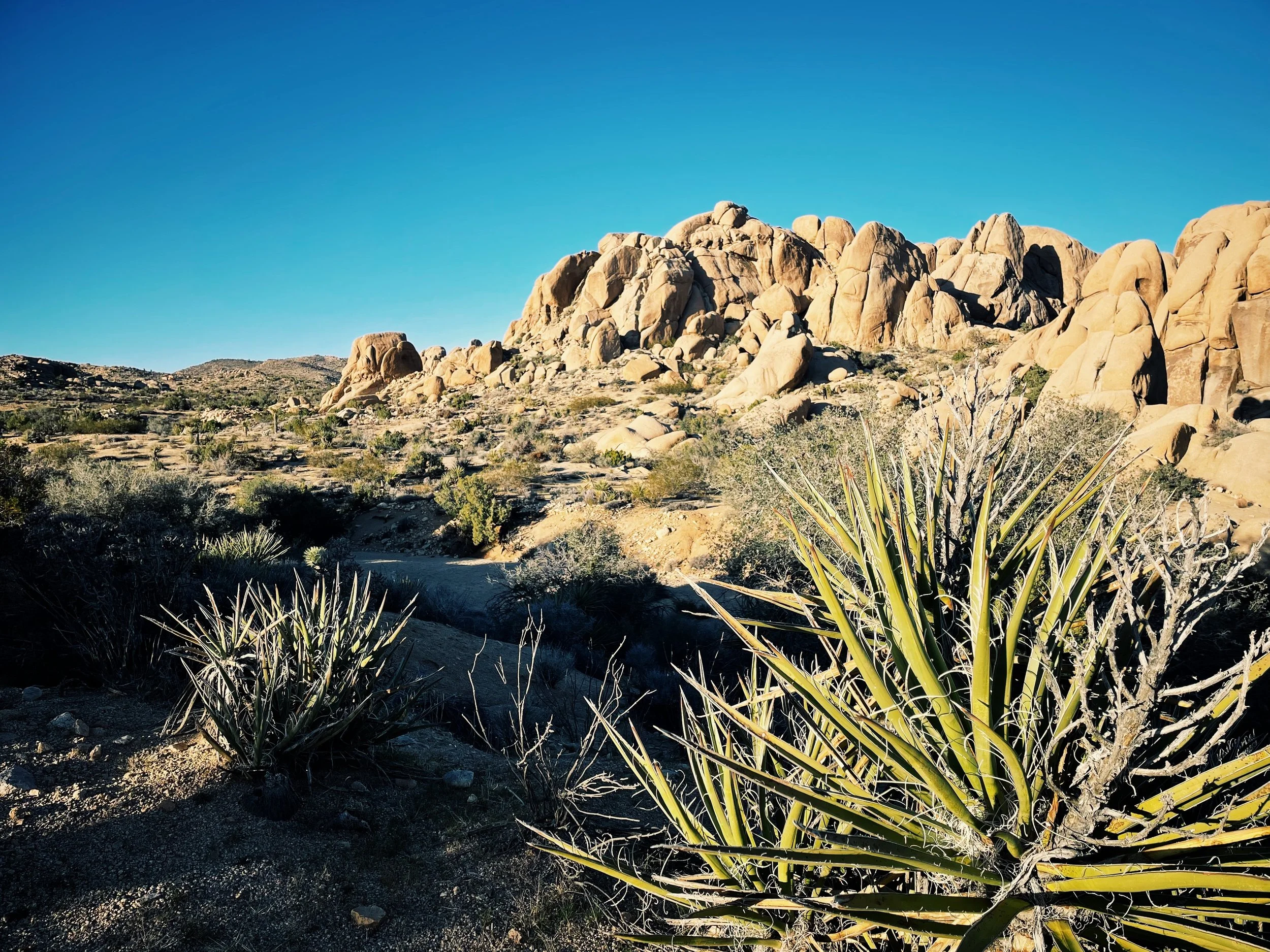
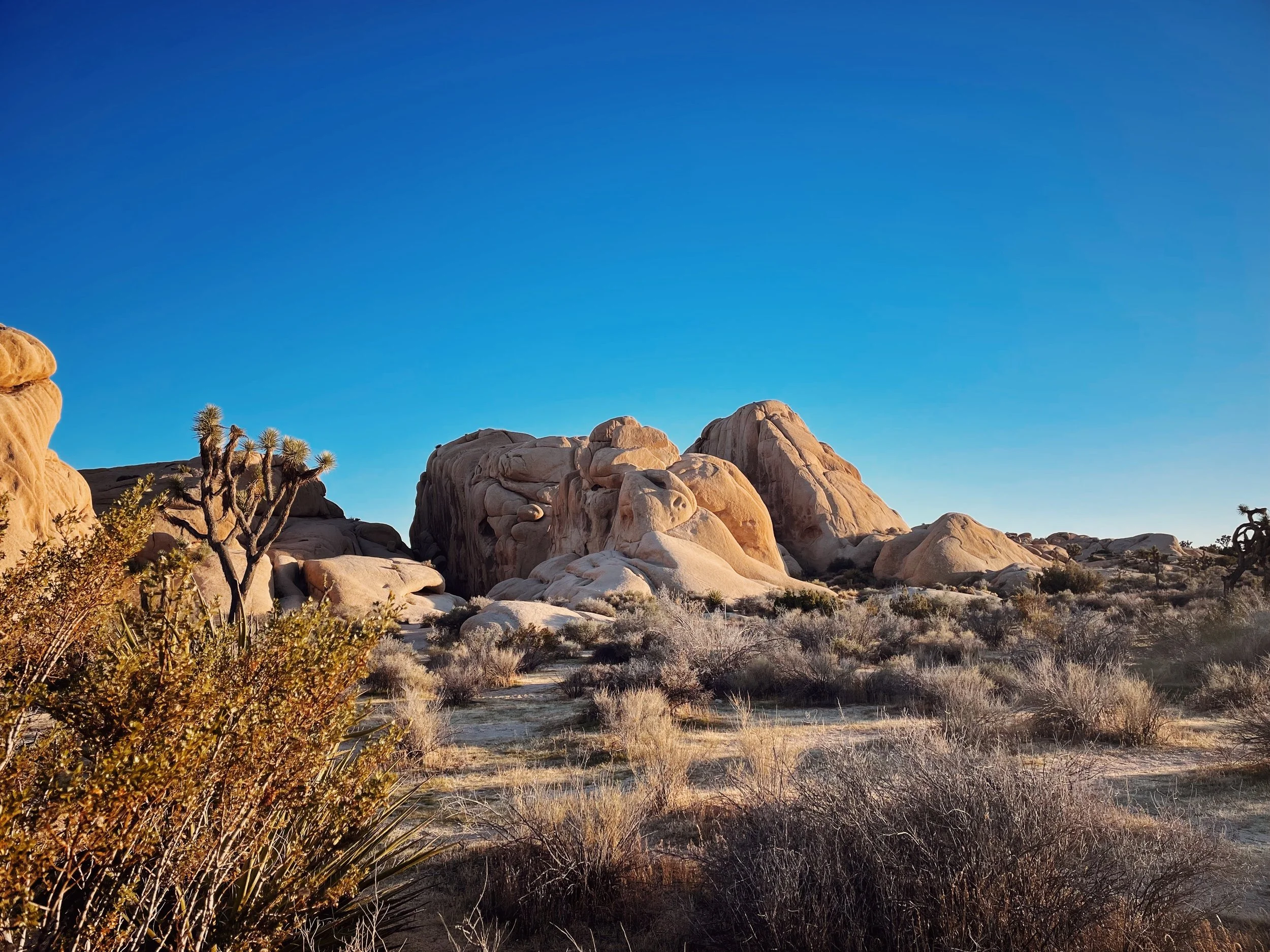
Fed, fueled up, and back on I-10, the miles ticked by until I crossed into California and began climbing toward Joshua Tree National Park’s south entrance. Joshua trees started appearing more frequently, boulder piles rose from the desert floor, and the world felt further and further away. Entering through the south gate was such a beautiful way in. I had the winding roads of the park to myself, allowing me to go as slow as I wanted as I took in California’s version of desert, reminiscent of what I’d just immersed myself in in Arizona, but different enough that it felt entirely new.
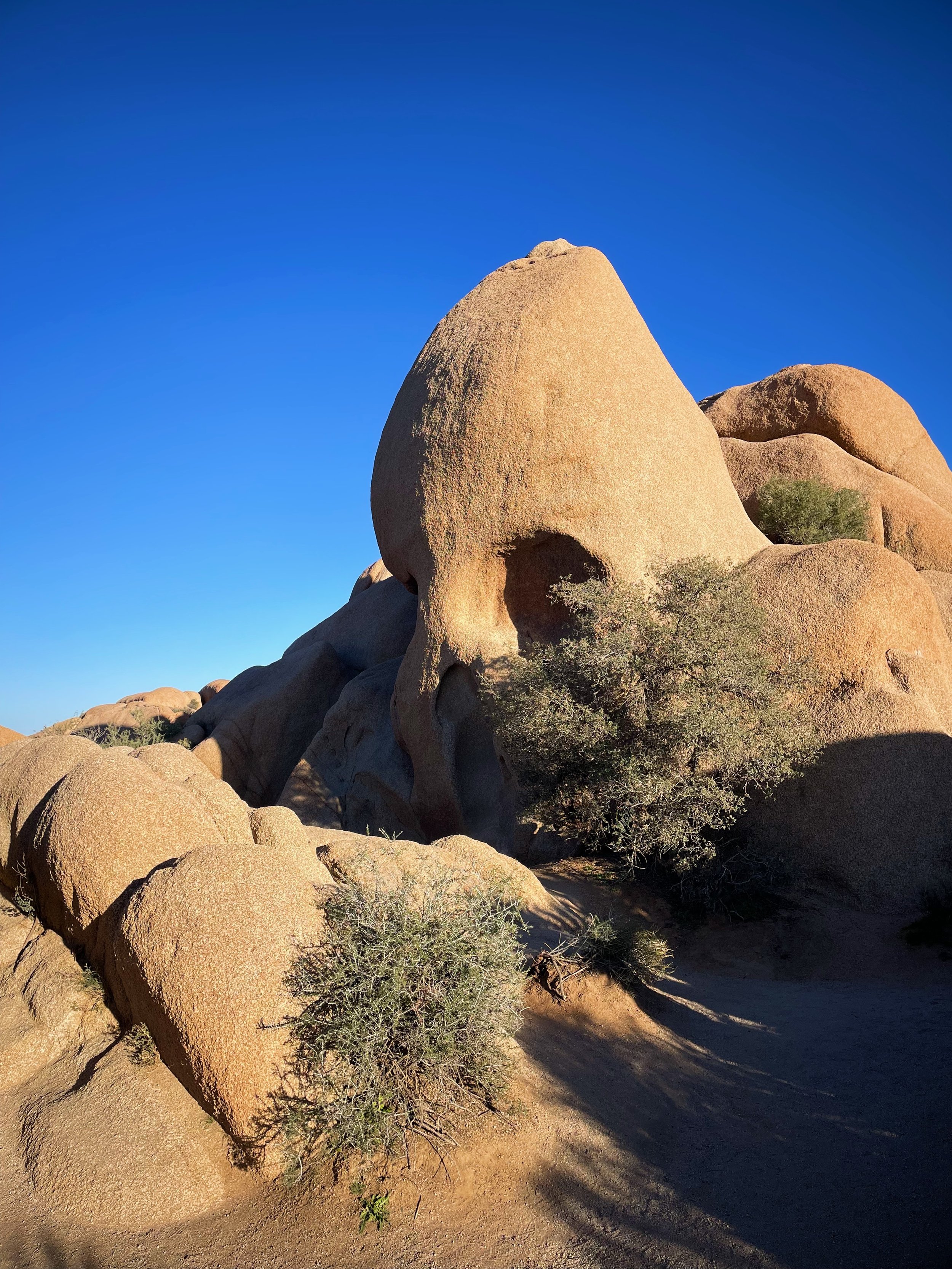
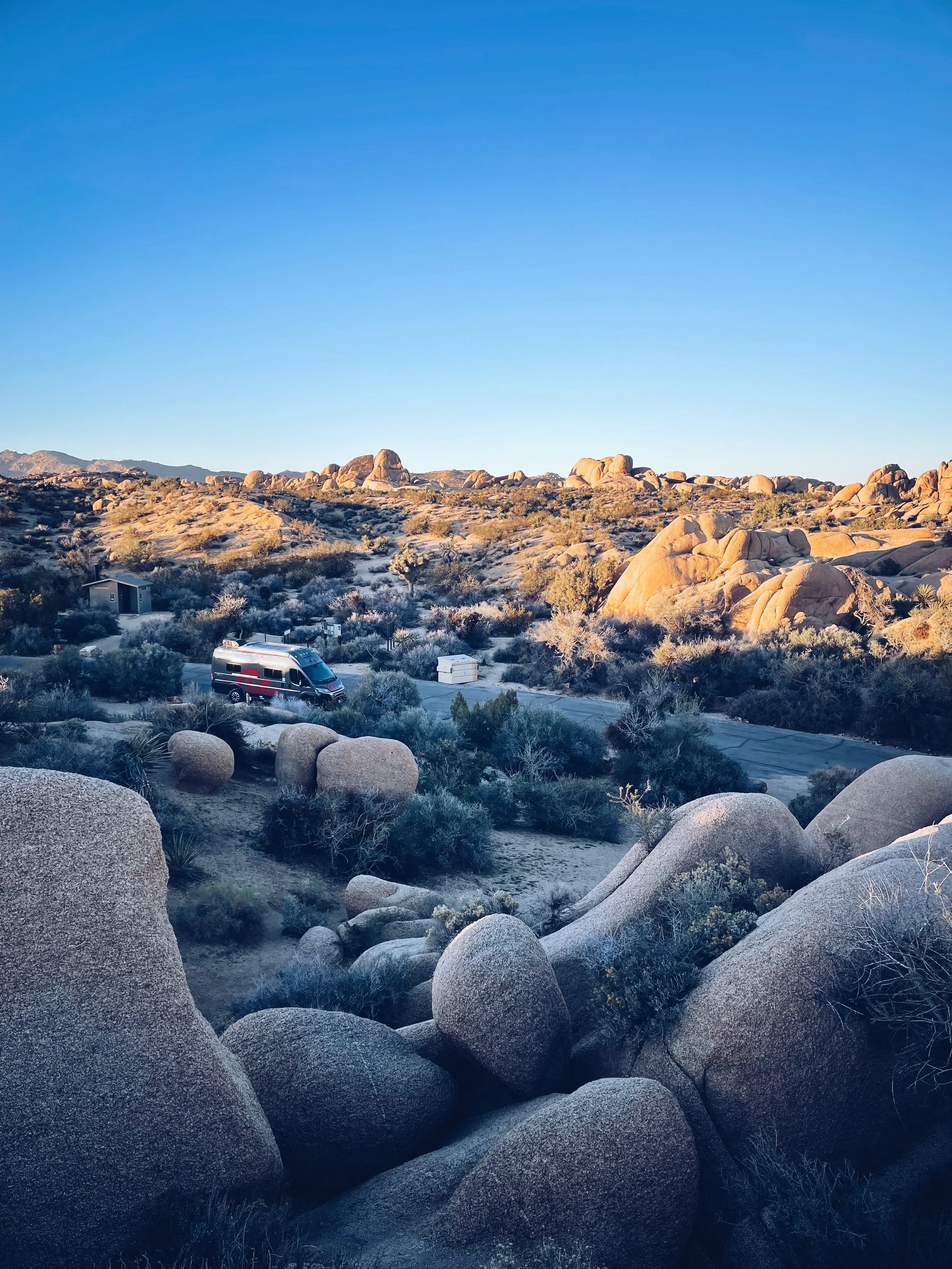
By 3:30 p.m. Pacific Time, I pulled into my site at Jumbo Rocks Campground—relieved, slightly exhausted, and grateful to have arrived a whole hour before sunset. Just steps from my tucked-away campsite was the trailhead for the Skull Rock Nature Trail, a flat 1.7-mile loop that winds through massive granite boulder formations and past its namesake rock, eroded over time into the vague shape of a skull.
With barely an hour of daylight left, I threw on an extra layer, grabbed my phone, locked the van, and just started walking—eager to get a feel for this entirely new landscape and atmosphere I’d just dropped into. No more saguaros and red rock. Instead, pale granite boulders, rounded smooth by wind and time, rising from the fine, ash-colored desert sand.
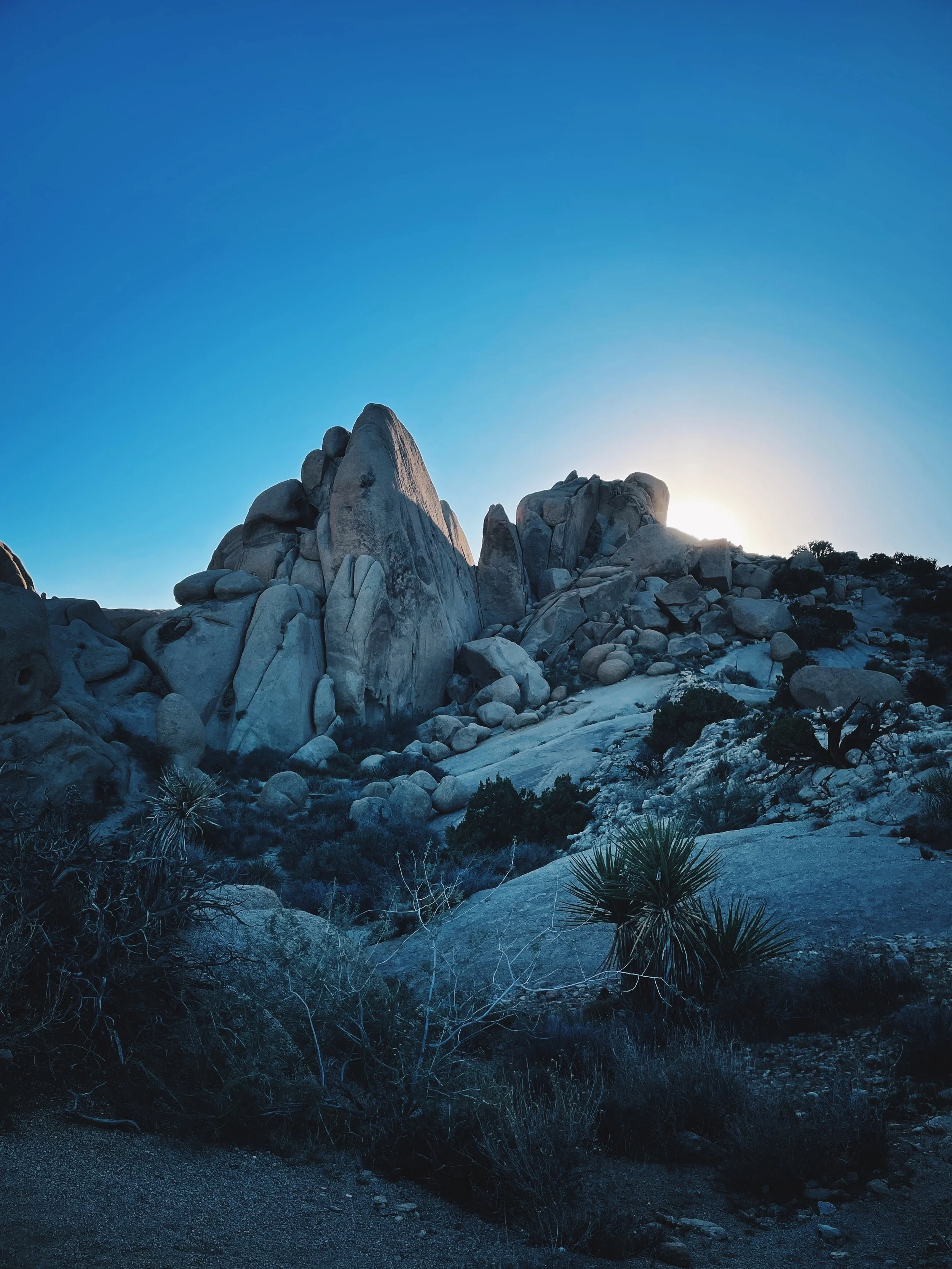
The last light of day felt exaggerated here, every rock catching the sun just right and casting such long shadows. With the sun now so close to setting, I had the trail pretty much all to myself, and with that my solo traveler protective instincts started kicking in. Was I safe? Isn’t this the hour when the mountain lions and coyotes go hunting? Would the temperature, already falling, drop faster than I was dressed for? My mind was hijacking the moment, and taking me out of it.
It was starting to become glaringly obvious by this point of the trip how often I was scanning, calculating, bracing for some calamity to occur. This innate urge to protect myself at all times, be the eyes at the back of my head, prepare for every possible danger. It was exhausting. But surrounded by these ashen rocks and sand glowing in the low light, I vowed to start releasing some of that. To trust a little more instead.
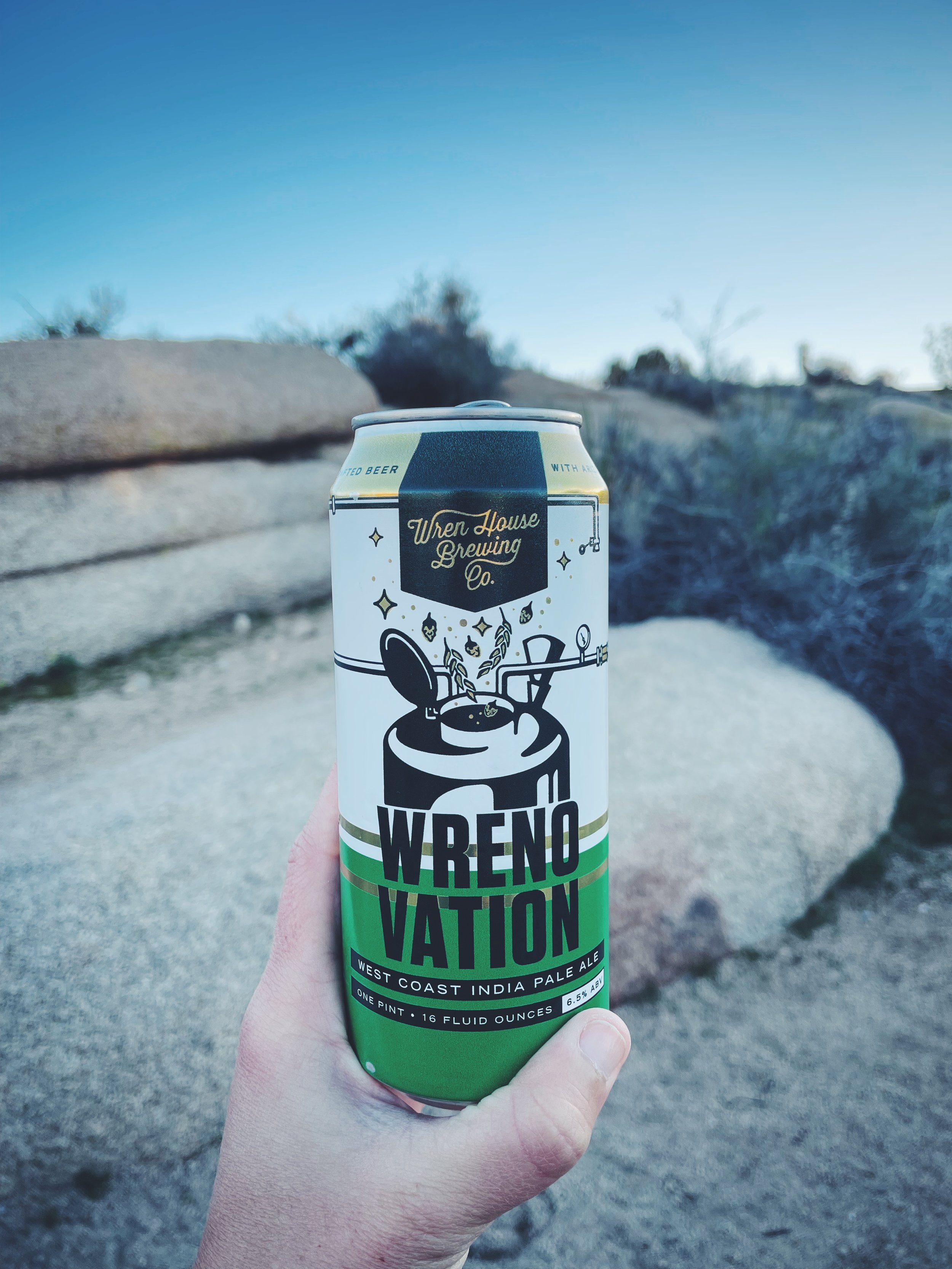
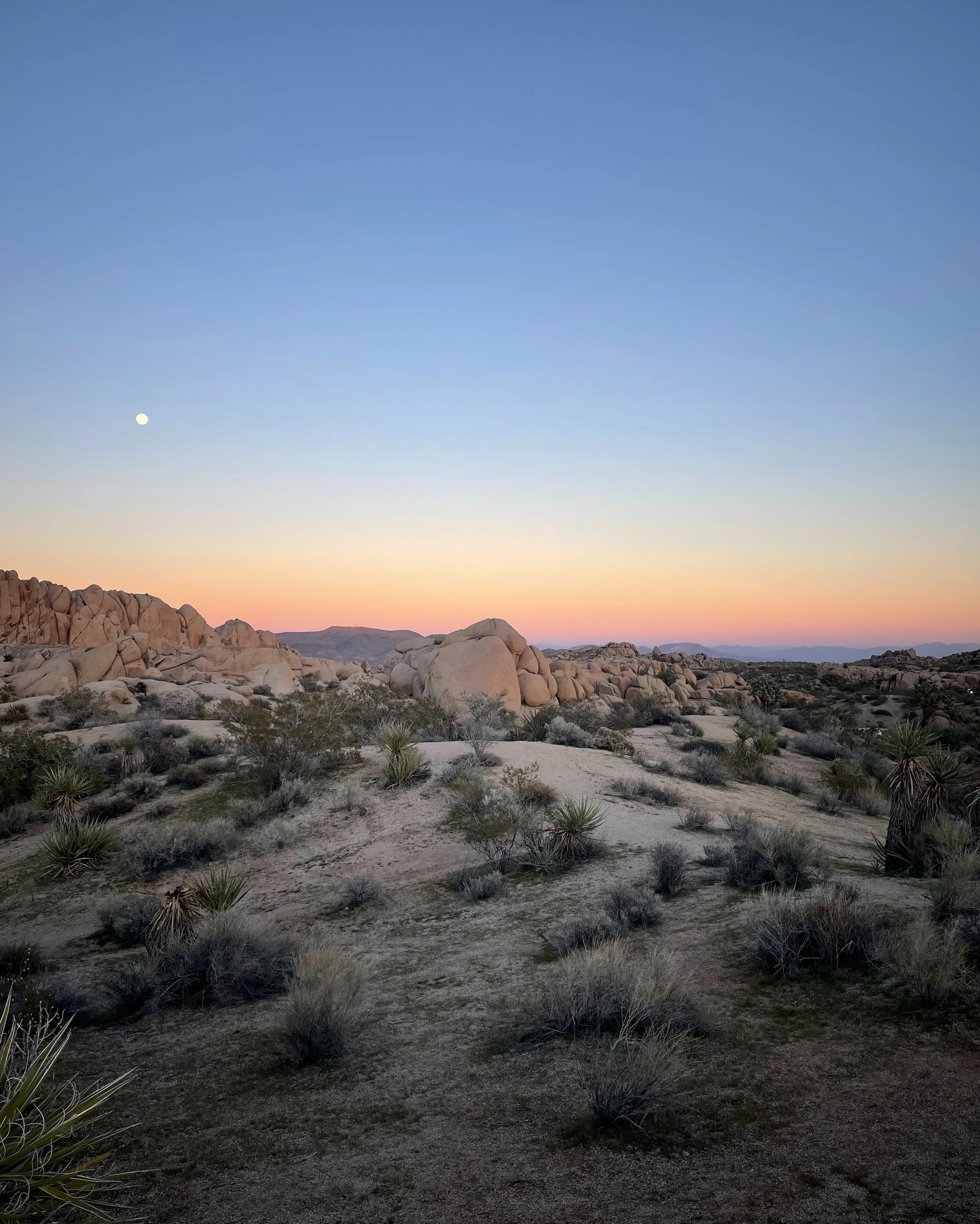
When the trail eventually looped me back to my van at sundown, the first thing I did was crack open a beer from the fridge, now becoming a nightly ritual, and climbed up to the nearest ridge by my campsite to watch the last sliver of sun sink below the horizon. There was that exhale I’d waited all day to take. This day was done.
Almost instantly, the temperature dropped as soon as the sky went totally dark—at least ten degrees in minutes. I hurried back to the van, knowing I wouldn’t be hanging out under the stars tonight. Welcome to California’s high desert. I might need to figure out the van’s parking heater after all, I realized.

That’s a wrap on the first three days of my Southwest road trip—Phoenix to Joshua Tree. Up next in Part 2: I’ll take you even further west into California, share more solo van adventures, and chase sunsets and stars with you in Joshua Tree National Park.
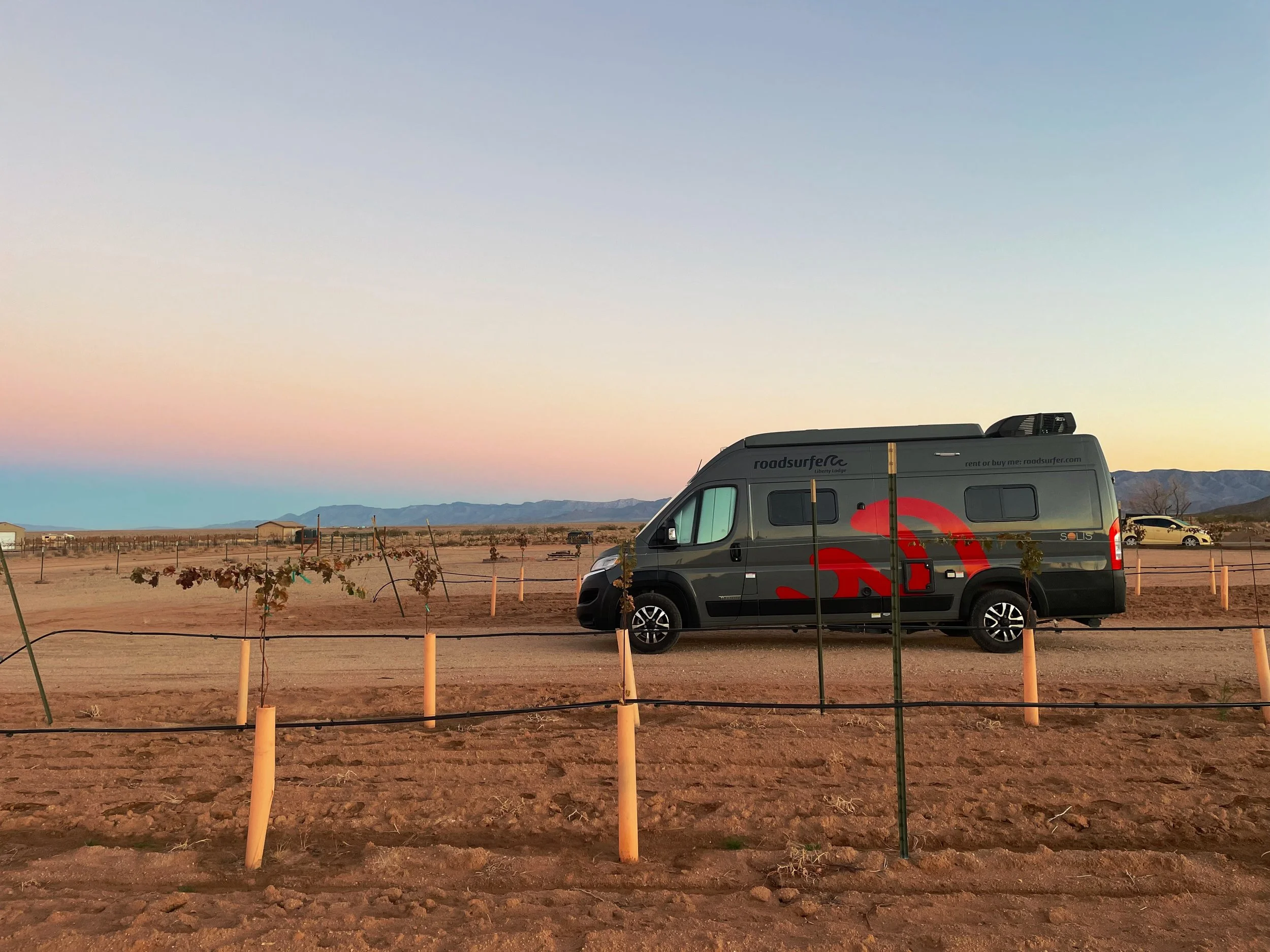
Picking up in Joshua Tree National Park, my solo campervan adventure through the American Southwest continues in Part 2, where the road stops feeling new and more like a life I want to continue living.
What to Read Next