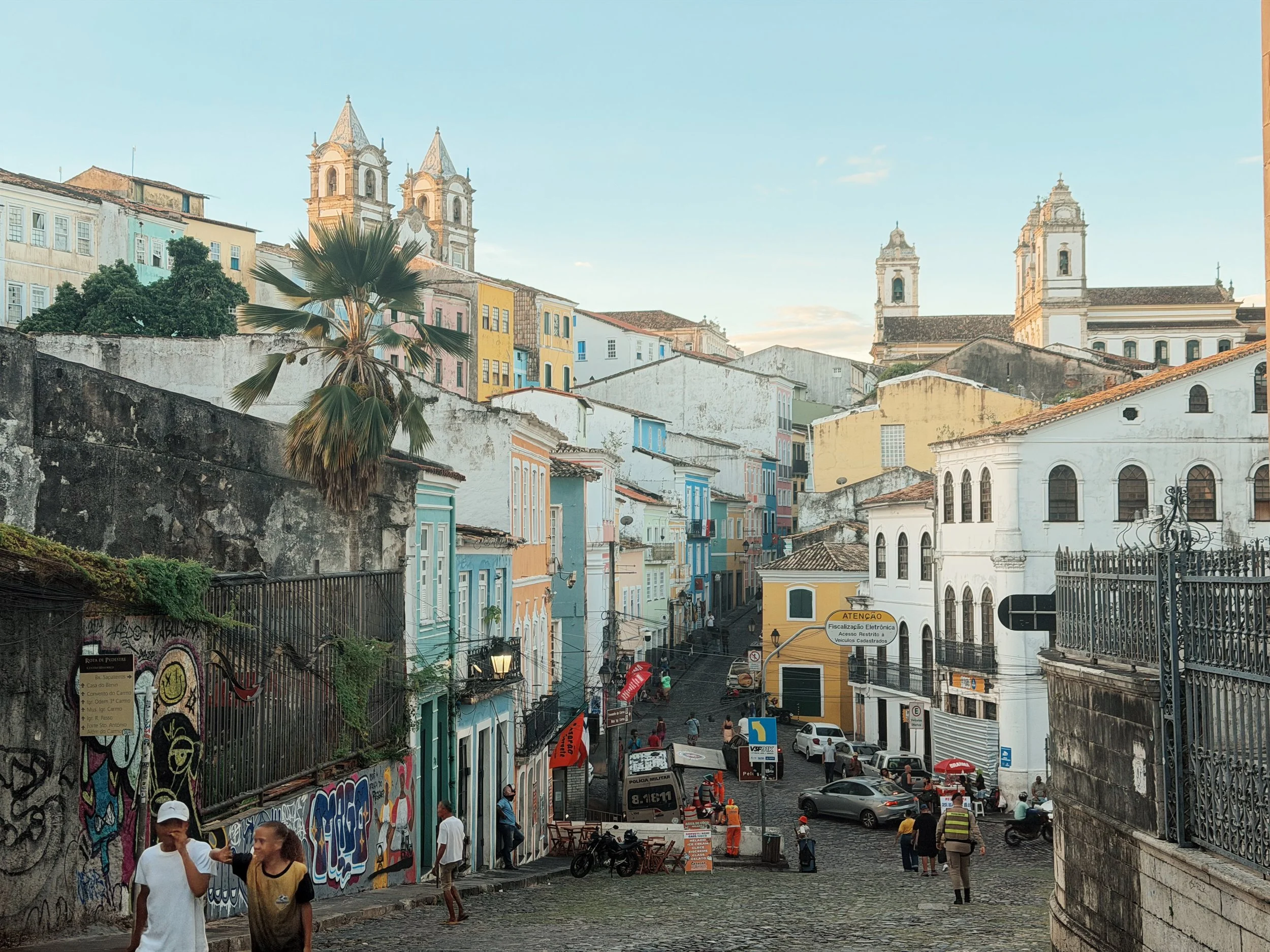
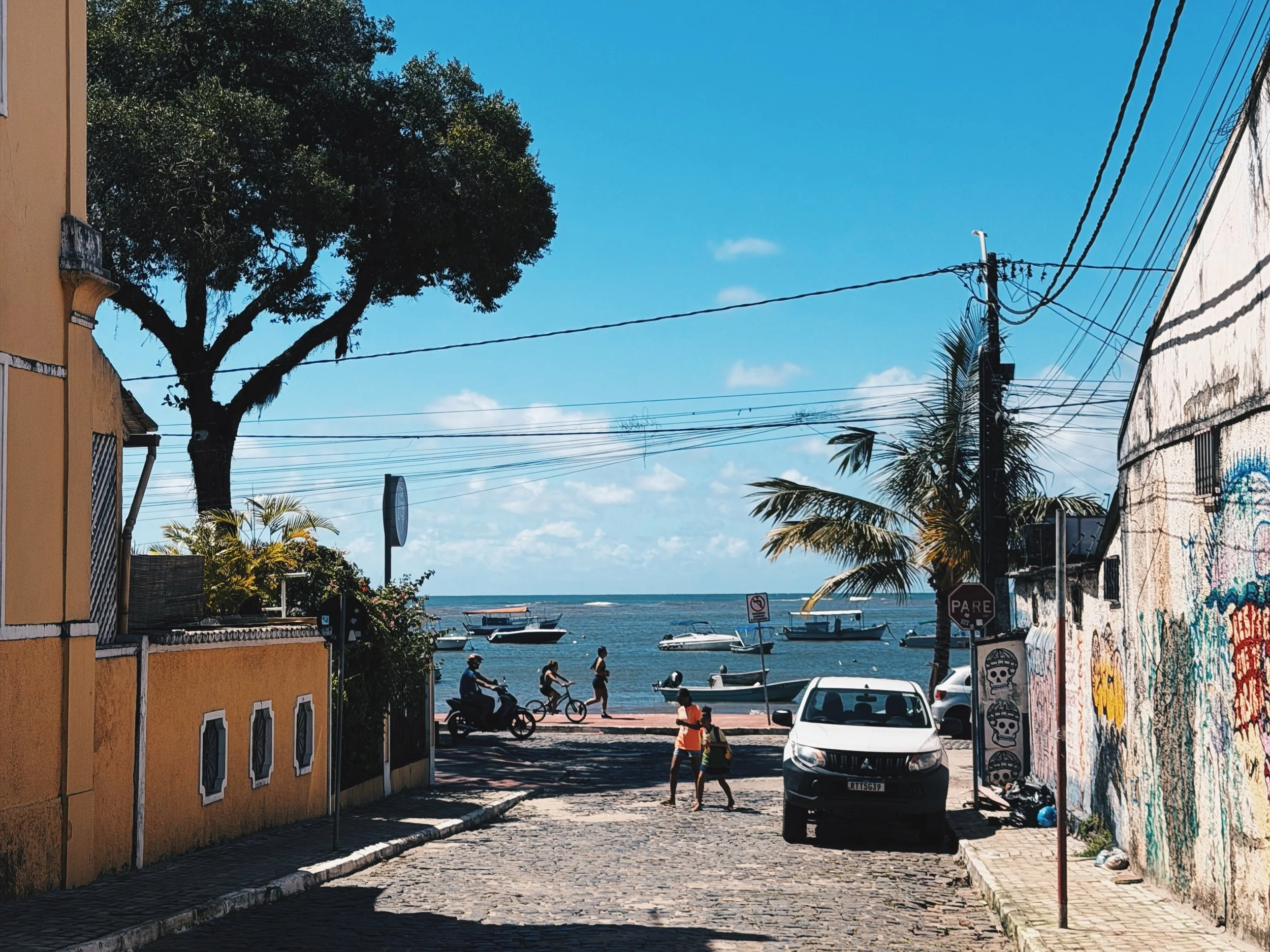
Boipeba Travel Guide: What to Do, Where to Stay & How to Visit Responsibly
Affiliate Disclosure: Some of the links in this guide are affiliate links, which means I may earn a small commission if you book through them—at no extra cost to you. I only recommend tools, tours, and stays that I’ve personally enjoyed and/or are backed by solid reviews.
From Moreré’s natural pools and mangroves teeming with bioluminescence and aratu crabs to sustainable stays and local heritage, this Boipeba travel guide is the perfect first step to visiting Brazil’s car-free paradise responsibly.
Boipeba wasn’t a spot I’d heard of before landing in Brazil, but it was one that was said with a sigh by nearly every Brazilian I met in Bahia. After about the fifth mention, I knew I needed to visit and give myself a full 12 days to know the island, and know it well.
During my time on this car-free sanctuary south of Salvador, I met its bone keepers, sampled its most sustainable stays, and followed forested trails to hidden surf breaks and snorkeling coves. On an island this size, it didn't take long to start feeling like a local, waving hello to someone I now knew every few steps through town.
The one thing that kept popping up in my conversations—with both locals and those who have vacationed here for decades—was how protected they hope this island remains. They don’t want it to become the next Morro de São Paulo (the overexposed destination next door that has lost much of its identity to mass tourism).
For this reason, I wrote this guide with preservation in mind. I’ve focused on the restaurants, pousadas, and experiences that celebrate Boipeba’s true character without exploiting it. My hope is that when you visit, you use this guide to travel responsibly, mindfully, and protectively too.
Quick Navigation: The Ultimate Boipeba Guide
Here’s what you’ll find in this guide if you keep scrolling:
If You’re Short on Time in Boipeba (3-Day Essentials)
For a quick trip from Salvador or Itacaré, a 3 to 4-day stay is the ideal minimum to experience the island without feeling rushed. Here is the most efficient way to see the highlights in my opinion:
Where to Stay: Choose Velha Boipeba (the main village) over Moreré. It offers a wider selection of pousadas, easier access to the pier for boat transfers, and the most reliable dining options.
Must-Do Activity: Book the "Volta à Ilha" boat tour. This full-day excursion is the only way to see Ponta dos Castelhanos and the Moreré natural pools if you don't have time for long-distance trekking to each. I’m not usually one to recommend tours like these, as they move too quickly, but this is truly the best way to see Boipeba’s “best of” hit list if you’re short on time.
Top Beach & Food: Walk the forest trail that starts at the end of Boca da Barra to Cueira Beach for the island's iconic Guido’s lobster or beachfront acarajé at Acarajé da Karol, then cross the river at low tide to Moreré for world-class snorkeling or something sweet at the dessert shack tucked inside Restaurante Paraiso.
Critical Logistics: Check the Boipeba tide table before arrival. Access to the natural pools and the walking path between beaches is entirely tide-dependent; you must time these activities for low tide. But, if you get caught on the Moreré side at high tide, there is a boat that can take you across the river for 5 BRL or you can catch an ATV taxi back to Velha Boipeba from the center of Moreré.
Travel Tip: Since there are no ATMs in Boipeba, bring enough BRL cash for boat tours and beach stalls that may not accept credit cards. Though, in my experience, most did accept card.
How to Get to Boipeba: Speedboats, Ferries, and Air Taxis
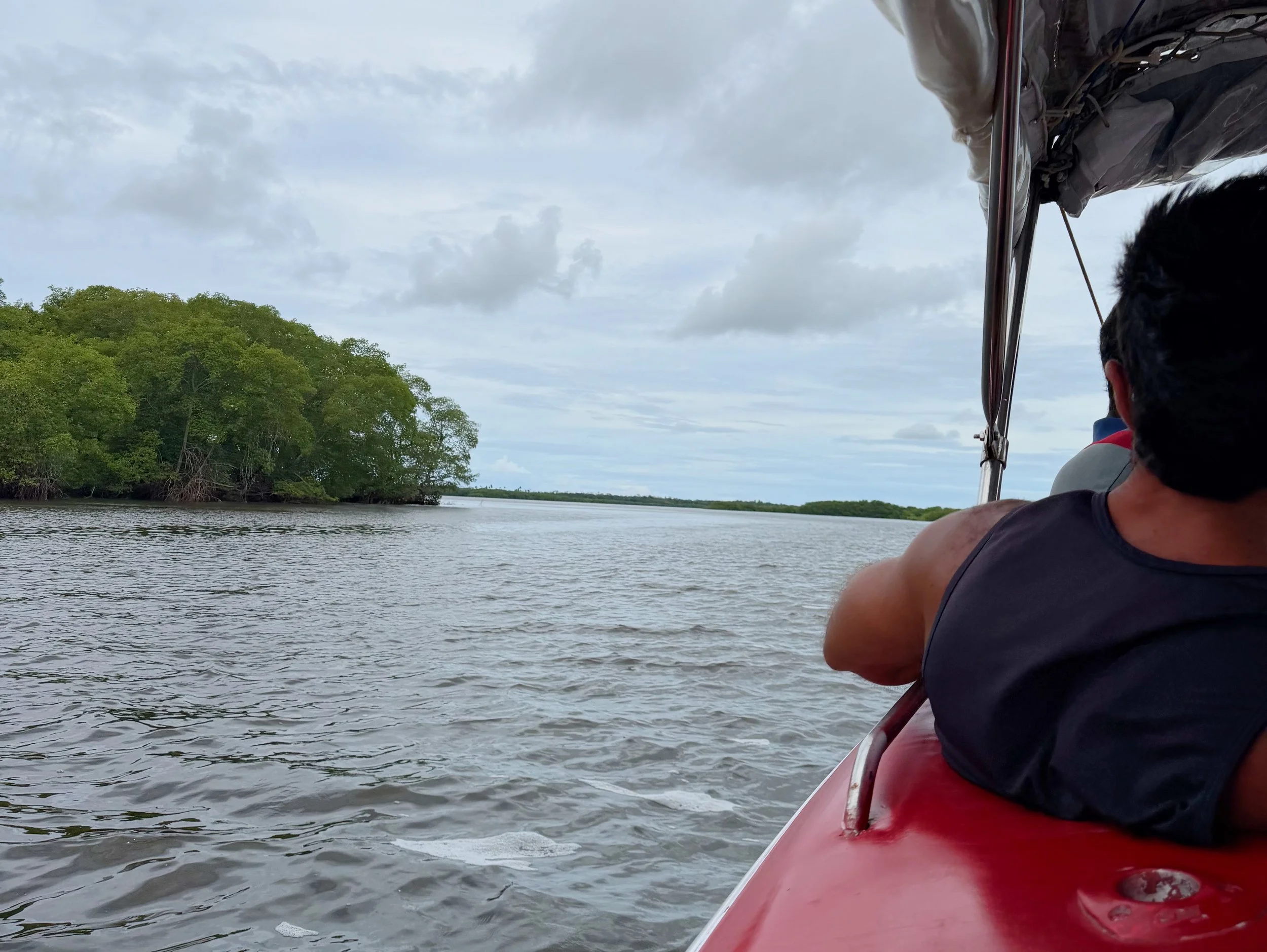
Getting to Boipeba is an adventure in itself, and a fun one at that! Because there are no cars on the island, your journey in is a scenic speedboat ride down the river past mangroves for most and a 9-passenger cessna entrance from above for the wealthy few.
Depending on your budget and time, here are the three best ways to get from Salvador to Boipeba:
1. The "Semi-Terrestrial" Route (Most Popular)
This is the standard way to travel. It involves a mix of water and land transport and takes about 4.5 to 5 hours.
The Route: Take the Ferry-boat from Salvador (Terminal São Joaquim) to Itaparica (better known as Bom Despacho) [R$7-10]> A bus to Valença (look for Cidade Sol or Águia Branca) [40-50 BRL]> At the Valença bus station, look for the counter for Expresso Boipeba for a combo ticket that includes a shuttle to the port in Graciosa, plus the speedboat (lancha rápida) to Boipeba [R$60-65].
Why choose this: It’s the best balance of cost and reliability, running multiple times a day regardless of sea conditions.
2. The Direct Speedboat (Fastest by Sea)
For those who want to avoid multiple transfers, you can take a direct boat from the Terminal Turístico Náutico da Bahia (near Mercado Modelo) in Salvador.
The Journey: A 2-hour crossing across the open ocean [R$450]
Warning: This route depends entirely on sea conditions. If the water is rough, the crossing can be very bumpy, and departures are often canceled for safety.
Winter Reality: If visiting between May and July, expect heavier rain. During these months, stick to the 'Semi-Terrestrial' route laid out above via Valença; the direct speedboat from Salvador can be dangerously bumpy in rough winter seas.
3. The Air Taxi (The Luxury Shortcut)
If you are short on time and have the budget, the fastest way to reach the island is by air.
The Journey: A 30-minute flight from Salvador International Airport (SSA) directly to a private airstrip on the neighboring Tinharé island, followed by a short 5-minute boat crossing. [R$610-850]
Note: Book at least a week in advance through Abaeté Aviação as seats are extremely limited. Also, keep in mind that oversized items like surfboards may be refused due to the small aircraft size.
Why choose this: Incredible views of the Tinharé Archipelago and maximum time on the beach.
How to get from Boipeba to Itacaré
If you are heading south to Itacaré after Boipeba, the logistics are slightly different. All speedboats from Boipeba technically end their journey at the Graciosa pier (just south of Valença).
The Included Route: Your boat ticket typically includes a van/bus transfer from the Graciosa pier to the Valença bus station. From there, you can catch a public bus to Itacaré. However, these buses are infrequent and often only run a few times a day. You can check schedules on BusBud.
The Insider Shortcut: As soon as you step off the boat at Graciosa, look for taxi drivers offering shared rides to Itacaré. If there’s enough of you, this is definitely the better way to go.
Why I recommend this: It avoids the detour into the busy Valença city center (which is north of the Graciosa pier). Taking a shared taxi directly from the pier saves you at least an hour of travel time and spares you the hassle of coordinating with a limited bus schedule. It’s a much more seamless way to continue your journey south.
Boipeba Survival Tips: ATMs, Cell Signal & Insects
Before you board the boat, here is the essential logistical "need-to-know" list to avoid common traveler pitfalls.
Bring Cash: There are no banks or ATMs on the island. While many pousadas, restaurants, and even quad-taxis now accept cards or Pix, some beach stalls and boatmen may only take BRL cash.
Connectivity: Cell signal in Boipeba has improved but can be spotty during storms or power outages. Signal is strongest in Velha Boipeba and significantly weaker to nonexistent in Moreré and its nearby beaches.
The "Borrachudos": These tiny biting flies can be relentless, especially near the mangroves and at sunset. Traditional repellent often doesn't work; locals swear by citronella oil or heavy moisturizers to prevent them from landing.
Tide is Everything:Your daily schedule should be built around the tábuas de marés (tide tables). High tide can trap you on certain beaches or make river crossings dangerous and new moons and full moons can mean an even higher tide than typical.
Low Season Closures: If you are planning a trip during the Brazilian winter, keep in mind that many businesses and pousadas in Boipeba close or operate with limited hours from April through July. This period coincides with the rainy season, leading to significantly fewer tourists and a much quieter—though wetter—atmosphere on the island. If you visit during these months, be sure to message your top-choice restaurants or stays in advance to confirm they are open.
Don’t Forget to Pack:
Flashlight/Headlamp: Island paths are not well-lit at night and chances are you’ll be walking them to get to dinner or back to your pousada after dark.
Reusable Bottle: Dealing with waste on Boipeba is a huge issue. Try to avoid purchasing plastic water bottles if you can. Better yet, bring a water bottle with a built-in filter (I never travel without my LifeStraw water bottle) and safely fill up straight from the tap.
Personal Meds: The local pharmacy has a limited selection, so bring what you might need.
The Best Beaches in Boipeba: From River Mouths to Remote Reefs
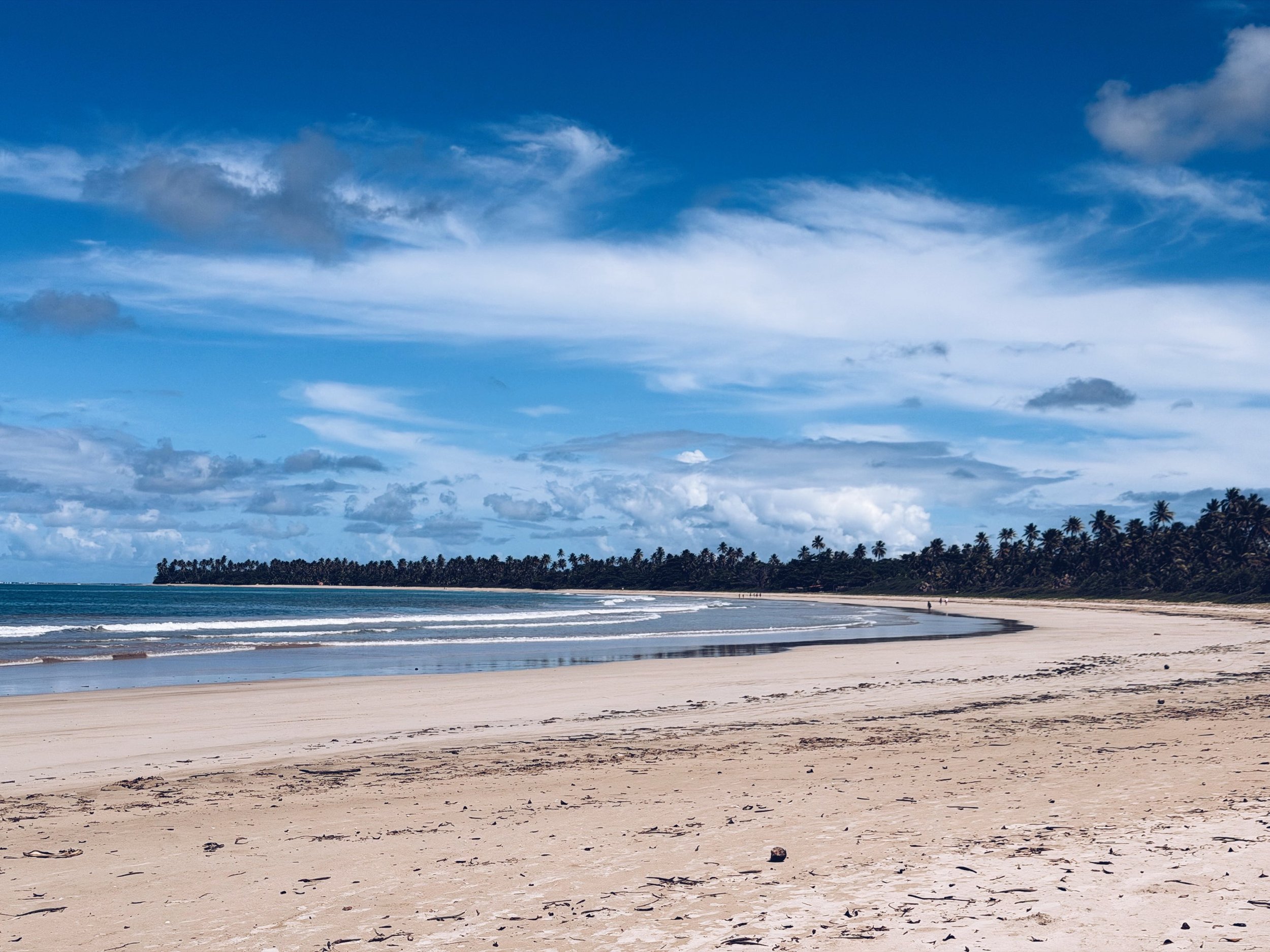
Bainema Beach
The beaches in Boipeba are dictated by the tide table. To see the natural pools or walk between beaches, you must time your visit for low tide. If you’re unfamiliar with tide tables, look for when the water height is at the lowest point of the day (ideally between 0.0 and 0.4 meters) or ask your guesthouse for guidance.
1. Boca da Barra (The River Meets the Sea)
This is the first beach you’ll see upon arrival in Velha Boipeba. It’s where the Rio do Inferno meets the Atlantic.
The Vibe: Lively with many beachfront restaurants and locals playing foot volley, calm river water for swimming, and the best place for a sunset walk given its west-facing position.
Top Tip: The current near the river mouth can be strong; stay closer to the shore for a relaxed swim.
2. Tassimirim (The Snorkeling Secret)
A short walk through a shaded forest trail from Boca da Barra leads you to this rocky, reef-protected cove.
The Vibe: Wild and quiet. At low tide, the receding water reveals natural pools right off the shore.
Why it’s special: It’s less crowded than Moreré, still has barracas to grab a bite or drink from, and perfect for shore-snorkeling with Ecomar.
3. Praia da Cueira (Surf & Lobster)
Walking south from Tassimirim, the coastline opens up into a long, coconut-lined crescent.
The Vibe: Classic tropical paradise that many consider to be Boipeba’s most beautiful beach. It’s also where you’ll find the island’s best surf break and the iconic Guido’s Lobster.
Surf Tip: You can rent boards or book a lesson with Cueira Surf School, located midway down the beach. The owner, Camilo, often posts live conditions to the school’s Instagram so you can check if the surf’s good before making the trek to Cueira.
Logistics: At low tide, you can cross the Oritibe River at the far end of the beach to continue your walk to Moreré. Important: Never attempt to cross the river at high tide; wait for the water to recede or take a boat for 5 BRL.
4. Moreré (The Postcard View)
Moreré is the heart of the "slow-life" movement on the island. Its almond trees provide natural shade right up to the water’s edge.
The Vibe: Much quieter, with a smattering of beachfront barracas and pousadas tucked under the almond trees
The Experience: The famous Moreré natural pools are located about a 15-minute boat ride offshore. Sip a drink at Paraíso while waiting for the tide to drop.
5. Bainema (The Wild Frontier)
Continue past Moreré to find a vast, and mostly empty stretch of sand.
The Vibe: Even more seclusion. You can walk for an hour here and see fewer than ten people.
Don't Miss: The "Twin Coconut Trees" (Coqueiros Gêmeos), a famous photo spot located at the entrance to the beach.
6. Ponta dos Castelhanos (The Deserted South)
While most travelers arrive via the Volta à Ilha speedboat tour, the truly adventurous reach it by a scenic hike from Moreré or a trek through the mangroves from Cova da Onça. Reach out to the ladies at Algha Moreré if you’re interested in doing this hike.
The Vibe: Untouched beauty with a tragic history (named after a Spanish shipwreck). It feels like the edge of the world, especially when the day-trip boats depart.
Highlights: Incredible sandbars that emerge at low tide and the famous floating stalls where you can enjoy fresh shrimp pastéis and caipirinhas while standing waist-deep in the river.
What to Do in Boipeba: From Bioluminesence Kayak Tours to Capoeira Classes
Activities in Boipeba are dictated by the tide table and the moon cycle. To truly experience the island, look beyond the sand and connect with the local guides and island natives who protect these ecosystems. Here are a few ideas to get you going:
1. Snorkeling the Natural Pools (Moreré & Tassimirim)
While the Moreré natural pools are the island’s most famous snorkeling spot, they can get crowded and are a bit harder to reach. For a more educational, easier access, and secluded experience, book with Ecomar. Their oceanographer-led tours to the Tassimirim reefs focus on coral health and marine biology. Your guide’s well-trained eye more than pays for the tour. My guide Carlinha spotted an octopus hiding in the reef that I most definitely would have swum right by without her.
Pro Tip: This experience can only be done at low tide (ideally between 0.0 and 0.3). You can check the tábua de marés before booking, but your tour operator will also likely already have the ideal times picked out.
2. Mangrove Kayak & Bioluminescence Tour with Ecomar
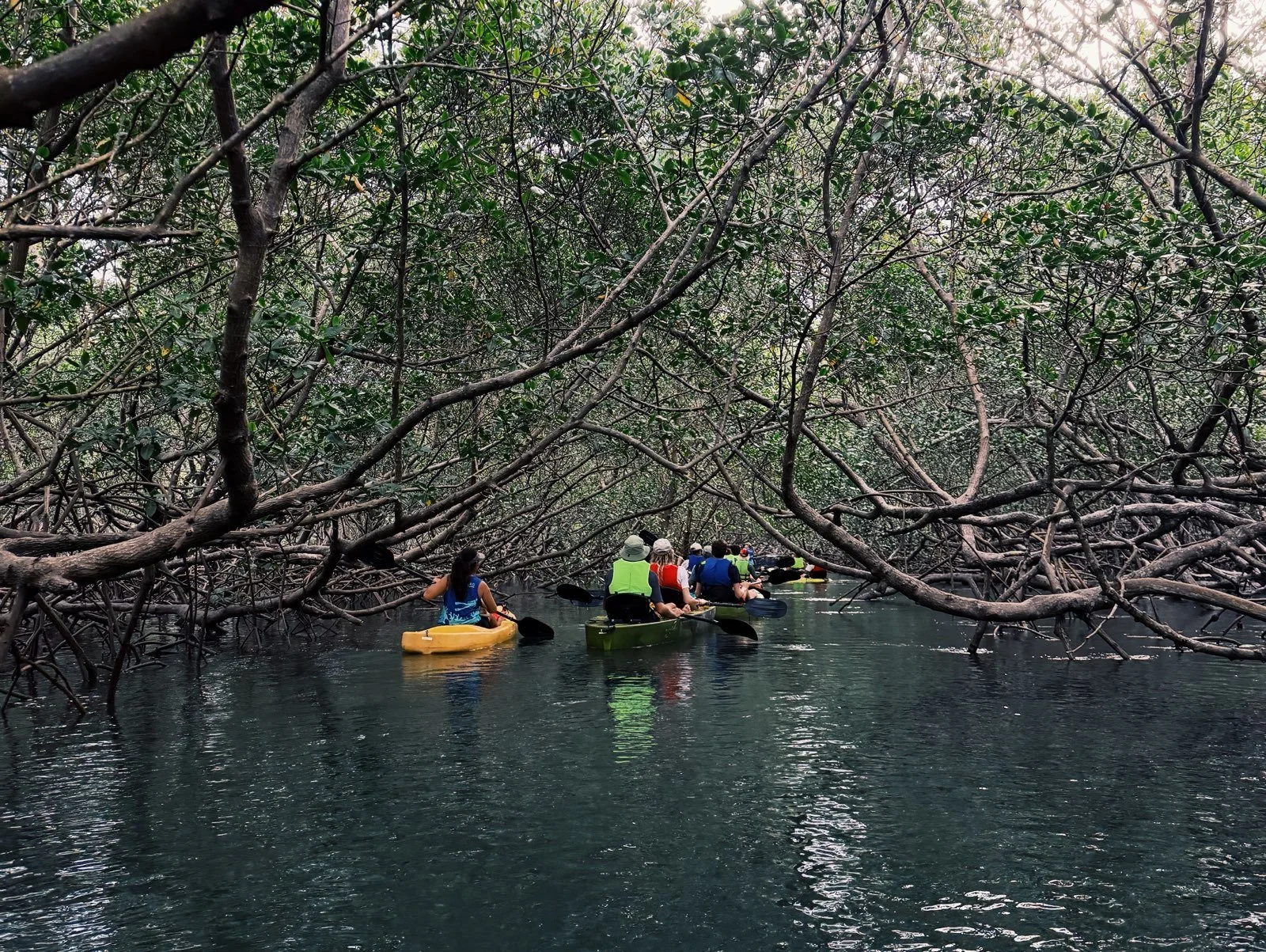
This is Boipeba’s most surreal experience. Paddle through the Rio do Inferno mangroves just before sunset to learn about the "nursery of the ocean” while the island’s aratu crabs climb the mangroves all around you. As night falls, the water erupts in neon-blue sparks called bioluminescence, while fireflies flit through the branches and the starry night sky sparkles above. Again, Ecomar is one of the best operators to do this experience with if you want to learn about the local ecology directly from oceanographers and native guides.
The "Secret": This is best during the New Moon (Lua Nova). Avoid the Full Moon, as the light pollution makes the bioluminescence harder to see. If you happen to be in Boipeba a few days after or before the full moon, there’s still a strong possibility you’ll see some bioluminscence. I did just days after the full moon, bus see what Ecomar recommends.
3. The "Volta à Ilha" Boat Tour
If you’re short on time, this is the 'greatest hits' of Boipeba’s coastline. By speedboat, you’ll visit the remote Ponta dos Castelhanos, swim in the Moreré natural pools, sip biri biri caipirinhas on Bainema’s wild sands, stop for lunch in the fishing village of Cova da Onça, and enjoy floating appetizers at the mangrove oyster bars. It’s a full-day, 7-hour tour that’s relatively affordable at 250 BRL—and according to fellow travelers, it’s well worth the time commitment. Almost every guesthouse in Boipeba has a "trusted" boatman or agency they work with. You can usually just ask at reception, and they will call the operator to reserve your spot.
4. Cova da Onça Full-Day Tour with Algha Moreré
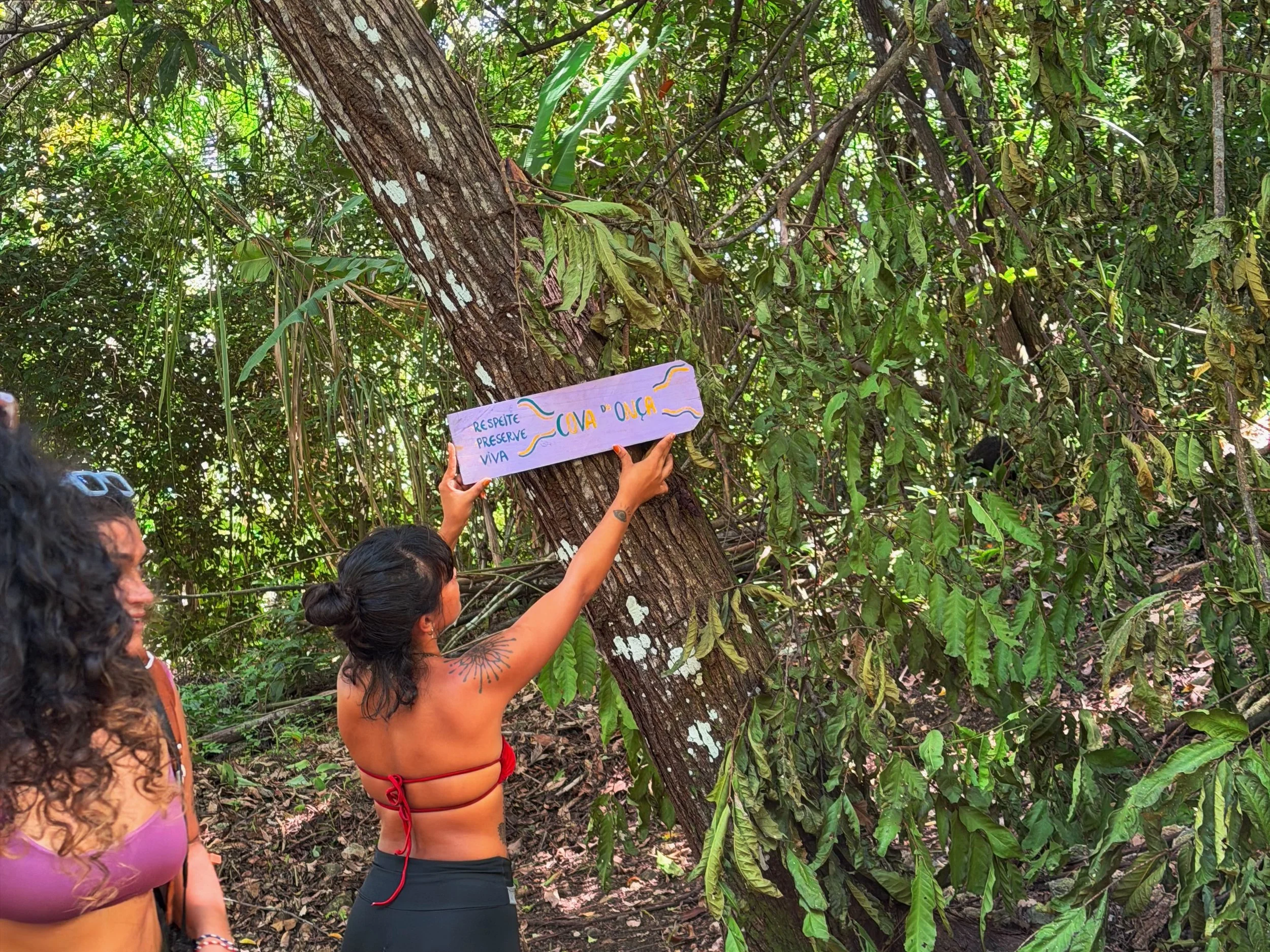
For a deeper dive into the south of the island, Nanda and Mari of Algha Moreré recently launched a specialized tour to Cova da Onça (São Sebastião). It’s a rugged, authentic look at the island's most remote fishing village, moving at a much slower, more intentional pace than the standard boat tours. The day includes lunch in a local’s home, a walk to the "leopard cave" (the village’s namesake), beers at the local pool hall, a visit to an artisanal dendê oil and cassava flour producer, and sunset drinks on a sandbar. It is a relaxed, immersive experience with plenty of time to get to know this lesser-visited part of the island, mingle with its inhabitants, and appreciate what Boipeba might have been like before it became Brazil’s favorite under-the-radar vacation destination.
5. Community-Based Tourism with Quase Nativa
To understand the "soul" of the island, connect with Quase Nativa, a social impact project founded by travel writer Manoela Ramos. Her tours aren’t traditional sightseeing, but a network designed to strengthen local communities by taking travelers to the places "traditional tourism" doesn't reach.
The Boipeba Roots Hike: This is their most iconic route. It takes you beyond the coastline and into the zona rural to visit the traditional Casa de Farinha. You’ll see how cassava flour—a staple of Bahian life—is still produced using ancestral methods.
The Percussive Experience: A deep dive into the island's rhythm with Mestra Jenice. She introduces you to native instruments and her own samba compositions, offering a hands-on connection to the Afro-Brazilian heartbeat of the island.
Cultural Context: Manoela is also the visionary behind the Festa Literária da Ilha de Boipeba (FLIB), a three-day festival celebrating local music, literature, and performance. If your visit aligns with the festival (typically held in October), it is an unmissable look at the island's vibrant creative community.
6. Surfing at Cueira Beach with Cueira Surf School
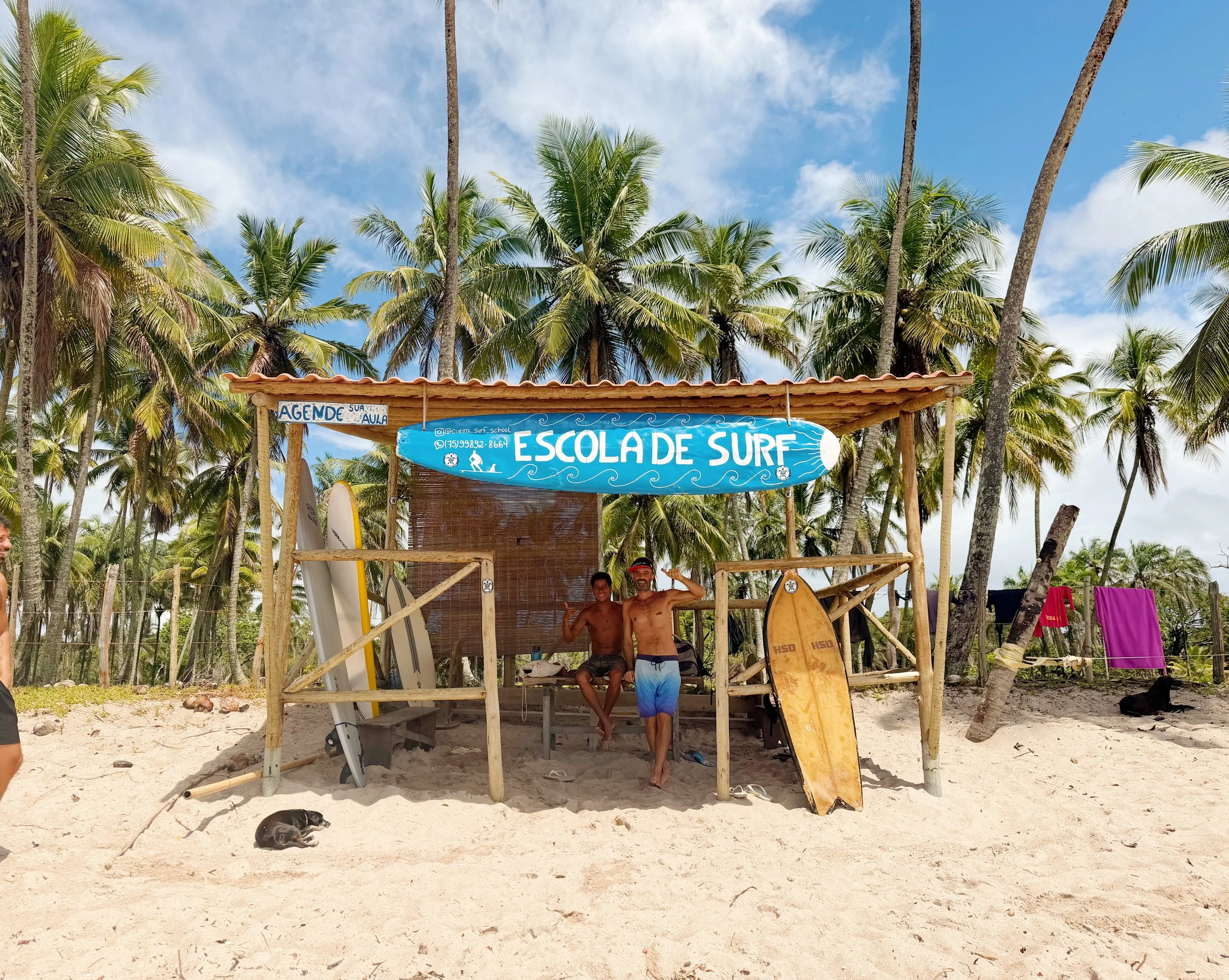
Praia da Cueira isn’t just a tropical postcard; it’s the heart of the island’s growing surf culture. Whether you are a pro or a total beginner, head to Cueira Surf School, the first school on the island, located right on the sand midway down the beach. The surf community in Boipeba is tiny—only about 10 to 20 regular surfers—making it a rare, uncrowded experience compared to Brazil’s bigger surf hubs like Itacaré. As the owner, Camilo, puts it, "Itacaré is the wall"—meaning that while most surf travelers stop there for the famous swells, Boipeba remains a peaceful, empty alternative for those in the know. Let’s hope it stays that way!
Surf Tip: Morning is usually the best time to paddle out. Camilo teaches everyone from locals to travelers, and he often posts live conditions to the school’s Instagram. Expect to pay around R$50/hour for a rental or R$110 for a guided lesson.
7. Cultural Roots & Conscious Movement at Cobijo Estudio
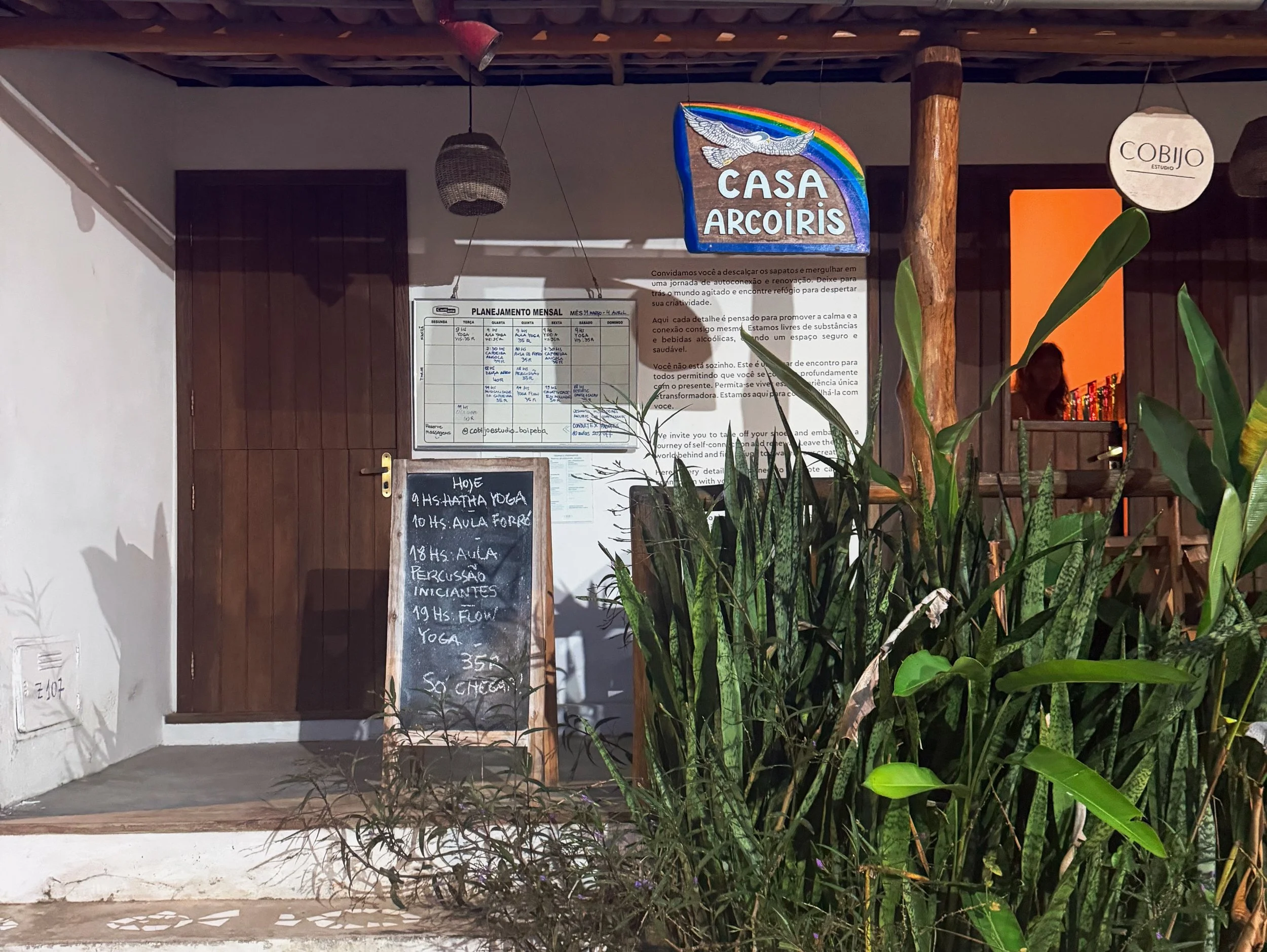
For a deeper connection to Bahian heritage and the island’s creative pulse, head to Cobijo Estudio (located at Casa Arcoiris). This is more than just a studio; it is a community hub that offers workshops focused on the history, social impact, and spiritual side of Afro-Brazilian art forms. Some of the classes and events you can sign up for include:
Capoeira Angola for Beginners: Unlike the more athletic Regional style, Capoeira Angola is a slower, more ritualistic dance-fight that emphasizes the art’s roots in resistance and community. Joining a roda or a beginner class here is a fun way to step inside this tradition.
The Rhythms of Bahia: The studio offers hands-on percussion and drumming classes that teach the specific rhythms of the Recôncavo Baiano, as well as Afro Dance and Forró workshops.
Yoga & Conscious Movement: There are yoga classes nearly every morning at 9am and a weekly ecstatic dance event paired with ceremonial cacao.
You’ll find their latest schedule of classes on the whiteboard outside the studio or you can find them on Instagram at @cobijoestudio_boipeb.
8. The Museu do Osso (The Bone Museum)
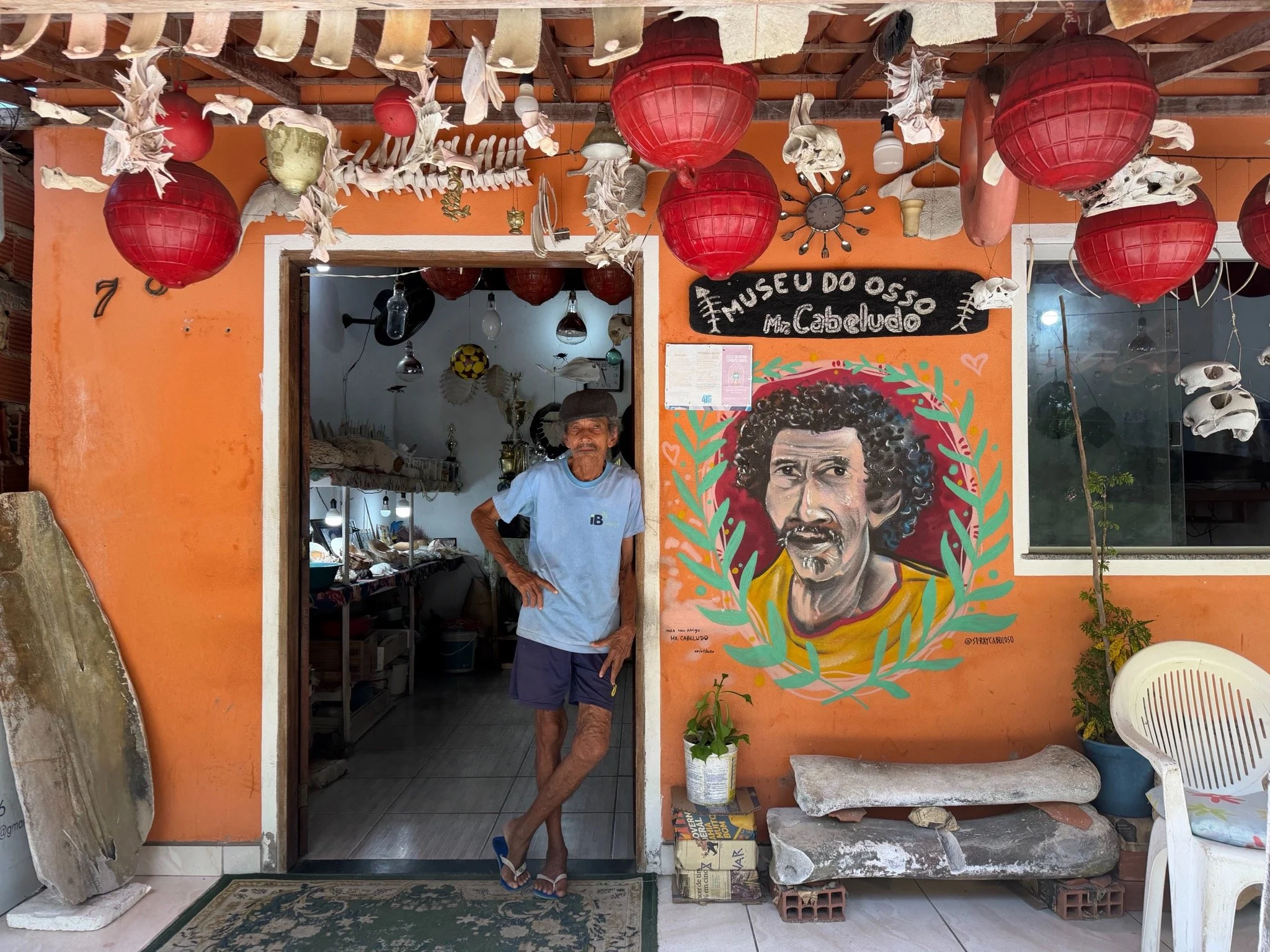
Located on the path to the Punto dos Quadriclos and inland trail to Cueira Beach, the Museu do Osso is one of the most eccentric and fascinating private collections in Brazil. It was founded and is still maintained by Mr. Cabeludo, a local resident who has spent over 40 years collecting thousands of bones from whales, dolphins, turtles, and other marine life that washed ashore on the island.
The Vibe: Humble, authentic, and a bit surreal. It’s essentially a small room packed from floor to ceiling with skeletons and marine artifacts, and if he’s there, Mr. Cabeludo often shares the stories behind his most prized finds.
Why it’s a "Must": It is a powerful, grassroots testament to the island’s incredible marine biodiversity and the life-long dedication of a single individual to preserve its natural history. It’s a quick but unforgettable stop that perfectly captures the quirky, independent spirit of Boipeba. Drop a few reais in his tip jar on your way out!
Where to Eat & Drink in Boipeba: From Ancestral Recipes to Modern Gastronomy
Boipeba’s food scene is evolving rapidly. While the classic wood-fired lobsters remain, a new wave of chefs and locals are focusing on historical revival, high-design dining, and authentic village staples.
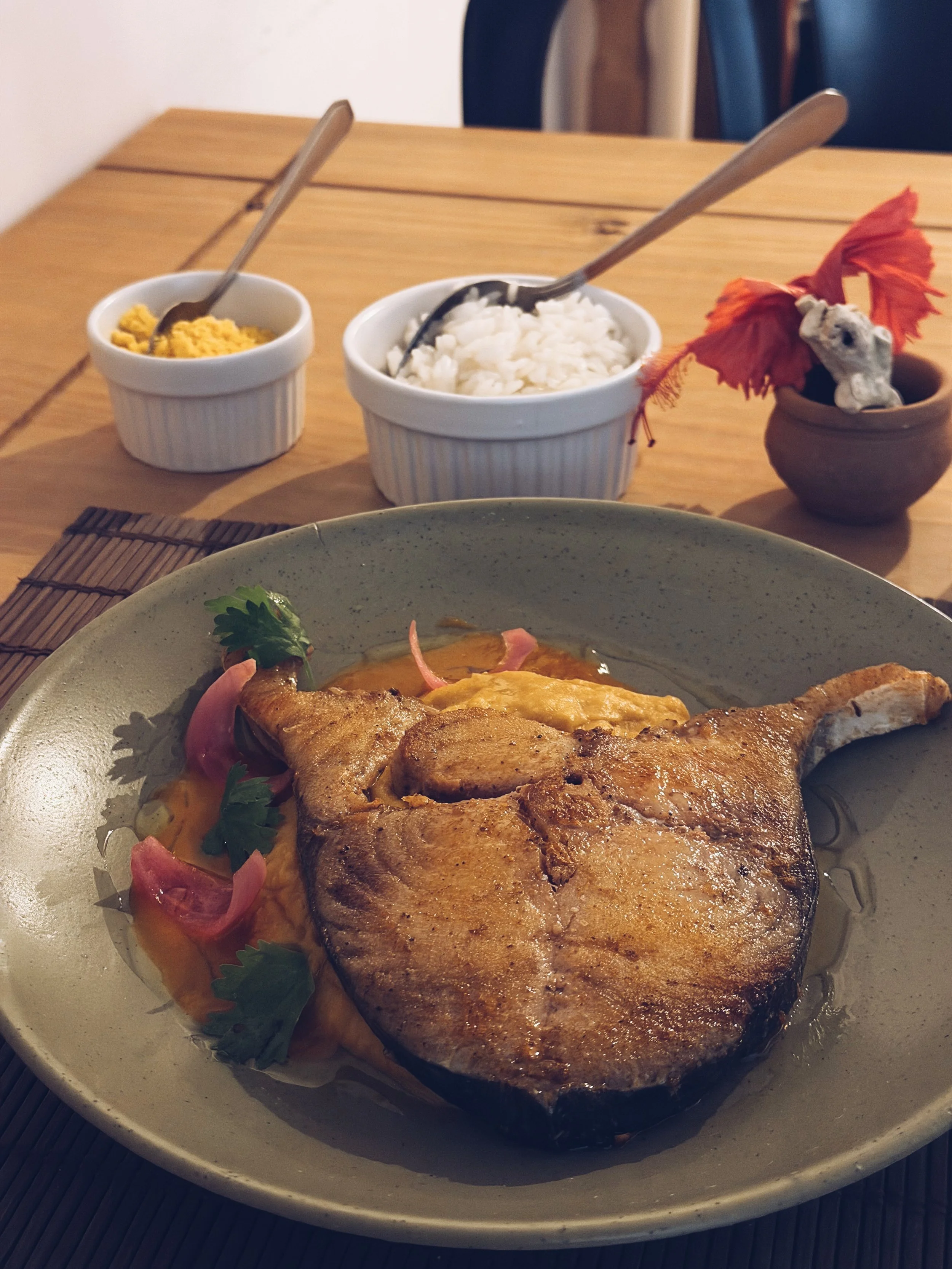
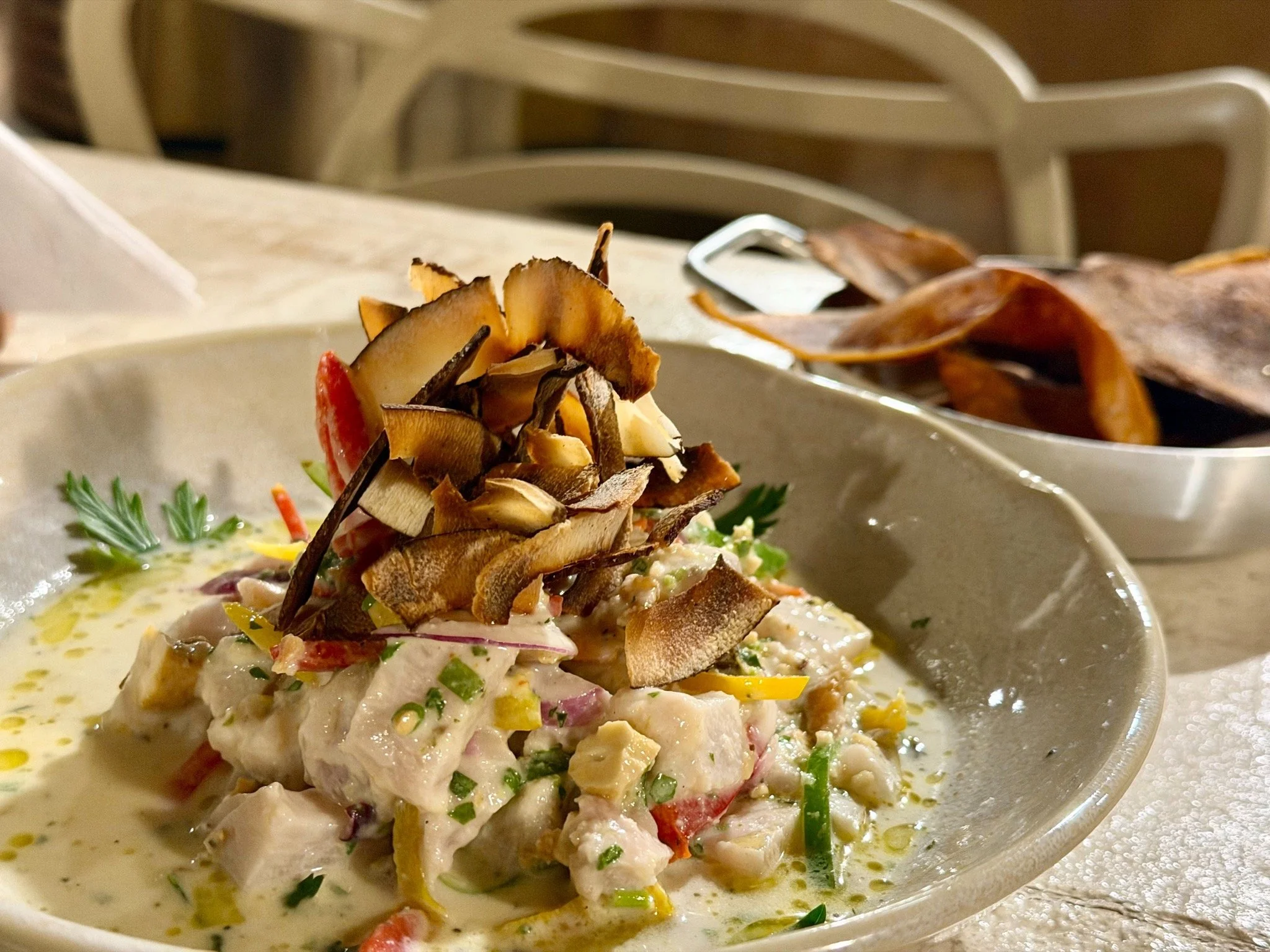
The Historical Heart: Querido Querino (Velha Boipeba)
Founded by Boipeba native and rising chef Sarah Barbosa, Querido Querino is a cultural landmark in the making. Her menu revives 19th-century Bahian recipes collected by ethnologist and intellectual Manuel Querino in the early 20th century.
The Vibe: Deeply intentional, culturally rich, and absolutely delicious.
Why it's "Responsible": It celebrates black Bahian gastronomy, ensuring ancestral flavors aren't completely lost to their modern-day takes.
The Fine Dining Edge: SOMA (Inside Casa Namoa)
Opened in December 2025 and led by Chef Fredd Flamarrion, SOMA is the island’s newest destination for contemporary gastronomy, tucked inside Casa Namoa Pousada.
The Vibe: Sophisticated, design-forward, and exquisitely plated dishes.
What to expect: A menu that elevates local ingredients through modern techniques, making it the premier choice for a high-end evening with plates that are almost too pretty to eat.
The Global Fusion Gem: Jardim (Velha Boipeba)
Led by Chef Juliane Martinez, Jardim offers a sophisticated fusion of Asian, Italian, and Northeast Brazilian elements that provides a change of pace from traditional island fare.
The Vibe: Intimate, serene, and intentionally tucked away from the village noise.
What to expect: This is the only place on the island where you’ll find a masterfully executed Nasi Goreng, Udon, or Yakisoba alongside artisanal pizzas and fluffy baos. It’s the perfect choice if you’re needing a break from moqueca and acarajé. I also hear their banana cheesecake is to die for.
The Comida Caseira for Cheap: Restaurante Jorge Som (Praça Santo Antônio)
Forget the fancy views—Restaurante Jorge Som is where you go for the definitive comida caseira (home-cooked) experience on the island. Located right in the village square, it is famous for its ambiente familiar and generous portions that feel like a meal at a local’s home.
The Must-Order: While vegans can go for their moqueca de banana da terra, the true local specialty here is the moqueca de aratu (a unique red mangrove crab). Their shrimp and octopus (polvo) moquecas are also standout choices, always served with some of the best pirão and farofa on the island.
The Vibe: Casual, authentic, and shaded by almond trees. It’s always full of life, serving as the perfect anchor for the village’s social and culinary scene.
The Soul of Boipeba: Acarajé da Pati
For the most authentic taste of the island, skip the central plaza and find Acarajé da Pati. Tucked away from the main tourist noise, Pati is widely considered by locals to serve the best acarajé on Boipeba.
The Vibe: Authentic, community-focused, and unpretentious. It’s where you go to eat like a local.
The Experience: Watch as she expertly fries the bolinhos (black-eyed pea dough) in fresh dendê oil. For the full experience, get it "completo" with vatapá, caruru, and salad—but be careful with the pepper (pimenta), as it’s notoriously strong.
The Bistro & Art Gallery: Divino Antônio
Located right in the heart of the village on a corner in Praça de Santo Antônio, Divino Antônio is arguably the most enchanting coffee and cake or dinner spot on the island. It shares its space with Tribo das Artes, a collective of local artists, making it a cultural hub that feels like a cross between a personal library and an art studio.
The Vibe: Intimate, artistic, and intellectual. With books on every table and walls of exposed brick showcasing rotating local art, it is the perfect place to disconnect from the beach energy and settle into a slower rhythm while still being locationally central.
What to Expect: The space transitions from a cozy cafeteria in the late afternoon (ideal for coffee and a slice of cake) to a refined bistro in the evening. Their healthy, intentional menu—featuring wholesome soups like carrot with ginger and hearty mains—is that perfect, nourishing reset we all need at some point.
The Shop: Don’t leave without browsing the attached boutique. It’s filled with curated, sustainable handmade decor, ceramics, and local crafts that reflect the true artistic spirit of Boipeba.
Sunset, Cocktails & Craft Beer
Boipeba’s evenings are best spent in a slow transition from high-altitude sunsets to small-batch brews, dinner, and rhythmic village nights where the live music lives.
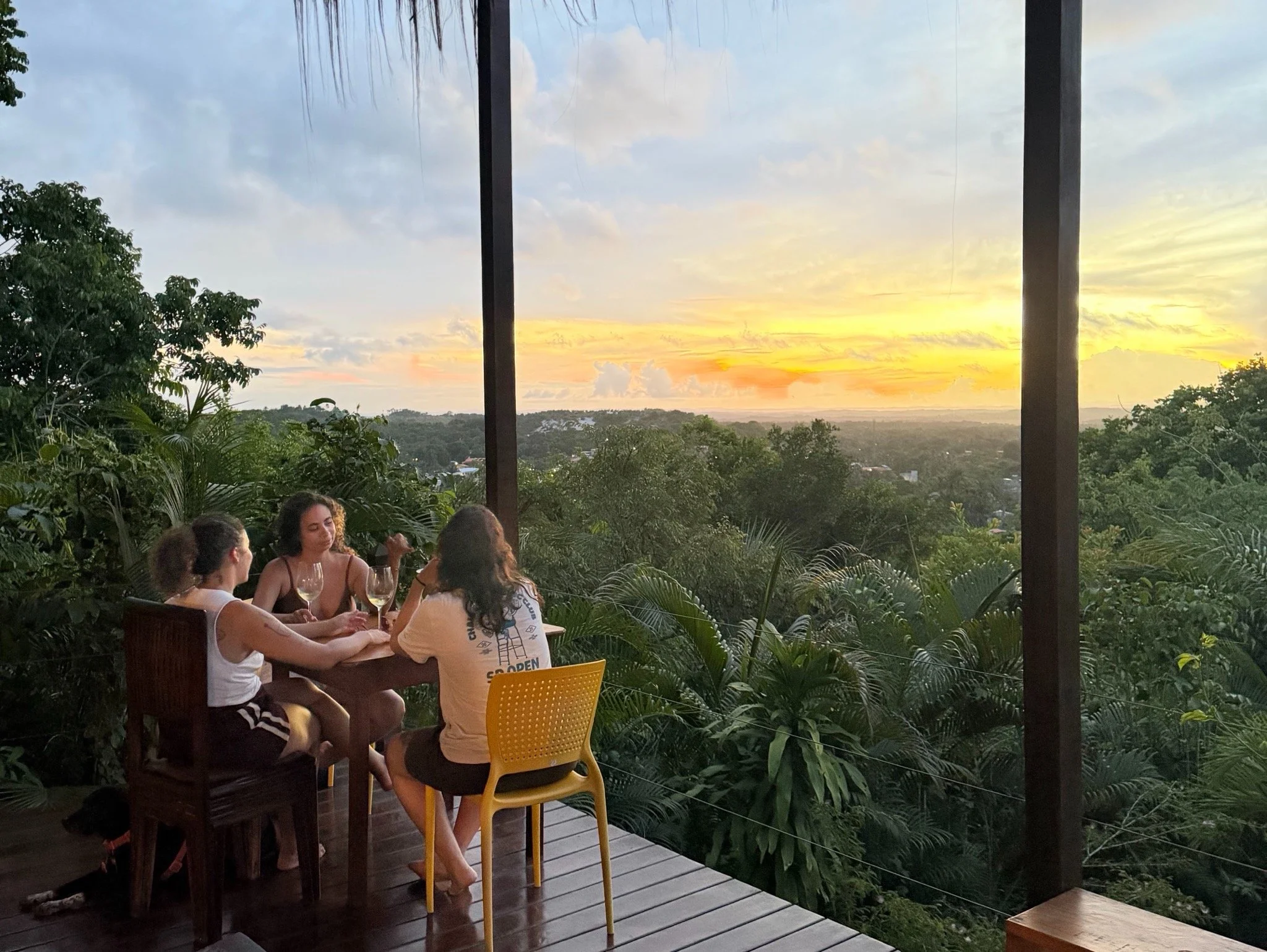
O Céu for sunset: This is the definitive "best view" on the island. Perched high above the village, it’s the iconic spot for sunset drinks and light bites. The walk up the hill is rewarded with a panoramic view of the Atlantic and island that is unmatched.
Casinha Latina for dancing and Latin American cuisine: For a more vibrant, high-energy atmosphere, head here for live music later in the night. This is the place in town to dance the night away and mingle with locals.
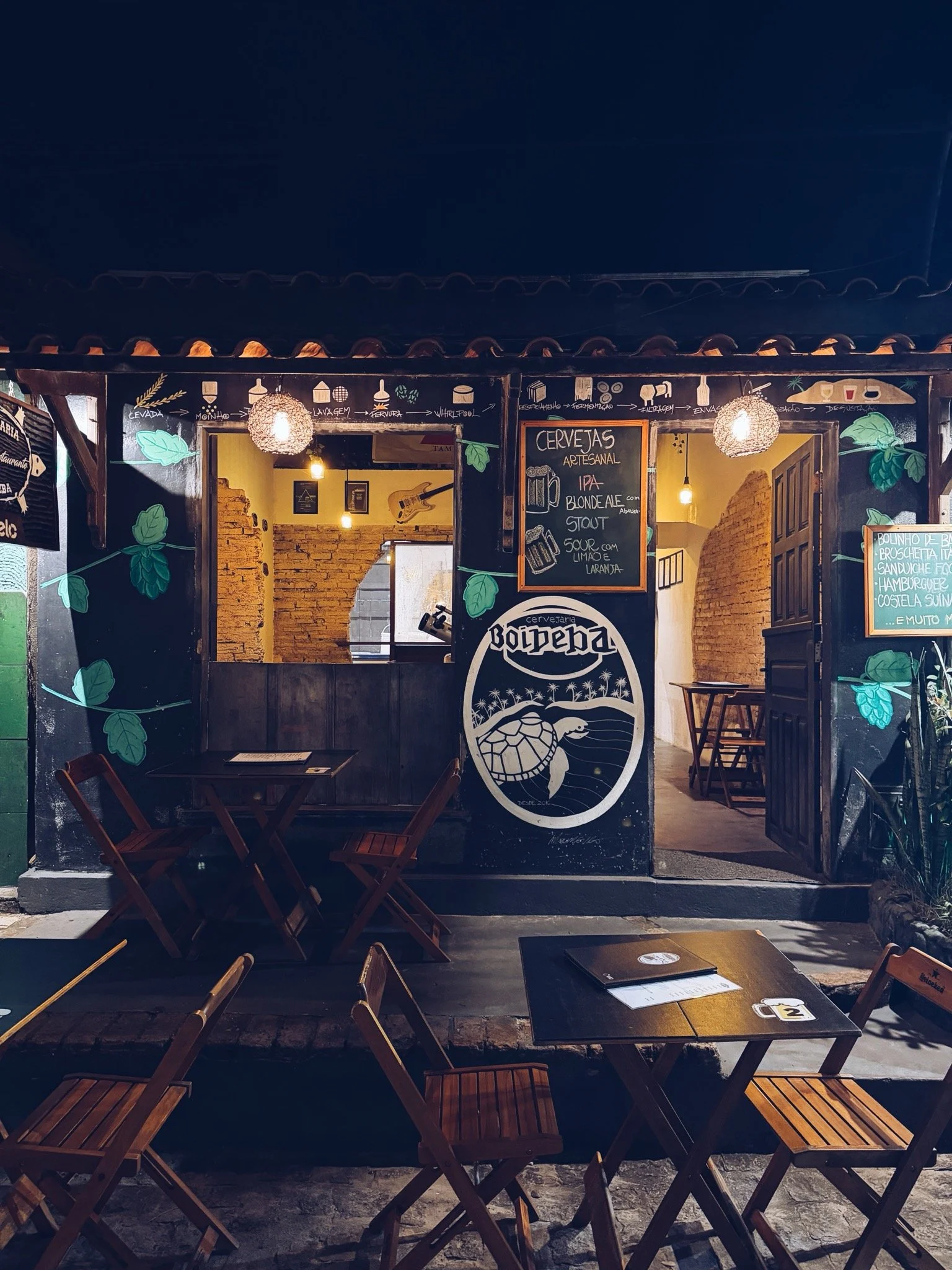
Cervejaria Boipeba for craft beer paired with Italian-made pizza: A must-visit for craft beer lovers, run by owner César. This is a true island brewery producing experimental, small-batch beers that rotate with the seasons. Look for their blonde ale with pineapple or their unique infusions using local cacau, Sicilian lemons, or even pumpkin. You can check their Instagram to see what’s currently on tap.
My Moreré & Bainema Favorites
If you are spending a few nights or even just the day on the southern beaches, these spots offer a more relaxed, nature-forward pace than the village center.
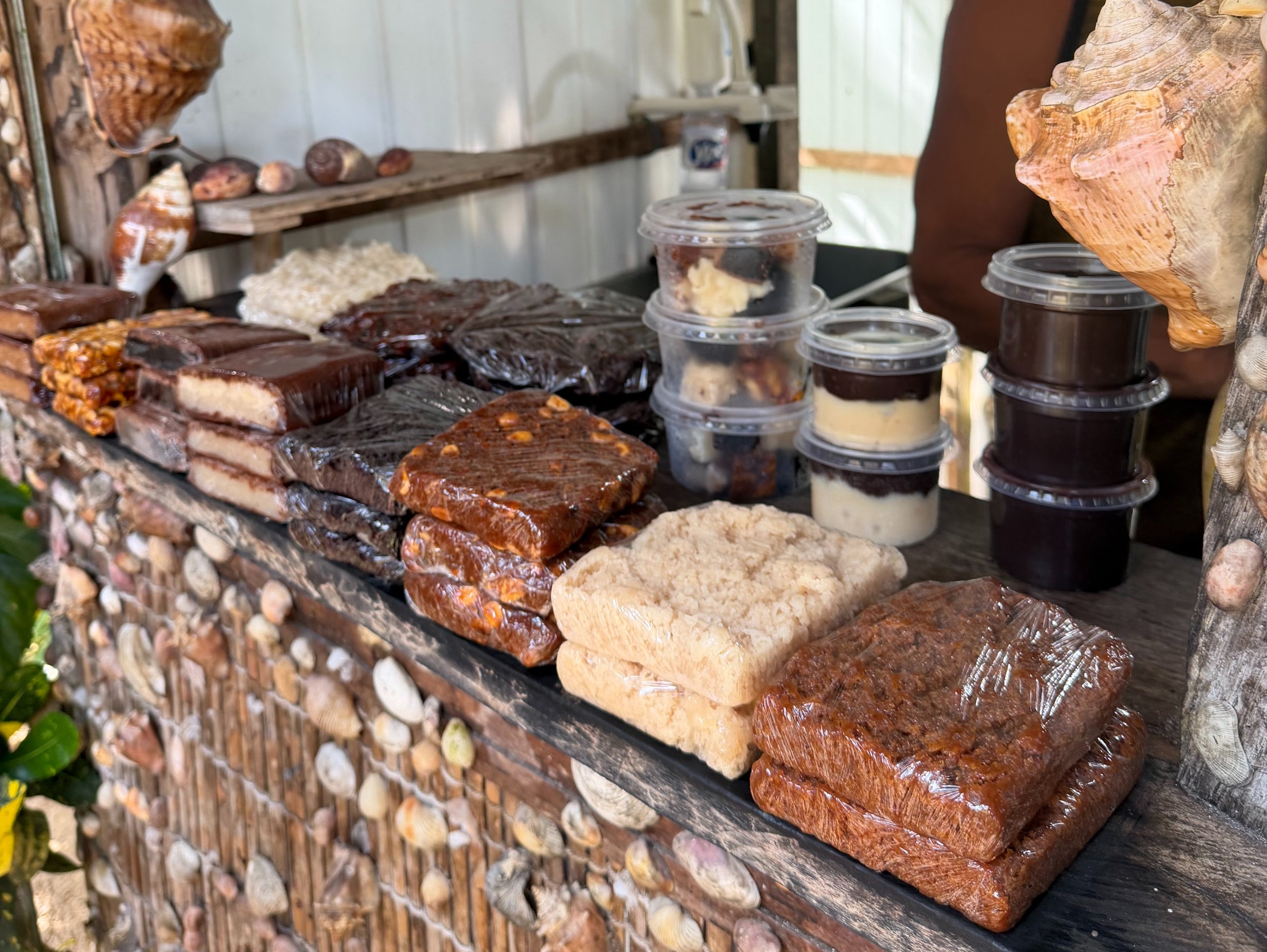
Paraiso (Moreré): A top-tier choice for a long lunch between snorkeling sessions. Stay for the Sobremesas Shack located inside; their mousses and cocadas (traditional coconut sweets) are legendary among those who know to look for them.
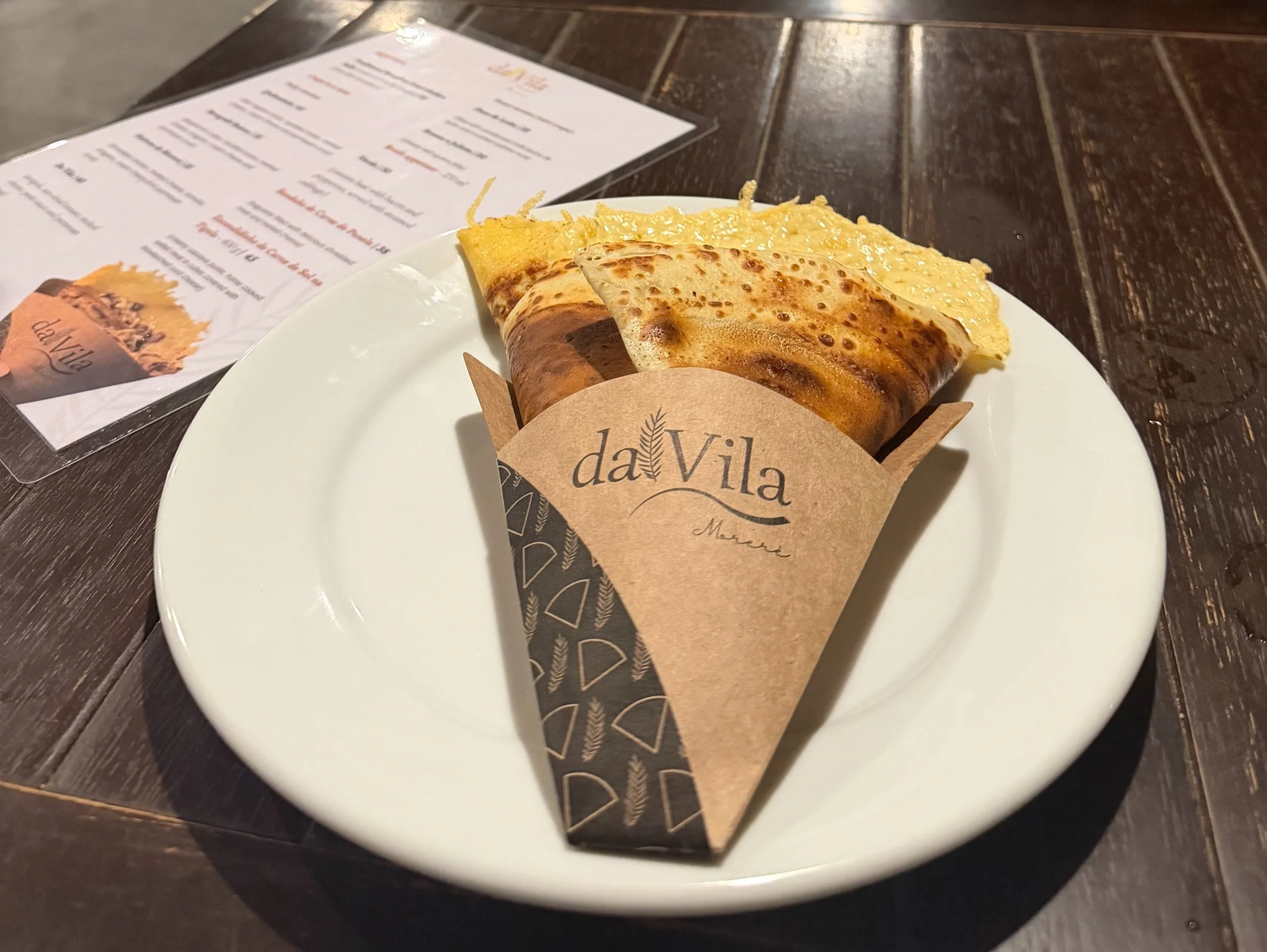
Da Vila Moreré: Head here for their heavenly parmesan-crusted crepes. It’s a nice casual light-bite option in Moreré for dinner when you need a break from local fare.
Brisa (inside Ventos Morere): For a breezy and romantic oceanside dinner, the restaurant inside this higher-end pousada is such a vibe. It’s set right on the edge of the sand and low-lit, allowing you to dine with the sound of the tide as your soundtrack over a bottle of wine and plate of gnocchi, risotto, or filet mignon. By day, this is also the only spot I found in Moreré with espresso on the menu.
Barraca Vai na Fé (Bainema): When you’re looking for a super relaxed and secluded beach day, this is the perfect spot. Located on the wild, untouched sands of Bainema, this barraca provides a quiet sanctuary. Grab a cold drink and spend the afternoon in one of their hammocks—it’s the ultimate way to settle into the island’s rhythm on one of its most beautiful beaches.
Where to Stay in Boipeba: Velha Boipeba vs. Moreré
Choosing where to base yourself depends on how much "friction" you want in your day. Most travelers split their time between the main village and the quieter beaches to the south, using quad-taxis to get them between the two or tracking the tide for the long walk along the beach.
Velha Boipeba: Infrastructure & Ease
Stay here if you want to be close to the pier, the widest variety of restaurants, and the main village square (Praça Santo Antônio). It is the most convenient choice for short stays on the island. Here are a few pousadas and hostels in Velha Boipeba I can personally recommend:
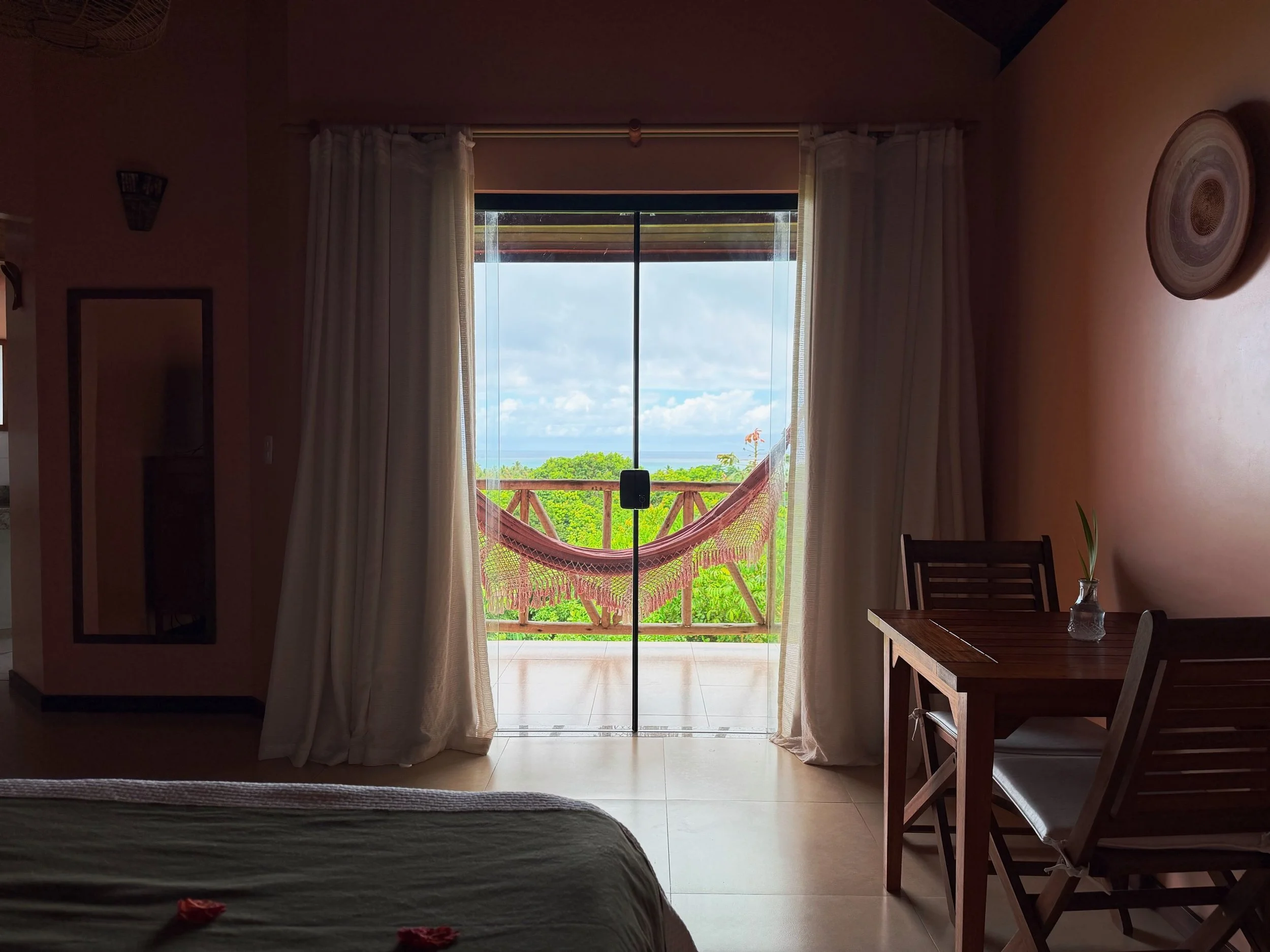
Pousada Mangabeiras ($$$)
An eco-luxury stay situated just off the forest trail to Tassimirim. It offers some of the best views of the archipelago from its hilltop perch and is deeply committed to sustainable practices. There’s a pool and even a funicular to help you get up and down to beach level.
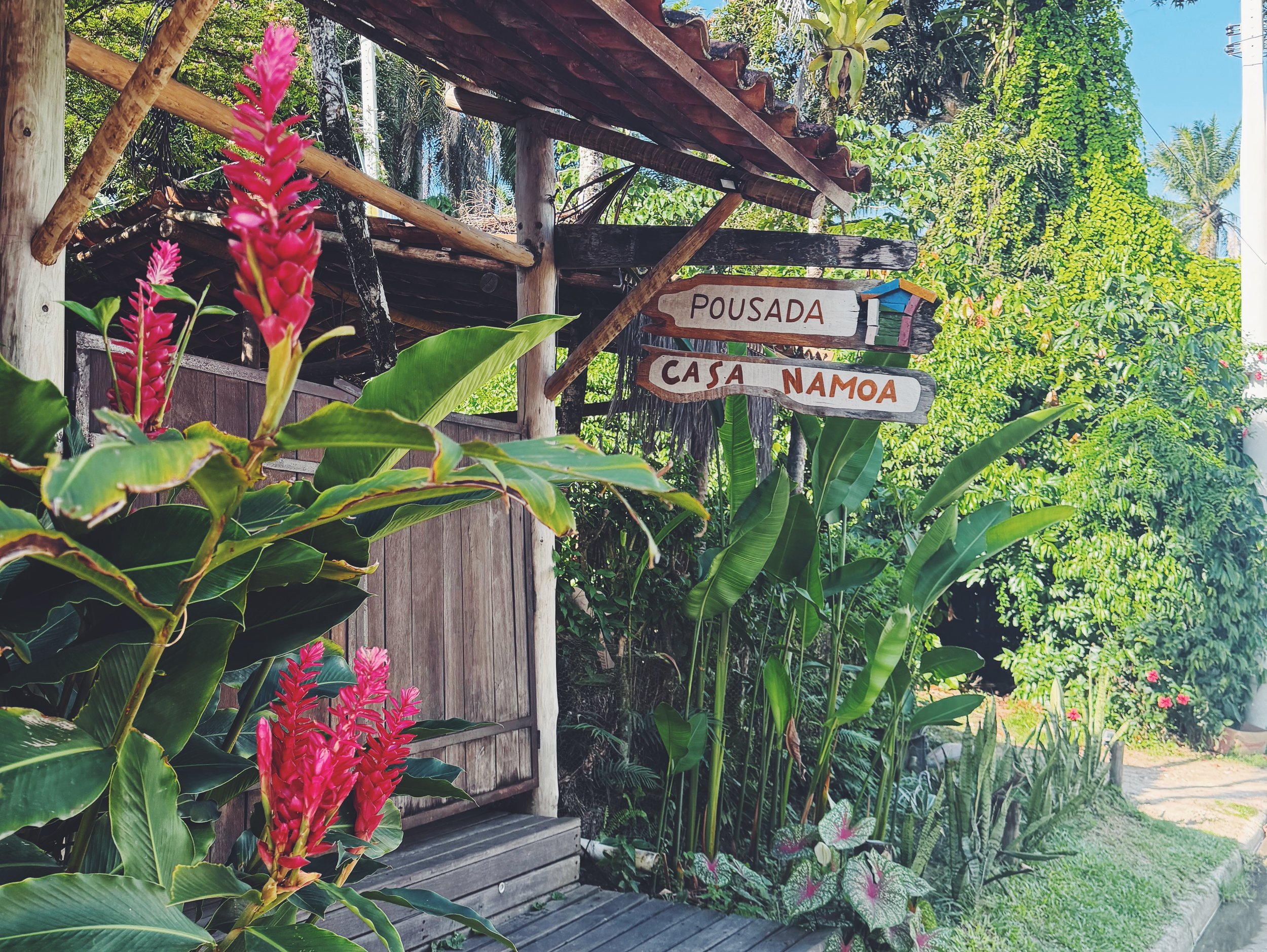
Casa Namoa ($$)
Perfect for travelers seeking a cozy and comfortable stay near the heart of the village, where every single element is handmade, homemade, and, when it comes to breakfast, homegrown. It’s ideally situated for easy access to boat departures and evening dining, with many of the restaurants mentioned above just minutes from its doorstep.
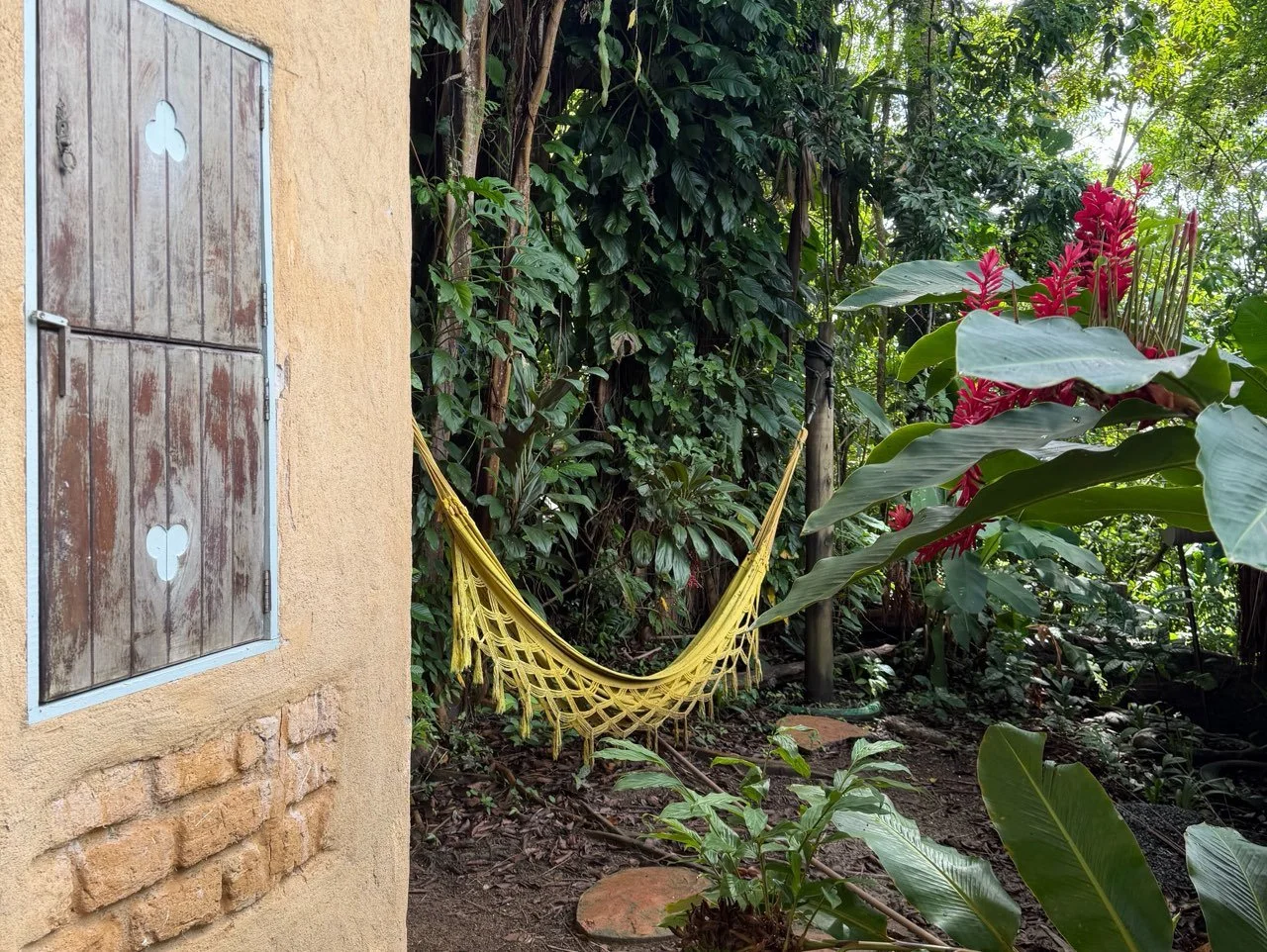
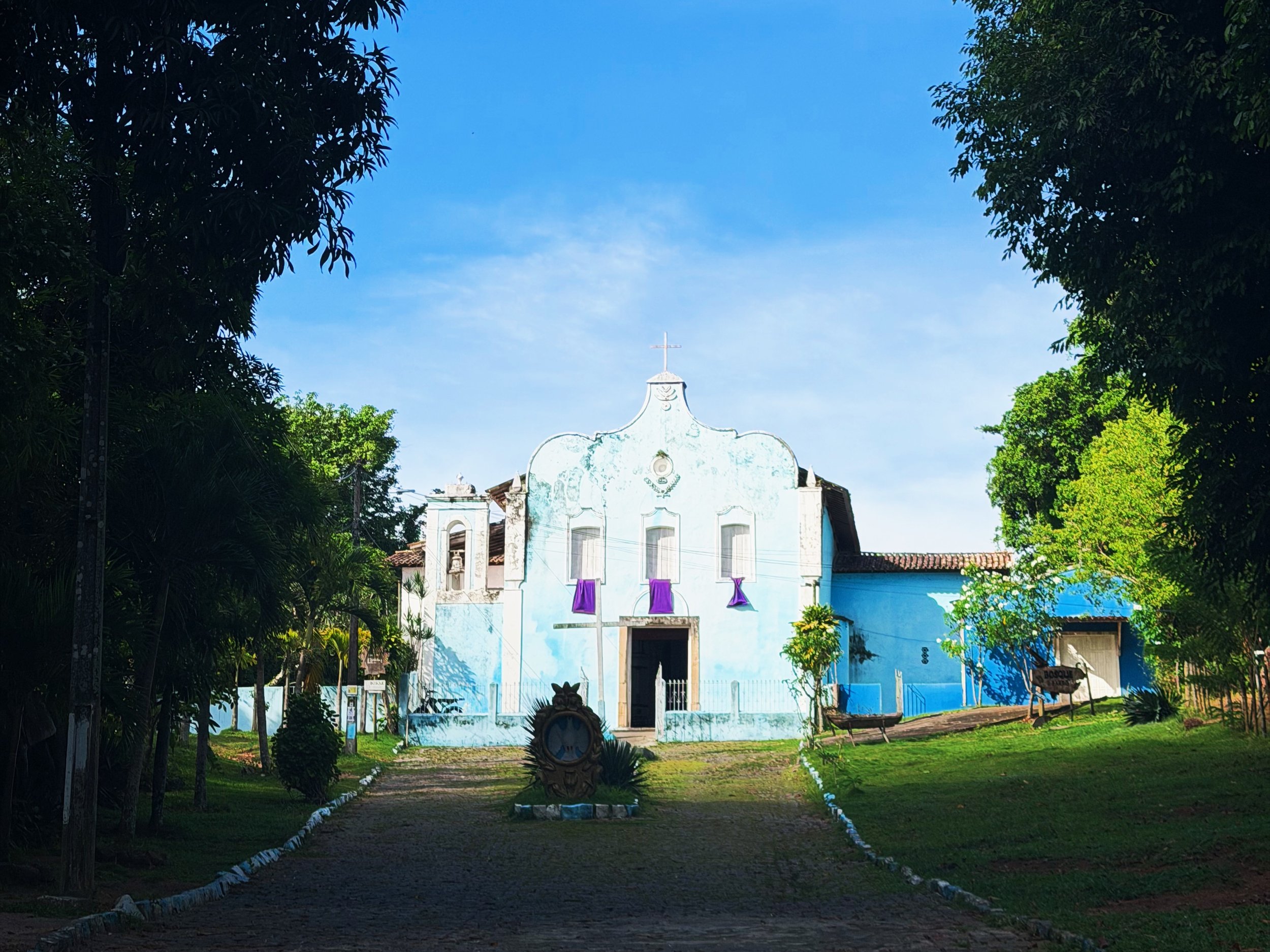
A standout for conscious travelers and backpackers who love to live surrounded by nature. Built with natural materials and integrated into the forest just next to Boipeba’s famous blue church, this hostel provides a peaceful, artistic sanctuary while remaining within walking distance of the village center and beaches.
Moreré: Quiet & Nature-Forward
Stay here if you want to find even more peace and quiet and don’t mind a more "rustic" pace. It’s the best choice for those seeking total disconnection or who want to be closer to the tide pools and most deserted beaches.
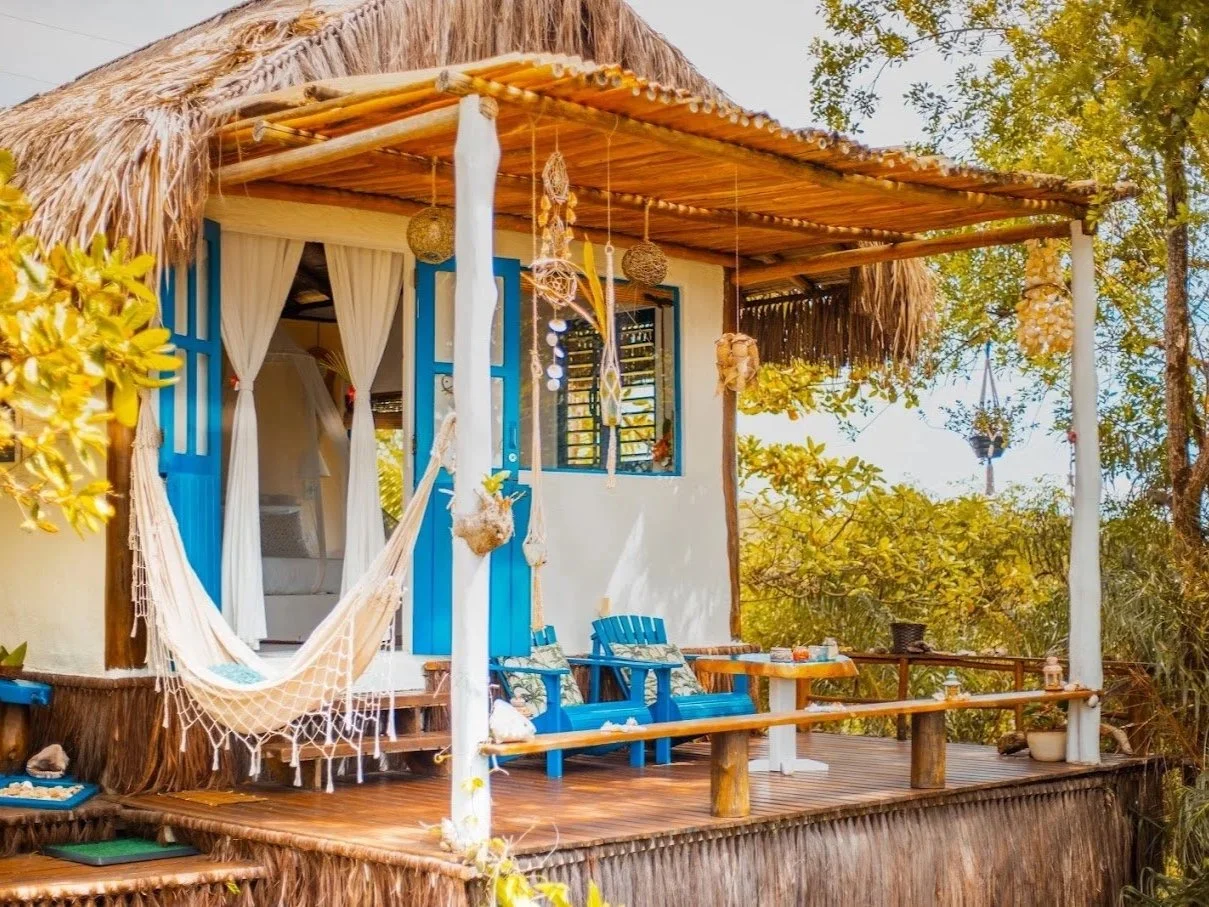
Eco Casa Bobô ($$)
Located on a hill overlooking the Moreré coast, this is one of the most sustainable stays in Brazil. It operates with a "zero waste" philosophy and offers a luxury experience that respects the local ecosystem.
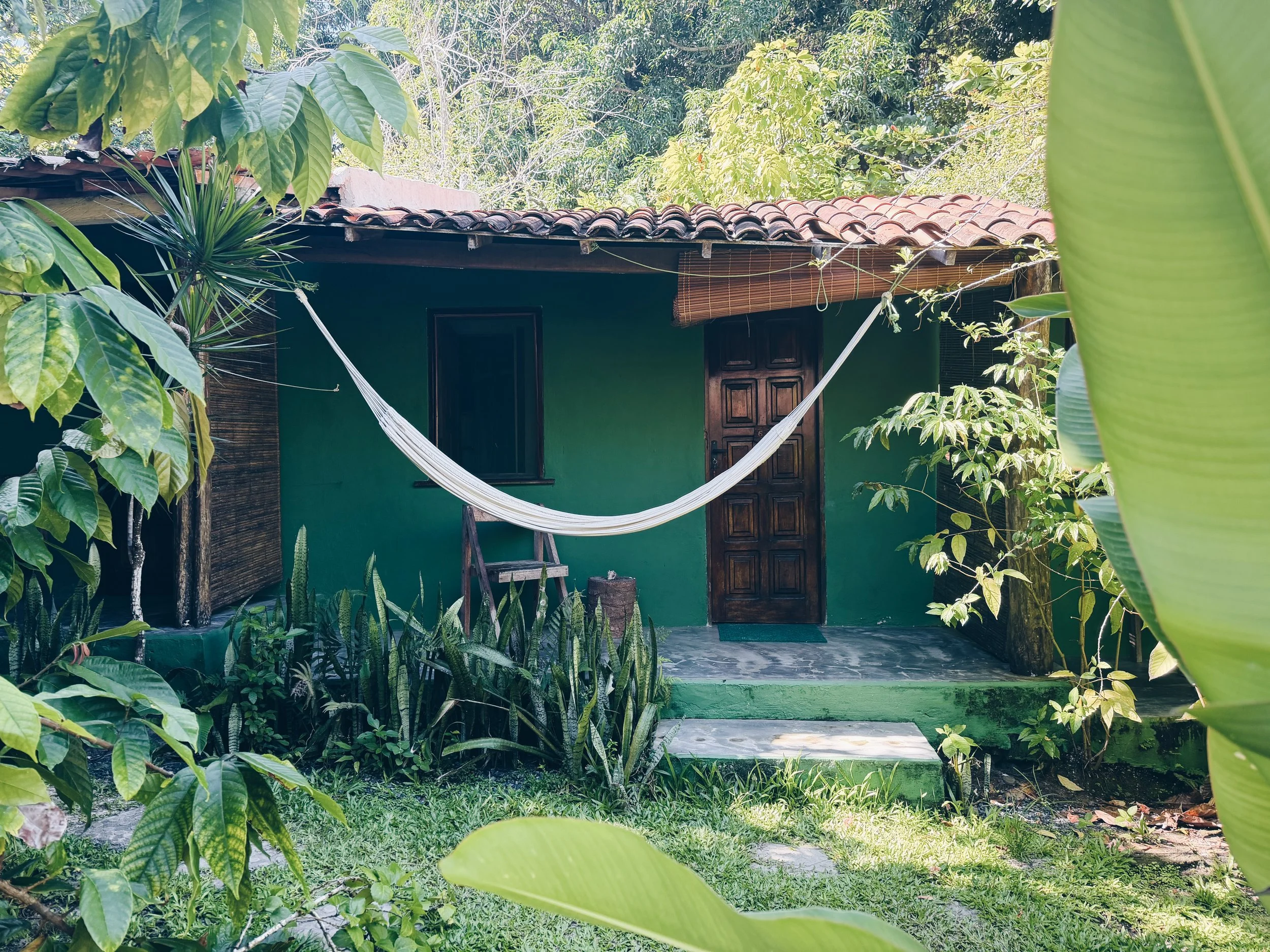
Pousada Moreré ($$)
A classic beachfront stay that captures the original "old Boipeba" spirit. You are literally steps from the sand, natural pools, and heart of the village in a revamped version of Boipeba’s first pousada.
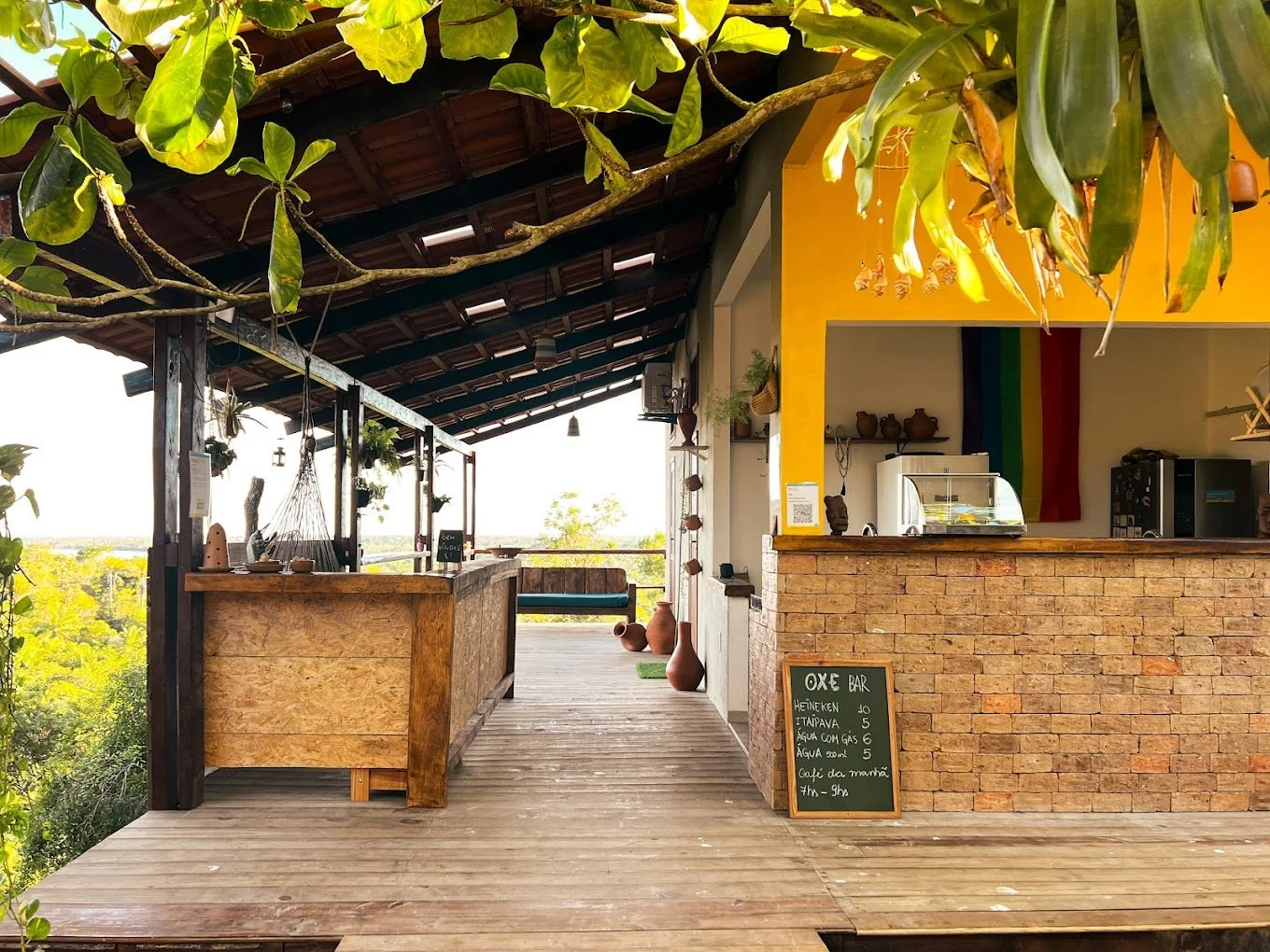
Oxe Hostel ($)
For a more laid-back, budget-friendly stay in Moreré, Oxe offers a great social vibe with amazing views from its hilltop perch. It’s perfect for solo travelers or those looking to stay somewhere immersed in nature.
Getting to Moreré: To reach Moreré from Velha Boipeba without walking the coastline, head to the 'Ponto do Quadriciclo.' There, you’ll find ATVs (quadriciclos) waiting to ferry passengers across the island's interior. A seat typically costs around R$30, and if you’ve got luggage, they’ll safely secure it for you. While faster, keep in mind that the rise of ATVs in Boipeba over the past year is a point of local environmental debate—walking the trails remains the most sustainable way to move about the island (plus they’re insanely beautiful!), but sometimes an ATV is really the only way to get between Velha Boipeba and Moreré when you’re loaded down with luggage or have mobility issues.
The Ideal Boipeba Itinerary (3–5 Days)
This flow balances the "must-sees" with the necessary "slow moments" the island requires.
Day 1: Arrival & Village Sunset
Check into your pousada in Velha Boipeba, switch into your swimsuit, then walk to Boca da Barra to go for a swim and watch the sun dip into the river. Follow it up with dinner at one of the restaurants in Velha Boipeba listed above, keeping in mind that most spots open at 7pm.Day 2: The "Volta à Ilha" Explorer
Book a full-day boat tour to see the remote south side of Boipeba. You’ll snorkel in the Moreré pools, explore the sandbars of Ponta dos Castelhanos, and eat oysters in Canavieiras. This is a 7-hour, full-day tour.Day 3: The Great Beach Trek
Walk from the village to Tassimirim in the late morning, maybe go for a surf, then have lobster for lunch at the iconic Guido’s in Cueira. After, cross the river (on foot at low tide, by boat at high tide) to spend the afternoon in Moreré.Day 4: Mangroves & Magic
Catch a quad-taxi from the Punto do Quadriciclo to spend a slow morning on the wild sands of Bainema. In the late afternoon, head back to Velha Boipeba to join Ecomar for a kayak tour through the mangroves, staying out for the bioluminescence after dark.Day 5: Slow Morning & Departure
One last dip in the river at Boca da Barra before taking the speedboat back to the mainland.
Visiting Boipeba Responsibly
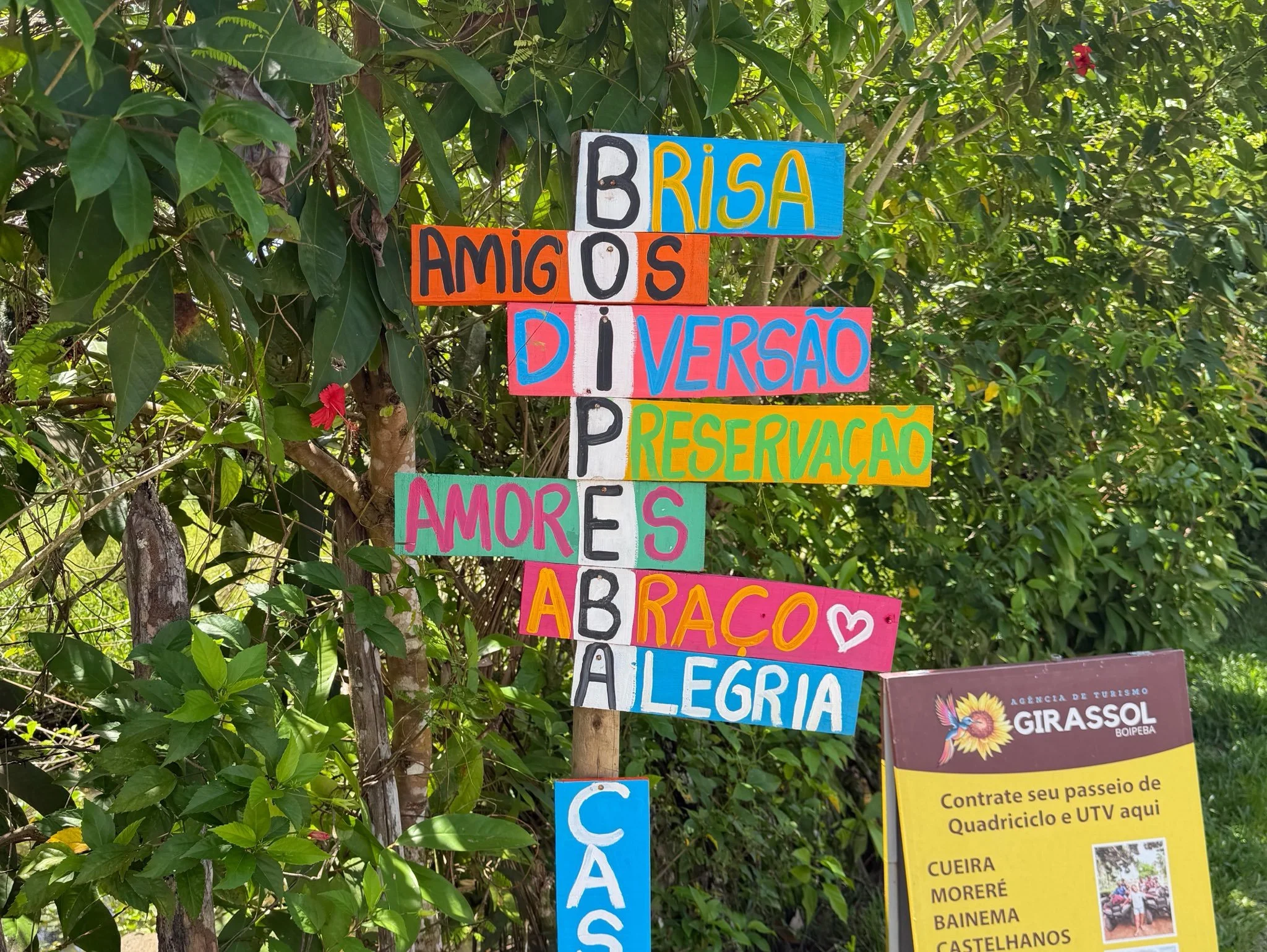
Boipeba is at a crossroads. Its recent rise in popularity means the island’s delicate infrastructure is under pressure. Visiting responsibly isn’t just a suggestion; it’s how we ensure the island’s "rhythm" survives for the next generation.
Respect the Quilombo Territory: In 2023, Boipeba was officially recognized as a Quilombola territory. This means the land is legally acknowledged as belonging to the descendants of Afro-Brazilians who historically resisted slavery. At barracas on the beach, look for signs for AQUIMBO (Associação dos Quilombolas de Boipeba). Supporting businesses and barracas aligned with this association helps these communities protect their ancestral land from predatory real estate development.
Support Local Associations: Look for the AMABO (Associação de Moradores e Amigos de Boipeba) seal when choosing local guides, operators, and pousadas. This ensures your tourism dollars are going towards supporting locals, the natural environment, and the community’s education and conservation efforts.
The Quadriciclo (ATV) Debate: While quadriciclos offer a fast way to reach remote beaches, their rapid rise is a major concern for soil erosion and noise pollution on the island. Opt for the traditional tractor-taxi or, better yet, explore on foot. Walking keeps the island car-free in spirit and preserves the quiet that makes Boipeba special.
Reef Protection: When snorkeling the natural pools, never touch the coral or feed the fish. Use mineral-based, reef-safe sunscreen or wear a UV-protection shirt to prevent chemical damage to the water.
Waste Management: Logistics on a car-free island are difficult. Everything brought onto the island must eventually be boated off. Minimize your plastic use and always take your trash back to the village where waste management is more centralized.
Support My Work While You Travel Brazil
If you found this guide helpful, one of the best ways to say thanks and support my work is to use the links on my Travel Resources page throughout your trip, be it for your hotel booking on Booking.com, that tour that caught your eye on Viator, or the travel insurance or eSIM you still need to buy. This sends a bit back my way at no additional cost to you—muitíssimo obrigada!
What to Read Next