Itacaré Travel Guide: The Tips I Wish I’d Had, Best Beaches, & Where to Stay
Affiliate Disclosure: Some of the links in this guide are affiliate links, which means I may earn a small commission if you book through them—at no extra cost to you. I only recommend tools, tours, and stays that I’ve personally enjoyed and/or are backed by solid reviews.
I spent three weeks exploring every inch of Itacaré so you don’t have to waste a day of your stay. Here’s what I discovered from best bites to beaches, surf schools, and parts of town to stay.
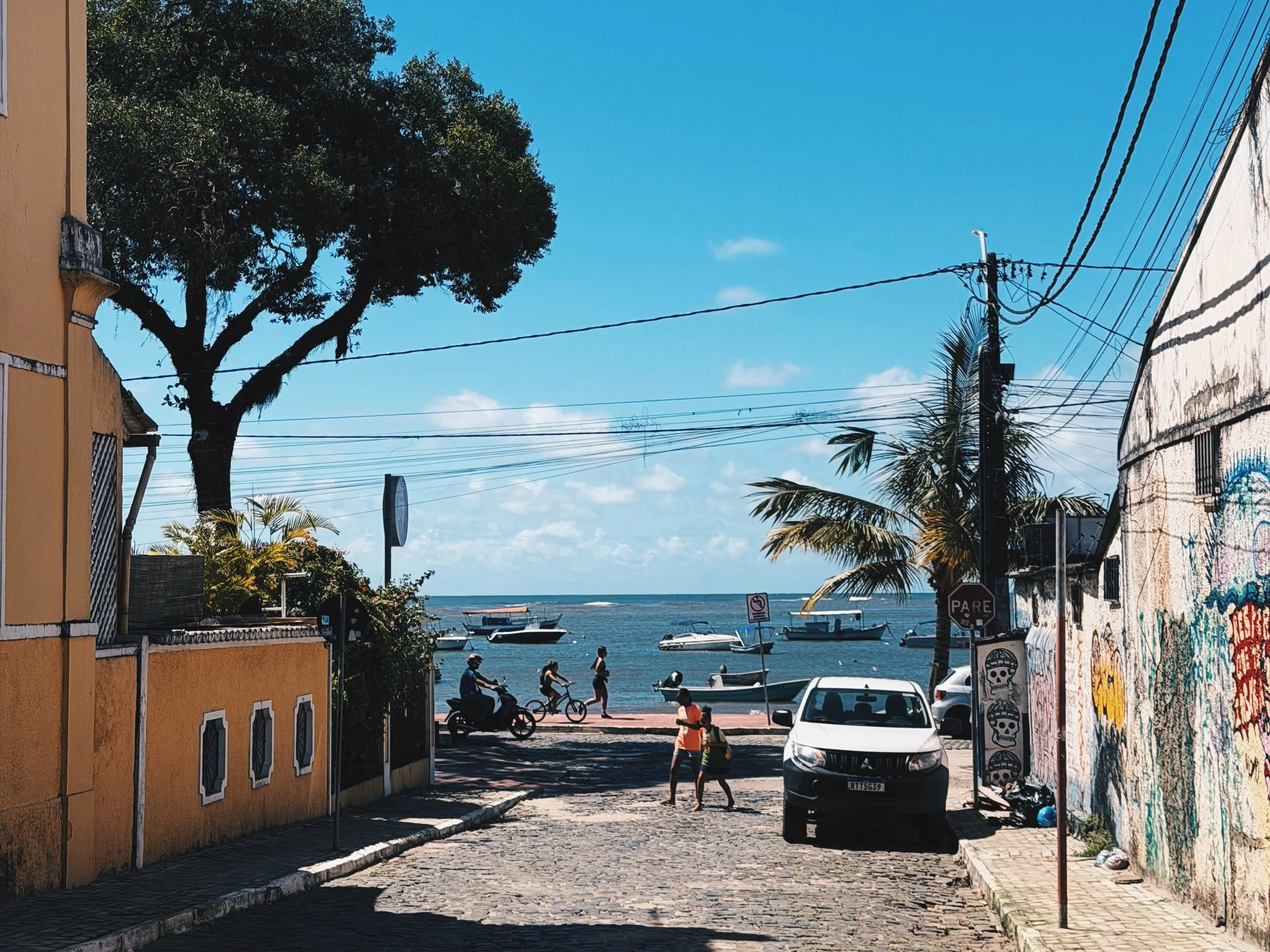
When I stumbled off the bus from Camamu, Itacaré felt like a rude awakening. I’d just spent two weeks in the sandy streets and secluded beaches of the Península de Maraú. This was not that. I wondered if I’d made a mistake in coming here. I wasn’t sure I wanted to adjust to its city sounds and structures. I actually considered crawling back onto the bus I’d just gotten off, reversing my steps back to what had felt like paradise.
Upon arrival, all I knew about Itacaré was that it had a reputation for surf and parties. I was all in for the first, only loosely interested in the second. But the bus, my link to where my heart still was, pulled away and I somewhat reluctantly made my way to the pousada I’d booked. I’d have to figure this place out—because here I was.
Fast forward three weeks, and you could say I did find my way. And I’ll tell you what made it all click: positioning myself wisely in town, knowing where the trails to the more secluded beaches begin, and connecting with the right people—starting with the surf community.
I did sample the samba street parties and forró nights, and even stayed at what was repeatedly recommended to me as the best hostel in town (and host of the Monday night live music). I became a regular at a local esfiharia and tapiocaria, found myself nearly every evening perched on the grass for sunset at the spot everyone seems to discover after a day or two, and more than once ordered a caipirinha from a street stand to sip while wandering past boutiques filled with beautiful bikinis and Farm Rio stock.
I’m writing this guide to Itacaré not to give it all away, but to share some of the places, people, and rhythms that shifted my experience from regret to why would I ever leave?
Start Here: What You Need to Know About Itacaré
If you’ve just arrived—or you’re about to—these are the things I wish I understood right away:
Most things happen between Praia da Concha and Rua Pituba, making it either the perfect base—or somewhere you may want to stay just outside of, depending on your preferences
There’s something happening every single day and night of the week and the Instagram account @roles.itacare is one of the best ways to keep up with the week’s schedule
You don’t need a car, though it would be useful if that’s in your budget—the town is highly walkable, and taxis or local buses can get you to most places further out
The most beautiful beaches often take a little effort to reach—whether that’s a hike through the forest or a quick bus ride out of town
Your experience here depends heavily on where you stay and who you connect with, and this guide is meant to help with both
Once you understand these basics, the rest of Itacaré starts to open up. Promise.
How to Plug Into the Itacaré Community
One of the biggest variables in my time in Itacaré—and something I didn’t fully understand at first—was just how much your experience here depends on who you connect with.
My connections started multiplying as soon as I attended my first surf lesson with Meninas do Mar Surf School, something I didn’t do straight away and definitely should have. These lessons not only improved my surf significantly (they’re really that good!), but they provided me with that sense of belonging and a schedule that made me feel less lost in the energy of Itacaré as a solo traveler.
Because most of my lessons started at sunrise, there was a natural built-in limit to any late nights I might have been tempted to join (if I was smart), a schedule that linked me up with the other class attendees who were also more interested in sunset drinks and lazy afternoons at the beach recovering from our early start and surf than late-night parties.
And if we didn’t reconnect after our lesson, I’d often see a growing number of now familiar faces around town, both fellow students and my instructors, including Rafa who I’d spot smiling behind the microphone while drumming for tips at my favorite sunset spot.
The familiarity and routine this created for me in a new place meant everything.
The Best Surf School in Itacaré: Meninas do Mar
If you’re looking to surf in Itacaré—whether you’re a beginner or looking to improve—Meninas do Mar Surf School is one of the strongest options in town.
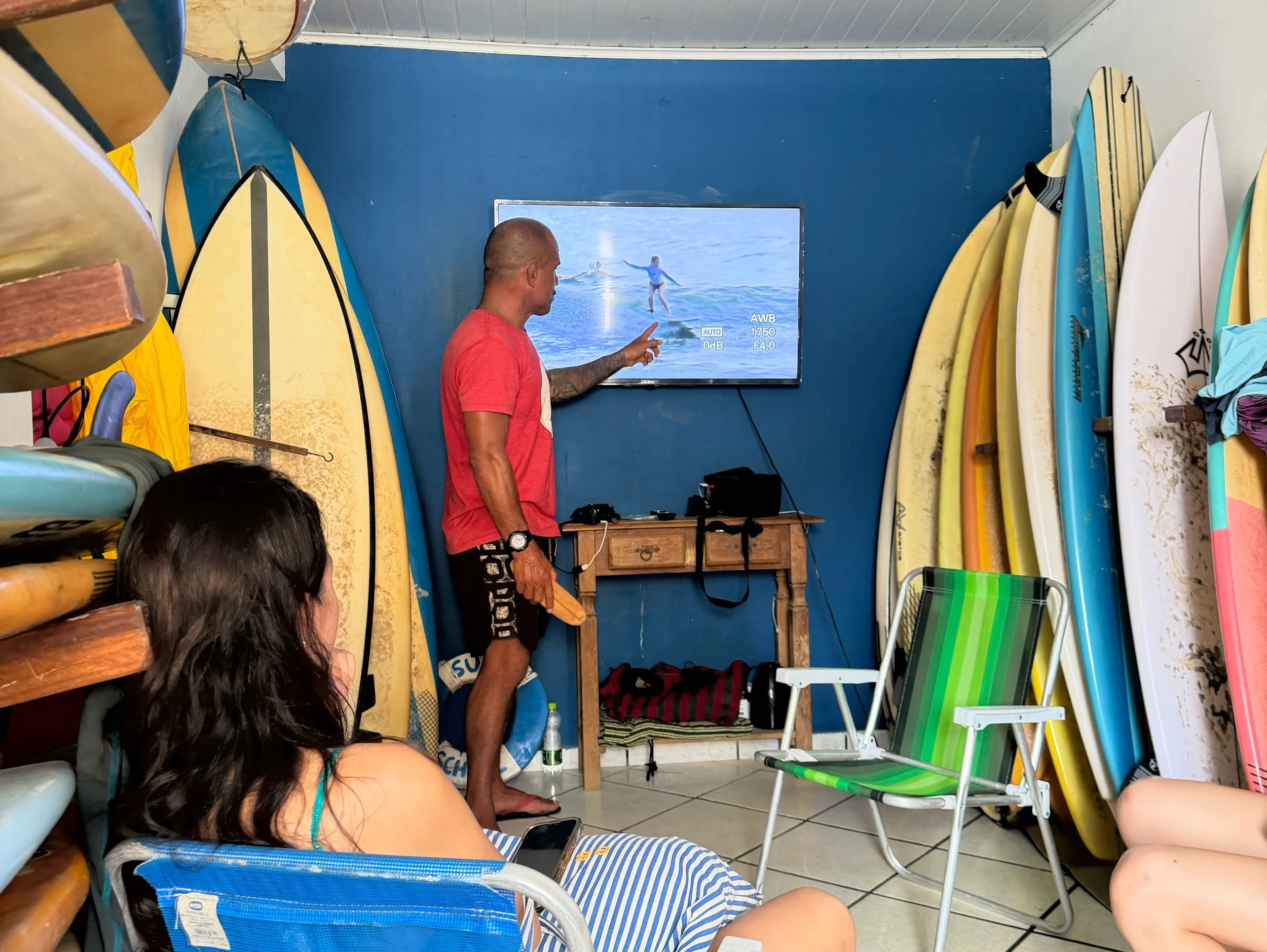
These were honestly some of the best lessons I’ve ever had in my life, and I’ve been surfing the world for years now. Each session started with drills on the beach before getting in the water, and always included video analysis afterward—something that helped me improve quickly and understand my technique in a way I hadn’t before.
Led by Zuqueto, the instructors are not only incredibly skilled but also genuinely supportive and fun to be around. Within just a few days, I felt a noticeable shift in my surfing.
They also simplify logistics in a big way—lessons include transportation to the best surf spots (all of which are outside town) and board rentals, so you don’t have to think about anything beyond showing up at the time they tell you to each day.
If you’re even remotely curious about surfing or improving your surfing, this is definitely the surf school in Itacaré I’d reach out to first. Just keep in mind, they do require you to sign up for at least 3 lessons, which makes complete sense when you see the way they teach. You’ll want to keep coming back as long as you’re in Itacaré.
Meninas do Mar Surf School
Rua Joao Coutinho 158
WhatsApp: +55 73 9929-7219
Email: info@meninasdomar.com.br
If surfing isn’t your thing, there are plenty of other ways into this kind of connection in Itacaré—through forró workshops, capoeira classes, yoga studios, or even the place you choose to stay (hostels are always a good call if you’re traveling solo!).
Where to Stay in Itacaré + How the City’s Laid Out
Itacaré makes a lot more sense once you understand how it’s laid out.
The area between Praia da Concha and Rua Pituba is the center of town—restaurants, music, shops, and easy beach access all within walking distance. It’s where most people stay, and where much of the daily energy lives.
But just beyond that, things start to shift.
A trail system connects a series of beaches—Resende, Tiririca, Costa, and Ribeira—that gradually become quieter the farther you go. At first, I didn’t realize how accessible these were. Once I did, my days changed completely.
Instead of staying in one place, I started moving—walking from one beach to the next, stopping where it felt right (Costa was always my favorite), and eventually continuing farther out toward more secluded beaches like Siriaco and Prainha (within walking distance), Itacarezinho (bus required), and Jeribucaçu (bus/taxi required).
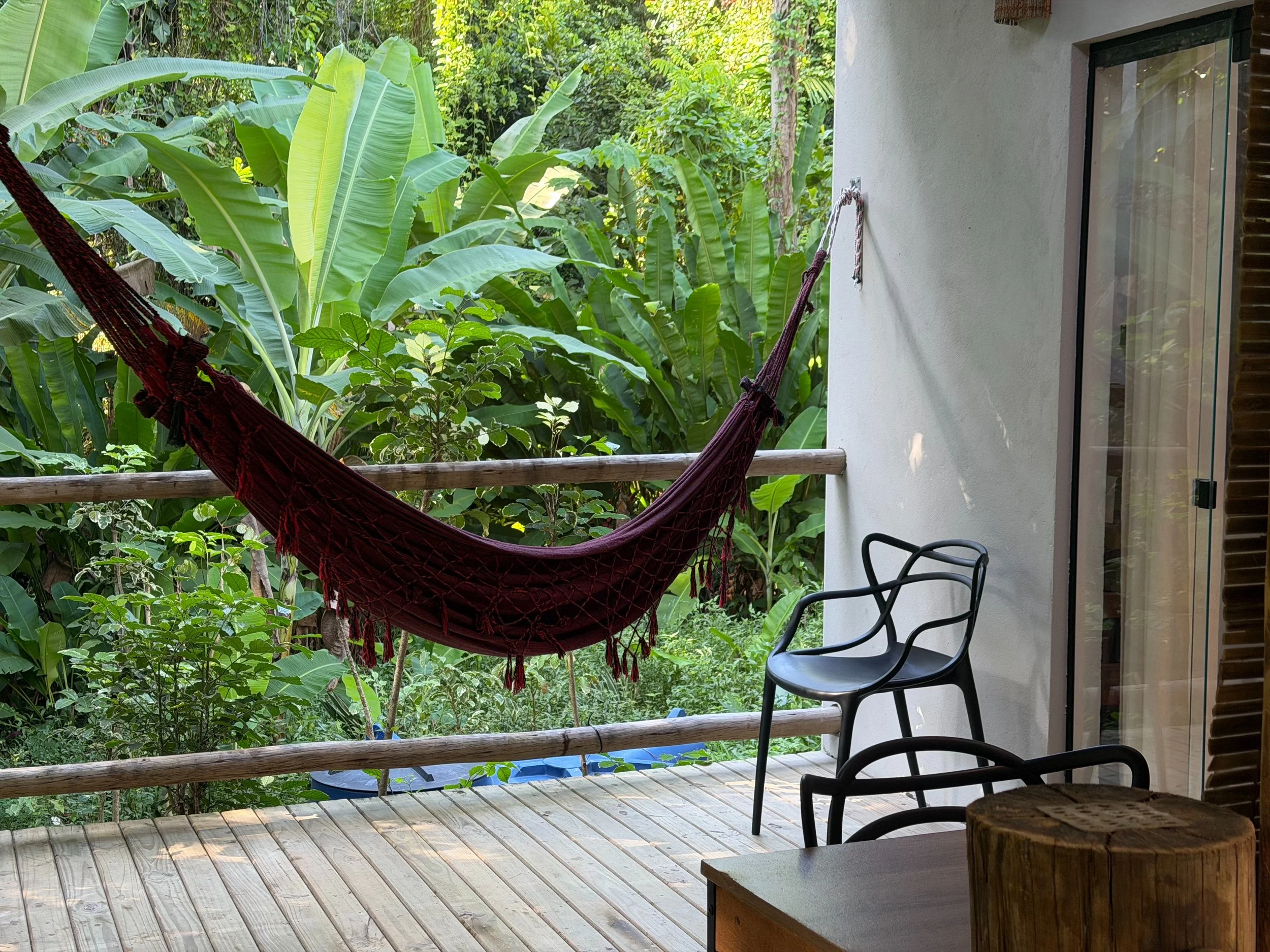
It also helped me understand why some travelers choose to stay just outside the center of town. I ended up doing it myself for some of my stay. Being a short distance removed can mean a better night’s sleep, fewer crowds, a different perspective of town, and easier access to the kinds of beaches you might end up gravitating toward anyway.
I’ve broken this down more fully in my guide to where to stay in Itacaré, but at a glance, here are a few places to stay that I’d personally recommend:
Pousada Burundunga: A charmingly quirky pool-clad oasis hidden just a block from Praia da Concha.
Vila Engawa Flats: Best for long-term stays needing a kitchen and more space in the tranquil neighborhood near Concha Beach
Chocolate Hotel: A hilltop hotel that’s chocolate themed, from the chocolate tasting at check in to bartender’s cacao-infused gin cocktails, and just a 15-minute walk from town
Itacaré’s Weekly Schedule & Rhythm
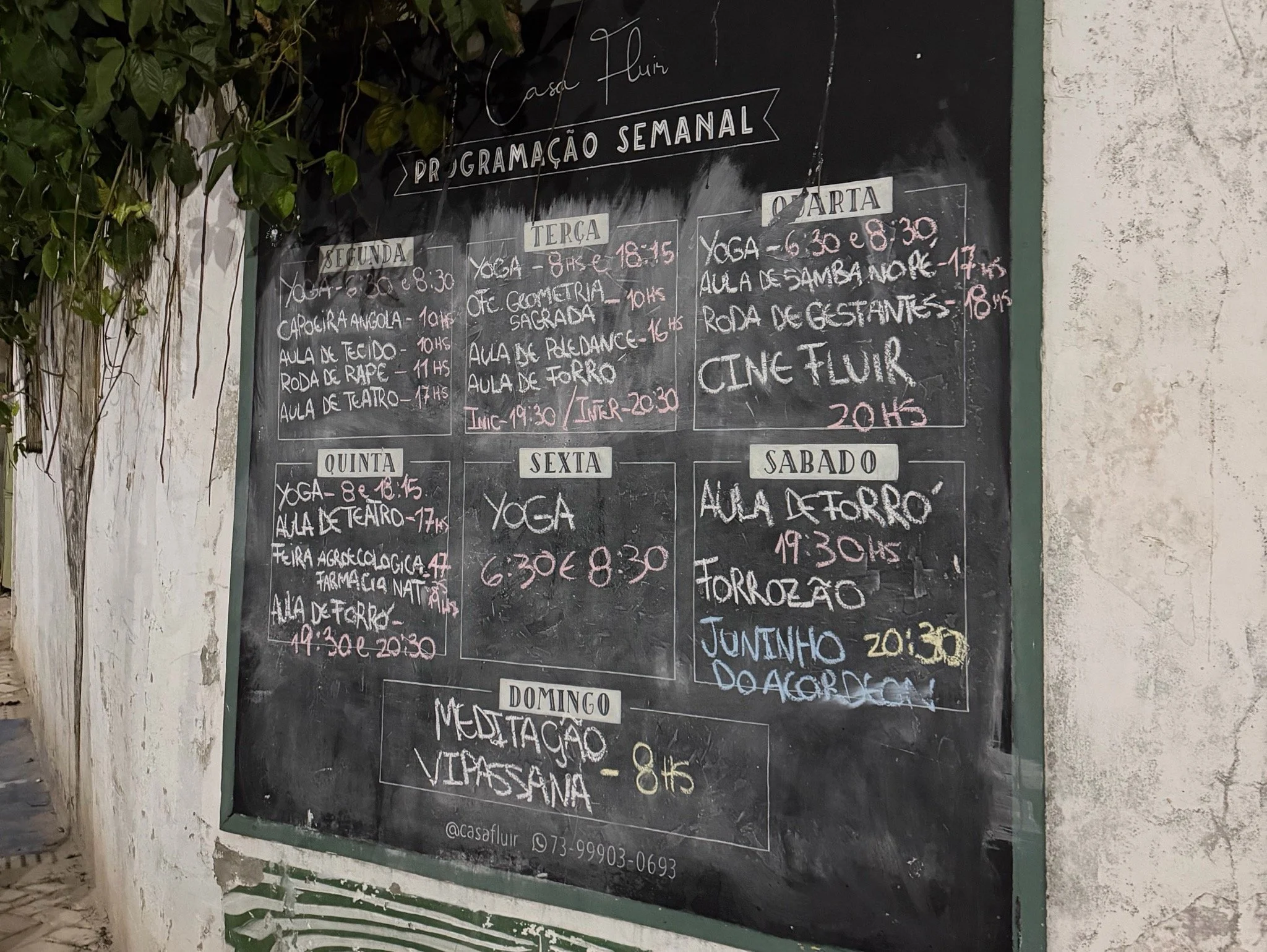
In Itacaré, there’s something happening almost every day and night of the week, but it’s not always obvious where to go. I found myself checking the Instagram account @roles.itacare most mornings just to get a sense of what was happening that day or night.
Here’s the schedule as I came to know it:
Monday: Live Music at Mais Que Nada Hostel
Tuesday: Pagode at Bar Maré Alta
Wednesday: Latin music at Bananas Hostel
Thursday: Samba at Bar do Pescador (highly recommend!)
Friday: Live music at Pé de Amêndoa
Saturday: Pagode at Cabana Corais (Concha Beach)
Sunday: Live music at Hawai Poke (Concha Beach)
Beyond live music and late nights that nearly always end at Favela Coffee Shop if you’re out late enough, there’s also yoga classes happening most days at Casa Fluir, weekly forró workshops at Lah Selva Hostel, and capoeira classes at Centro Cultural Tribo Bahia Capoeira. I’ve linked each of their Instagrams, so just check their latest stories for what they might be offering while you’re in town.
Things to Do in Itacaré
Immerse Yourself in the Chocolate Culture
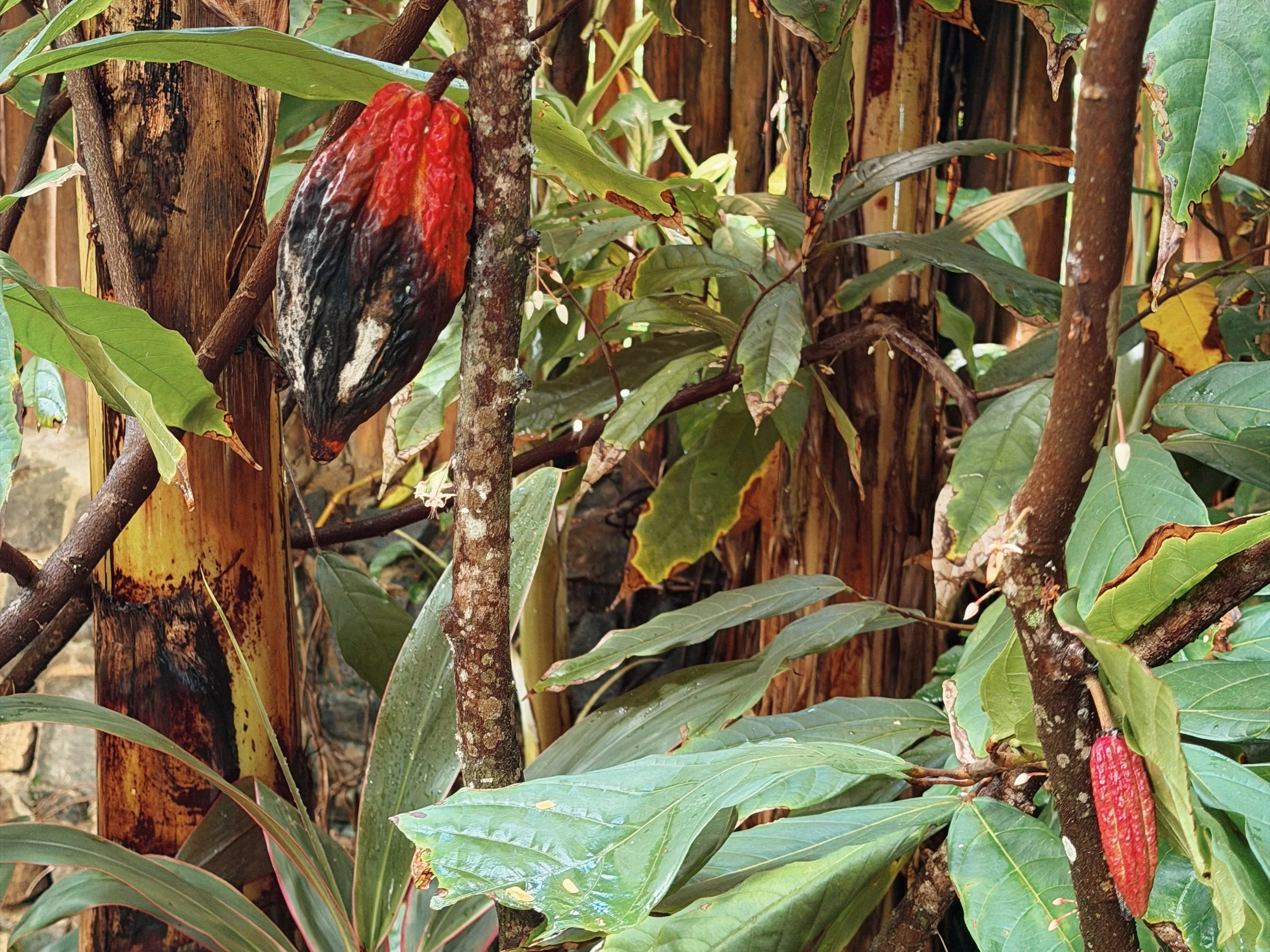
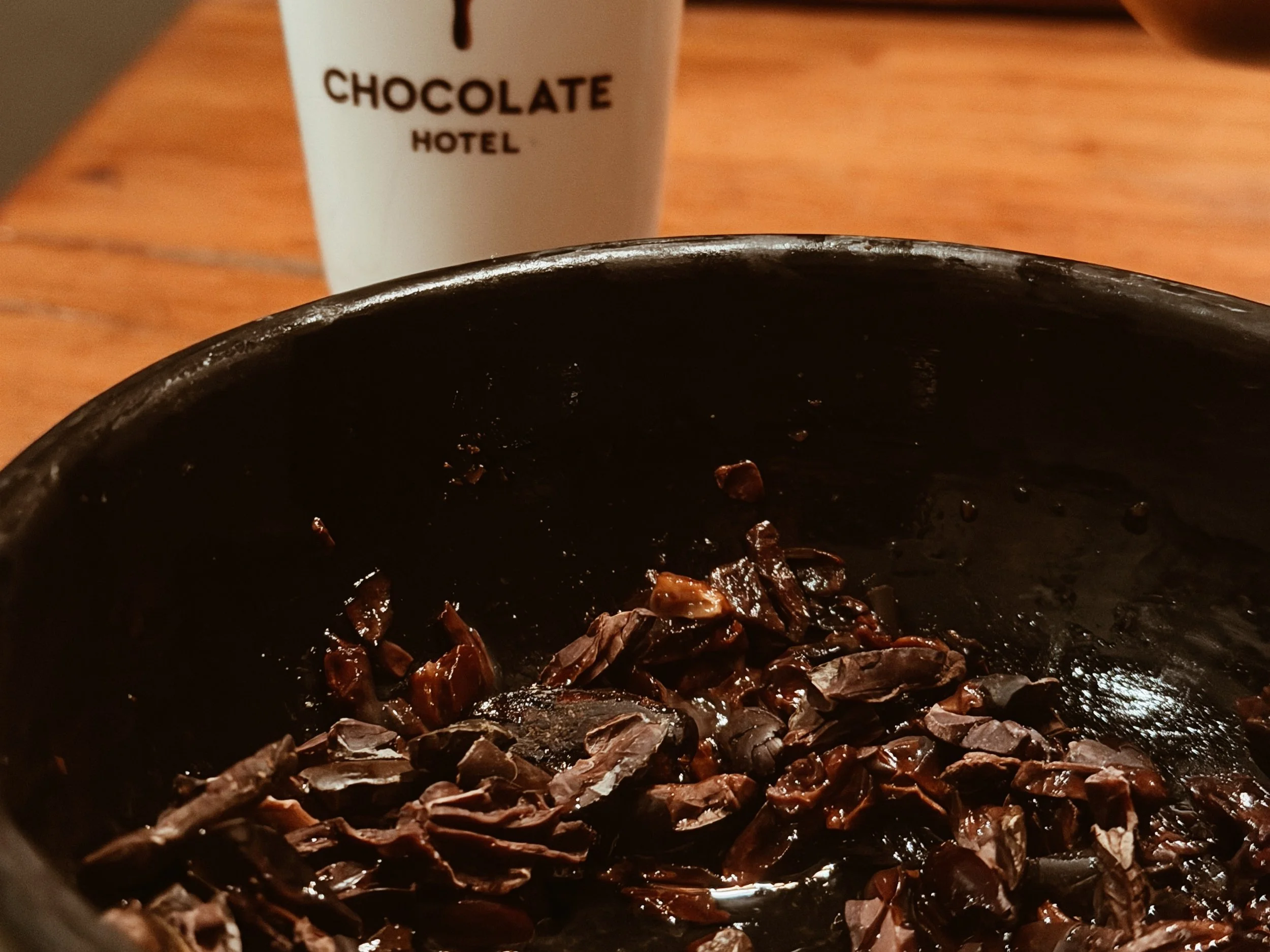
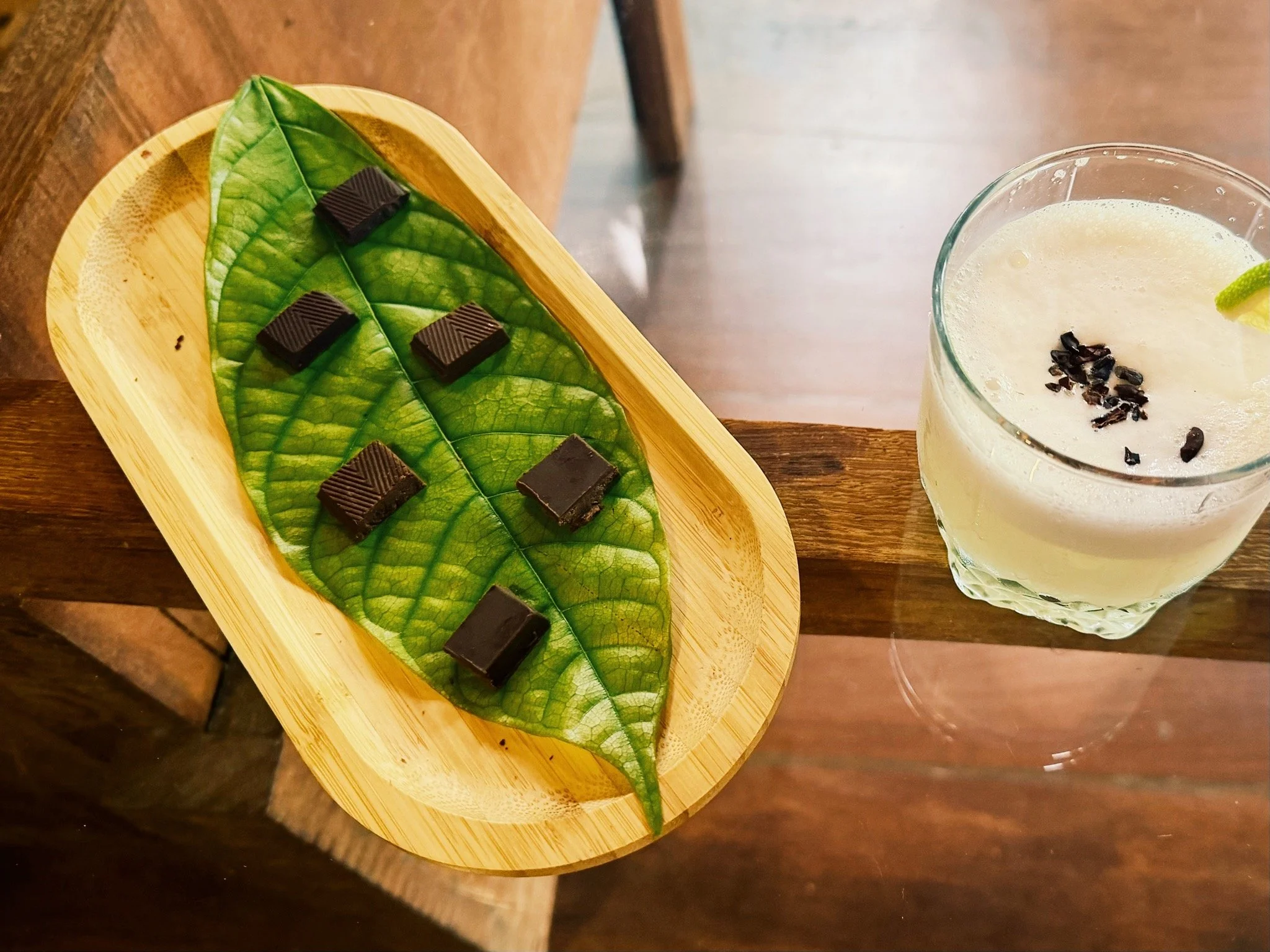
Many who visit Itacaré may not realize this, but the town is surrounded by cacao farms. Itacaré is on the Cacao Coast after all. This proximity does show up in storefronts on Pituba (visit Itacaré Cacau or Delicias do Nordeste to see what I mean), but you can actually go straight to the source for an afternoon at farms like Seo Cacau and Vila Rosa to name a couple.
If you’re staying at Chocolate Hotel, they’re even better connected to the cacao community up and down the Cacao Coastline and can arrange a private or group experience for you with a local producer.
Besides tasting and touring, you can also get a chocolate treatment with Aiana Eloy, a local therapist who offers cacao detox massages with cacao nib exfoliation, lymphatic drainage, and a chocolate face mask she makes herself. It’s another fun and indulgent way to connect to this coastline’s most precious commodity.
Hike the Four Beaches Trail or the Trail to Prainha
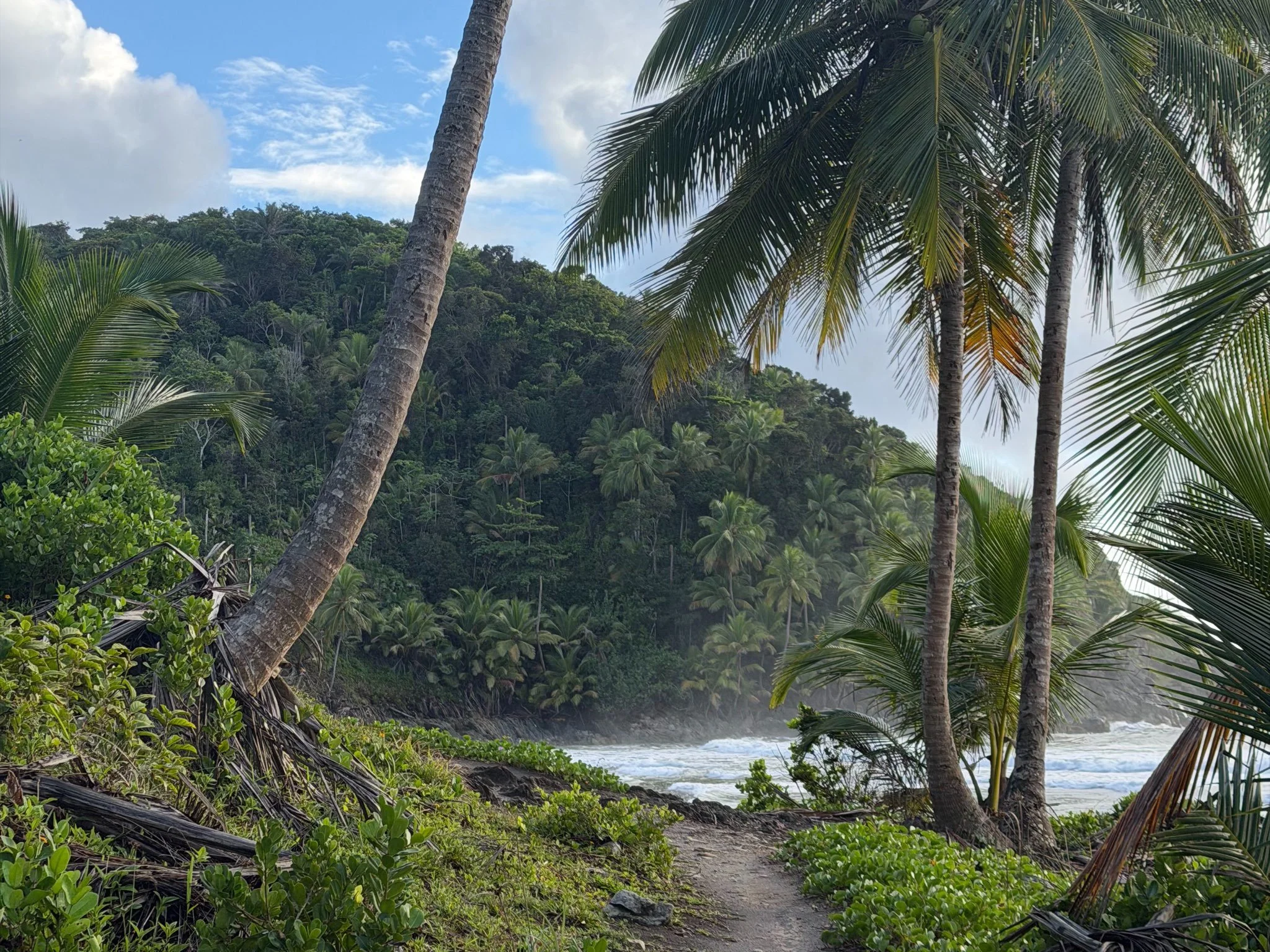
Finding my way to a forest trail was everything to me in Itacaré, a little taste of what I loved about my previous paradise while still having the energy of Itacaré to come home to.
In Itacaré, there are a few different trails to add to your list:
Four Beaches Trail: connects Praia de Itacarezinho with Praia da Engenhoca
Trail to Prainha: starts at the edge of Praia da Ribeira and finishes at the wild and picturesque sands of Prainha
Both can be walked without a guide, but the Four Beaches Trail requires a bit more of an effort to reach—either a bus or a private taxi. You can catch a Rota bus from the Itacaré bus station, ask to be dropped at the entrance to Itacarezinho or Engenhoca and then connect to the trail from there. I recommend downloading either AllTrails or Maps.me, as there is no cell signal once you arrive at either beach and it is helpful to have a little marker telling you where you are and where the trail is.
Quick Tip: Some trail apps, including Google Maps, might show that there’s an alternative trail along the coast between Engenhoca and Havaizinho, there is not. I explored this and regretted it instantly. There is a trail but it’s full of fallen trees, thorns, and overgrowth. Just take the well-traveled route through the forest. It’s beautiful anyway!
If you’re a larger group and just want someone to take care of the transport for you, you could hire a taxi to drop you off and pick you back up at a scheduled time or go for this well-reviewed guided option on Viator that takes care of all of the logistics.
Both trails take about an hour to complete one-way without stops and do not depend on a low tide.
Sign up for a Class Rooted in Local Culture
Be it samba at Casa Fluir, a forró workshop at Lah Selva, capoeira classes with Faisca Experience, or a surf lesson with Meninas do Mar. As I said before, signing up for a class is a great doorway into the local culture, but also a community while you’re in Itacaré, transforming you from observer to participant. It’s also, when it comes to the dance classes at least, great preparation for the parties that fill every evening in Itacaré. Scroll up to the last section for that schedule.
Surf at Tiririca and Engenhoca
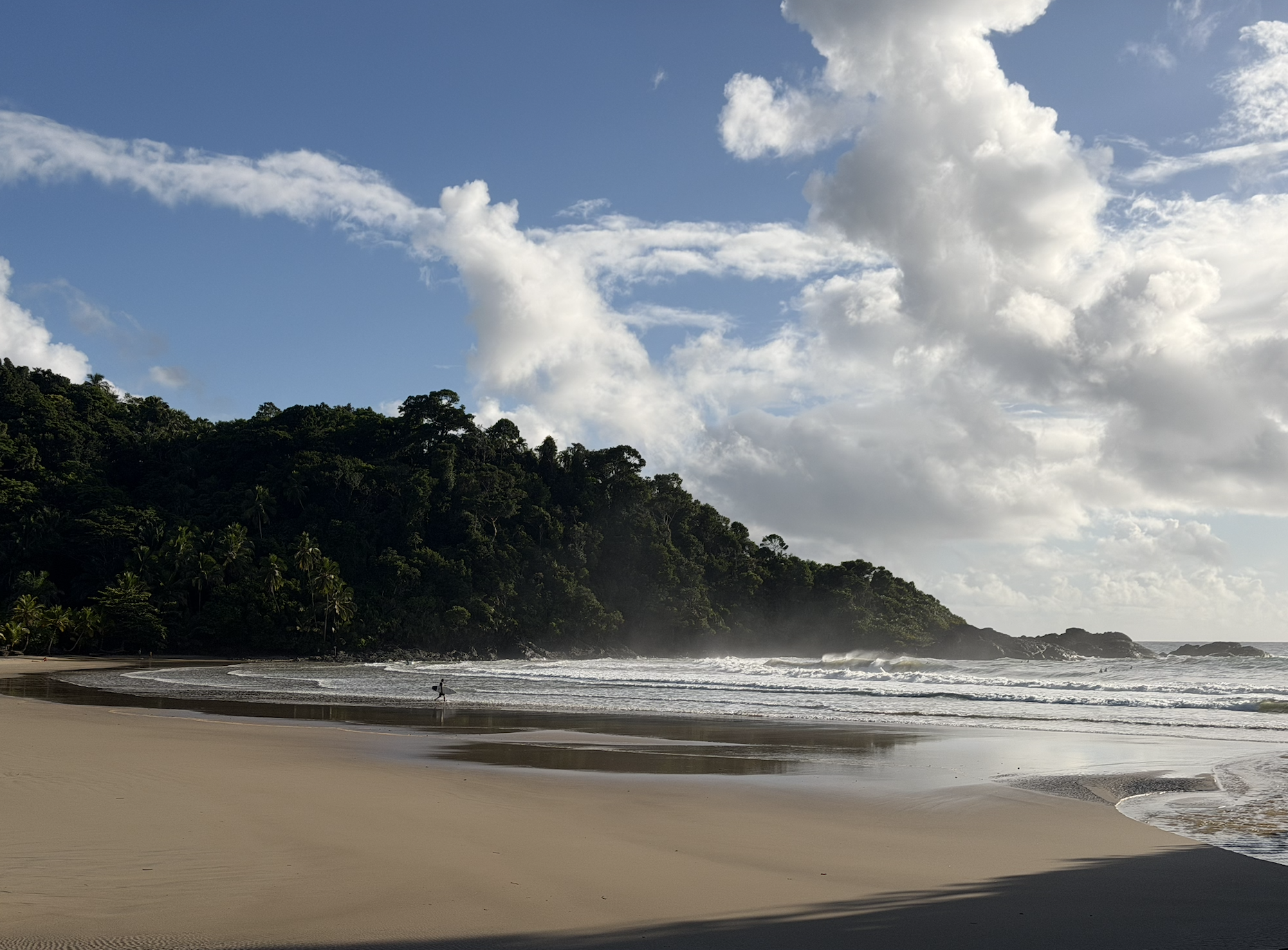
As much as Itacaré has so much more going for it, it is a surf town too. The best, most consistent, and beginner-friendly waves can be found at Praia da Engenhoca, a 30-minute bus ride from town. You can pick up that bus (typically Rota) at the central bus station. This is the beach where most of the surf schools go, so it is crowded. Another option for the more advanced and less willing to travel for surf is Praia da Tiririca, located within a 15-minute walk from town.
You can rent boards at both spots and, at the time of writing this in April of 2026, the rate is R$50 per hour.
Where to Eat in Itacaré: My Favorite Restaurants & Local Eats
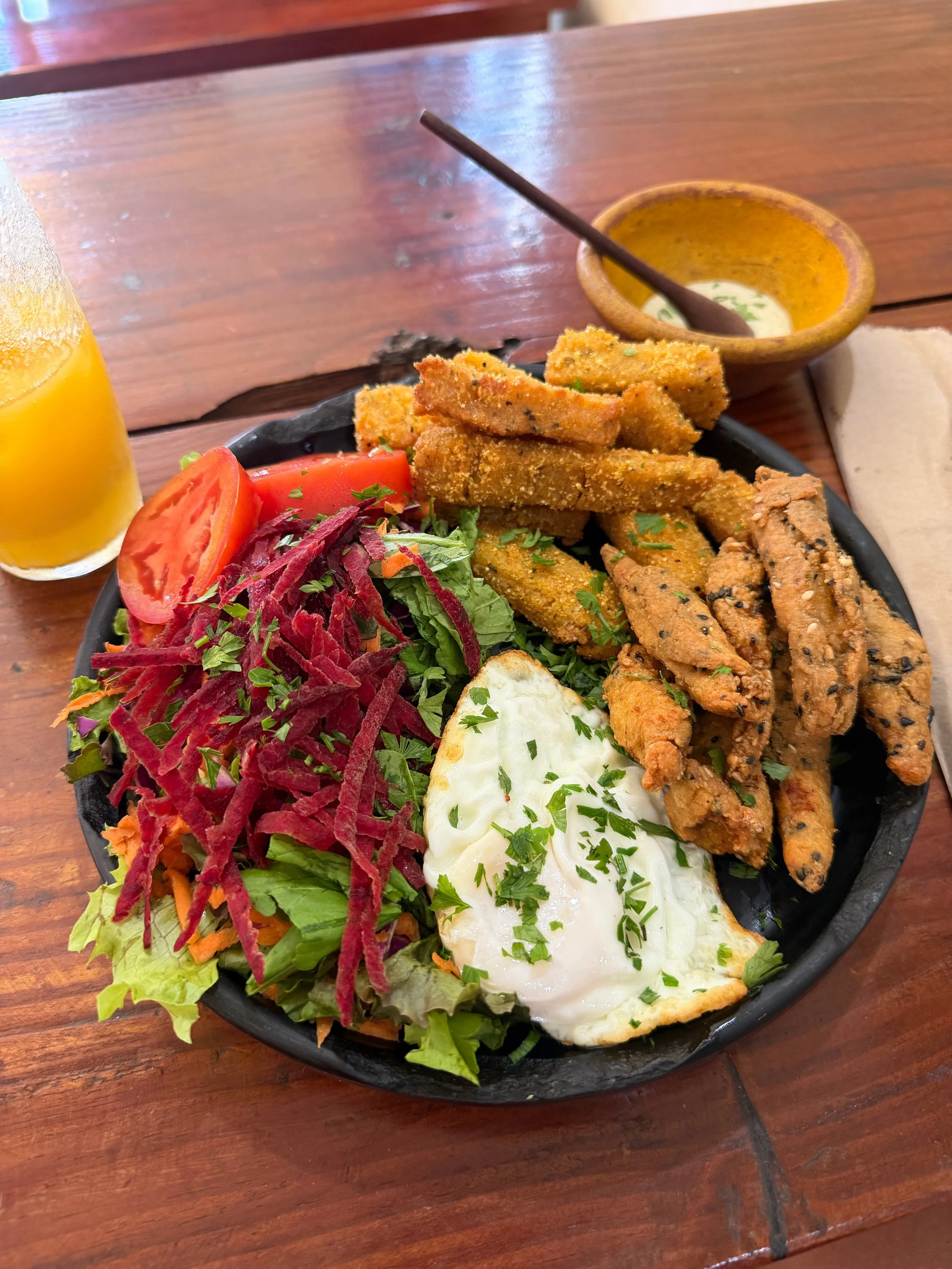
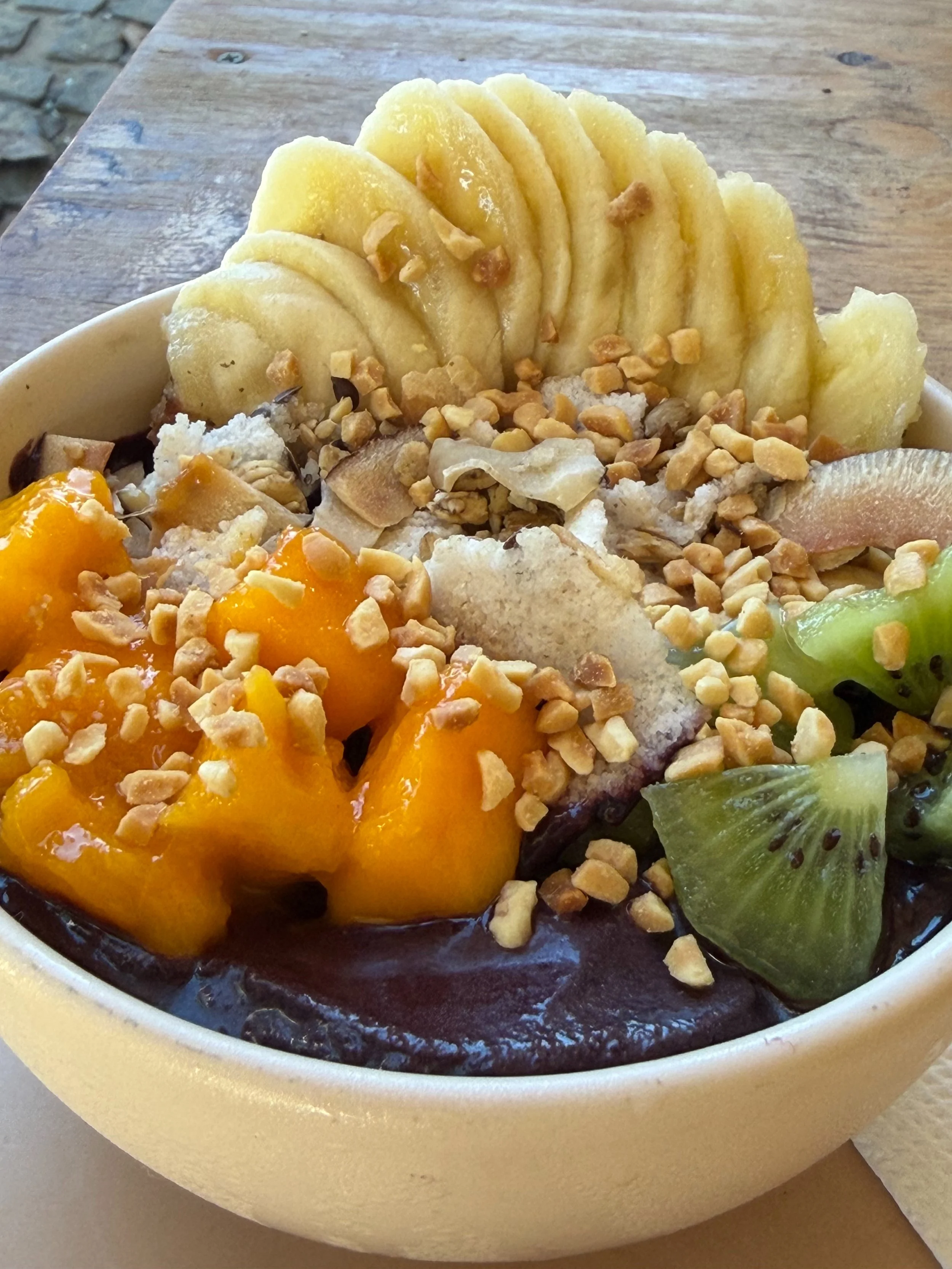
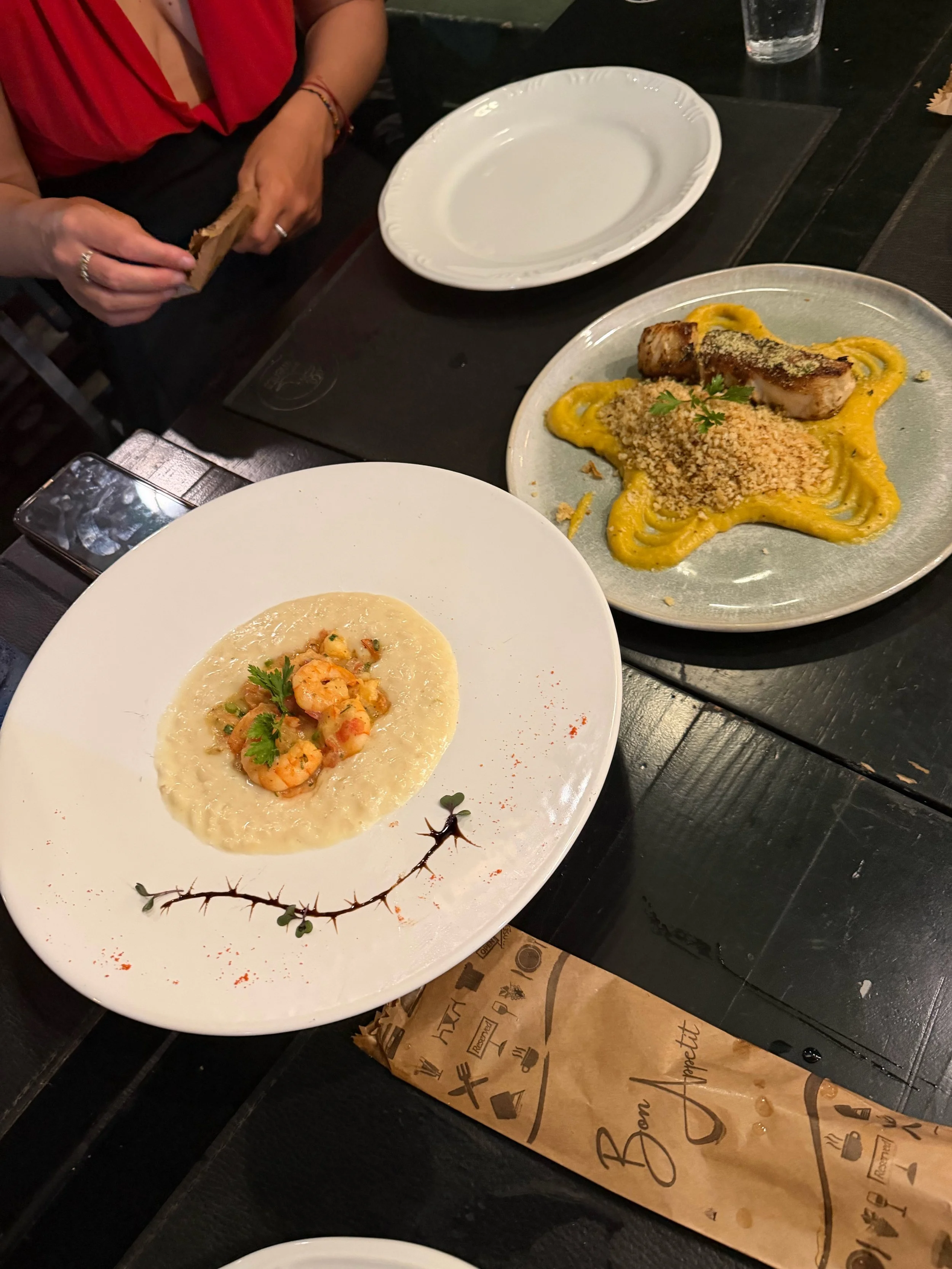
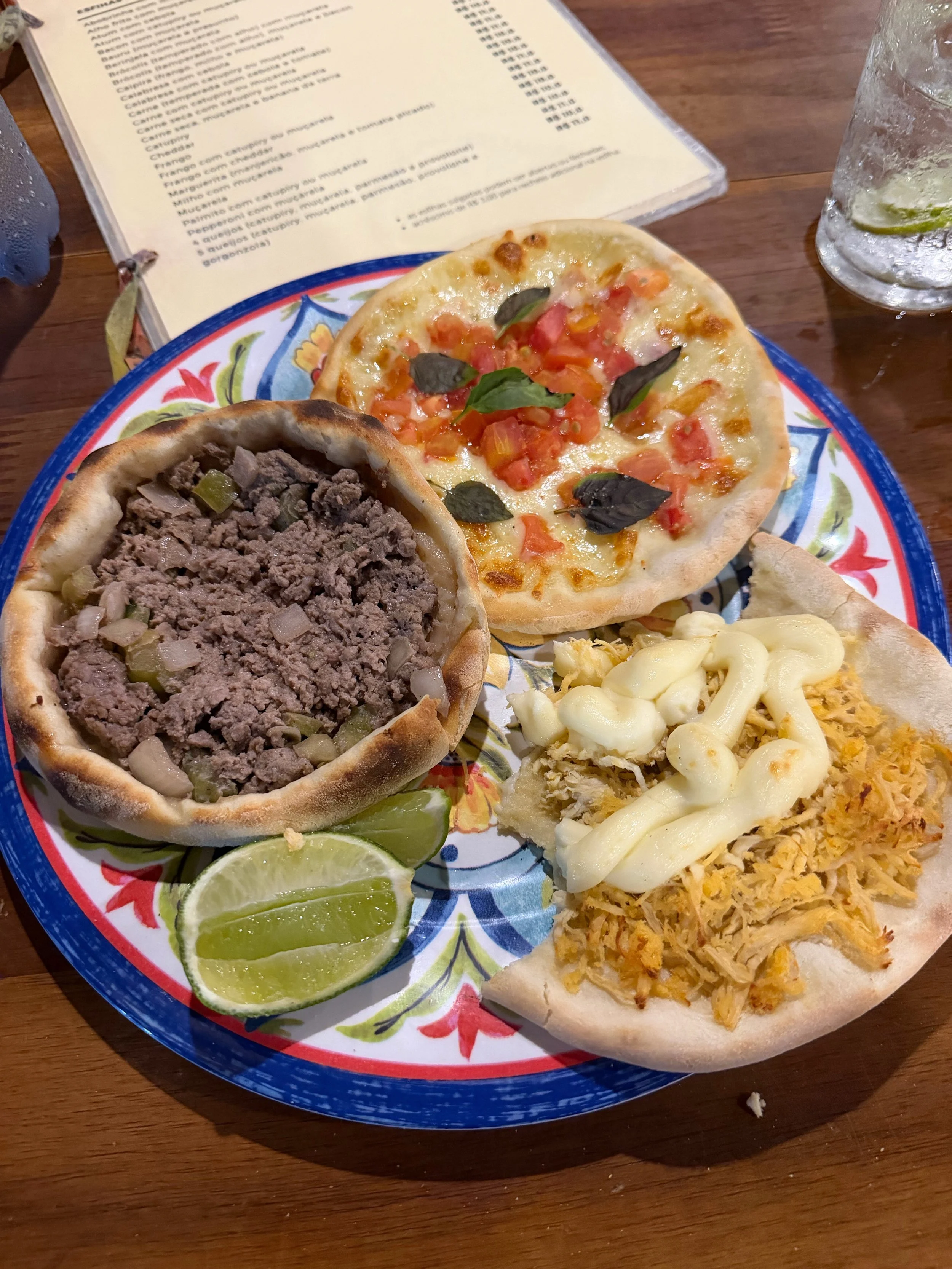
Now, let me preface this by saying I’m no foodie and sadly not a seafood-eater either so this list may not be to your taste, but here are a few of the spots that I either became a regular at, simply had the vibe I loved, or that were so memorable I still think about them:
Shangri-lá at Tiririca Beach: The beach bar attached to the Shangri-lá Pousada is something I stumbled across by way of their unique seating—you literally sit inside of a canoe-turned-bench seat facing the beach. Whenever I just wanted to watch the surf and foot volley chaos at Tiririca, I’d head here, snag a canoe, and order an agua de coco.
Açai Raiz Organico: My go-to spot in Itacaré for açai that is 100% natural and organic. I made way through their entire menu of açaí blends, from ginger to mel de cacao and peanut butter over the course of my stay.
Esfiharia Itacaré: This was my first meal in Itacaré and then my clutch meal when I wanted a light bite for dinner the rest of my stay. I was drawn to it by the crowds of locals, not tourists, filling its tables. While waiting for my own esfihas to arrive, I quickly googled what they actually were: a Brazilian street food staple of Lebanese and Syrian origin served open-faced like a mini pizza or closed like an empanada and stuffed with your choice of a long list of savory fillings.
Coco Pimenta Gastrobar: Order the shrimp risotto. Enough said. (and yes I realize I said I don't eat seafood, but I ate this and loved it!)
Baobà Bistro: Discovered this one in my final hours in Itacaré only to realize it may be the best value healthy and filling lunch in town— also veg-friendly! Go for the build-your-own plate where you get to pick a protein and three sides ranging from salad and plantains to polenta, vegetables, and tapioca. What comes out of the kitchen tastes homemade, not restaurant-made. Love this spot!
Tekoá Cafe:For the laptop crowd looking for a spot outside the hotel, hostel, or Airbnb, this is the one, and their coffee, menu, and wifi back it right up. I was often holed up here with a bowl of açai, a cappuccino, and my laundry tumbling at the self-service laundromat just next door. Just note it is outdoors (with umbrellas), so maybe not ideal for a rainy day.
La Ninfa Cafe: The most charismatic café in Itacaré. Its aura will pull you to it along the Passarela da Vila, and thank goodness too, because blink and you’ll miss it. It’s a tiny, but mighty, coffee window that serves all the classics, plus chai lattes, golden milk, and matchalattes. Their desserts are excellent as well.
Tapiocaria da Sandra: In Brazil, it’s always important to know a good tapioca spot and this is that in Itacaré. Like the esfiharia spot, this was my go-to when I wanted something for dinner that was light-ish, reliable, and budget-friendly. Just know you’ll be fighting the crowds for a seat, but it’s worth it.
Nibs Restaurant: Let this be the fancy dinner out, high up on a hill, and…wait for it…chocolate-themed. The chef is Argentinian, the owner of the hotel it sits inside of Italian, and the location Brazilian of course, so expect a fusion of all three on your plate with the consistent thread of cacao. I can vouch for their gnocchi medley with cacao and sweet potato, steak with cacao-infused chimichurri dressing, and Dengo Mel cocktail made with Gin de Cacau by Dengo Chocolates and cacao honey, garnished with nibs and slices of Sicilian lemon.
Mirante Lounge Bar e Restaurante: If you want to elevate your sunset perch from a seat on the grass at the typical spots to a table at this candlelit hideaway next to Praia da Concha, I can tell you it’s worth it for the cocktail list alone, and slightly more atmospheric ambiance to accompany the sky’s show. They also have a full menu so you could stick around through dinner if you wanted to too.
How to Get to Itacaré
By Air (Closest Airport):
Fly into Ilhéus (IOS), which is the closest airport (approx. 1 hour 40 mins away).
Travel Tip: If prices are high on the airline’s website, it’s worth checking Booking.com Flights too. Sometimes you can get the local rate there as a foreigner (without a CPF / Brazilian tax ID number)—a little hack I learned that sometimes works.
From Ilhéus: Take a taxi, transfer, or rental car via the paved BA-001 road. Direct buses (like Rota and Cidade Sol) also run daily and, in Rota’s case, near hourly. You can search for the latest schedule and reserve tickets on BusBud or purchase right at the bus station, just be aware that buses later in the day fill up fast.
From Salvador: Take the ferry from Salvador to Bom Despacho (Itaparica Island), then a 5-hour bus (Águia Branca or Cidade Sol) or drive along BA-001. The ferry terminal and bus station are co-located, which makes it super easy to transfer. Again, you can check bus schedules and reserve your ticket on BusBud to ensure your seat.
Where to Go After Itacaré: The Peninsula de Maraú
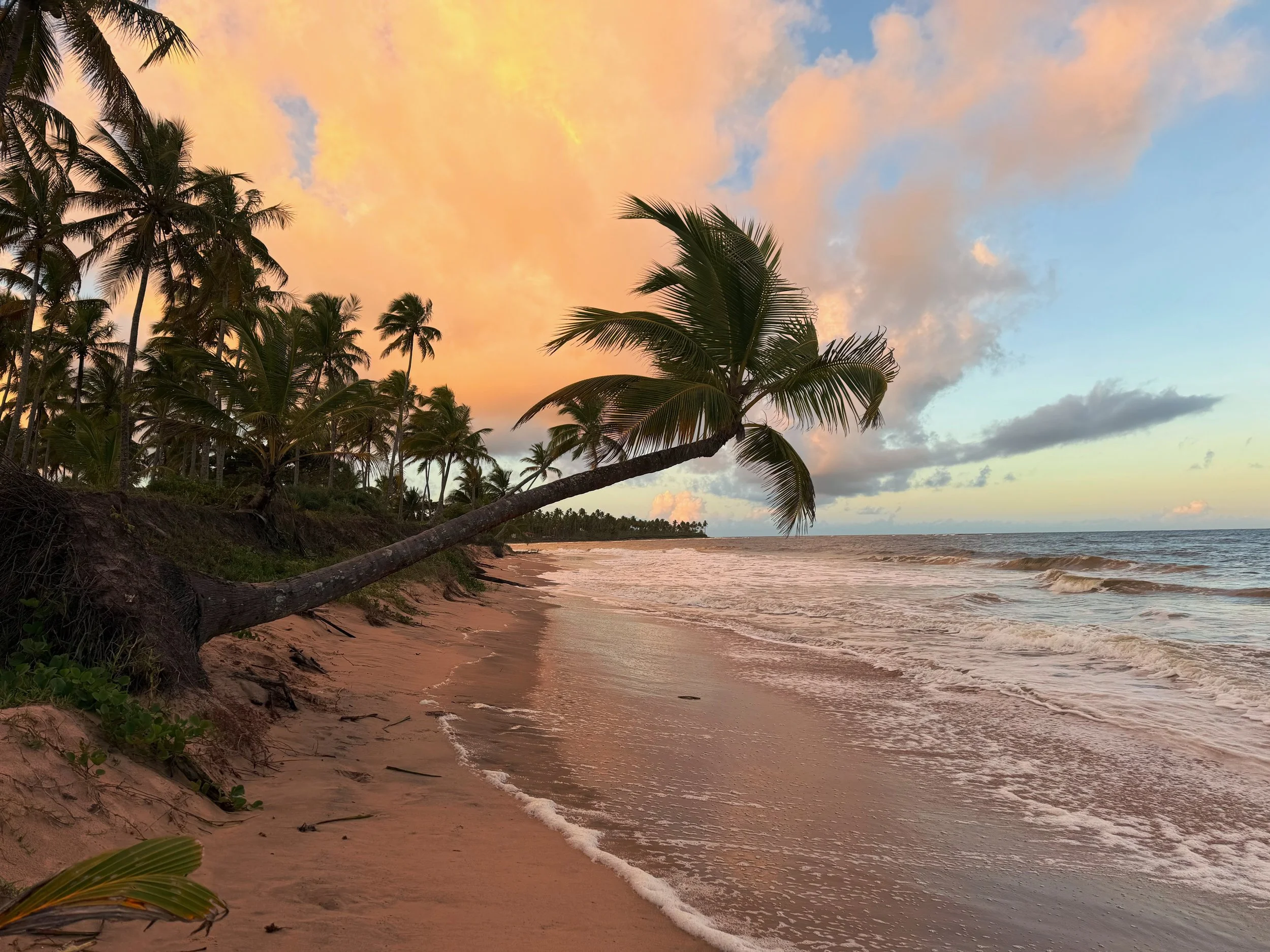
The Peninsula de Maraú is a great option and easily reachable from Itacaré by taxi or bus (via Camamu then speedboat to Barra Grande). It’s much quieter, just as surf-friendly, and full of native Atlantic Forest, lagoons, and sandy trails perfect for an ATV adventure.
I wrote a full guide to the peninsula, plus a where to stay post that breaks down each of its best places to base yourself: Algodões, Lagoa do Cassange, Taipu de Fora, and Barra Grande.
Support My Work While You Travel Brazil
If you found this post helpful, one of the best ways to say thanks and support my work is to use the links on my Travel Resources page throughout your trip, be it for your hotel booking on Booking.com, that tour that caught your eye on Viator, or the travel insurance or eSIM you still need to buy. This sends a bit back my way at no additional cost to you—muitíssimo obrigada!
What to Read Next
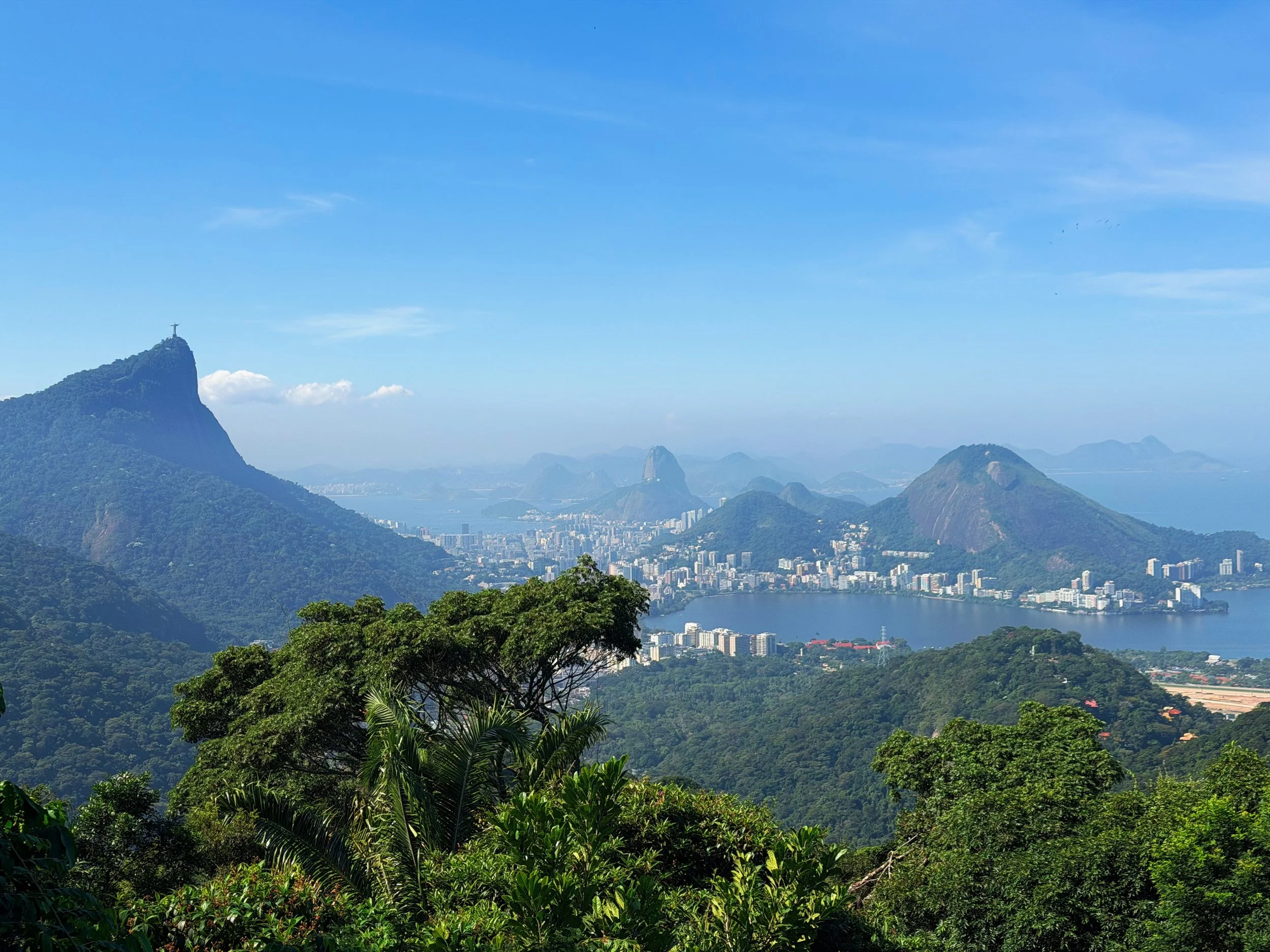
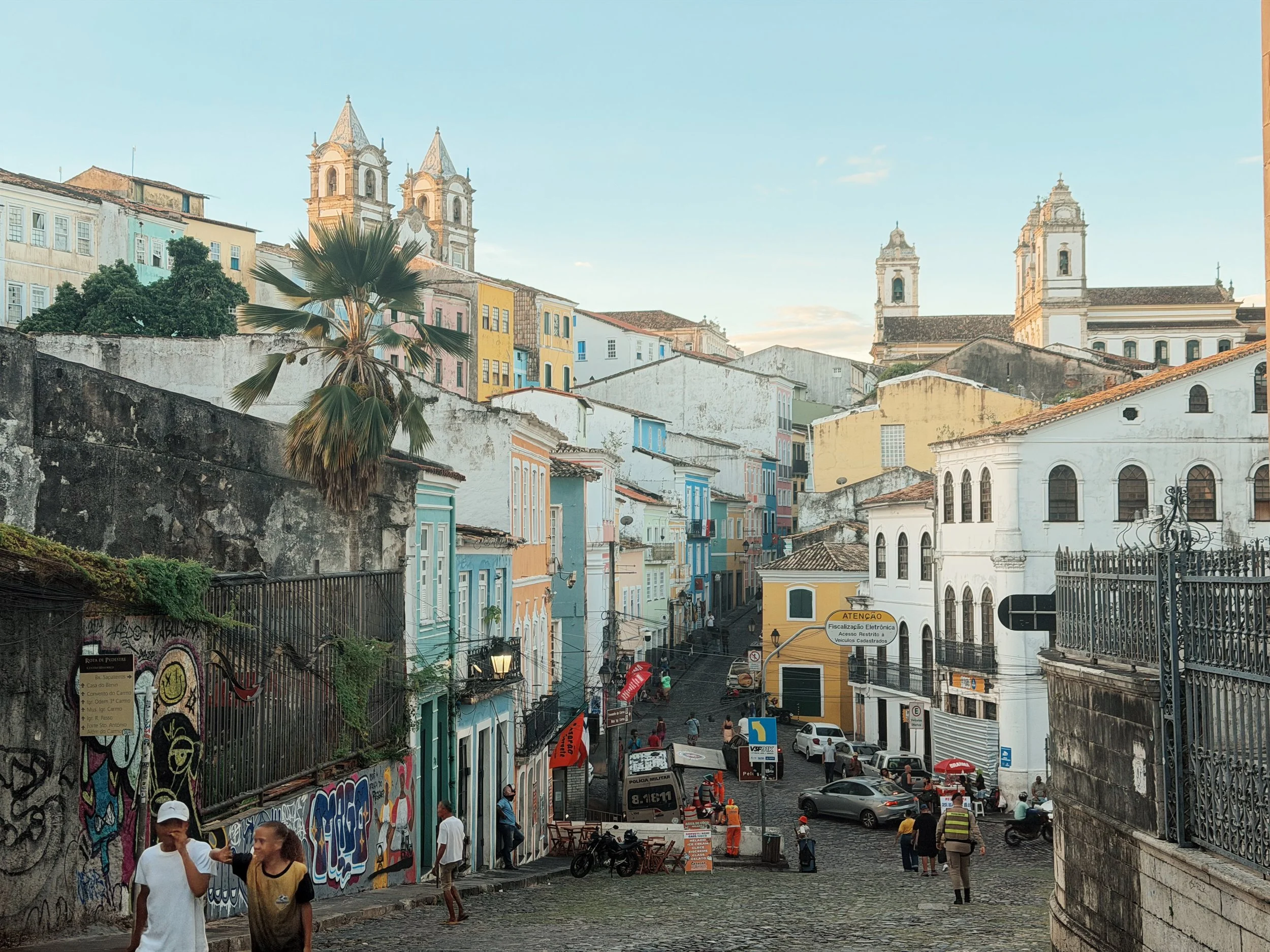

The Vale do Pati trek in Chapada Diamantina National Park is one of the most spectacular treks no one’s ever heard of. In this guide, I share what it’s like to do the four-day trek, everything you need to know to do it yourself, and why it’s worth every blister and back ache.