The Ultimate Maraú Peninsula Guide: Algodões, Taipu de Fora, Cassange & Barra Grande
Affiliate Disclosure: Some of the links in this guide are affiliate links, which means I may earn a small commission if you book through them—at no extra cost to you. I only recommend places I’ve stayed or would personally choose when visiting the Maraú Peninsula.
The Maraú Peninsula is one of those rare places that still beats by the rhythm of nature, not noise and too many tourists. Here’s a guide to where to stay, what to do, and where to find the best bite or beachside bed in this precious paradise in South Bahia.
As I type this, I’m no longer in the grip of the Peninsula de Maraú. At least physically. Mentally, I’m very much still there, missing it like crazy. It’s a place that’s hard to let go of once you’ve steeped in its wildness, its remoteness, its ways of life for more than a few days. And I had 17.
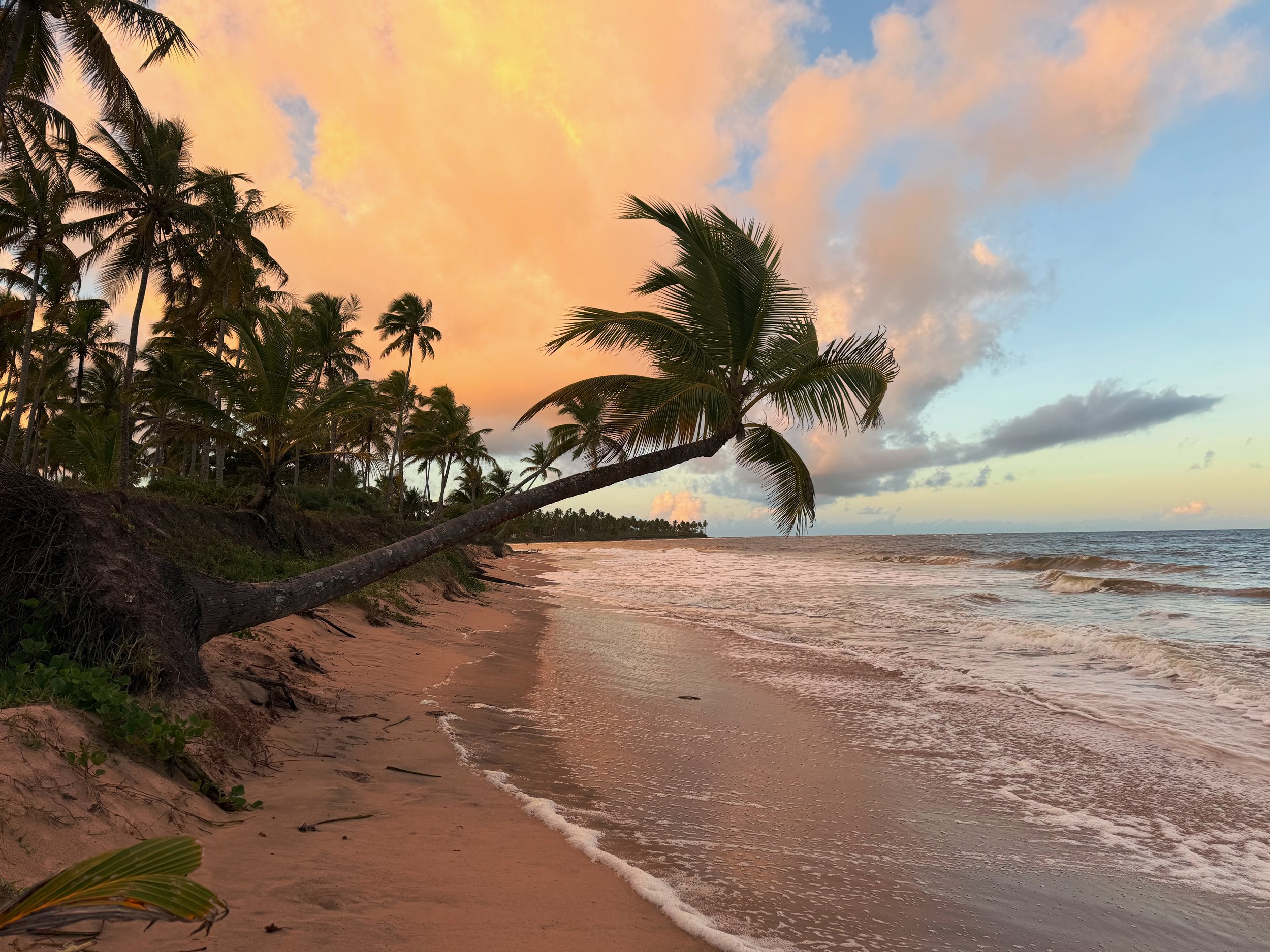
Stretching along Bahia’s Cocoa Coast between Ilhéus and Camamu Bay, the Peninsula de Maraú remains one of Brazil’s most quietly spectacular destinations. Long coconut palm-lined beaches bend towards the warm Atlantic surf, hidden lagoons and mangrove thickets set the stage for sunset, and small fishing villages define a landscape where nature still obviously shapes daily life.
Unlike many beach destinations in Brazil, the Peninsula de Maraú isn’t really centered around one main town. In fact, the bumpy and weather-worn dirt road that connects one village to the next makes it rather unappealing to have to move about by car or quad. Instead, and because of this underdeveloped infrastructure, the peninsula unfolds through a series of villages that each has its own rhythm, scenery, and personality, each one equipped just enough to sustain its own web of life.
Over my several weeks of exploring it, I moved slowly from Algodões, to the lagoons of Cassange, the famous tide pools of Taipu de Fora, and finally the lively village and beach clubs of Barra Grande.
Together, they form a coastline that rewards travelers willing to trade a little convenience and ease of movement for beauty and a solid sense of place.
If you’re looking for a destination in Brazil where surf, nature, and small-community life intersect, the Peninsula de Maraú is for you.
Find Accommodation on the Maraú Peninsula
• Hotels in Barra Grande → see options and availability
• Pousadas in Taipu de Fora → see options and availability
• Stays in Algodões → see options and availability
• Accommodation near Lagoa do Cassange → see options and availability
If you’re primarily deciding where to stay on the peninsula, I’ve also put together a detailed breakdown of the best pousadas and boutique stays across the region.
Where Is the Peninsula de Maraú?
The Peninsula de Maraú sits along Bahia’s southern coast, about halfway between Salvador and Ilhéus.
The peninsula stretches roughly 25 miles (40 km), its narrow thumb of land nestled between the Atlantic Ocean to its east and Camamu Bay to its west, one of Brazil’s largest protected bays.
The closest airport to the Peninsula de Maraú is Ilhéus Airport (IOS), about 2–3 hours away depending on your route. This is how I arrived from Salvador, but there are also bus and boat combo options if you’d prefer to arrive by land and sea and save a few reais.
From Ilhéus or Itacaré, you can reach the peninsula by:
Renting a car (just make sure it has four-wheel drive) or hiring a taxi to drive via BR-030 (a very rough dirt road that runs from Maraú in the south to Barra Grande in the north)
Alternatively, you could take a bus to Camamu and from there take a speedboat to Barra Grande, and then in Barra Grande hire a taxi or rent a quad to get you the rest of the way
Because the roads across the peninsula can be sandy and uneven, the only way to move between villages is by quad or four-wheel drive vehicle. Anything else, and you might find yourself stuck.
But, and a big but, the effort it takes to reach Maraú and move around it is also what keeps this peninsula feeling wild and uncrowded. It’s the price worth paying for the preservation of this paradise, and many a local will agree with me in saying that.
The Villages of the Peninsula de Maraú
Rather than one central destination, Maraú is best understood as a string of small coastal communities. Traveling the peninsula means discovering how each one offers a slightly different experience of Bahia’s coastline.
From south to north, the main areas are:
Algodões – quiet beach village surrounded by nature and shaped by a laid-back surf culture
Lagoa do Cassange – lagoon landscapes and eco-lodges
Taipu de Fora – famous coral reef tide pools
Barra Grande – the peninsula’s main village and transport hub
Each area can serve as a base depending on the type of experience you’re looking for.
Algodões: A Quiet Beach Village with a Laid-Back Surf Culture
Of all the villages on the Peninsula de Maraú, Algodões may feel the most connected to the natural rhythm of this coastline—in part because many of the people who live and spend time here are surfers who depend on the tides, wind, and swell.
I spent a little over a week based in Algodões, which made it easy to experience both the village’s quiet rhythm and the small network of places that shape daily life in this part of the peninsula.
The village itself is small. Sandy roads wind between coconut groves and forest dripping with orchids and tropical flowers. A handful of pousadas and beach restaurants dot the shoreline, and a long stretch of wild Atlantic coastline awaits for contemplative walks with nothing but the sound of waves and wind-rustled palms overhead.
Compared with the busier village of Barra Grande on the other end of the peninsula, Algodões is for those looking for something quieter: surfers chasing uncrowded waves, couples seeking seclusion, and travelers drawn to the slower pace of Bahia’s coastal communities.
The Beach at Algodões
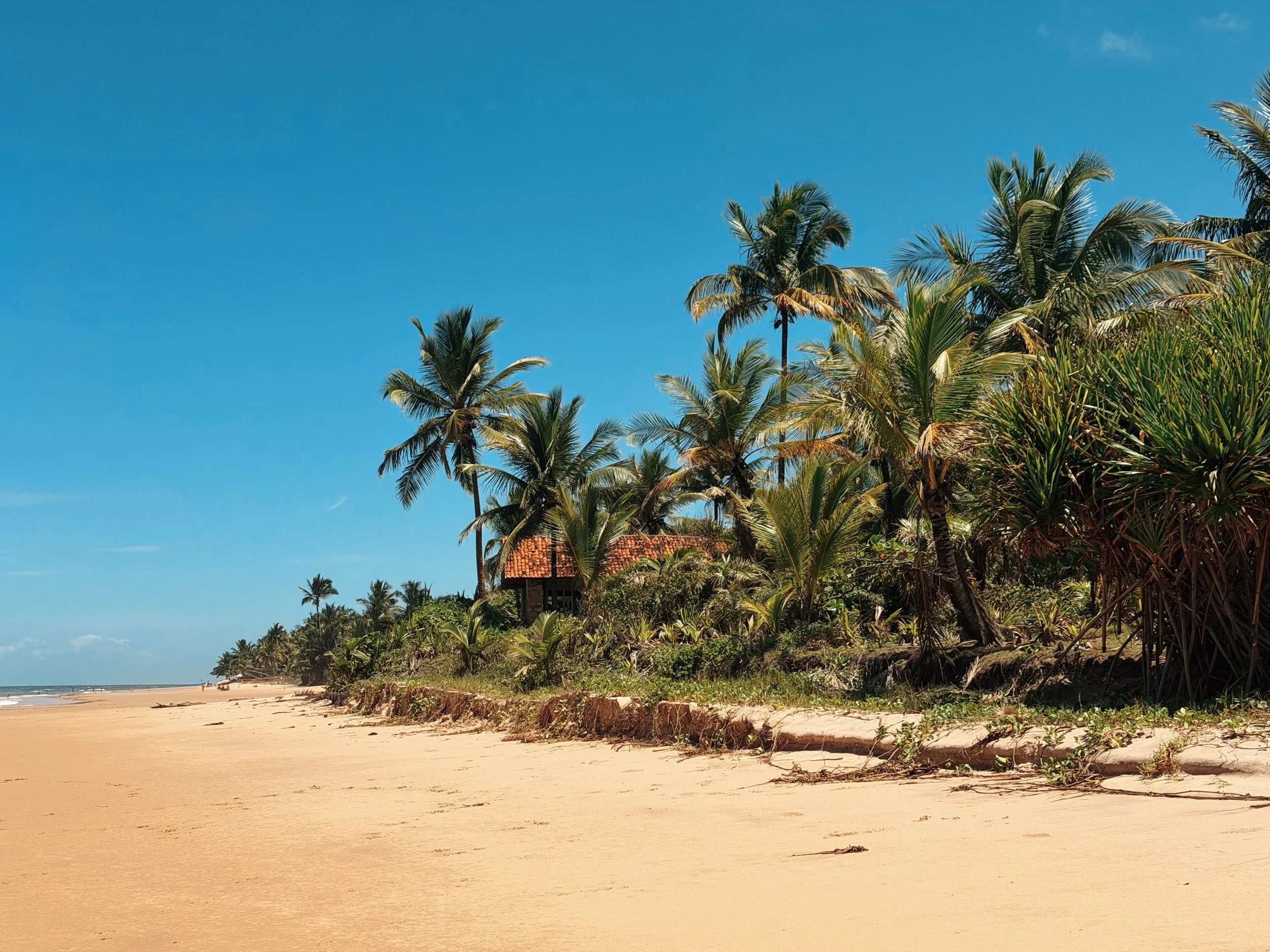
Praia dos Algodões, the main beach in the village, stretches for miles in both directions, often feeling almost empty outside of high season and weekends.
Palm trees straight out of a postcard lean toward the ocean, small fishing boats rest in the sand, and the Atlantic rolls in with a steadiness that becomes the soundtrack to life here.
Unlike the coral-protected waters of Taipu de Fora, the open coast here meets the full energy of the Atlantic, which is why surfing has long been part of daily life in the village.
Even if you’re not surfing, the beach still invites long walks, maybe a spontaneous game of footvolley, or a wade into the warm Atlantic Ocean.
Walk far enough down this beach and the landscape quickly becomes wild again—endless coconut groves, the occasional água de coco stand, and a pousada bar tucked quietly behind the palms.
Surfing in Algodões
Surfing is part of the quiet rhythm of life in Algodões and one of the reasons so many people here arrange their days around tides and wind.
Because this stretch of the Maraú Peninsula faces the open Atlantic, the coastline can produce clean waves when swell and tides align. On those days, you’ll see a handful of surfers paddling out early in the morning or throughout the afternoon.
The surf culture here is low-key and rooted in a strong respect for the local community. Rightfully so, they’re wanting to protect this spot from the masses, so if you paddle out here keep that in mind. Sessions are typically shared between residents and a small number of visiting surfers who understand the value of keeping places like this understated.
Like the village itself, the atmosphere in the water is relaxed, welcoming, and deeply connected to the natural rhythms of this coastline.
Restaurants in Algodões
Despite its small size, Algodões has a handful of really great restaurants that become the central gathering place for locals and travelers alike.
The spots I became a regular at while in Algodões are:
Calango – one of the village’s most loved restaurants for a relaxed beachfront lunch. Be sure to try their bao buns and ask for the paddles for their ping pong table while you wait for your lunch to arrive.
Obaê– another beachfront spot serving lunch steps from the ocean. Their menu includes everything from moqueca to poke bowls and açaí.
Mucha Playa – casual beachside meals and drinks with a Mexican theme. Surprisingly this is where I also found the best cup of coffee in town.
Michu – another favorite for a late afternoon sweet treat closer to the mangroves than the beach. This French-owned bakery has an amazing selection of cookies and baked goods, best enjoyed with a cappucino in their lantern-lit forest patio in the late afternoon.
Afrodite Pizza Bar - this is the best place for sunset with a side of pizza. It’s west-facing and right in front of the mangroves, making for a dreamy scene and soundscape at nightfall.
A few other spots I never had the chance to try, but that were recommended to me were: Al Andaluz for Spanish-inspired cuisine, O Tal Hamurgueria in the same Beco Blue hub as Michu and Afrodite, Acarajé da Zizi for a Bahian culinary classic, and Villa Hawaii for poke bowls as good as any you’d find in Hawaii.
Many of the restaurants focus on fresh seafood, Bahian ingredients, and relaxed outdoor dining facing the ocean, the forest, or the mangroves, reinforcing the feeling that meals here are meant to be savored slowly and surrounded by nature.
Local Life and Small Creative Spaces
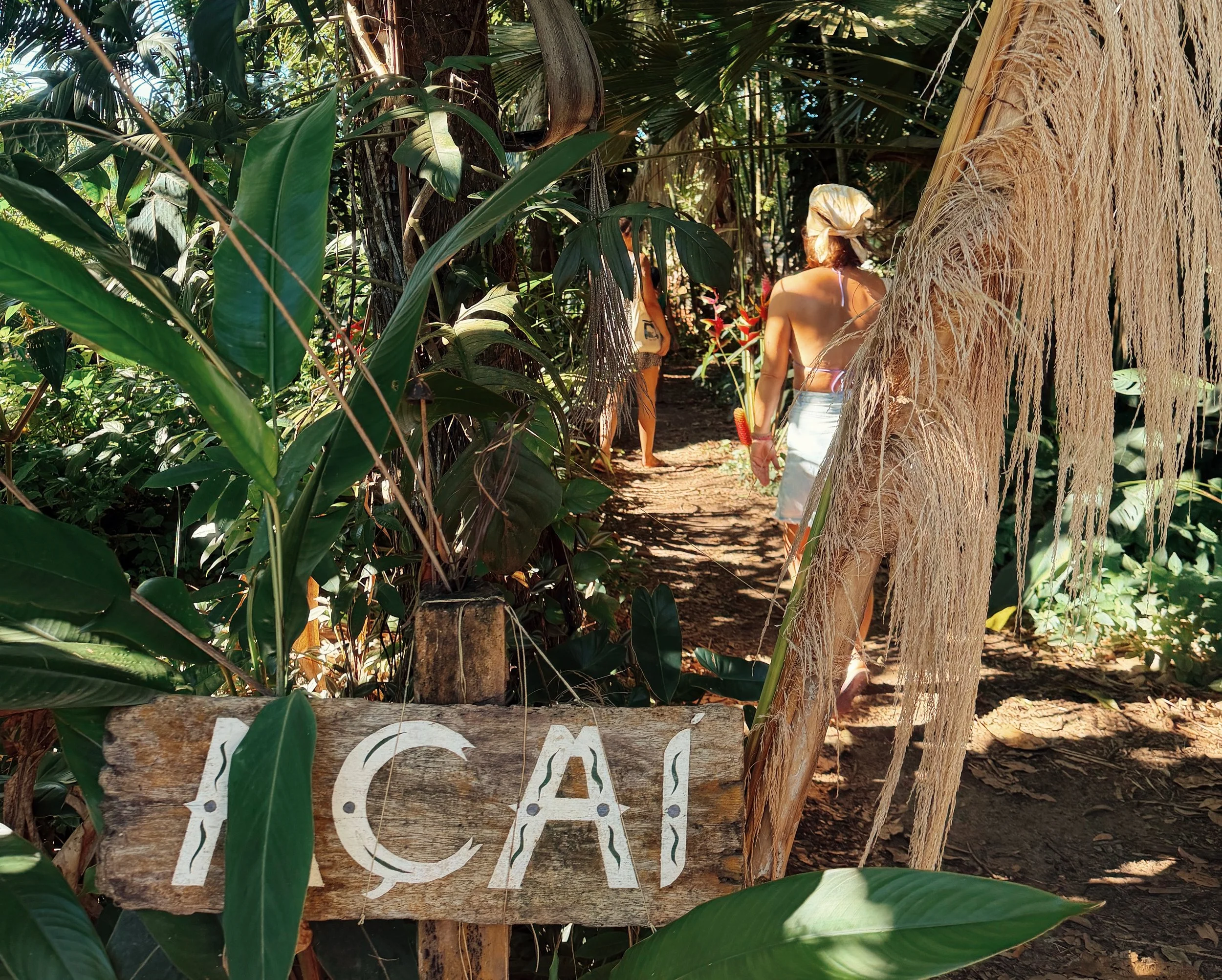
Beyond the beach and mangroves, Algodões also has a small but meaningful creative and ecological spirit.
One of the best examples is Sítio de Outeiro, Karma and Marisa’s forest property and one of the most fascinating places to experience açaí in the region.
Originally from Rio de Janeiro, the couple now welcomes visitors to their organic farm and forest Tuesday through Saturday. Guests can enjoy bowls of açaí harvested directly from the property and, if they wish, pair the experience with a guided walk through forest trails filled with artwork Karma creates using natural materials found on the land.
For the village’s spiritual and cultural side, Algodões’ two ocas—circular structures inspired by Indigenous architecture — serve as gathering spaces for yoga classes, workshops, and cultural events throughout the year, including the annual Equinox Festival.
Music also plays an important role in life here. At Beco Blue, weekly forró sessions bring together locals and travelers for one of Brazil’s most beloved dance traditions. On those nights, this quiet surf village briefly transforms into a lively gathering place under the stars.
Together, these scenes offer a glimpse into the deeper cultural layers of Algodões—where nature, creativity, and community remain closely intertwined.
Where to Stay in Algodões
Accommodation in Algodões reflects the village itself: small-scale, nature-focused, and deeply connected to the surrounding landscape.
Rather than large resorts, most places here are boutique pousadas or thoughtfully designed villas and rooms you can rent tucked between coconut groves and the sea.
Because Algodões remains quieter than other parts of the Maraú Peninsula, staying here often means waking to the sound of the ocean, walking barefoot down sandy paths to the beach, and settling into the slow rhythm that defines this stretch of Bahia’s coast.
Two standout places to stay in Algodões include:
Na Villas
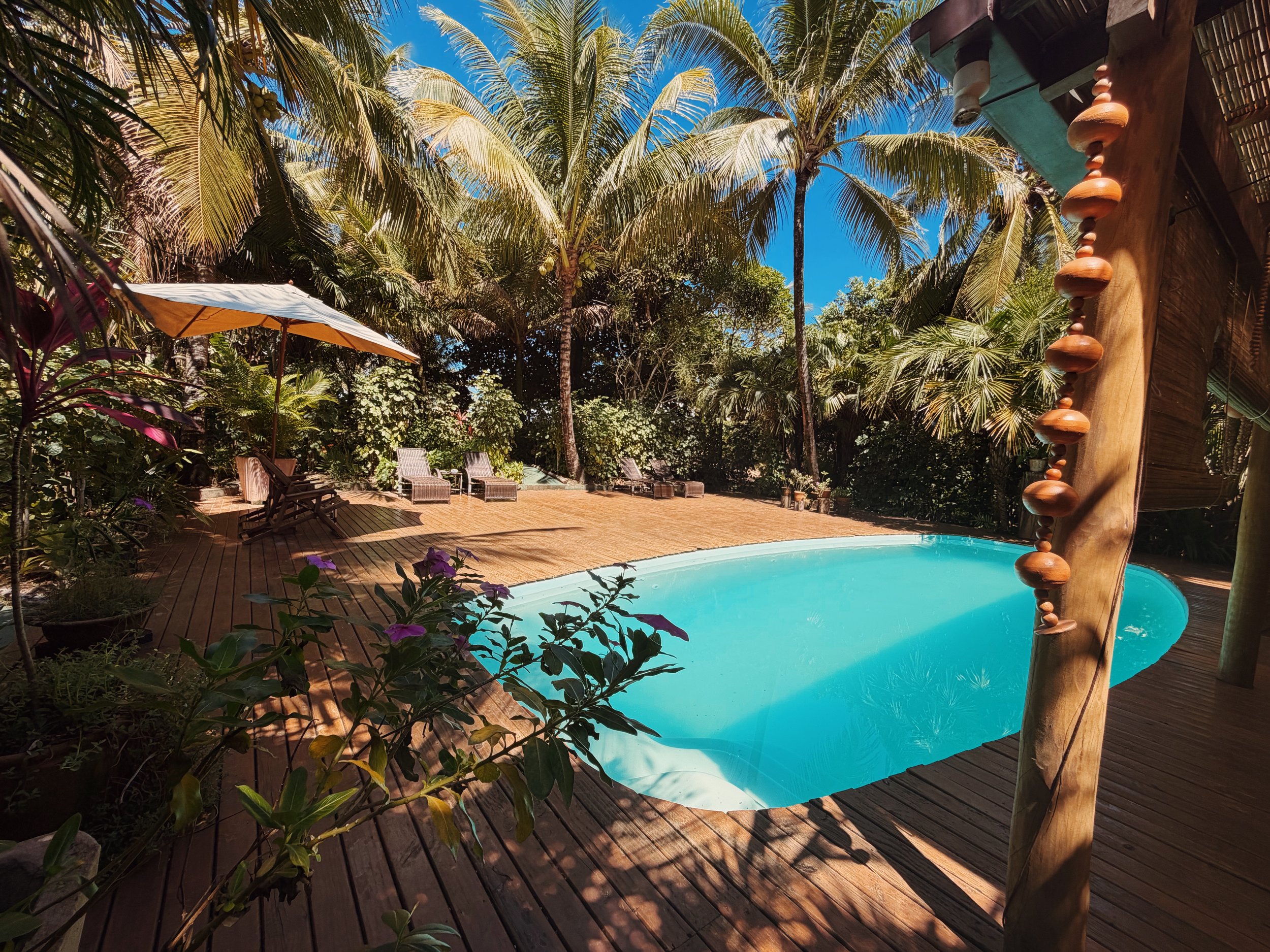
Set just steps from the beach, Na Villa dos Algodões is a small pousada with seven independent chalés arranged around a shared pool and garden lounge.
The design blends modern comfort with the relaxed spirit of Bahia’s coast, leaning into natural materials and open-air spaces.
Breakfast each morning includes options ranging from couscous and tapioca to fresh fruit and Brazilian bolos, alongside vegan and gluten-free choices.
The beachfront restaurant Obaê sits directly in front of the property, making it an easy stop when lunchtime arrives.
Na Villa works equally well for couples, solo travelers, or families looking for a peaceful base on the peninsula.
I absolutely adored my stay there.
Surf & Yoga Retreat
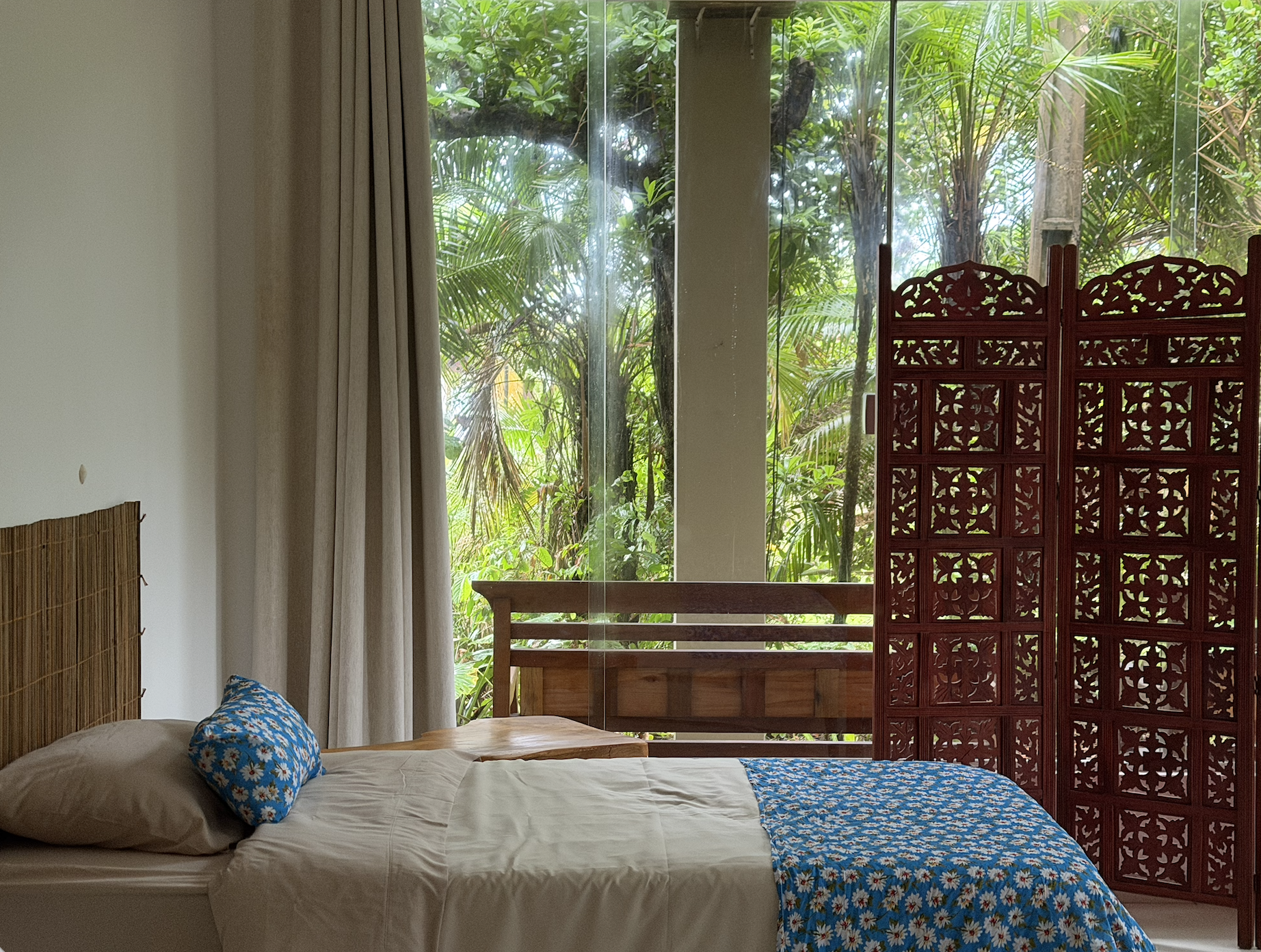
For travelers drawn to the laid-back culture that defines Algodões, Surf & Yoga Retreats offers an experience built around the rhythms of the ocean and the yoga mat.
You might already recognize the brand if you’ve been following my travels for a while—I stayed at their Lombok retreat when it opened a few years ago.
Like their other locations, the Algodões retreat combines daily yoga and surf sessions in a setting designed for connection with nature. I’ve written a full feature about my stay at the retreat, including what a typical day looks like there.
The yoga deck overlooks the ocean, surfboards are available for guests, and meals focus on vegetarian and natural ingredients, with breakfast and dinner included in the stay.
Even for those new to surfing, the retreat provides an approachable way to connect with the ocean while meeting other travelers drawn to the same lifestyle.
The atmosphere is relaxed, communal, and rooted in the rhythm that makes Algodões such a special place.
If the places mentioned above are booked during your travel dates, you can browse additional options here:
Why Stay in Algodões
Algodões is one of the quietest villages on the Maraú Peninsula, known for its uncrowded beaches, laid-back surf culture, and small creative community.
Unlike the busier atmosphere of Barra Grande or the natural pool tourism of Taipu de Fora, Algodões moves at a slower rhythm shaped by tides, swells, and the daily routines of a tight-knit coastal village.
Algodões is best for:
• Travelers seeking quiet beaches and a slower pace of life
• Yoga retreats and wellness-focused stays surrounded by nature
• Discovering small restaurants, creative spaces, and community gatherings
Lagoa do Cassange: A Lagoon Between the Ocean and the Forest
Lagoa do Cassange, situated about a 20-minute drive north of Algodões, offers an even quieter and more tranquil landscape on the Peninsula de Maraú.
Here, a narrow strip of land separates the Atlantic Ocean from a long freshwater lagoon, creating a place where two very different environments exist just steps apart. On one side, waves roll steadily onto the beach. On the other, the lagoon sits calm and reflective, often mirroring the surrounding palms and sky.
The result is a setting that feels both expansive and deeply peaceful—one where it’s easy to forget that anything else exists beyond the water and the trees.
The Landscape of Lagoa do Cassange
What makes Lagoa do Cassange unique is the way the lagoon and ocean coexist side by side.
From many pousadas in the area, it takes only a short walk to move between the two landscapes. In the case of Pousada Lagoa do Cassange, where I stayed, the ocean sits just beside the property, while a small forest path leads through the trees to the lagoon roughly five minutes away.
The contrast is striking. The Atlantic brings constant movement and the steady sound of waves crashing onto the sand, while the lagoon remains still and quiet—a place for paddling, swimming in fresh water, or simply watching the light shift across the water as the day unfolds.
Sunset, in particular, can feel almost surreal here, when the sky turns gold and pink and the lagoon reflects the colors like a mirror.
What to Do in Cassange
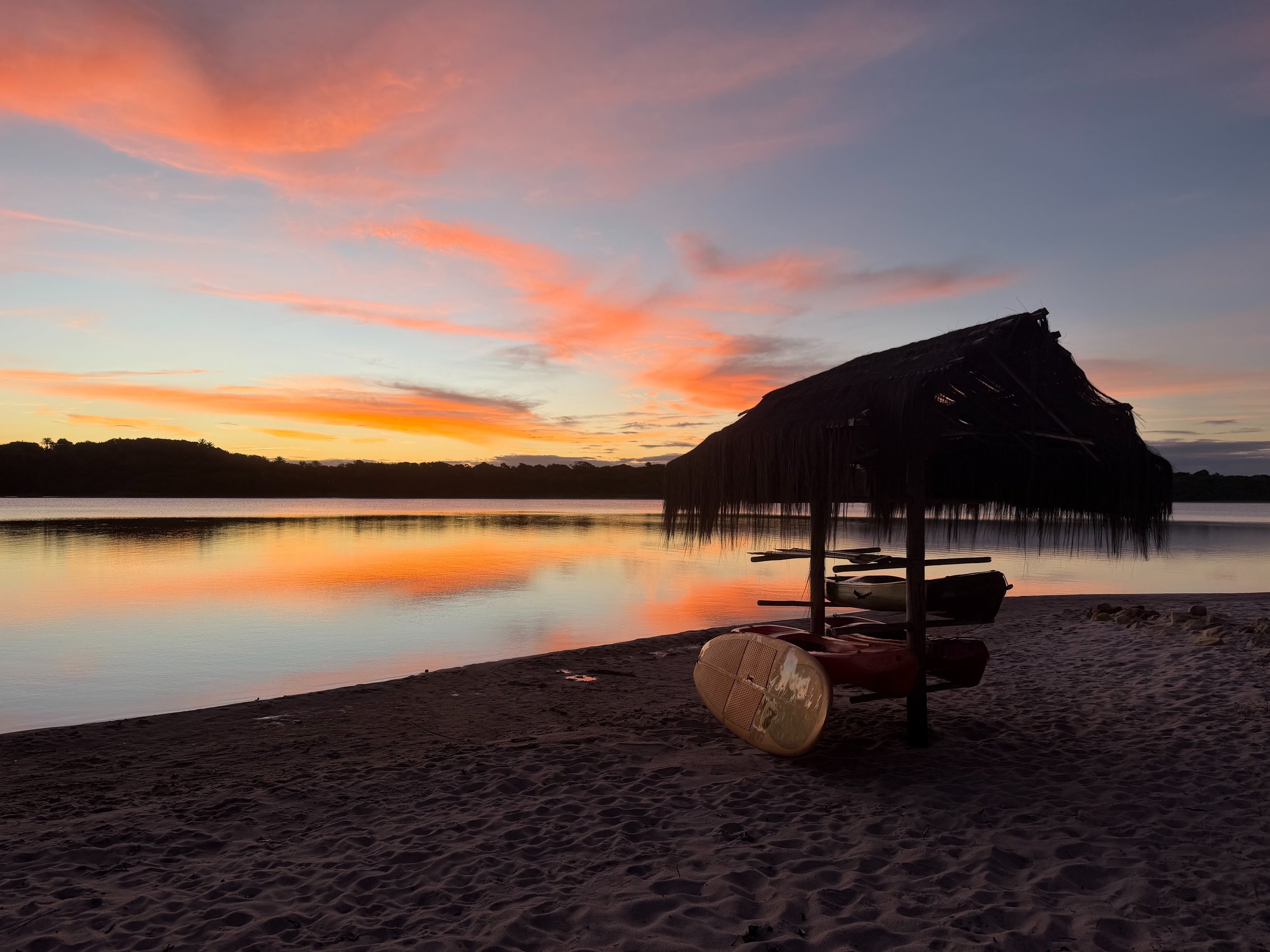
Life in Cassange quickly becomes about the landscape itself.
My days were spent moving back and forth between lagoon and ocean, rarely needing to go much further. Mornings began under a shaded daybed on the beach before wandering down to the water for a swim, a surf, or a long walk along the nearly empty coastline.
By late afternoon, I’d follow the forest trail to the lagoon, grab a kayak or stand-up paddleboard from the rack, and paddle out across the still water until the entire lagoon turned into one giant mirror for the sunset.
Because this is one of the most undeveloped parts of the Maraú Peninsula, evenings naturally slow down. Many travelers settle into dinner back at their pousada before stepping outside again to take in the star-filled sky.
The rhythm here is slow, simple, and deeply connected to the surrounding nature.
Where to Stay: Pousada Lagoa do Cassange
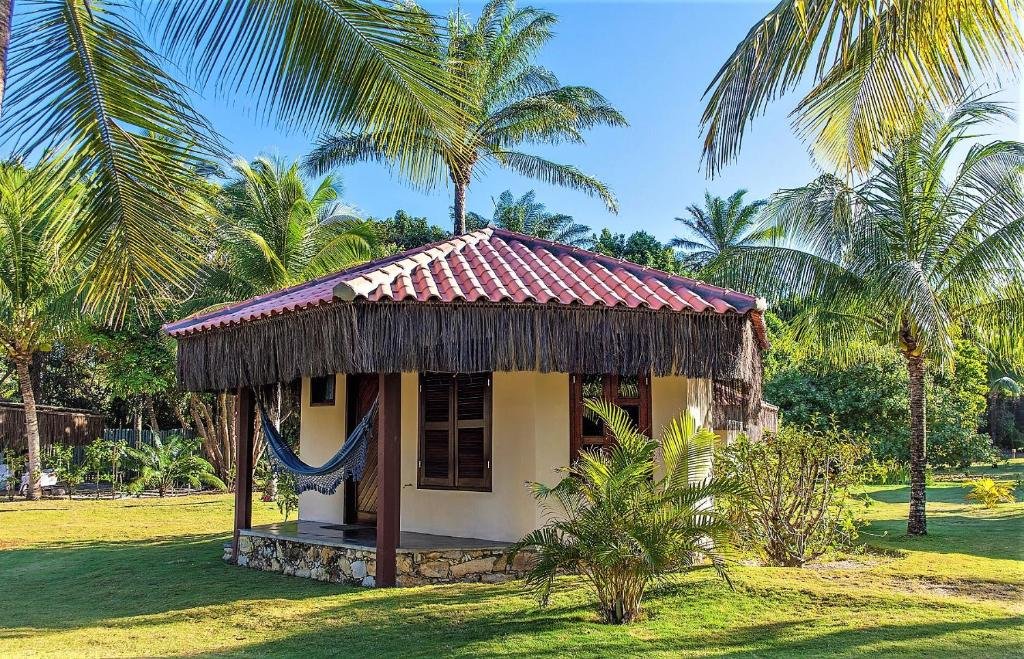
One of the most established places to stay in the area is Pousada Lagoa do Cassange, a small nature-focused pousada created by Janaína and Flavio, who described it to me as a dream built “with many hands.”
The property embraces the surrounding landscape beautifully, offering guests easy access to both ocean and lagoon. Kayaks, stand-up paddleboards, and surfboards are available for exploring the water, while hammocks, beach beds, and open common spaces invite slower moments between activities.
Meals highlight fresh local ingredients. Breakfast is prepared daily with items like homemade granola, coconut milk, honey, breads, and tropical fruits, while dinners often feature Bahian classics such as moqueca, the region’s iconic seafood stew cooked in coconut milk and dendê oil.
The atmosphere feels relaxed and welcoming, reflecting the pousada’s philosophy of creating a space where guests can reconnect with nature while engaging with the local community.
If Pousada Lagoa do Cassange is unavailable, you can explore other nearby options here:
A Connection to the Local Community: Escola Maramar
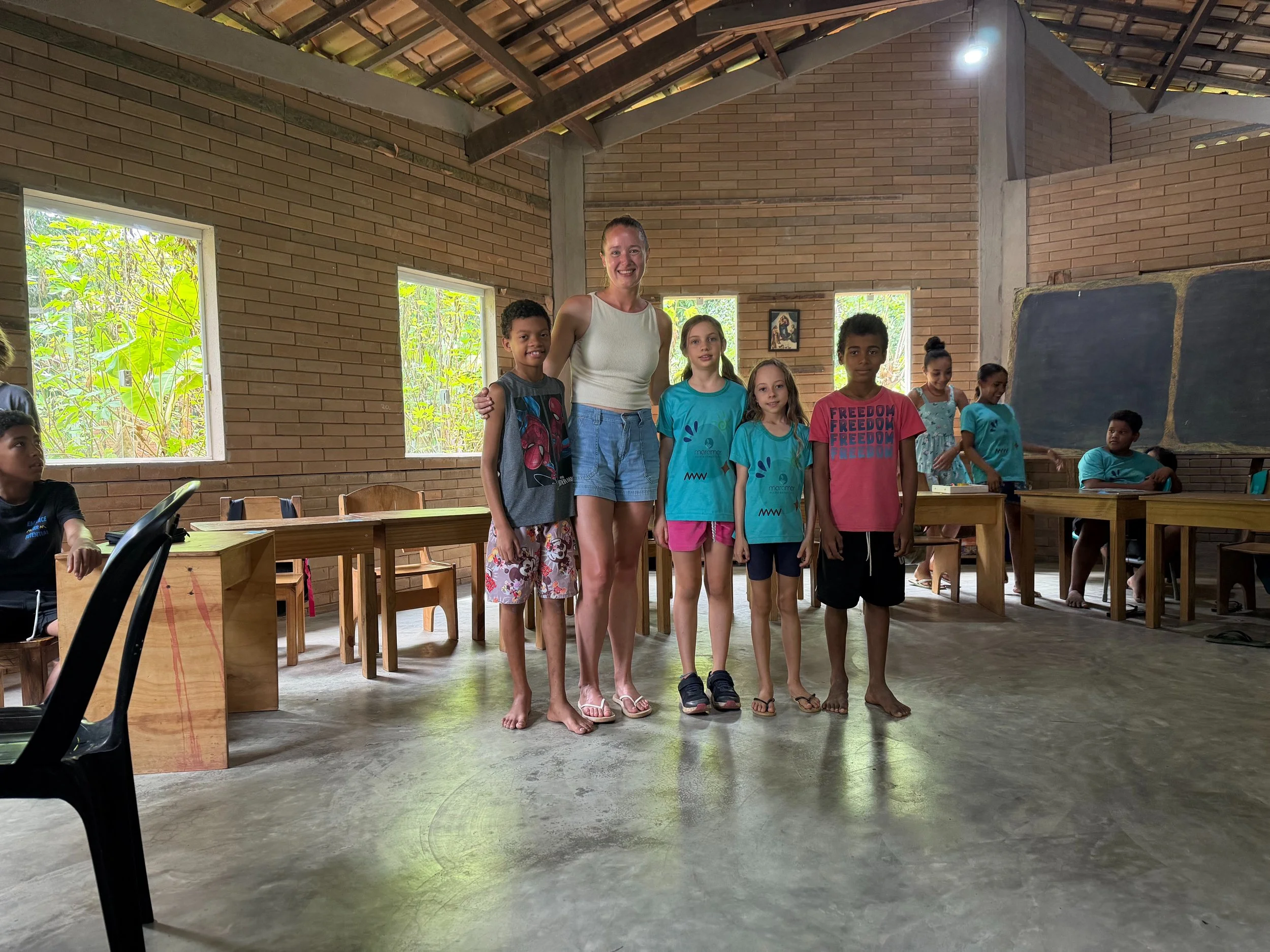
One of the most meaningful aspects of staying at Pousada Lagoa do Cassange is its connection to Escola Maramar, a nearby Waldorf-inspired school that serves children from the surrounding communities.
The project was created by the pousada and local partners to provide accessible education for families living along the peninsula—many of whom work in fishing, agriculture, or tourism.
Today, around 90% of the students attend the school free of charge, supported through donations, partnerships, and community initiatives.
Guests at the pousada have the opportunity to visit the school, meet the students, and learn more about the project if they wish. The pousada also sells small products made by the children that help support the initiative.
For travelers interested in understanding more about life on the peninsula beyond the beaches, this connection offers a meaningful glimpse into the social fabric of the region.
Why Stay in Lagoa do Cassange
Lagoa do Cassange is one of the quietest and most nature-focused areas of the Maraú Peninsula, where the Atlantic Ocean and a freshwater lagoon exist side by side.
Lagoa do Cassange is best for:
• Travelers seeking peaceful nature and uncrowded beaches
• Kayaking or paddleboarding on the freshwater lagoon
• Easy access to both ocean surf and calm lagoon waters
• Slow evenings, stargazing, and a deeper connection to the landscape
Taipu de Fora: Natural Pools and the Heart of Tourism on the Maraú Peninsula
If Algodões offers surf and quiet village life and Lagoa do Cassange centers around its tranquil lagoon, Taipu de Fora is best known for the natural pools that helped put the Peninsula de Maraú on the travel map.
Just offshore, a long coral reef forms one of Brazil’s most famous natural tidal pools. When the tide drops, sections of the reef become clear, shallow pools filled with tropical fish, creating ideal conditions for snorkeling and swimming.
It was these pools that first began drawing travelers to the peninsula years ago—long before many of the pousadas and restaurants that now line the coast.
The Natural Pools of Taipu de Fora
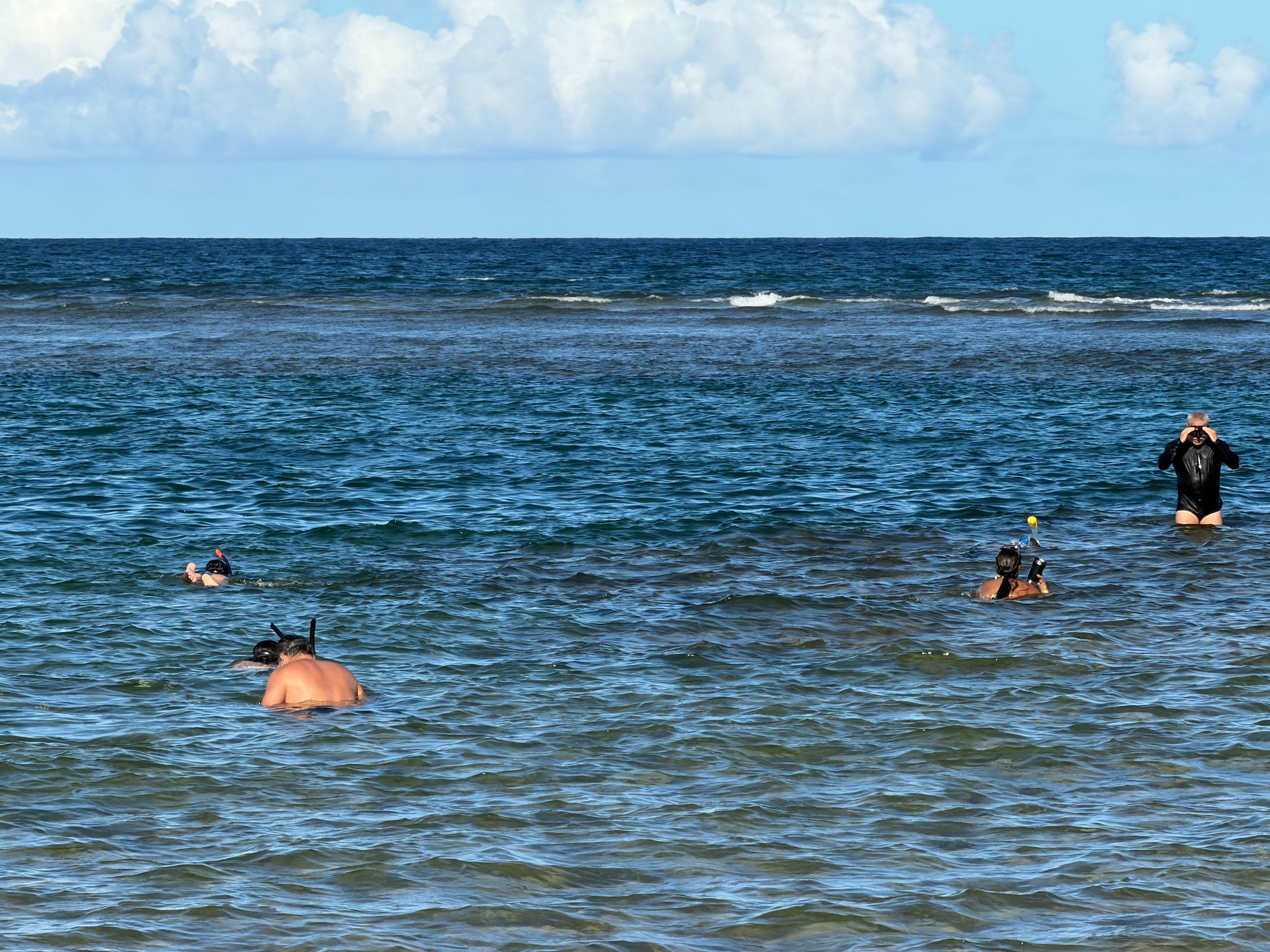
The natural pools of Taipu de Fora are best experienced at low tide, when the coral reef traps calm seawater and reveals an underwater landscape of fish, coral, and marine life.
Visitors often arrive early to catch the pools at their clearest, snorkeling through the shallow water while schools of colorful fish move between the coral formations.
Because the pools only appear when the tide drops, checking the Taipu de Fora tide chart before visiting is essential to experiencing them at their best.
Outside of low tide, the beach itself stretches wide and open, backed by coconut palms and long sandy paths connecting pousadas, beach bars, and small restaurants.
Even when the pools are not accessible, the coastline remains one of the most scenic stretches of beach on the peninsula.
What to Do in Taipu de Fora
While many travelers come primarily for the natural pools, the surrounding area offers plenty of ways to explore the landscape.
Snorkeling is the obvious highlight, but the beaches here are also ideal for long walks beneath coconut palms, particularly in the early morning or late afternoon when the light softens across the sand.
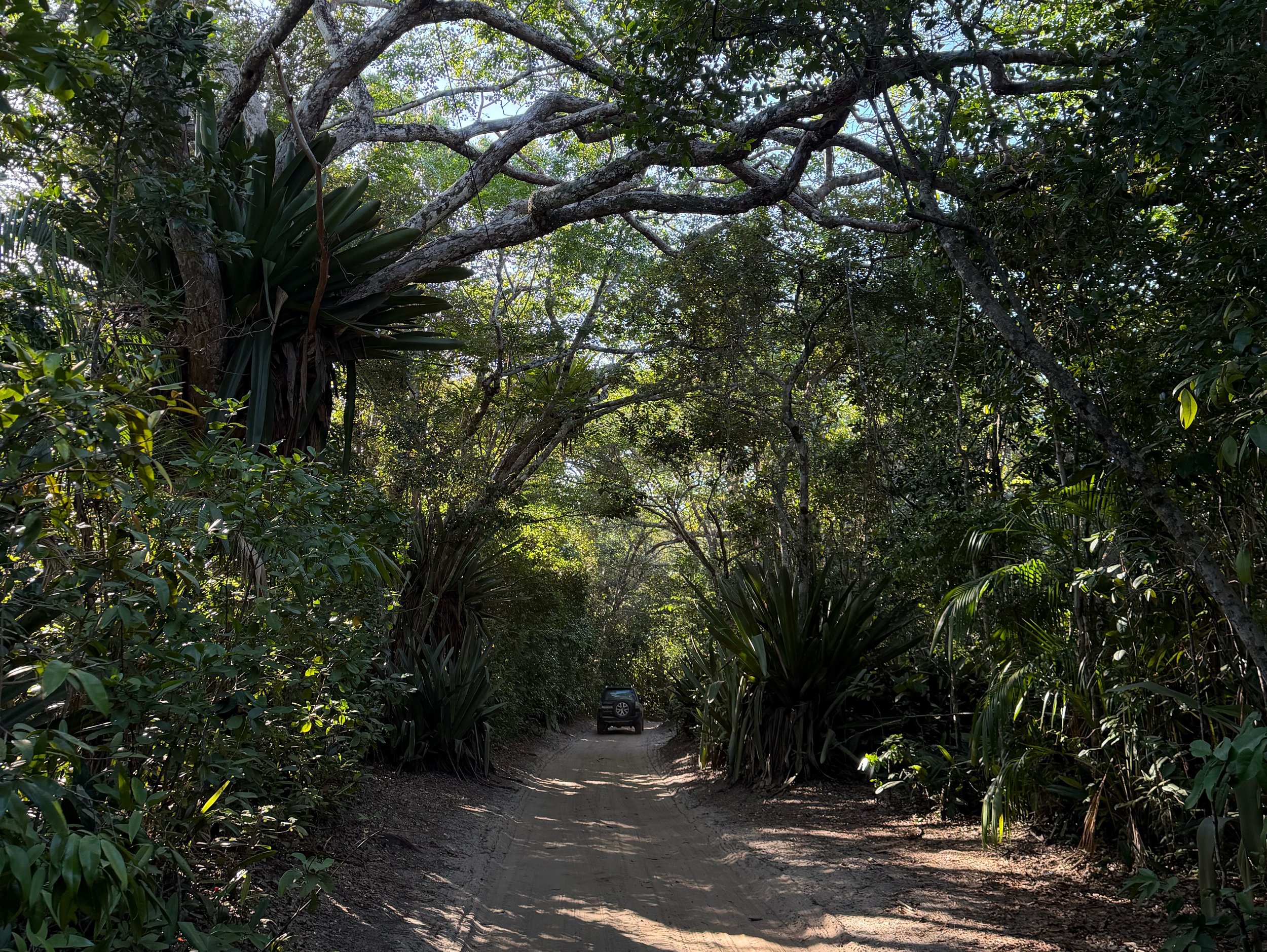
Some visitors explore the peninsula by quad or buggy, following sandy tracks through coconut groves and forest trails. One memorable route is the Trilha das Bromélias, a sandy inland trail connecting Taipu de Fora with Lagoa do Cassange.
Following the trail eventually leads to Bar Lagoa e Mar, a relaxed stop overlooking the lagoon, and continuing north brings you toward the small lighthouse where many people gather to watch the sunset over the peninsula.
For those interested in surfing, the coastline near Dreamland Bungalows can occasionally produce waves when swell and tides align. Surf lessons are available through local instructors, like Aline Chaves of Sunday Surf School, for visitors looking to spend time in the water beyond snorkeling.
Where to Eat in Taipu de Fora
Despite its relatively small size, Taipu de Fora has a handful of excellent restaurants and beach bars that reflect the flavors of Bahia’s coastal cuisine.
Pizzeria 73 is a popular stop for casual dinners, while Noemia, located across from Solar Pitanga, serves traditional regional dishes such as carne do sol, traditional salt-cured beef, and bobó, a rich Bahian stew often made with shrimp and cassava.
For a more relaxed beach afternoon, Bar das Meninas offers lounge chairs and drinks right on the sand—a perfect place to spend a few hours between dips in the ocean to swim, surf, and snorkel.
One of the most charming spots in the area is Jardim Secreto, a small garden café tucked among tropical plants. The atmosphere feels calm and intimate, making it a perfect stop for coffee, breakfast, or a quiet break from the beach.
Where to Stay: Solar Pitanga
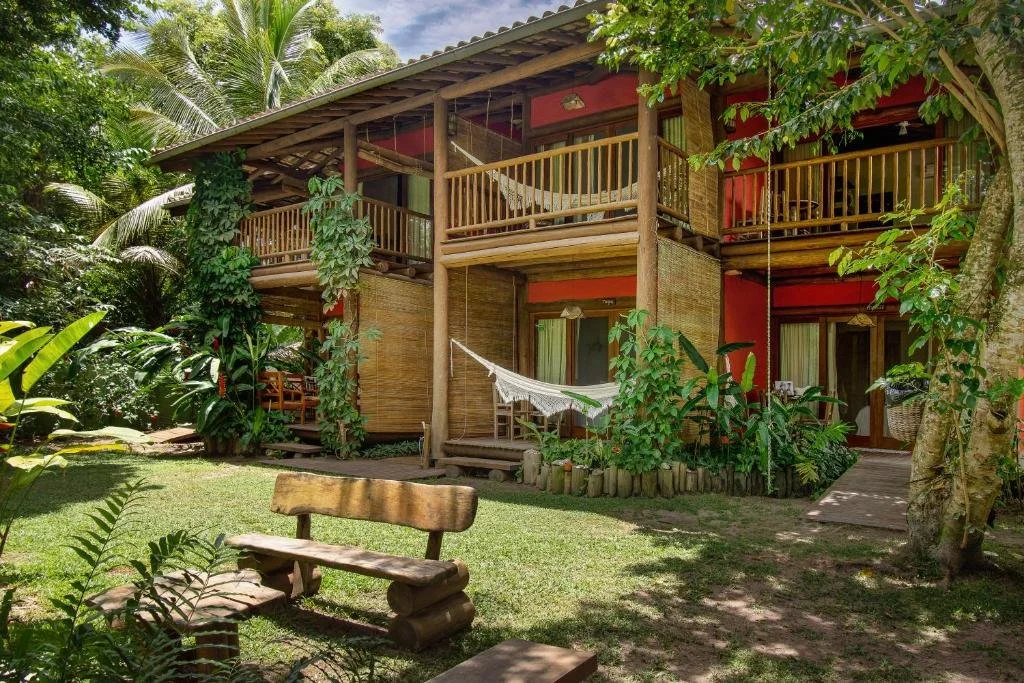
A short walk from the natural pools, Solar Pitanga is a small pousada run by Marina and Marcos, who first discovered Taipu de Fora more than two decades ago.
Marcos originally arrived in 2003, when the peninsula was still far less developed. Dirt roads were common, and reaching the beaches often meant navigating sandy tracks where travelers occasionally needed help freeing stuck cars. It was during those early visits—including time spent swimming in the natural pools—that he first recognized how special the area was.
After returning home to Brasília, he never forgot the place. Marcos later returned with Marina for their honeymoon in 2006, eventually purchasing the property and building Solar Pitanga in 2013, before opening the pousada the following year.
Today the property includes four suites, two flats, and additional suites in a newer building, surrounded by tropical gardens. An incredible breakfast buffet is included and served daily, making the pousada a comfortable base for exploring the pools and surrounding coastline.
Like much of Taipu de Fora, the pousada reflects the evolving character of the peninsula—a place that has gradually grown as travelers from across Brazil and beyond discover the beauty of Maraú.
If Solar Pitanga isn’t available for your dates, you can browse additional pousadas and small hotels nearby here:
Moving Around Taipu de Fora
Local transport trucks known as jardineiras typically operate between villages, though they’re not always reliable for tourist transportation.
Many visitors instead rent quads, fat tire bikes, or motorbikes, which are the most common way to explore the peninsula independently. These vehicles make it easy to access nearby lagoons, inland trails, and neighboring beaches.
The daily rate for a quad rental when I visited was about 250 reais for the day, though prices can vary depending on the season.
Why Stay in Taipu de Fora
Taipu de Fora is the peninsula’s most famous beach area, known for its natural pools and long stretches of palm-lined coastline.
Taipu de Fora is best for:
• Snorkeling in the natural pools at low tide
• Travelers who want restaurants and beach bars within walking distance, but quiet evenings
• Easy access to both Lagoa do Cassange and Barra Grande
• Long beaches ideal for walking, swimming, and sunset views
Barra Grande: The Lively Village at the Tip of the Peninsula
If Algodões offers quiet surf, Cassange centers around its peaceful lagoon, and Taipu de Fora revolves around its famous natural pools, Barra Grande is the social heart of the Peninsula de Maraú.
Located at the northern tip of the peninsula along Camamu Bay, the village serves as both the main arrival point for travelers coming by boat from Camamu and the most developed hub for restaurants, small shops, and nightlife.
Because the Maraú Peninsula has no major paved roads connecting it to the mainland, many visitors first arrive here by speedboat from Camamu, stepping onto a small harbor where fishing boats, tour operators, and beach bars all share the same stretch of waterfront.
From there, sandy streets wind through the village toward the bay and the ocean side of the peninsula.
By day, visitors spread out along the calm waters of Camamu Bay, explore nearby beaches, or head south toward the peninsula’s natural pools and lagoons. By night, Barra Grande transforms into one of the liveliest spots on Bahia’s Cocoa Coast, with music drifting through open-air restaurants and travelers lingering in garden bars well after dinner.
The Atmosphere of Barra Grande
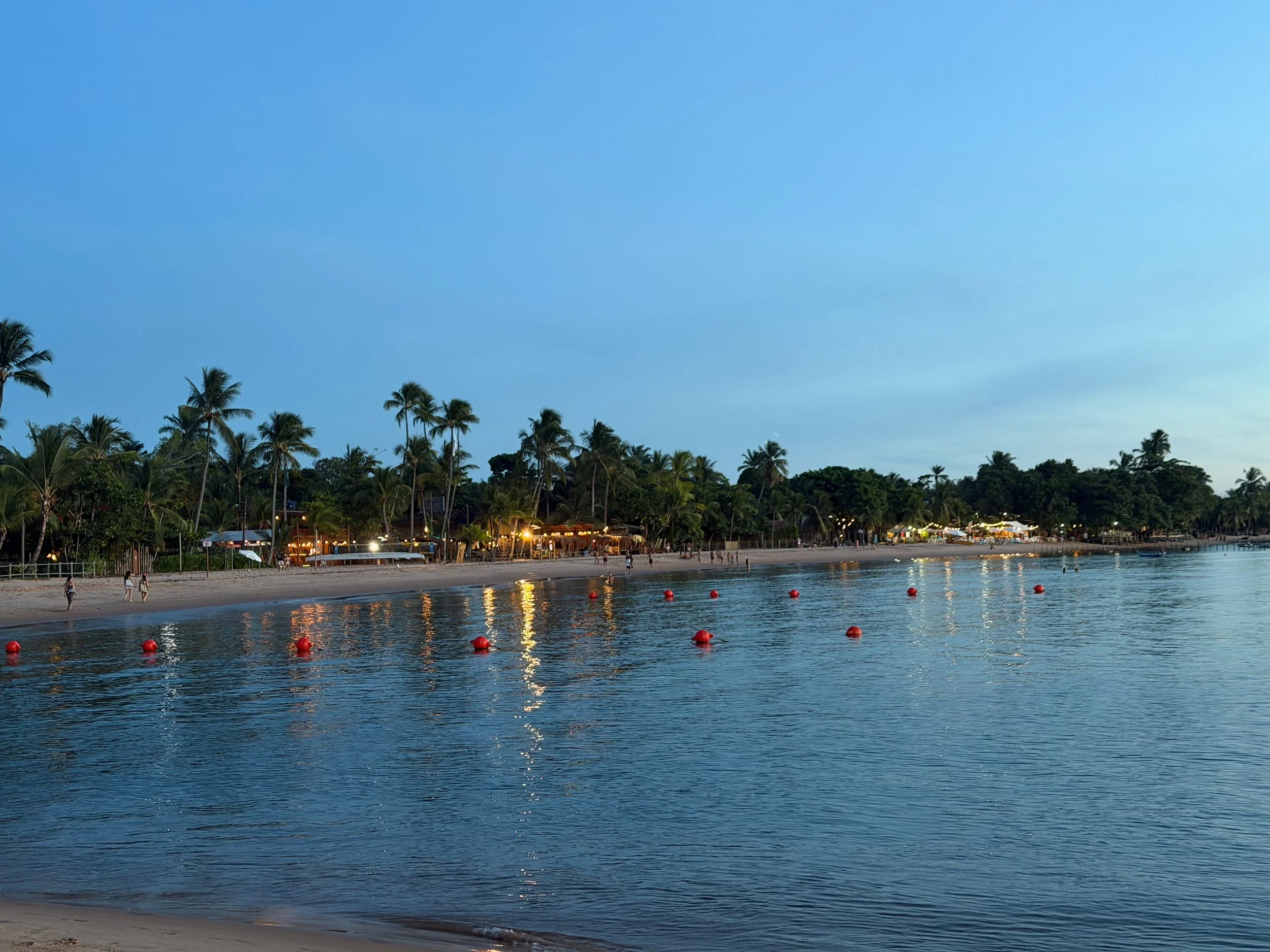
Barra Grande feels noticeably different from the quieter villages further south along the peninsula.
Small shops stay open late, açaí stands and tapioca vendors line the sandy streets, and restaurants range from casual beach cafés to Argentine-style steakhouses and Bahian eateries serving classics like acarajé and moqueca.
Live music is a regular part of the evening scene, particularly during high season and weekends. Spots like Orum and other open-air garden bars draw visitors for drinks, dancing, and long evenings under the palms.
Despite the lively energy, the village still maintains the relaxed character of a coastal town. The streets are sandy rather than paved, and transportation typically happens by quad bikes, bicycles, or moto taxis moving slowly between pousadas, beaches, and restaurants.
It’s this balance—lively but still unmistakably laid-back—that makes Barra Grande a natural gathering place for travelers exploring the Maraú Peninsula.
Where to Stay: Nirvana Beach Hotel
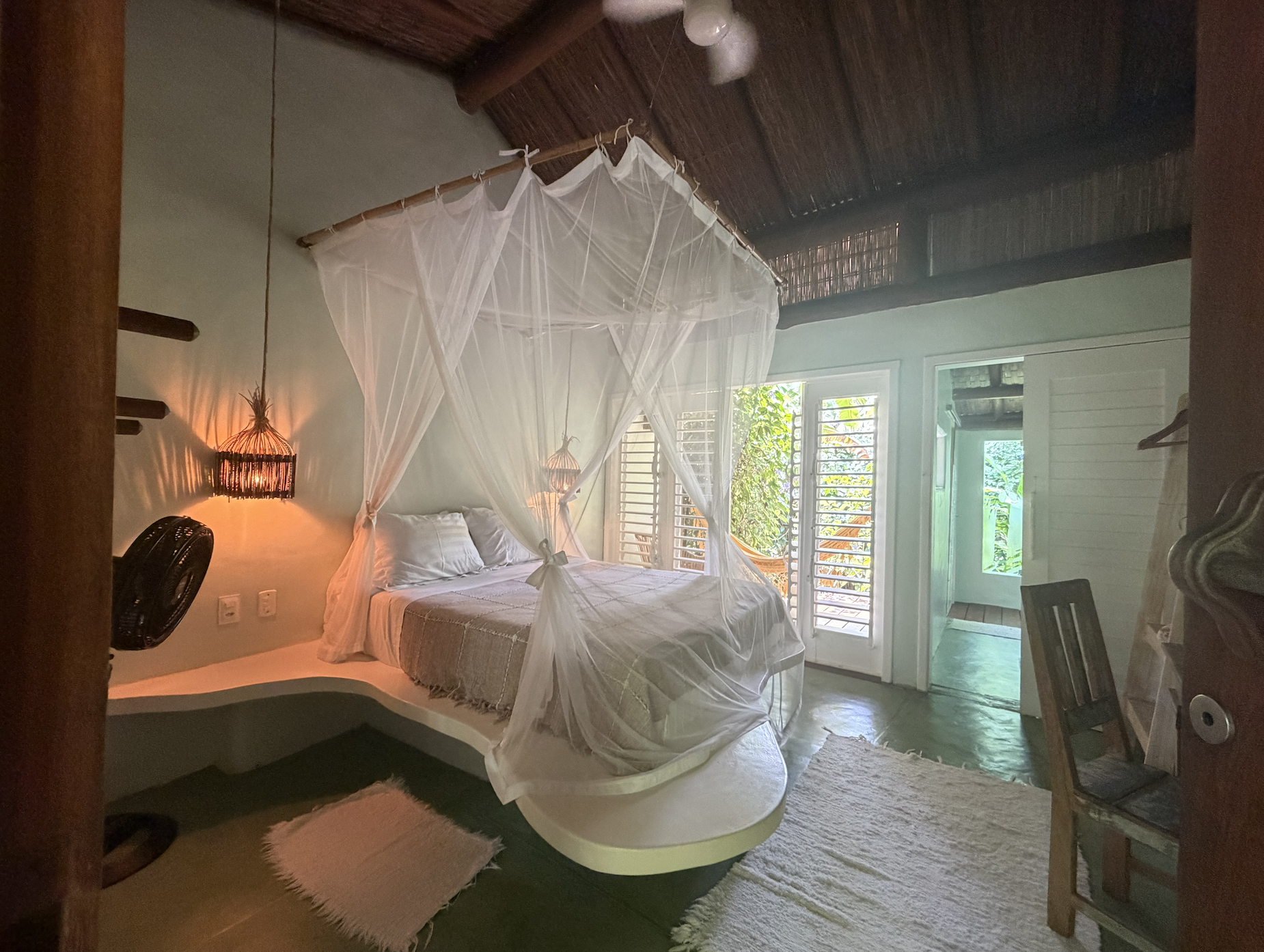
One peaceful place to stay just outside the center is Nirvana Beach Hotel, located near the tip of the peninsula in a spot known as Ponta do Mutá.
Set slightly removed from the bustle of town, the hotel offers a quiet atmosphere while still allowing easy access to Barra Grande’s restaurants, beach clubs, and nightlife.
Its location is particularly special because it sits between two very different coastal environments: the open Atlantic Ocean on one side and the calm waters of Camamu Bay on the other.
This makes it an ideal place to experience both sunrise walks along the Atlantic and the peninsula’s famous sunsets over the bay.
In the evenings, guests often gather along the shoreline as the sun drops behind the water—one of the most memorable daily rituals in Barra Grande.
If Nirvana Beach Hotel is unavailable, you can explore additional options here:
What to Do in Barra Grande
While many travelers simply enjoy the beaches, restaurants, and beach clubs, Barra Grande also serves as the launch point for many of the peninsula’s most popular excursions.
Because the village has the peninsula’s main harbor and tourism infrastructure, most tours and transfers can easily be arranged directly in town.
Popular activities include:
• Boat trips through Camamu Bay, visiting nearby islands and mangrove channels
• Snorkeling at the natural pools of Taipu de Fora during low tide
• Quad or fat tire bike rides along the peninsula’s sandy coastal roads
• Sunset sailing trips across the bay
• Beach hopping along quieter stretches of coastline south of Barra Grande
Even if you don’t plan to take a formal tour, simply wandering through the village at sunset, stopping for açaí or tapioca, and ending the evening with live music is part of the experience.
Barra Grande may be the most developed village on the Peninsula de Maraú, but it still feels far removed from Brazil’s larger beach destinations—a place where the rhythms of fishing boats, ocean tides, and long evenings outdoors continue to shape daily life.
Why Stay in Barra Grande
Barra Grande is the peninsula’s most social and energetic village—ideal for travelers who want restaurants, live music, and easy access to tours around Camamu Bay, but also ease of access in and out of the peninsula.
Barra Grande is best for:
• Travelers who want a wider selection of restaurants, nightlife, and live music
• Easy access to boat trips and tours around Camamu Bay
• Watching sunsets over the bay at Ponta do Mutá
• A livelier base to end a Peninsula de Maraú trip
How to Get to the Maraú Peninsula
Reaching the Maraú Peninsula requires a bit more effort than many beach destinations in Bahia, but that extra journey is part of what has helped the region maintain its wild and undeveloped character.
Most travelers arrive either by boat from the town of Camamu or by driving the dirt road across the peninsula. The best route depends largely on where you are coming from.
From Salvador
From Salvador, the most common route is to travel south to Camamu, then take a boat across the bay to Barra Grande.
Option 1: Bus + Boat (most common)
Take a bus from Salvador to Camamu (about 6 hours).
From Camamu’s harbor, take a lancha rápida (speedboat) to Barra Grande. The boat ride takes about 30–40 minutes.
Boats run throughout the day and usually cost around R$40–60.
This route avoids the long dirt roads across the peninsula and is the easiest way to reach Barra Grande.
Option 2: Drive
Driving from Salvador takes about 6–7 hours depending on road conditions. The final stretch across the peninsula involves dirt roads, which can become challenging during heavy rain.
Because of this, many travelers prefer the boat route via Camamu.
From Ilhéus
Ilhéus is the closest airport to the Maraú Peninsula and the most convenient starting point for many travelers.
Option 1: Bus or Transfer to Camamu + Boat
Travel from Ilhéus to Camamu (around 2.5–3 hours by bus or car).
From Camamu, take the speedboat to Barra Grande.
This is the most common route for visitors flying into the region.
Option 2: Drive Across the Peninsula
It’s also possible to drive north from Ilhéus through the towns of Itacaré and Maraú before crossing the peninsula on dirt roads to reach the coastal villages.
However, road conditions can vary, so many visitors still choose the boat route for simplicity.
From Itacaré
Because Itacaré sits just north of Ilhéus, it’s a convenient stepping stone for reaching the peninsula.
Most travelers go:
Itacaré → Camamu → Barra Grande
The journey typically takes:
1.5–2 hours from Itacaré to Camamu
30–40 minutes by boat to Barra Grande
Private transfers are also available and are often arranged through pousadas.
Boat Arrival in Barra Grande
Most boats from Camamu arrive directly at the small harbor in Barra Grande, the peninsula’s main village.
From there:
Barra Grande accommodations are usually within walking distance or a short moto-taxi ride away.
To reach Taipu de Fora, Lagoa do Cassange, or Algodões, travelers typically continue by quad, taxi, or transfer along the peninsula’s sandy roads.
Getting Around the Maraú Peninsula
Transportation across the peninsula is mostly informal and adapted to the landscape.
Common ways to move between villages include:
Quad rentals
Moto taxis
Private transfers arranged by pousadas
Jardineira trucks, local transport vehicles that run between villages
Because roads are sandy and distances can be longer than they appear on a map, most travelers base themselves in one village and explore nearby areas gradually.
A Peninsula in Transition
According to longtime residents and the locals I spoke with while traveling across the peninsula, the Maraú Peninsula has changed significantly over the past two decades.
In the early 2000s, access was limited and many routes across the peninsula were reached primarily by boat or rough dirt roads. Today, new pousadas and restaurants continue to appear, and visitors from other parts of Brazil—as well as international travelers—are increasingly drawn to the area in search of a slower, nature-focused lifestyle.
Locals often speak about the peninsula’s future with a mix of optimism and caution. Long-promised infrastructure improvements, including the eventual paving of the BR-030, could make access easier—but also bring faster development.
For now, much of the peninsula’s appeal still lies in the very things that once made it difficult to reach: forests thick with Atlantic vegetation, coconut farms stretching toward the sea, long empty beaches, and villages where daily life still moves to the rhythm of tides rather than traffic.
Places like this rarely stay secret forever.
But for travelers willing to make the journey today, the Maraú Peninsula still offers something increasingly rare along Brazil’s coastline—space, stillness, and the feeling of discovering a place that remains deeply connected to its landscape.
And perhaps that’s the quiet magic of this peninsula: not just the beaches or the natural pools, but the sense that nature still sets the pace here.
This guide is part of my larger collection of travel guides across Brazil.
What to Read Next