Salvador, Brazil Travel Guide: The Cultural Threads to Follow, Best Neighborhoods To Stay & How To Stay Safe
Affiliate Disclosure: Some of the links in this guide are affiliate links, which means I may earn a small commission if you book through them—at no extra cost to you. I only recommend tools, tours, and stays that I’ve personally enjoyed and/or are backed by solid reviews.
If you’re planning a trip to Salvador or are already in its grip, this guide will help you understand what makes Brazil’s first capital city so impressionable and gift you with a few key tips and recommendations to set your stay up for success.
Bold claim: I don’t think anyone’s ready for Salvador. And I think you’ll see what I mean when you get here.
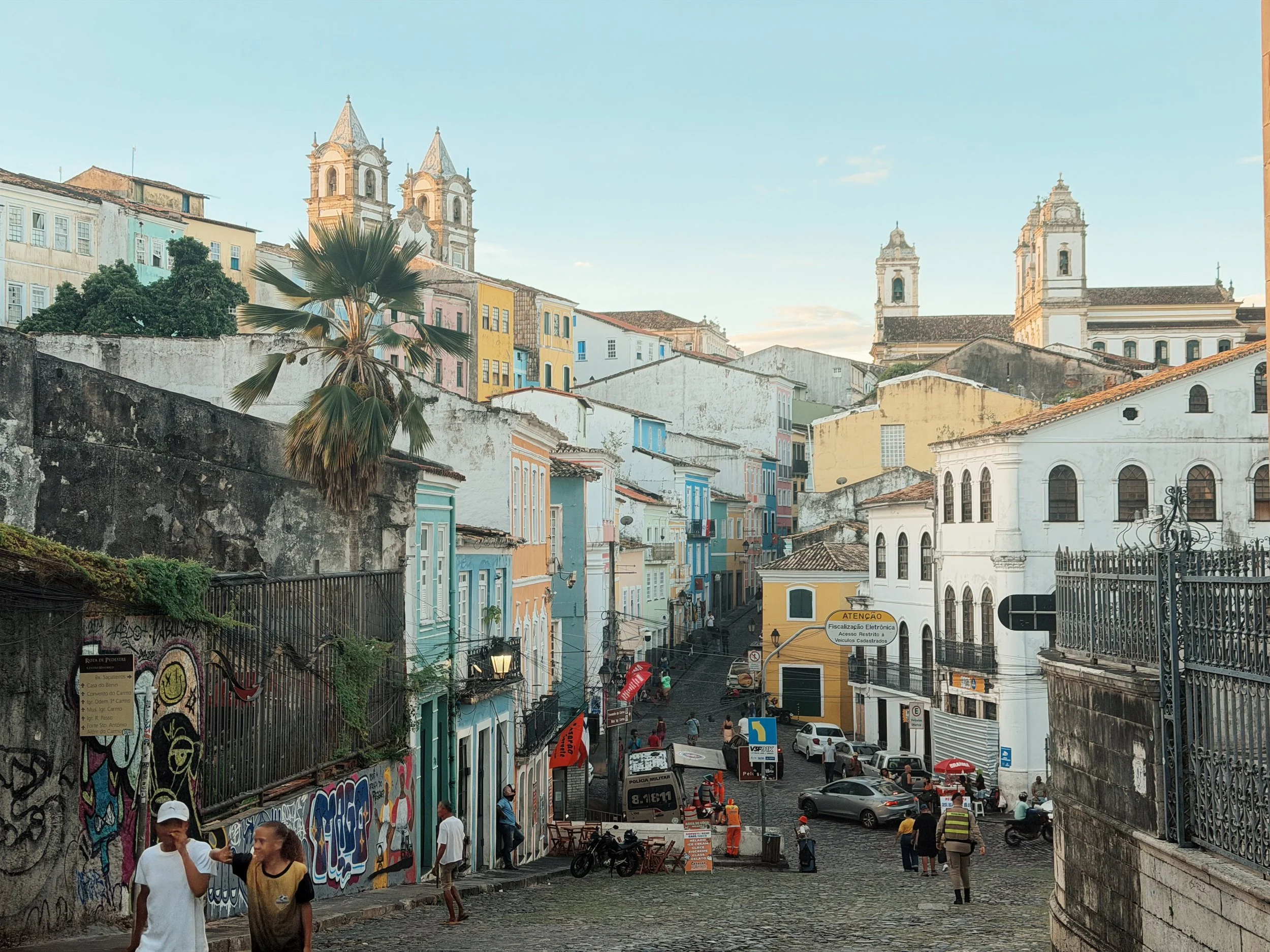
I’m writing this Salvador travel guide intro from the terrace at my pousada in Pelourinho (Pousada da Mangueira if you were wondering). I’m staring out at the backsides of faded colonial facades and tiled bell towers, while Olodum drums in the streets somewhere nearby (It’s their birthday today - April 25). It’s so loud I can feel each strike of the drum reverberating in my chest and it’s honestly taking everything within me not to just close this laptop and join them down there.
No time for storytelling? Here’s a quick synopsis of what you need to know for Salvador:
Best Area to Stay: Pelourinho (stay at Pousada da Mangueira for epic views of the colonial city + a swimming pool), but if you’d prefer bustling beachfront, stay in Barra (and Pousada Maria Maria) or to be steps from the samba and nightlife, choose Rio Vermelho (and Hotel Catharina Paraguaçu).
Top Thing To Do: Immerse yourself in the Afro-Brazilian history, heritage, and culture, be it on a free walking tour (like GuruWalk’s Paths of Resistance tour), going inside the exhibits at the Museu Afro-Brasileira (MAFRO), or ordering your acarajé com todo from the nearest Baiana while watching a capoeira performance or a drum rehearsal in the street.
How To Get Around: Uber or 99 app are essential. You can book a car (safer) or a moto (cheaper). Walking after dark, sometimes even in daylight, in many parts of the city is not recommended. More on that below in the Safety section.
For everything else, keep reading.
This is my last day of 12 in this special city, and I want to speak to you from inside its energy, while I’m feeling it. I’ve spent my precious final hours, earlier this morning, wandering in and out of open-doored colonial-era churches, understanding the craft of the acarajé makers at the Memorial das Baianas de Acarajé, and browsing the gallery of Pierre Verger, a name I didn’t even know before coming to Salvador but who I now admire deeply.
I’m sharing my morning with you so specifically because it shows that even up until the final hour (and after 12 days!) there’s always more to explore in Salvador—mostly because there’s just so much to explore in Salvador.
My other days were just as full in other places—nights out at the bars and plazas of Rio Vermelho for samba and caipirinhas, mornings spent on free walking tours through Pelourinho to learn more about Salvador’s Afro-Brazilian heritage and history, and afternoons peeking inside places that associate to the famous author Jorge Amado’s Salvador life, work, and impact.
Salvador is the kind of destination that pulls you along on this endless thread of curiosity. One aspect of itself leads to another, then another, and there’s always a museum, a church, a conversation, a shop, or a street performance ready to take you further down that thread.
I can honestly say I’m leaving Salvador with a profound love for it. It’s found its way into my currently reverberating chest. Before you roll your eyes though, remember what I said at the start: no one’s ready for Salvador. This city is a force to discover, better said to feel. And I am so excited to be one of your doorways in to that experience through this in-depth guide to Salvador.
In this travel guide, I want to share the Salvador I found, but more than that, I want this post to feel like I’m handing you your own assortment of Salvador threads to follow and see where they wind up taking you.
Ready?
You’re not, but let’s begin anyway ;)
Still haven’t downloaded an eSIM for Brazil?
Brazil is one of the few countries in the world where it’s an actual nuisance to purchase a physical SIM card. At most shops that sell them, you’ll need what’s called a CPF (Brazilian Tax ID), which obviously you don’t have as a tourist. The workaround is to just go the eSIM route instead.
I buy my eSIM through SIM Local when I travel. Their eSIM worked great for me across Brazil, even in the more remote stretches of Bahia and Rio. While I am an affiliate with them and do get a very small kickback if you purchase an eSIM through my link, I can honestly vouch for their easy interface, coverage, and customer service. You can use my code NOMAPS at checkout for 5% off your first SIM Local eSIM purchase.
Salvador Fast Facts For Context
Before we dive into the sides of Salvador that had me falling so deeply in love with it, let me first center some of the vital stats of this powerhouse coastal city, just to put where you’re headed into even more context.
Salvador is…
The cultural hub of the country: Salvador is the Afro-Brazilian capital of Brazil. It holds the proud distinction of being the city with the largest population of African descent outside of Africa.
The first capital of Brazil: Founded in 1549, it served as Brazil’s very first colonial capital until the capital moved to Rio de Janeiro in 1763 (and later to Brasília in 1960).
A UNESCO City of Music: Expect to hear rhythms everywhere you go. It is home to world-famous percussion groups, spontaneous street drumming, and one of Brazil’s largest, wildest Carnaval celebrations every February.
Among Brazil’s Largest Cities: It is Brazil's 5th largest city, home to about 2.6 million people. It sits on a peninsula in the country's sunny Northeast, framing the massive Bay of All Saints (Baía de Todos os Santos).
A City Split in Two: Salvador’s topography is unique; it is divided by a 100-meter (328-foot) cliff into the Cidade Alta (Upper City, where the historic Pelourinho sits) and the Cidade Baixa (Lower City, the port and commercial area), connected by the iconic Lacerda Elevator.
Is Salvador Safe for Travelers?
A resounding yes! Salvador is safe to visit. Do not let fear get in the way of you visiting this epic city. You’d be missing out on so much!
As I mentioned in my intro; I spent 12 days in Salvador, staying in both Pelourinho and Barra—which are two great neighborhoods to position yourself by the way—and had no incidents. Pelourinho is policed day and night, while Barra is considered to be the safest neighborhood in Salvador. Stay outside of those two areas (and you can) and your risk of getting a phone or your valuables stolen gets a little higher.
Search for hotels, hostels, and apartments in Barra and Pelourinho on Booking.com, my personal hotel comparison engine of choice. The reviews there never steer me wrong and they’re especially useful in Salvador to make sure you’re sleeping and basing yourself not just in a safe neighborhood, but on a safe street.
I would recommend that wherever you stay, ask your host or your hotel’s reception to show you on a map if there are any areas that they do not recommend you wander into on foot. If they’re unsure or you’re unsure of what’s safe and what isn’t, a good rule of thumb is to avoid any empty streets. Always opt to walk where the people are and/or just call an Uber or 99 (Brazil’s Uber equivalent) to get you to your destination. It’s cheap and assures you’ll arrive with all of your belongings intact.
🔒 A Note on Protecting Your Trip (& Why I Recommended Travel Insurance for Salvador Specifically)
Because Salvador is a slightly riskier city where phone snatching and petty theft do happen, I wouldn't travel here without a solid backup plan, maybe even a backup phone if you have one. I recommend purchasing your travel insurance policy with WorldTrips before you land. Their Atlas International plan offers comprehensive emergency medical and travel protection for an incredibly affordable daily rate and you can customize your plan to include specialized theft coverage for your smartphone, camera, and electronics. It takes just a few minutes to set up online and gives you total peace of mind while navigating the historic streets of Salvador and wherever else your trip takes you.
Where to Stay in Salvador: Barra, Rio Vermelho, or Pelourinho?
While there are other neighborhoods in Salvador of course, Barra, Rio Vermelho, and Pelourinho are the ones most visitors to Salvador choose to stay in. They’re safe, near to what you came to the city to experience, and full of hotels, hostels, and apartments for every budget.
Here’s a quick breakdown of each neighborhood to help you make your choice:
Pelourinho: At the Center of It All and Culturally Immersive
I’m not exaggerating when I say Pelourinho is the best neighborhood to stay in, especially if this is your first time in Salvador. Staying in Pelourinho means you’re in the heart of the UNESCO-protected colonial city…the cobblestones, the faded and Portuguese-tiled facades, the street performances, and history are all right there under your feet and everywhere you look. It’s where the true spirit of Salvador is felt at its fullest volume.
The only downsides are that it can be high energy at all times, so if you’re a light sleeper, I’d bring some earplugs. The other inconvenience is that there aren’t really any grocery stores within walking distance. I’m mentioning this just in case you have access to a kitchen and are planning to cook your own food. You’ll have to take an Uber to Barra or another more residential area of Salvador for groceries.
Safety isn’t really an issue in Pelourinho just due to the fact that police are literally standing on every corner keeping an eye on things. This goes for day and night. I personally felt completely fine walking back to my hotel as late as 11pm. A lot of the current content on the internet will say that Pelourinho is unsafe at night, but that’s outdated. It’s now one of the safest places to stay in Salvador.
Here a few pousadas in Pelourinho that I recommend, based on location, historical intrigue, and reviews (both mine and other travelers):
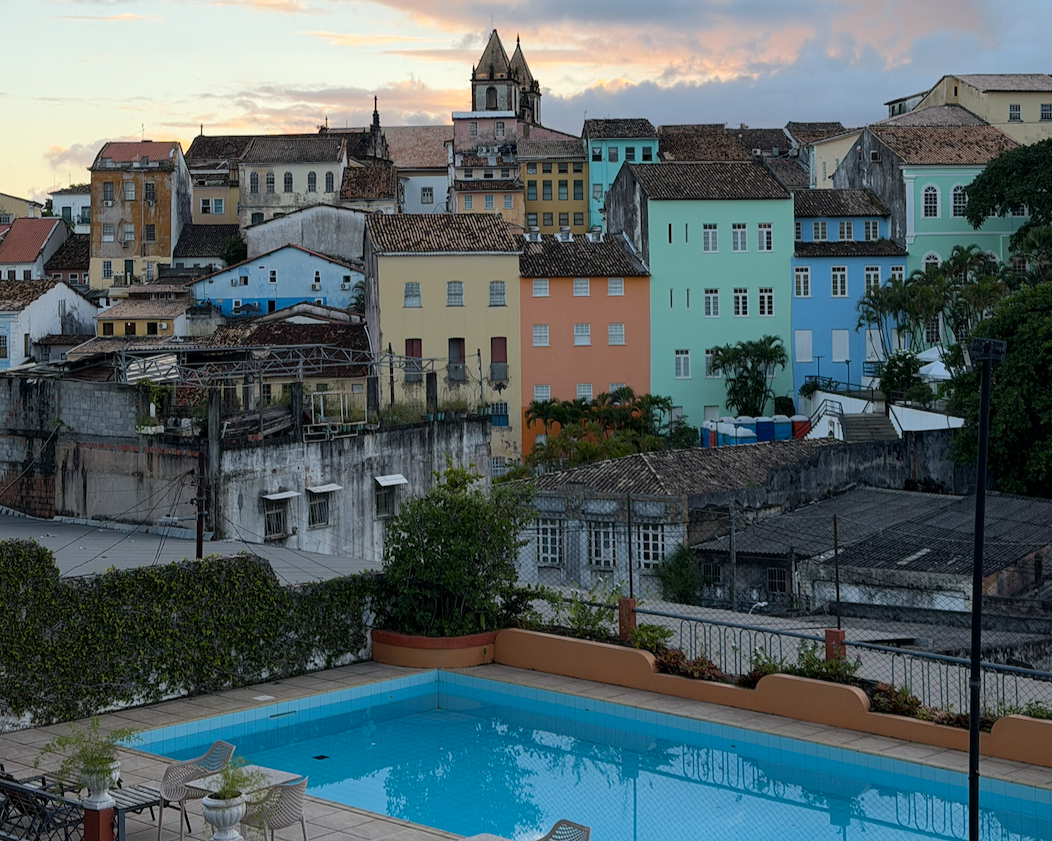
This is where I stayed. I chose it because it’s positioned a couple of streets outside of the Old City, which means instead of being enveloped in the historic streets of Pelourinho, you get to drink in the tiled belltowers and colorful colonial facades from your room’s balcony, the hotel’s swimming pool, or the al fresco breakfast terrace each morning. The pousada is actually just as historical as the district it looks out upon, dating back to the 19th century and built as a private urban mansion for some wealthy sugarcane or tobacco tycoon of the time.
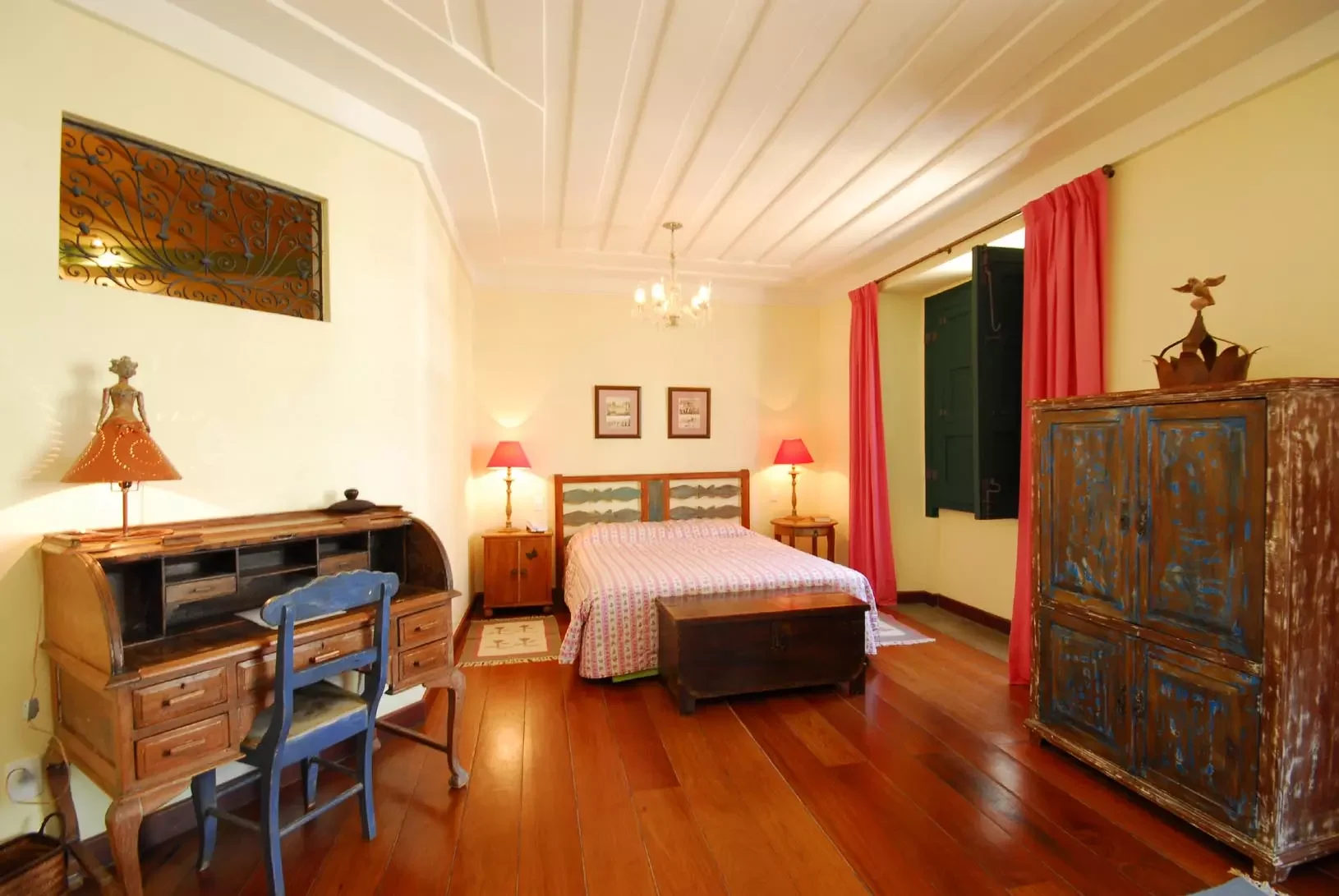
Situated just next to the extravagant, gold-leafed São Francisco Church and Convent, this historic hotel is a seamless blend of two adjoining colonial townhouses, with the oldest of the two structures dating all the way back to 1680. Inside, the rooms are themed around global trade routes, unearthed Portuguese tiles adorn the walls by the plunge pool, and there’s even an excavated mikveh likely put there by a covert Jew during the times of the Inquisition.
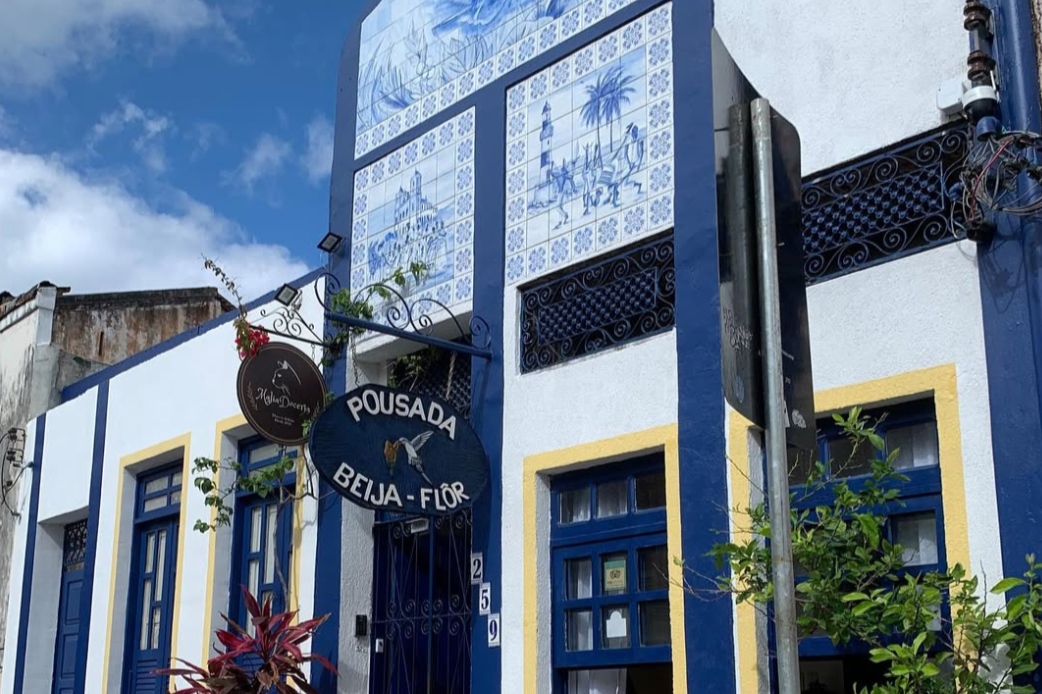
A gorgeous inn in the Santo Antônio stretch connected to Pelourinho (where some of the best restaurants, shops, and cafes are IMO) with rooms and terraces that overlook the Bay of All Saints and a delicious complimentary breakfast spread each morning. I walked by this spot many times and dreamt of staying here too.
See what else might be available in Pelourinho for your dates using the map below:
Barra: Beachfront & Bustling With a More Lived-In Vibe
Before I landed in Salvador, I relied on other travel blogs to tell me where the safest place to stay was, and they all pointed me to Barra. Safety, even more than convenience, was my top priority in those early days of getting a feel for Brazil. Barra was, in fact, perfect for that.
It’s situated along a bustling boardwalk with the ocean right there. There’s an iconic lighthouse that’s perfectly positioned for sunset and every evening or weekend it’s not unusual to catch a few spontaneous drum performances in the street. There’s street food stalls galore and plenty of locals running and cycling along the oceanfront.
This is the place to stay if you want to blend in with local life and all of its conveniences (like ATMs, grocery stores, and gyms), while still being catered to as a tourist. You’re about a 20 to 30-minute Uber from Pelourinho and a little bit closer than that to Rio Vermelho, the nightlife district. If you surf, you’re in the right spot too. There are surf schools and board rental shops near the lighthouse, the main break in Barra.
In Barra, you’ll have the widest selection of hostels and apartments, with just a few hotels. Here are a few stays in Barra that I recommend:
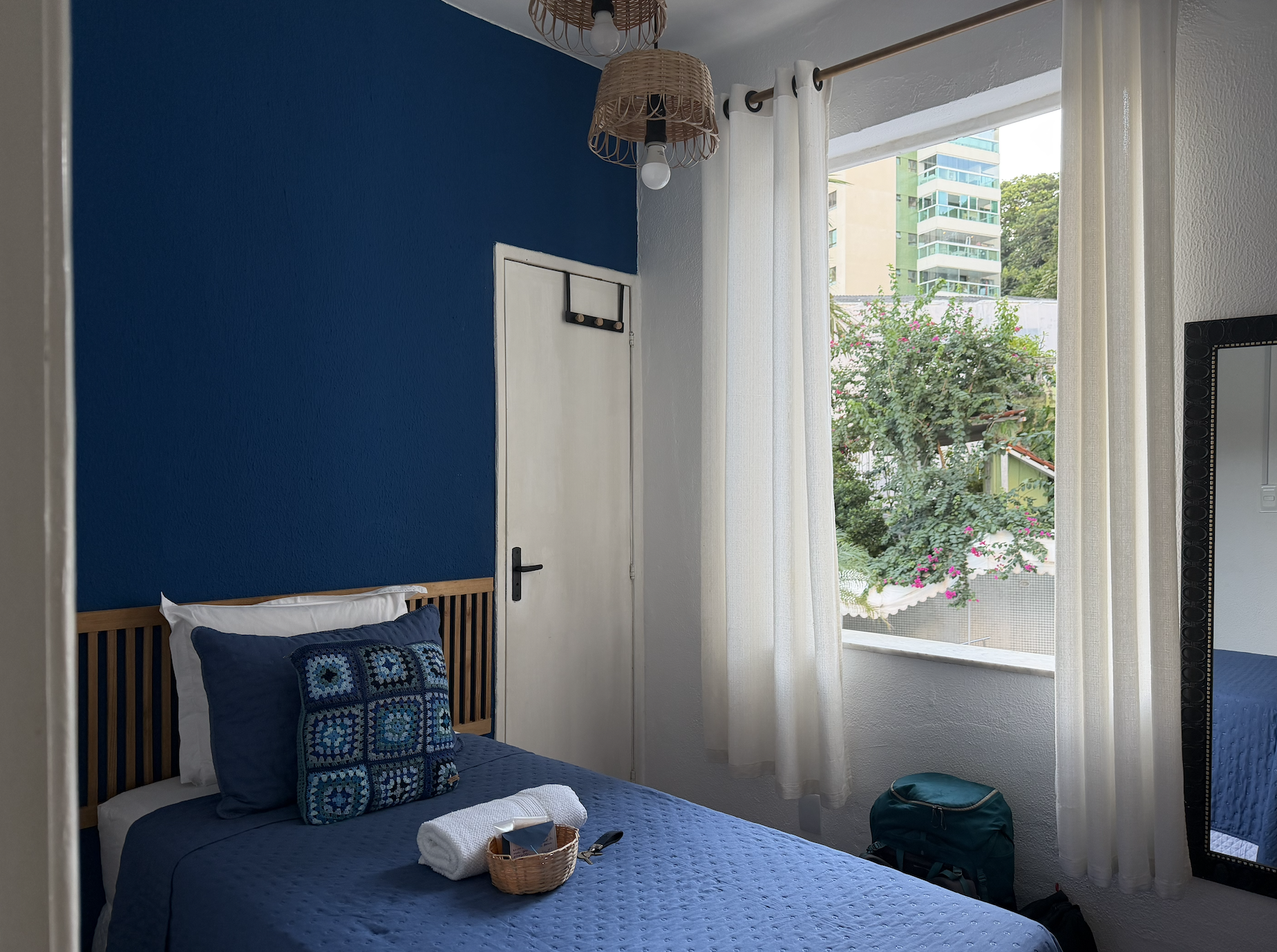
If there’s a room available at Pousada Maria Maria, snag it. This is one of the few pousadas that exist in Barra and they do the bed-and-breakfast concept so well. I spent a few nights in their single room and just loved the atmosphere and experience from start to finish. It’s quiet, cozy, and full of the comforts of home. Complimentary tea, coffee, and home-baked goods appear every afternoon, the shared spaces are bright and inviting with lounge chairs, a hammock, and a comfy couch, and the rooms have everything you need from a mini-fridge to air conditioning and, in some, a desk for plotting out your day.
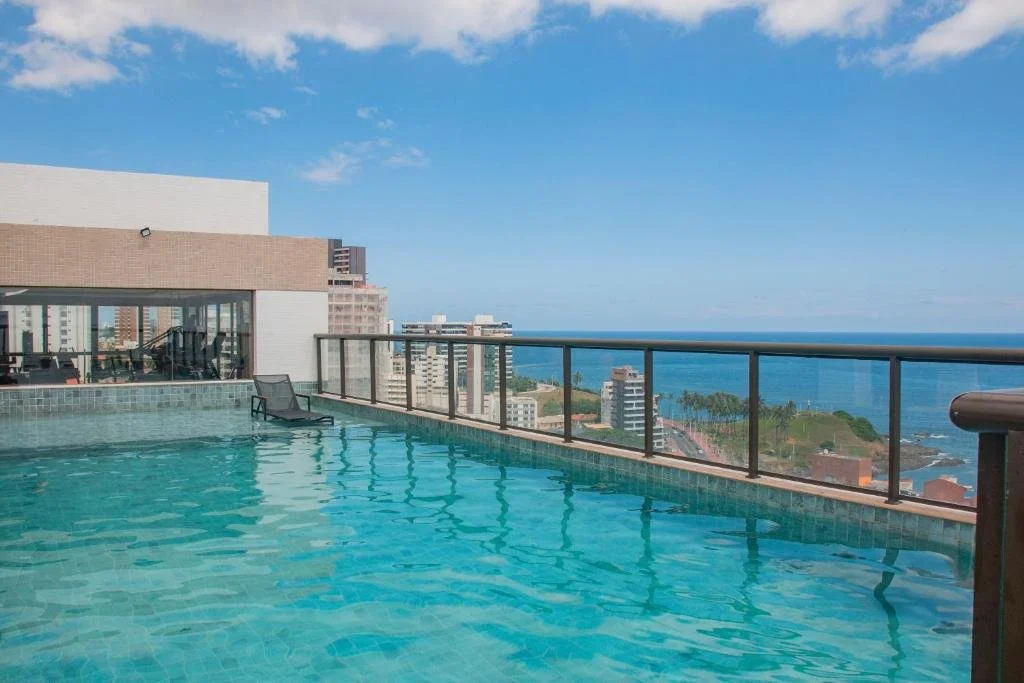
This is a solid pick if you’re in the market for an apartment stay in Salvador. There’s a rooftop pool, gym, and coworking space. It’s studio-style, but sleeps up to four between its queen-sized bed and pullout sofa bed. It has a well-equipped kitchen, including a fridge, stovetop, and microwave, and it’s close to all the activity and action on the beachfront boardwalk.
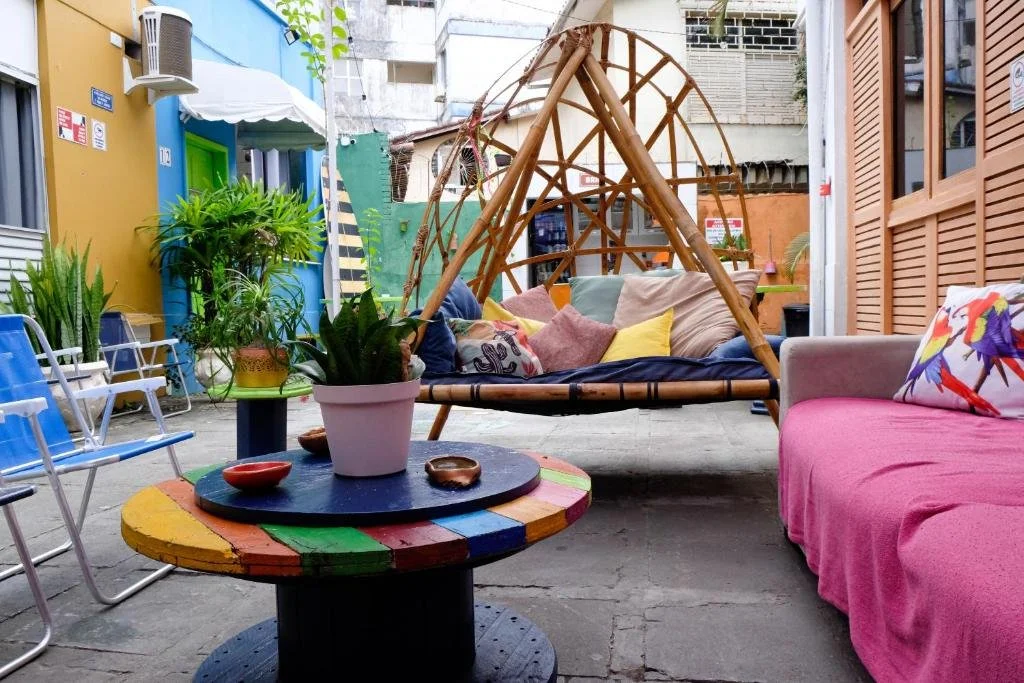
While I didn’t stay here myself, I met more than a few backpackers who did and who loved it. It’s very social, with activities running daily that put you in touch with the other guests quickly. You’ll have access to a shared kitchen and a coworking space to get some work done in peace or to plan the rest of your trip. The beds in the dorms have curtains (so nice!), and there are a limited number of private rooms you can book, too.
See what else might be available in Barra for your dates using the map below:
Rio Vermelho: The Bohemian Nightlife Hub
I never did get a chance to stay in Rio Vermelho, but I did visit for its iconic nightlife. That’s what this part of town is best known for, alongside its artistic, neighborhood-first character. Some might even call it the gastronomic capital of Salvador, where you can find the most famous, bustling acarajé squares (like Largo de Santana and Largo de Mariquita).
Of note, however, it is less heavily policed than Barra or Pelourinho, so my safety tips earlier definitely apply and you’ll want to read all reviews before booking a place to stay in this neighborhood, just to make sure it’s in a safe location.
Stay here and you’ll be steps from a few attractions, including the Casa do Rio Vermelho, the former residence of Jorge Amado, Brazil’s most celebrated 20th century novelist, the Casa de Yemanja, a small, culturally significant temple on the beach dedicated to the Afro-Brazilian goddess of the sea Yemanjá, and the Mercado do Rio Vermelho, a large indoor market where you can shop for fresh fruits, local cheeses, and regional handicrafts.
If you’re looking for nightlife on your doorstep instead of a swim and surf-friendly beach like in Barra or deep history like in Pelourinho, this is the place for you. If you’re seeking peace and quiet after a reasonable hour (especially on the weekends), I’d say choose a different neighborhood and Uber here instead for your big night out.
Here are a few spots I’d recommend you stay in Rio Vermelho:
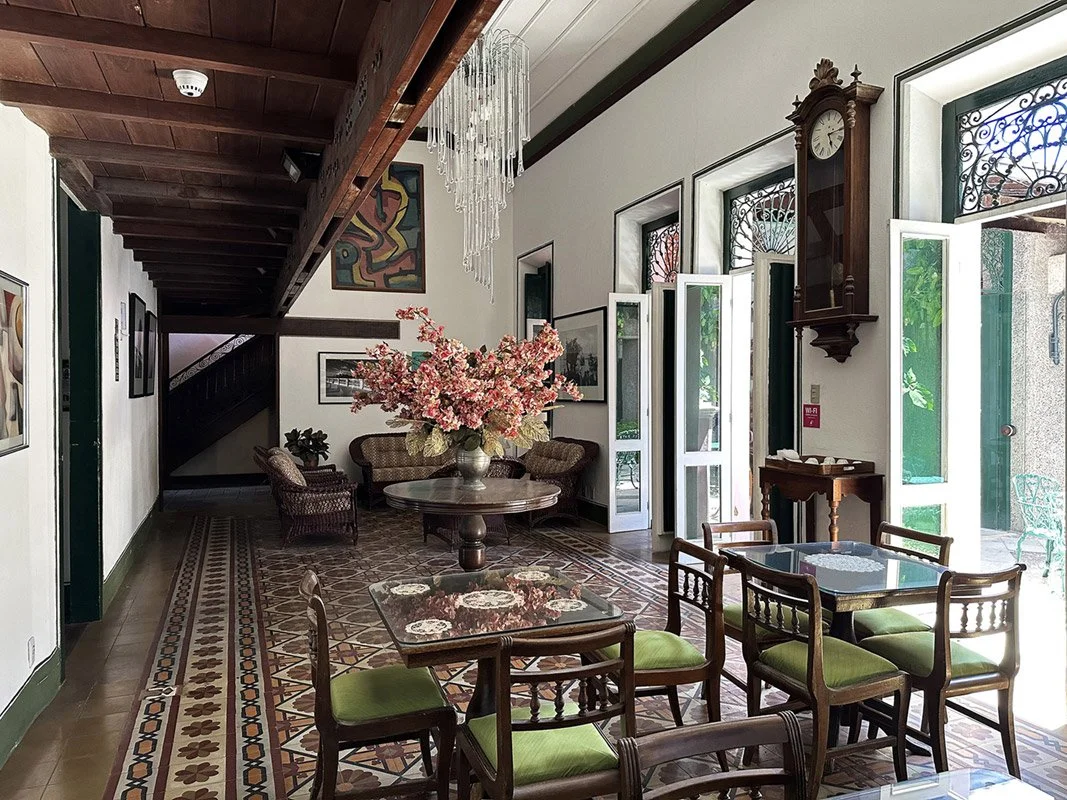
If I wanted to splurge on a stay in Rio Vermelho, it would be here. Inside of a restored 19th century residence, this charming boutique hotel is named after the Tupinambá indigenous maiden who married the shipwrecked Portuguese sailor Diogo Álvares and whose union in the 1500s is widely considered the symbolic birth of Bahia's mixed cultural identity. Between the architecture, the lore, and the ornate, art gallery-like interiors, this would be a memorable place to stay in Rio Vermelho.
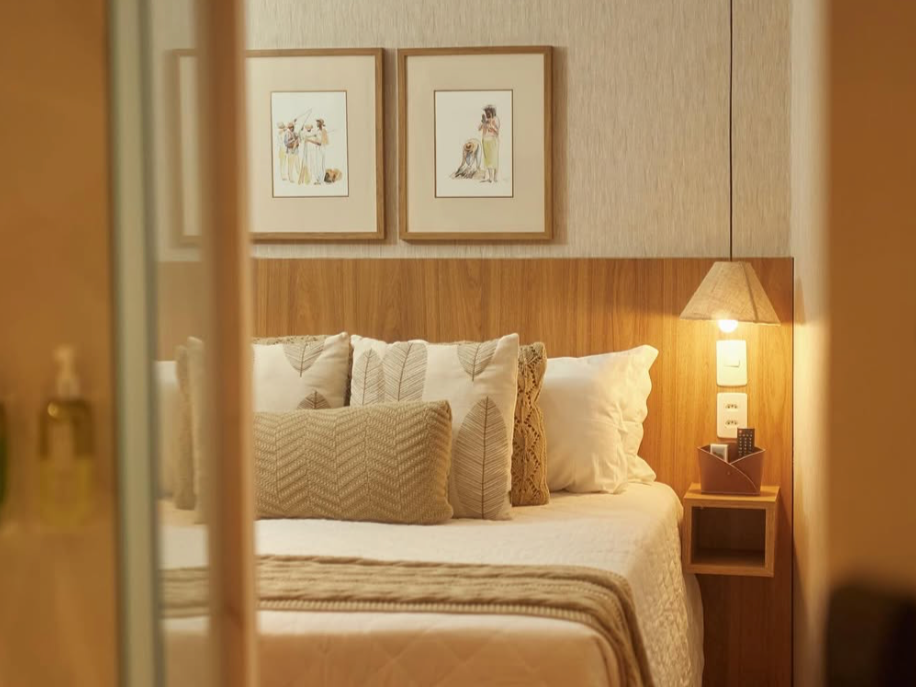
For something luxurious, with an infinity pool on the roof, a Mediterranean restaurant on-site, and rooms with French doored-balconies, this boutique hotel might be for you. Previous guests say it’s quiet, beautifully designed, and within a safe walking distance of the bars and restaurants of Largo de Santana.
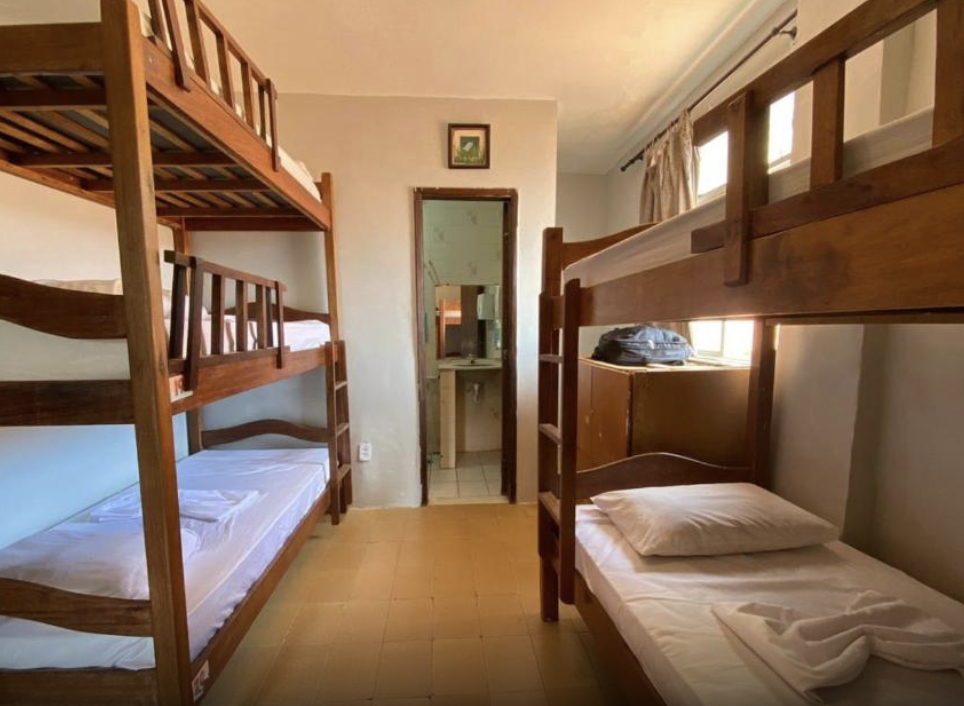
When I was considering trying a night or two in Rio Vermelho, this was the hostel at the top of my list. It’s got great reviews, air-conditioned dorms, and free breakfast every morning. What more could a backpacker want!
See what else might be available for your dates in Rio Vermelho using the map below:
Top Things to Do in Salvador
Here are the Salvador threads I encouraged you to run with in my intro. There’s quite a few here, so I’ve broken them down by theme.
Thread 1: Afro-Brazilian History & Resistance
Be Led Through Salvador’s Afro-Brazilian History & Heritage
There’s a long list of places to start for following this thread through Salvador, but a really good one is jumping on GuruWalk’s Paths of Resistance Free Walking Tour (and hope that Roberto is your guide that day - he’s excellent!). GuruWalk’s tip-based walking tours are a nice introduction to any city, especially on your first day, but in Salvador, where the history and its impacts loudly define the culture of today, they should be a requirement.
After the tour or in the days that follow, double down on the Afro-Brazilian history lesson by visiting Pelourinho's two powerhouse Afro-Brazilian museums:
Step inside Museu Afro-Brasileiro (MAFRO)to marvel at Carybé's legendary wooden carvings of the Candomblé Orixás
Then head over to Museu Nacional da Cultura Afro-Brasileira (MUNCAB) to witness powerful, contemporary exhibitions detailing the living, modern African diaspora.
Contrast Baroque Wealth with What Enslaved Labor Built For Themselves
Marvel at the 800 kilos of gold leaf inside the opulent Igreja de São Francisco (entry fee is roughly R$10, cash only). Afterward, contrast it with Nossa Senhora do Rosário dos Pretos, a stunning church built entirely by enslaved people at night after their forced daily labor.
To feel its living legacy, attend their famous Tuesday evening Mass at 6:00 PM to experience a unique, moving blend of Catholic liturgy and traditional Candomblé drumming. I’d recommend arriving at least 45 minutes early to secure a seat, as this specific service fills up completely with locals and travelers alike. Also, dress respectfully with covered shoulders and knees if you can.
Plunge into the Labyrinth that is the Feira de São Joaquim
Step away from the tourist zones and plunge into Salvador’s largest open-air market, located in the Água de Meninos area. It is a sensory overload of sights, sounds, and scents where locals buy everything from fresh dendê palm oil to clay pots and sacred ritual herbs, showcasing a raw, unfiltered slice of Afro-Bahian community life.
For the best experience, visit on a Friday morning when the market is fully stocked with fresh goods for weekend Candomblé ceremonies. When you go, be sure to wear closed-toe shoes with good grip to navigate the narrow, wet corridors, keep valuables completely out of sight, and consider hiring an authorized local guide to help navigate the vast labyrinth safely. Claudio at MC Tours can likely hook you up.
See the Visual Archive of Survival at the Pierre Verger Spaces
Explore the profound spiritual and cultural links between West Africa and Bahia through the lens of legendary French photographer and Candomblé priest Pierre Verger.
You can view his work at two incredible city locations:
The beachside Espaço Pierre Verger da Fotografia Baiana housed inside Forte de Santa Maria in Barra (entry fee is R$20)
The intimate Galeria Fundação Pierre Verger (entry is free) located in the historic center
The latter is situated right on the Portal da Misericórdia between Praça Municipal and Pelourinho and features rotating, curated exhibits of his iconic black-and-white portraits. It’s also an excellent spot to purchase specialized regional photography books if that’s something you’re shopping for.
Uncover the Art of Resistance at Galeria Mercado Modelo
Take the Elevador Lacerda down to the harbor to explore Mercado Modelo, Salvador's premier artisanal market. While popular myth falsely labels the building's labyrinthine basement as a colonial slave dungeon (the building was actually built in 1912 as a customs house), the subterranean space has been beautifully transformed into the permanent Galeria Mercado.
For a R$20 entry fee (free on Wednesdays), you can walk through the arched brick tunnels to view a stunning, light-filled contemporary art installation titled Lágrimas (Tears) alongside modernist masterpieces by Rubem Valentim and Mário Cravo Jr.
It functions as a powerful, immersive tribute to the working-class Afro-Bahian traders who fought for economic resilience within these exact flooded corridors.
A few hand-picked GetYourGuide experiences that will take you deeper down this thread:
Thread 2: Living Spiritual Heritage & Rituals
Experience a Candomblé Ceremony
Witness the profound, living African roots of Salvador’s most sacred faith. Enslaved Africans historically masked their sacred Orixás behind Catholic saints to preserve this spiritual devotion under colonial rule.
You will need a reputable local guide to attend, as these active ceremonies require strict permission, follow rigorous etiquette, and take place in residential, non-touristy parts of town.
Your Tour Brazil offers an authentic and respectful Candomblé ceremony experience (bookable on GetYourGuide). It includes transport, access to a truly local (not performative) temple, and an English-speaking guide who provides context to what you’re witnessing.
Decode the Art of Religious Syncretism at Bonfim
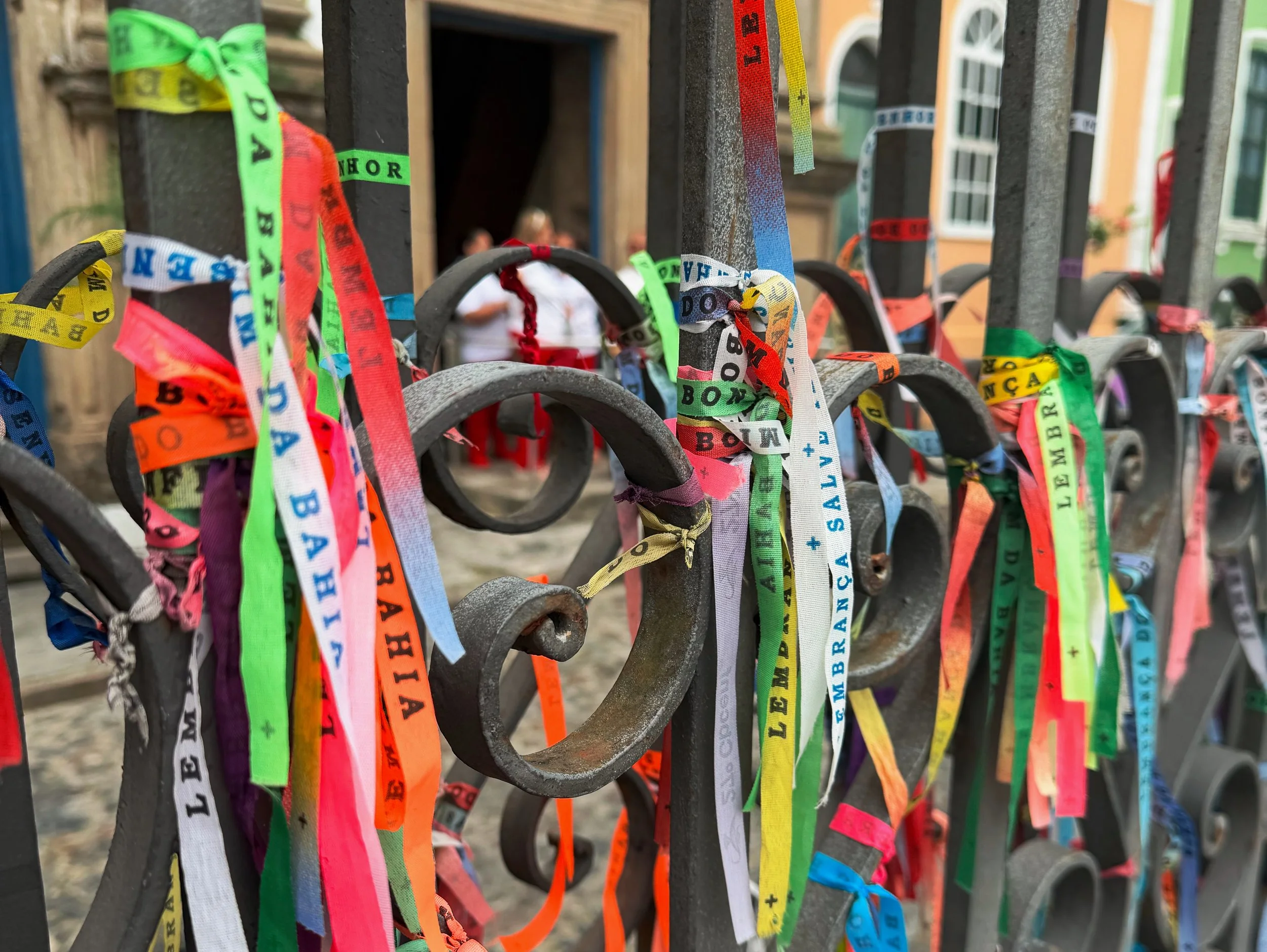
Climb the Colina Sagrada (Sacred Hill) to visit the historic Basílica do Senhor do Bonfim, Salvador's emotional and spiritual epicenter. Tie a vibrant, colored fitinha (wishing ribbon) to the church’s famous outer gates using three knots for three wishes, honoring a centuries-old tradition that beautifully fuses Catholic devotion with Afro-Brazilian Candomblé spirituality. You will have to take a taxi or rideshare to get to the basilica, but it’s not more than 20 minutes drive from Pelourinho. Plan your visit for a Friday morning, which is the most spiritually significant day of the week.
Afterward, call another taxi or Uber and have them take you a few minutes down the peninsula to the historic beachfront neighborhood of Ribeira (walking is not recommended in this neighborhood). There, you’ll find the award-winning Sorveteria da Ribeira (est. 1931), an artisanal ice cream shop with a menu of local and tropical flavors. If they have any of these flavors in stock, don’t pass them up: roasted coconut, tapioca, acai, or their famous "African Chocolate".
View the Floating Orixás at Dique do Tororó
Take a taxi or Uber out to Salvador’s central lake to view the magnificent, larger-than-life sculptures of the Candomblé Orixás floating gracefully on the water. Created by artist Tatti Moreno in 1998, these beautifully dynamic figures offer an unforgettable public tribute to the city's prevailing West African spiritual heritage.
It’s best to visit during daylight hours when the park is fully secure or time your visit for dusk to see the statues illuminated by floodlights. By dark, it’s best to be headed back to your hotel.
During the day, the lake features a well-frequented, paved walking path with lakeside restaurants, making it an excellent spot to pair sightseeing with a casual lunch.
A few hand-picked GetYourGuide experiences that will take you deeper down this thread:
Thread 3: Rhythms, Dance, & Carnaval Culture
Sample Samba, Percussions, and/or Capoeira
Take an interactive class or workshop to experience Salvador’s foundational trinity of movement and rhythm. Learn the mesmerizing hip-work of Samba de Roda (the historic ancestor of modern samba) at CASA Projeto Samba Bahia, or book a booming Afro-Brazilian percussion workshop right in Pelourinho to master the heavy, infectious polyrhythms of samba-reggae.
If you want to sweat, look into the acrobatic martial art of capoeira—originally disguised as a dance by enslaved people to evade colonial masters—with a beginner's lesson at the historic Associação de Capoeira Mestre Bimba. Or combine all three with this samba-percussion-capoeira combined experience available on GetYourGuide.
Watch a World-renowned Performance by the Balé Folclórico da Bahia
The Balé Folclórico da Bahia was a highlight experience for me! Their high-energy choreography beautifully stitches together Candomblé rituals, capoeira acrobatics, haunting vocals, and thunderous drum troupes.
Shows run every Monday, Wednesday, Thursday, and Friday at 8:00 PM at the intimate and historic Miguel Santana Theater in Pelourinho. You can buy your tickets at the door, but get there early as these shows almost always sell out and it’s free seating inside the tiny auditorium.
Step inside Carnaval (even in the offseason)
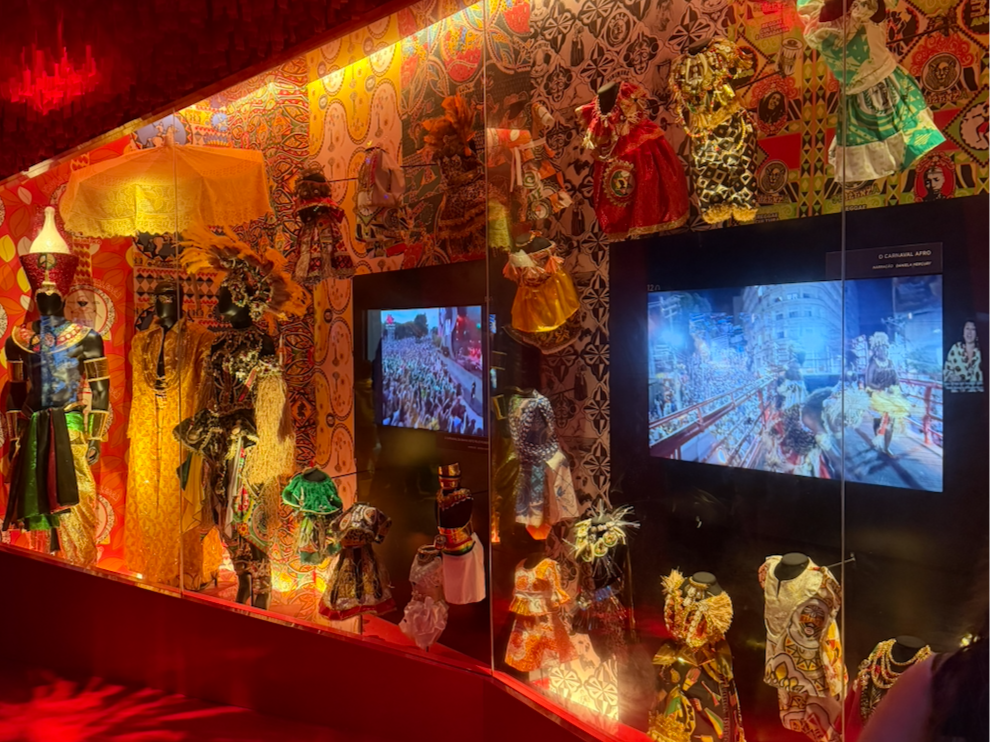
Start by immersing yourself in the interactive exhibits and rhythmic dancing booths at the Casa do Carnaval da Bahia in Pelourinho (open Tuesday through Sunday, 9:00 AM to 5:00 PM, with free entry on Wednesdays). You can even duck into their interactive cinema rooms to dress up in authentic costumes and learn the choreography of the trio elétricos.
Once you’ve absorbed the history, walk down the cobblestone streets to browse the nearby boutiques of legendary Afro Blocos like Olodum or Ilê Aiyê, and to witness them in action, plan your itinerary around Olodum’s legendary public street rehearsals that take place every Tuesday evening in Pelourinho.
A few hand-picked GetYourGuide experiences that will take you deeper down this thread:
Thread 4: Maritime Legacy & Seaside Bohemia
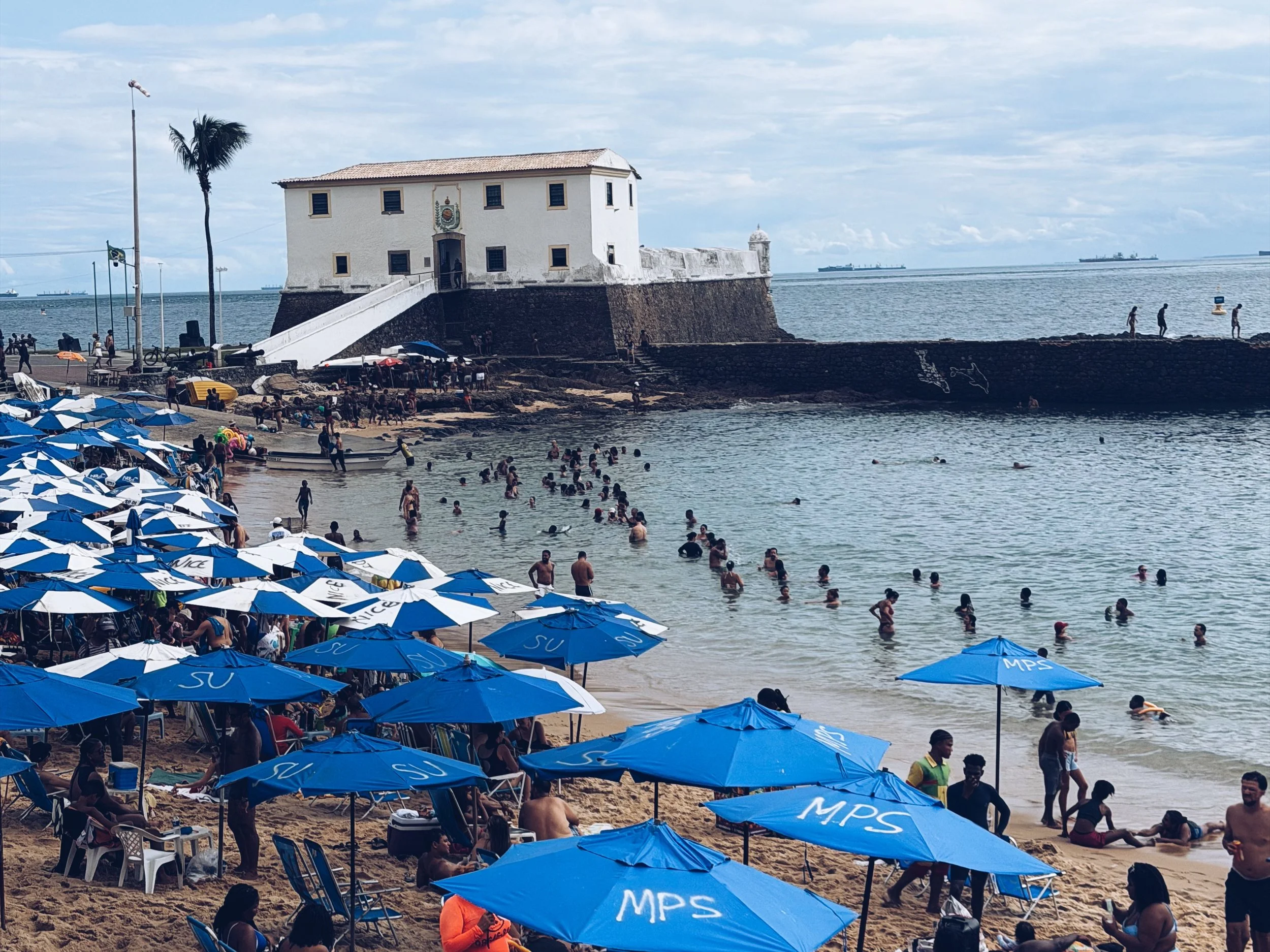
Chart the History of the Bay of All Saints
Explore centuries of maritime history both above and below the surface of Brazil’s largest bay. Start by touring the Museu Náutico inside the 16th century Forte de Santo Antônio da Barra (entry fee is R$15, cash or PIX) to see salvaged colonial treasures and climb the iconic Barra Lighthouse.
Afterward, head down to the calm, clear waters of Porto da Barra beach. There, you can rent a snorkel from beachfront kiosks or book a guided shore dive with local operators to swim directly over the remains of historic, coral-covered shipwrecks resting just off the coast. For the best experience, plan your snorkel or dive at slack high tide when water visibility is highest, and stay to watch the sun set directly over the ocean.
Trace the Footsteps of Salvador’s Literary Genius Jorge Amado
Tour the interactive Casa do Rio Vermelho, the former home of novelist Jorge Amado and his wife Zélia Gattai. Step inside their preserved sanctuary to browse their private libraries, touch the quirky collection of local folk art and ceramics covering the walls, and sit in the lush garden where the creative couple’s ashes are buried alongside multimedia video installations detailing their daily lives.
Afterward, head over to Pelourinho to explore the iconic, pastel-blue Fundação Casa de Jorge Amado that dominates the Largo do Pelourinho. Inside this cultural hub, you will find an extensive, multi-floor archive of the author’s life, featuring rare first-edition book covers from around the globe, personal photographs with mid-century icons, and rotating contemporary art exhibits showcasing Afro-Brazilian painters inspired by his work.
Finally, head to Dona Mariquita or Casa de Tereza to finish your day tasting a traditional Afro-Brazilian chicken stew (xinxim de galinha)—a rich dish simmered in dendê palm oil and ground nuts that was the legendary author's documented culinary obsession.
If you’re still at home while you’re reading this guide, order one of these three famous Jorge Amado titles and make it your flight, bus, and/or beach read through Brazil. The English editions sold at bookstores in Brazil are very expensive!
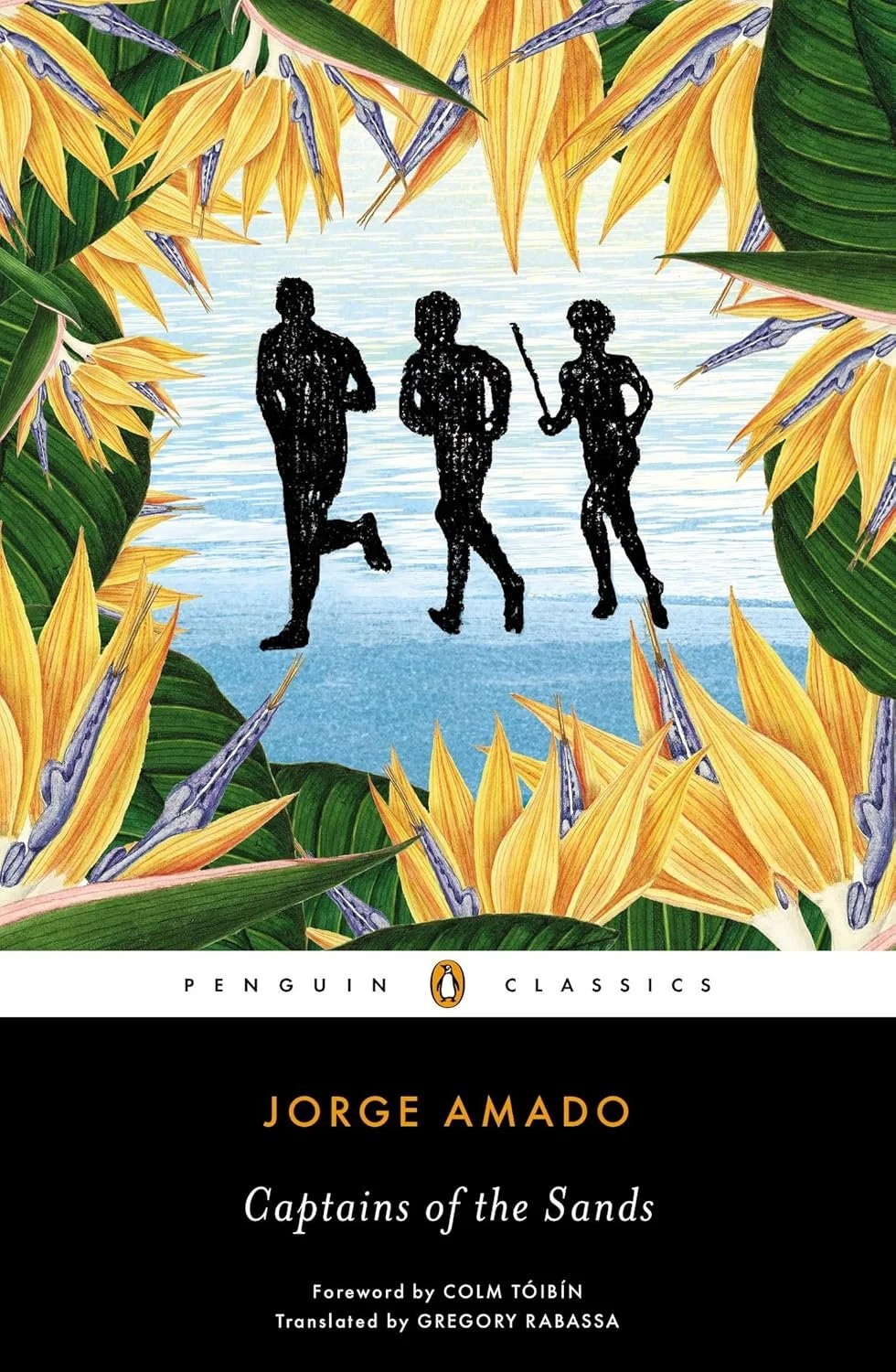
Amado's deeply moving masterpiece about a gang of brilliant street urchins surviving on the docks of Salvador; read this to truly understand the soul of the city’s historic street culture. Check current price and availability on Amazon

This celebrated novel serves as the ultimate introduction to Bahia's historical cocoa plantations, shifting cultural traditions, and vibrant coastal lifestyle. View the paperback and Kindle editions on Amazon

Set right in the heart of Pelourinho, this masterful tale of romance and cooking perfectly captures the playful, mystical, and sensory spirit of Salvador. Check current price and availability on Amazon
Stroll the Creative & Colorful Streets of Santo Antônio (my favorite part of town)
Escape the bustle of Pelourinho and stroll the quiet, pastel-hued cobblestones of Santo Antônio Além do Carmo, a historic, village-like enclave just next to Pelourinho packed with local art ateliers, hidden courtyards, and beautiful colonial architecture.
Some of my favorite galleries and shops along the main street (Rua Direita de Santo Antônio) are:
Sebo do Além - Livros, Cafe, y Arte: an adorable literary hideaway full of used books and local art with a cozy space to grab a coffee
Patuá Caffé e Atelier: this cozy spot perfectly blends a coffee shop, crystal/gift shop, and art gallery all into one
Caveira Discos: a vibrant little record shop with an incredible crate of vintage Brazilian vinyl and regional rarities
Estudio Agá: a colorful independent art studio with a gorgeous collection of contemporary prints, graphic art, and unique local gifts
Dumato Cosméticos Naturais: a charming wellness haven that blends natural cosmetics with ancestral Baianan self-care rituals
Finish your stroll by grabbing a coveted table at Cafélier around 4:30 PM to watch the sunset melt over the shipping lanes of the bay below and pair your view with an iced cappuccino or a strong caipirinha, but be sure to arrive early as there’s almost always a wait at this popular cafe come golden hour.
Sunbathe, Samba, and Surf at the Barra Beaches
Relax on the gold sand of Porto da Barra beach, widely considered one of the best urban beaches in the world. This vibrant cove faces due west, making it Salvador's premier spot to watch the sun melt directly into the ocean.
Come the weekend, the calm Porto da Barra cove and boardwalk turns the volume and vibes way up. Rent a chair on the beach (R$ 20–30) for the day, by afternoon order a fresh caipirinha and some petiscos from one of the boardwalk bars or street vendors, and see if you don’t spot an impromptu street samba or hear the rumble of a drum troupe by sunset.
If you surf and want to find some waves, walk just 5 minutes around the point to Praia Farol da Barra (by the lighthouse), where consistent Atlantic swells create one of the city's top surf breaks. Reach out to local surfer Daniel Chaves if you’re interested in taking a lesson or renting a board in Barra.
Discover the Bohemian Energy of Rio Vermelho By Day and By Night
Experience Salvador’s absolute capital of nightlife and live music. Gather around the open-air plazas of Largo de Santana or Largo da Mariquita to drink cold beer and eat world-famous street acarajé.
For the best atmosphere, plan your visit for a Friday or Saturday night after 9:00 PM when the neighborhood truly wakes up. You can catch raw indie rock or electronic beats at local multi-art venues like LáLá, or head to Casa da Mãe to listen to intimate, legendary live samba, jazz, and Afro-Brazilian ijexá sessions.
Keep a small amount of cash on hand for the street vendors, and use a rideshare app for safe door-to-door transport late at night.
A few hand-picked GetYourGuide experiences that will take you deeper down this thread:
Thread 5: Culinary Traditions & Street Food
Eat Your Way Through the Afro-Brazilian Menu
Treat your tastebuds to a culinary history lesson by piecing together a DIY food tour. Sample some street acarajé—a crispy, deep-fried fritter made from black-eyed pea flour, fried in rich dendê palm oil, and split open to be stuffed with vatapá, caruru, and shrimp—at Largo de Santana or from a traditional Baiana stall in Pelourinho.
For something even more filling or to follow that up, you must try Moqueca Baiana—a slow-simmered seafood stew prepared traditionally in handmade black clay pots.
Then, grab a sweet cocada for dessert, a chewy, traditional confection crafted from shredded coconut, sugar, and condensed milk, and when you get thirsty, head to O Cravinho for a shot of regional cachaça infused with cloves and honey.
If you’d rather have a local guide for your food foray into Afro-Brazilian cuisine, check out this 12-bite food tour on GetYourGuide that takes you to markets, street stalls, and small local spots all over the city.
A few hand-picked GetYourGuide experiences that will take you deeper down this thread:
Top Tips for Navigating Salvador
Now that you know what to do in Salvador, here’s what to know while you do it:
Wednesdays are Free Entry at Museums: Plan your museum hops mid-week. Heavy hitters like MUNCAB, the Casa do Carnaval, Cidade da Música, and Jorge Amado's interactive Casa do Rio Vermelho all wave their admission fees every Wednesday.
Carry Physical Cash: While Brazil is highly digitalized with card payments, historic neighborhood spots like MAFRO often only accept physical cash for entry. It is also essential for tipping street performers or buying beach-side drinks and snacks.
Transit Mindfully at Night: Salvador’s more historic and touristic neighborhoods do tend to be well-policed, but come nightfall there are no guarantees and walking anywhere in Salvador requires some caution and awareness; stick to cheap, highly reliable rideshare apps like Uber or 99 to move safely between zones, even if its just a five-minute drive.
Careful with the Camera: The traditional Baianas do Acarajé cooking on the streets wear stunning, sacred white Candomblé lace attire. They are cultural icons, not tourist props; always ask for permission before taking their photo and drop a small cash tip in their jar. Additionally, if you’re caught taking pictures of a street performance, be it a drum troupe or a capoeira crew, they will expect you to tip, so have cash ready.
Mind the Monday Closures: Almost every major municipal museum, gallery, and historic church in Salvador closes completely on Mondays to reset from the heavy weekend crowds. Use Mondays for beach trips or coastal boat tours instead.
Here are a few day trip ideas from Salvador to plan for a Monday:
Journey to an Ancestral Quilombo: Take a guided tour to Santiago do Iguape or Quilombo Kaonge in the nearby Recôncavo Baiano region. These are historic, self-liberated communities founded by escaped enslaved Africans. A day trip here offers an unforgettable look at artisanal palm oil production, traditional Afro-Brazilian medicine, and rural resistance history.
Sail to Ilha dos Frades: Board a schooner or a fast private boat from the Terminal Turístico Náutico to explore Ilha dos Frades in the Bay of All Saints. It is a stunning, ecologically protected island featuring calm, crystal-clear waters and the historic 17th century Igreja de Nossa Senhora de Loreto sitting right on the shoreline.
Explore the Heritage of Cachoeira: Take a 2-hour drive inland or join a tour to the colonial town of Cachoeira. Nestled along the Paraguaçu River, this town is a powerhouse of Afro-Brazilian culture. It is famous for its wood-carving artists, Baroque architecture, and the legendary Sisterhood of Our Lady of the Good Death (Irmandade da Boa Morte).
Best Restaurants in Salvador: Where to Eat & Drink
Finding the right spots to eat can make or break a trip. After nearly two weeks of eating my way through the city, these are the exact cafes, bars, and restaurants that became part of my regular rotation.
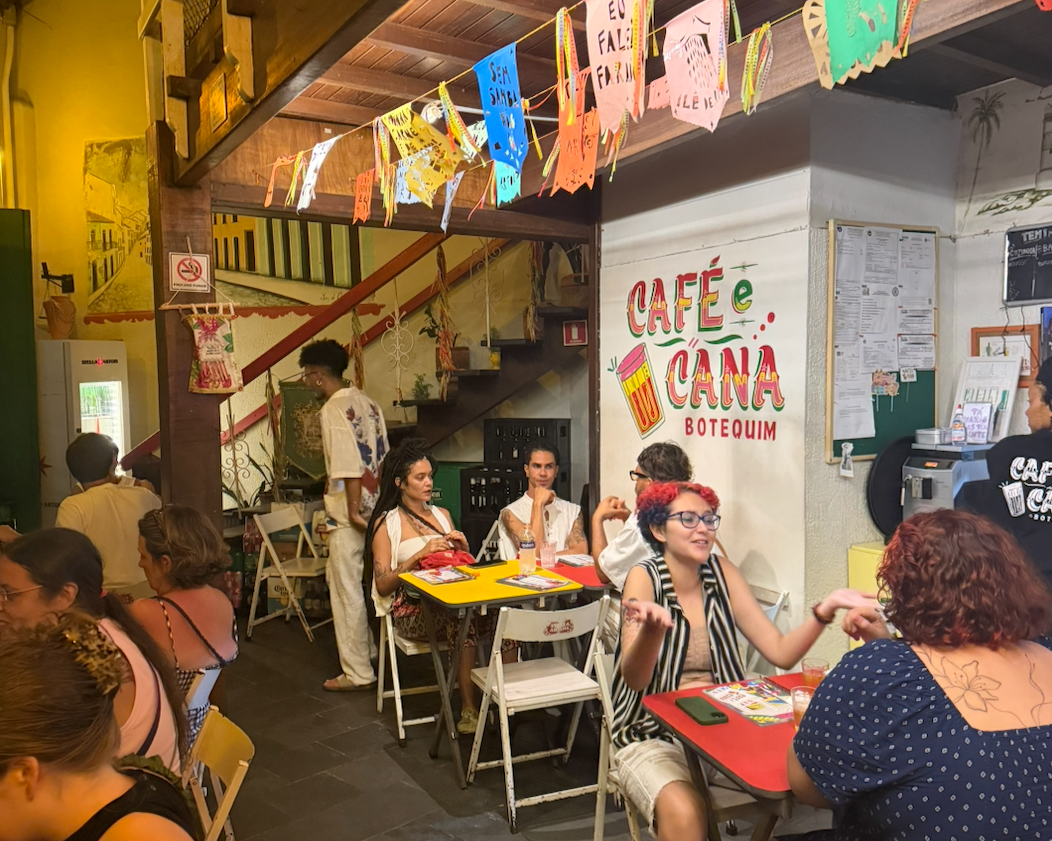
Café e Cana Botequim in Santo Antônio
In Pelourinho & Santo Antônio Além do Carmo
Cafélier (The Sunset View & Coffee Dream): An absolute dream for a late afternoon coffee or a sunset drink. It features a stunning, romantic balcony overlooking the Baía de Todos os Santos. Arrive around 4:30 PM to beat the rush, as balcony tables are strictly first-come, first-served.
Padoca do Carmo (The Artisanal Breakfast Hub): The perfect, cozy breakfast and bakery stop nestled in Santo Antônio Além do Carmo. Their artisanal breads, fresh pastries, and specialty coffees are incredible for fueling a morning walk.
O Cravinho (The Legendary Infused-Cachaça Tavern): You cannot leave Pelourinho without stopping at this historic tavern in Terreiro de Jesus. It is famous for its clove-and-cinnamon-infused cachaça. Grab a small cup, stand among the giant wooden barrels, and toast to Bahia.
Zanzibar (The African Diaspora Kitchen): Located in Santo Antônio, this restaurant offers a profound culinary journey. The menu explicitly bridges the gap between West African cuisine and Bahian traditions. Sip a hibiscus cocktail and enjoy dishes heavily spiced with ginger, shrimp, and coconut water in an art-filled dining room.
Café e Cana Botequim (The Lively Local Hangout): A brilliant, casual neighborhood spot for exceptionally cold beer, creative caipirinhas and cocktails, and classic Brazilian bar snacks (petiscos) like crispy pastéis. It’s perfect for a laid-back evening.
In Barra
Barra Boardwalk Street Food (The Beach Day Bite): Do not skip the local street vendors grilling right on the main waterfront drag in Barra. Grabbing a skewer of grilled queijo coalho (squeaky cheese drizzled with molasses or oregano) or a grilled meat skewer with farofa while walking the boardwalk is an essential local ritual.
In Rio Vermelho
Acarajé da Cira or Acarajé da Dinha (The Street Food Icons): Skip the indoor restaurants for dinner and head to the open-air plazas of Rio Vermelho. These legendary, multi-generational stalls are run by baianasdressed in traditional white lace. Order an acarajé com tudo (fried bean patty split open and stuffed with spicy vatapá, caruru, and dried shrimp) and eat it on the curb with a cold beer.
Restaurante Casa de Tereza (The Artistic Culinary Gallery): Helmed by acclaimed chef Tereza Paim, this multi-room restaurant is set inside a beautifully restored colonial house that doubles as an art gallery. It is the ultimate sit-down spot to experience upscale, masterfully prepared Bahian classics like moqueca or xinxim de galinha surrounded by regional folk art.
Dona Mariquita (The Afro-Ethnic Heritage Kitchen): An absolute must for food historians. Chef Leila Carreiro runs this intimate venue as a "patrimonial kitchen" explicitly designed to rescue original, ancestral recipes historically served in Bahia's old open-air markets and Candomblé terreiros.
In Ribeira
Sorveteria da Ribeira (The Historic Institutional Treat): Operating since 1931 along the quiet Ribeira waterfront, this world-renowned ice cream parlor is an absolute necessity after visiting the nearby Bonfim Church. Skip standard flavors and order iconic local tropical options like umbu, cupuaçu, tapioca, or coco queimado (burnt coconut).
In Pituba
Restaurante Origem (The Avant-Garde Heritage Menu): This is widely considered the best restaurant in Salvador and a regular on Latin America's top lists. Chefs Fabrício Lemos and Lisiane Arouca take local, traditional ingredients from the surrounding Recôncavo region and transform them into a mind-blowing, multi-course tasting menu. It is an upscale, intellectual celebration of Bahian identity that shows how traditional flavors can be elevated into world-class fine dining. Booking weeks in advance is mandatory.
When to Visit: Some Key Dates to Time Your Trip to Salvador For
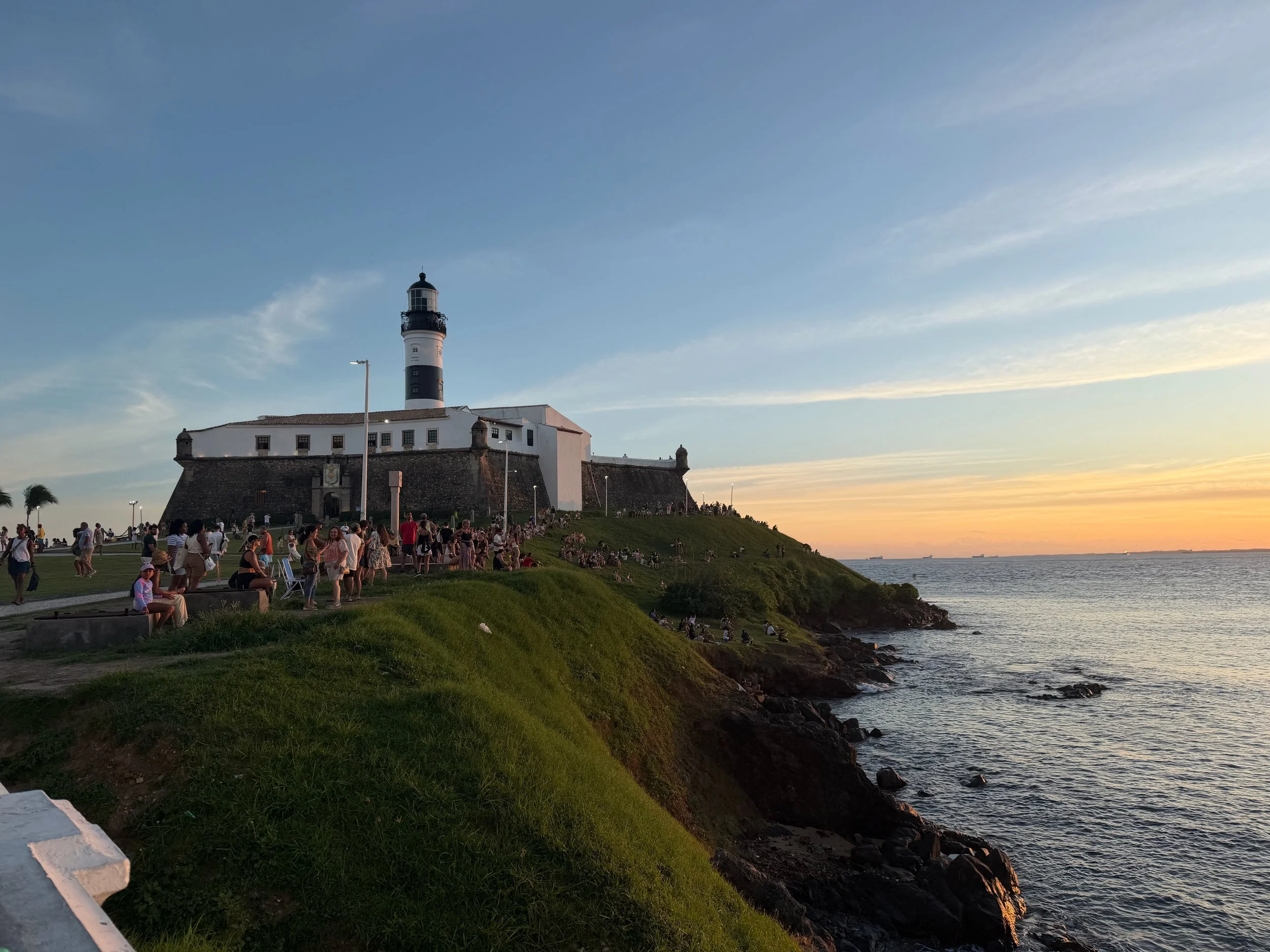
The absolute best time to visit Salvador is between September and March, when the city enjoys sunny blue skies and its legendary festival season kicks into high gear. While temperatures remain tropically warm year-round, your experience will change dramatically depending on the months you choose:
December to March: The High Season
If you want to experience the peak energy of Salvador, this is the time. The city enters "Carnaval mode" starting with the Festa de Santa Bárbara in early December, rolling straight through the explosive, world-famous Carnaval street parties in February or March. Expect street music every night, massive crowds, and peak prices.
Insider Strategy: Ground Zero for Carnaval & New Year’s
If you want the absolute best experience for either Carnaval or New Year's, stay in Barra. Booking outside this zone will mean fighting brutal city gridlock and rideshare surge pricing.
The Ultimate Location: Target beachfront hotels and apartment rentals along Avenida Oceânica or near the Farol da Barra.
The Carnaval Jackpot: Barra is the starting line for the iconic Dodô (Barra-Ondina) circuit. A street-facing balcony gives you a private VIP viewing box over the trios elétricos without paying for expensive camarote tickets.
The New Year's Hub: You get daytime beach life at Porto da Barra, local beachfront fireworks, and easy transit access down the coast to the main Festival Virada concert grounds.
Beat the Lockdown: Roads close and traffic freezes during these mega-festivals. Staying in Barra means you can walk straight to the action and stroll home at 4:00 AM.
When to Book: Lock in your room 6 to 8 months ahead for Carnaval and 4 to 5 months ahead for New Year's. I recommend using Booking.com's free cancellation filter to secure prime ocean-view spots before prices double.
In the map below, I’ve marked a few strategically great stay options in Barra for Carnaval and New Year’s, but feel free to see what else is available for your dates in Salvador.
September to November: The Sweet Spot
This shoulder season offers a perfect balance. The weather is beautiful, accommodation prices drop, and the summer crowds haven't yet taken over. It’s ideal for deep, focused cultural exploration without the chaotic holiday rush.
April to July: The Rainy Season
While you can visit year-round, April through July bring heavy tropical downpours and high humidity. It's best to stay clear of this window if you want guaranteed beach days or don’t want to be puddle-jumping as you explore. I’ll mention that I visited in April and did get a lot of rain, but it just meant I was spending more time at museums than on the beach—and this city has plenty of them.
Events to Time Your Trip For
Salvador Carnaval (Typically February): If you can time your travel to match this mega-event, you will witness the absolute pinnacle of Afro-Brazilian celebration. Unlike the spectator-heavy stadium parades in Rio, Salvador’s Carnaval is entirely street-based and deeply participatory. For six days and nights, giant sound trucks (trios elétricos) roll through the coastal and historic circuits. It is an intense, high-energy showcase of Yoruba pride, bloco afro rhythms, and unadulterated civic joy that will shake you to your core.
Carnaval Warning: Because places fill up months in advance for Carnaval and prices tend to spike the closer to it you get, you'll want to lock in your lodging as soon as you know you’re going. See what’s still available on Booking.com and scroll back up to the High Season section for my insider tips for when to book and where.
Festa de Iemanjá (February 2nd): Held along the coast of the Rio Vermelho neighborhood, this massive spiritual gathering honors the Candomblé Orixá of the sea. To experience it viscerally, dress in traditional white or blue alongside tens of thousands of locals. The morning begins with a serene, moving spectacle as the faithful line up at the shoreline to place perfume, jewelry, and white flowers into large wicker baskets. By mid-afternoon, fishing boats carry these collective offerings out into the deep ocean while the streets erupt into a celebratory, drum-fueled block party.
Tuesday Terça da Bênção Rehearsals (Year-round / Summer Peak): You do not have to wait for Carnaval to hear the pulse of the city. Every Tuesday evening, the historic cobblestones of Pelourinho transform for the "Tuesday Blessing." The highlight is the public Olodum rehearsals, where the world-famous percussion band fills the open air with thunderous samba-reggae beats. Standing on the street as hundreds of heavy, synchronized drums reverberate off faded colonial facades is a sensory dive into Salvador's modern beating heart.
Lavagem do Bonfim (Second Thursday of January): This 250-year-old inter-religious celebration perfectly captures the unique spiritual blending of Bahia. The day centers on an 8-kilometer walking procession from the lower city to the hill of Bonfim. At the front are hundreds of Baianas clad in flowing, traditional white lace dresses, carrying sacred water to ritually wash the stone steps of the Bonfim Church. Joining this massive walk offers an incredibly moving window into how West African Candomblé and Catholic traditions have coexisted, evolved, and survived side-by-side.
Getting Around Salvador: Transportation & Logistics
Arriving: How To Get To & From Salvador
While most international travelers will fly into Deputado Luís Eduardo Magalhães International Airport (SSA), Salvador also serves as the primary regional hub for overland and maritime travel through the state of Bahia and the rest of Brazil.
By Ferry: Salvador is a coastal city, meaning some of your best regional travel happens by water. If you are heading out to the stunning, car-free paradise of Boipeba or the surf haven of Itacaré, for example, you will start by taking a ferry right out of Salvador's port. You can search ferry schedules and buy tickets in advance on Bookaway or in person at the ferry terminal.
In case you are headed to Boipeba or Itacaré after Salvador, check out these guides I’ve written for you:
Boipeba Travel Guide: What to Do, Where to Stay & How to Visit Responsibly
Where to Stay in Boipeba: 5 Best Pousadas, Eco-Hostels, & Hidden Gem Rentals
Itacaré Travel Guide: The Tips I Wish I’d Had, Best Beaches, & How To Plug Into the Local Community
Where to Stay in Itacaré: Best Stays For Every Budget + Neighborhood Advice
By Long-Distance Regional Bus: If you are coming from or heading to nearby mainland beach destinations like Imbassaí and Praia do Forte, or traveling deeper into Bahia's interior to Lençóis (Chapada Diamantina), you will rely on the long-distance bus network (which is great and very comfortable). But navigating the crowded ticket windows at the Terminal Rodoviário de Salvador can be an absolute headache if you don't speak the local language. I highly recommend just booking your tickets in advance using Busbud.
By Plane: The city airport (SSA) is located roughly 28 kilometers outside the historic center of Salvador. The absolute easiest and most stress-free way to reach your accommodation in Pelourinho, Barra, or Rio Vermelho is to call an Uber or 99 directly from the arrivals terminal (expect to pay around R$60–R$80). Alternatively, budget-conscious travelers can hop on the efficient Salvador Metro. Just grab the free airport shuttle bus right outside the terminal door, which drops you directly at the Estação Aeroporto metro station. From there, you will take Line 2 into the city network. Once there, you’ll have to call an Uber or 99 the rest of the way. Local buses are not recommended for tourists in Salvador due to safety and just overall unreliability.
How To Get Around Salvador Safely
Besides the fact that the city is split geographically into two distinct tiers—the Cidade Alta (Upper City) and Cidade Baixa (Lower City)—there’s the safety issue. Here’s what transport is available to help you get around Salvador safely and efficiently:
Rideshare (Uber or 99): The absolute easiest, safest, and most reliable way for travelers to move between major neighborhoods (like traveling from your base in Barra or Rio Vermelho to the historic center of Pelourinho). Rideshare apps are highly cost-effective, readily available at all hours, and completely eliminate any language barriers with navigation. Use them exclusively for door-to-door transit after dark to avoid walking through unfamiliar streets.
Elevador Lacerda (The Art Deco Marvel): To move between the Upper City (Pelourinho) and the Lower City (Mercado Modelo and the harbor area) while in Pelourinho, ride this historic Art Deco elevator, the Elevator Lacerda. Freshly modernized, it is currently completely free of charge to ride. There may be lines if cruises are in port, but once you’re on, it takes less than thirty seconds to get from the Upper to Lower City and vice versa.
Tip: Before you hop on from the Upper City, treat yourself to the panoramic views of the bay from the upper observation area. Just walk all the way to the back of the building and you’ll find it.
Planos Inclinados (The Historic Funiculars): These are historic funicular cable railways running up and down the steep cliffs. Look for the Plano Inclinado Gonçalves (located right behind the Cathedral in Pelourinho) or the Plano Inclinado Pilar (located in Santo Antônio). Following recent city upgrades, they are currently completely free of charge to ride. They take less than a minute and function as fantastic, living transportation links still used by thousands of locals today.
Walking (With Strategy and Caution): Salvador is incredibly rewarding to explore on foot, especially the colorful, pedestrian-only cobblestones of Pelourinho or the coastal promenade in Barra. However, you must walk with awareness always. And don’t always trust the route Google Maps might tell you to go, as there can be notorious blind spots for a daylight mugging. Stick strictly to the Elevador Lacerda or funiculars to go between the Upper and Lower Cities and stay on the streets you’ve been told by your host or hotel are safe and walkable. In general, it’s also best to keep your phone out of sight while walking (step into a shop if you need to check something). At night, even if your destination is five minutes away, just call an Uber or 99 to get you there. It’s worth it.
Plan the Rest of Your Trip While Simultaneously Supporting This Blog
If you’re still in the process of planning your trip to Salvador and Brazil, visit my Travel Resources page for all of the tools I use and love when I travel, from the eSIM I prefer to travel insurance and booking sites for cheap flights, trusted transfers, and more. When you book through the links there you’re simultaneously supporting my work at no additional cost to you. Your support is how I can keep crafting in-depth travel guides like this one.
Muito obrigada!
Frequently Asked Questions About Traveling to Salvador, Bahia
How many days do you need in Salvador, Brazil?
To truly experience the city without rushing, you need 3 to 4 days in Salvador. This gives you two dedicated days to explore the historical architecture of Pelourinho and the museums, one day to relax at the beaches in Barra, and an evening to experience the nightlife in Rio Vermelho. If you want to include a day trip to places like Praia do Forte or Morro de São Paulo, extend your stay to 5 or 6 days.
How do you get from Salvador Airport (SSA) to the city center?
The most convenient way to get from Salvador International Airport (SSA) to the city center is by taking an Uber, which is widely available, safe, and affordable. Alternatively, you can use the efficient Salvador Metro system; a free shuttle bus connects the airport terminal to the nearby Aeroporto Metro Station. From there, Line 2 connects you to the city's main transit hubs. Fixed-rate airport taxis are also available at the arrivals terminal or book a reliable transfer through GetTransfer.com.
Can you swim in the beaches in Salvador?
Yes, you can swim in Salvador, but you must choose your location carefully. The absolute best urban beach for swimming is Porto da Barra, which features calm, clear, and protected waters ideal for a morning dip. Farol da Barra is also great during low tide when natural pools form. Avoid swimming at the rougher Atlantic-facing beaches like Rio Vermelho or Ondina, as they have dangerously strong currents and varying water quality.
What are the best day trips from Salvador, Brazil?
The most popular day trip from Salvador is a visit to Praia do Forte, a charming coastal village located about 50 miles (80 km) north, famous for its sea turtle conservation project (Projeto TAMAR). Another excellent option is taking the local ferry across the bay to Itaparica Island for historic streets and quiet beaches. For a longer adventure, travelers often book speedboats to the car-free paradise of Morro de São Paulo.
Do I need cash in Salvador, or are credit cards widely accepted?
Credit and debit cards are accepted almost everywhere in Salvador, including upscale restaurants, pharmacies, and even beach vendors selling coconuts. However, it is highly recommended to carry a small amount of Brazilian Real (BRL) in cash. You will need physical cash for tipping local street performers, buying small souvenirs in Pelourinho, and purchasing authentic street food like acarajé.
Is Salvador, Brazil worth visiting?
Salvador is absolutely worth visiting and is an indispensable stop for anyone wanting to understand the true soul of Brazil. As the country's first capital and the epicenter of Afro-Brazilian culture, it offers a sensory experience you cannot find anywhere else—from the thunderous drums of Olodum to the unique flavors of Bahian cuisine and its stunning coastline. It is a city of immense historical depth and vibrant, living traditions.
Check out my other Brazil travel guides and content:
Brazil Travel Tips: What To Know Before You Land (SIMs, Visa, Money & More)
How to Get a SIM Card in Brazil (and why an eSIM is the way to go)
Top Things to Do in Rio de Janeiro After Christ, Sugarloaf, & The Beaches of Ipanema & Copacabana
Boipeba Travel Guide: What to Do, Where to Stay, & How to Visit This Car-free Paradise Responsibly
Itacaré Travel Guide: The Tips I Wish I’d Had, Best Beaches, & Where to Stay for Peace or the Party
The Ultimate Maraú Peninsula Guide: Algodoes, Taipu de Fora, Cassange & Barra Grande
Surfing Bahia: My Stay at the New Surf & Yoga Retreats on Bahia’s Dende Coast
Before You Go to Bahia: A Contextual Introduction to Brazil’s Afro-Brazilian Heart
Traveling elsewhere in South America? Here are some other posts you might be interested in.


Cusco’s been adding its fair share of dishes and drinks to the Peruvian menu for centuries and these six are the ones to be sure to save room for.