13 Things to Do in Rio de Janeiro That Aren’t Christ the Redeemer, Sugarloaf, & The Beach

Affiliate Disclosure: Some of the links in this guide are affiliate links, which means I may earn a small commission if you book through them—at no extra cost to you. I only recommend tools, tours, and stays that I’ve personally enjoyed and/or are backed by solid reviews.
Rio de Janeiro is an experience. For some, it’s the only taste of Brazil they get before flying back home. That’s why I’ve written this guide to make sure you’re making the most of your Rio experience—from eating your way through the carioca menu to digging into the city’s past in places like Little Africa and the Tijuca National Park, or navigating the weekly roda de samba schedule, bossa nova bars, favela experiences, and sunrise summits worth waking up for.
This is a guide for the traveler who wants to go deep and get to know the “Cidade Maravilhosa” beyond the classic stops of Corcovado and Sugarloaf, even if you only have three days. Yes, this guide is lengthy, but that’s because I wanted it to be something you keep coming back to as you move through this city and go down my list of the best things to do in Rio de Janeiro.
I’ve included 13 things to do in Rio, all of which are based on my recent two-week stay this past May, informed by the locals and other travelers I met along the way and my own insatiable appetite for culture, good food, and immersive experiences. At the bottom of the post, I’ve strung these things to do into a sample three-day itinerary you can use as a starting point for your own stay and have also included some tips on navigating the city by public transport and ridesharing apps, something you’ll certainly be doing as you bounce from the beaches of Copacabana and Ipanema to the bars of Lapa and the galleries of Santa Teresa.
Let’s go! I’m excited for you!
Top 13 Things to Do in Rio de Janeiro
Click any of the items below to jump straight to its section on this page.
1. Uncover Afro-Brazilian History in Rio’s Little Africa (Pequena África)
2. Experience Bossa Nova in its Birthplace of Copacabana & Ipanema
3. Chase the Rhythm of an Authentic Street Roda de Samba
4. Delve Into the Multicultural Flavors of Rio’s Food Scene
5. Step Inside the World's Most Beautiful Library at Centro
6. Explore the Bohemian Slopes and Historic Tram of Santa Teresa
7. Tour Rocinha Ethically with a Local Community Leader
8. Catch Sunrise from the Peak of Morro Dois Irmãos
9. Venture Into the Reborn Urban Rainforest and Caves of Tijuca National Park
10. Dive Into Rio’s High-Performance Surf Culture at Arpoador
11. Escape the Heat in the Imperial Haven of Jardim Botânico
12. Experience Gilded Romance and Contemporary Art at Parque Lage
13. Cycle, Jog, or Walk Around the Waterfront Vista of Rodrigo de Freitas Lagoon
Base Yourself Well: A Quick Guide to Where to Stay in Rio de Janeiro
If you are still locking down your lodging in Rio de Janeiro or looking for something different than what you had originally booked, here’s a quick rundown of the Rio neighborhoods that balance safety with ease of movement to everything you might want to see while you’re here:
Santa Teresa: The Bohemian Hilltop Escape
If you want to stay in a neighborhood that is surrounded by historic architecture, vibrant street murals, and a community of local artists, the winding slopes of Santa Teresa are unmatched, as are the views. Staying here puts you in a fun little micro-culture of Rio’s historic core, though you will rely more on Ubers or the historic tram to reach the southern beaches and the rest of the city.
Top Boutique Pick: Panorama Inn — Perched high on the ridgeline, this stunning, family-run property offers an unforgettable view of Christ the Redeemer and the city skyline. The incredible attention to detail by Arthur and his wife, alongside the breezy, panoramic terrace, makes this a truly special, hyper-local base — Check Rates & Availability
Top Hostel Pick: Castelo dos Tucanos — A highly unique social hostel set inside an authentic 1872 heritage castle originally built by a Brazilian coffee baron. It perfectly champions ethical community travel by utilizing local volunteers, serving homemade breakfast, and hosting traditional Sunday churrascos (barbecues) alongside a panoramic swimming pool overlooking the lush hills — Check Rates & Availability
Ipanema & Leblon: The Safe Coastal Hubs
If having a safe, walkable neighborhood with immediate beach access is your top priority, the upscale districts of Ipanema and Leblon are the most strategic zones in Rio's South Zone (Zona Sul). This area is incredibly well-policed, packed with fantastic outdoor beachfront bars, and sits directly on the Metro line, making it effortless to zoom north to Centro or Little Africa for daytime tours.
Top Boutique Pick: Hotel Arpoador — Perched steps from the sand at Arpoador Beach, this stylish modernist hotel features a spectacular sunset rooftop pool, complimentary bicycles, and an incredible oceanfront restaurant — Check Rates & Availability
Top Hostel Pick: El Misti Hostel — A clean, modern, and high-energy social hostel located a short walk from the waves. It features two lively bars, dorms as well as private rooms, and organized tours to easily connect solo travelers with the other guests and local guides — Check Rates & Availability
Botafogo: The Trendy Transit Center
For the ultimate combination of safety, budget-friendly prices, and hyper-efficient logistics, look no further than Botafogo. Known as Rio's hipster and culinary hub, this neighborhood boasts the city's best concentration of indie bars, third-wave coffee shops, and award-winning restaurants. Because it serves as a central Metro junction, you can easily slide north to historic Centro or south to the Copacabana beaches in under ten minutes.
Top Boutique Pick: Yoo2 Rio de Janeiro — A sleek, design-forward hotel featuring a world-class rooftop bar that looks directly out at the majestic silhouette of Sugarloaf Mountain — Check Rates & Availability
Top Hostel Pick: Gaia Hostel —A vibrant, highly rated social hostel housed inside a beautifully preserved historic mansion just a short walk from the metro. It features air-conditioned rooms, a fully equipped guest kitchen, and an active on-site bar known for its karaoke nights — Check Rates & Availability
1. Uncover Afro-Brazilian History in Rio’s Little Africa (Pequena África)
📌 Little Africa At A Glance
Location: Port Zone, Rio Centro
Best Way to See It: GuruWalk Little Africa Free Walking Tour
Key Sites Information:
IPN Museum: R$20, buy online
MAR Museum: Closed Wednesdays (otherwise open Tuesday to Sunday 11:00 AM to 6:00 PM)
Pedra do Sal Samba: Mondays & Fridays from 7:00 PM (Free entry)
History and Cultural Impact of Rio's Little Africa
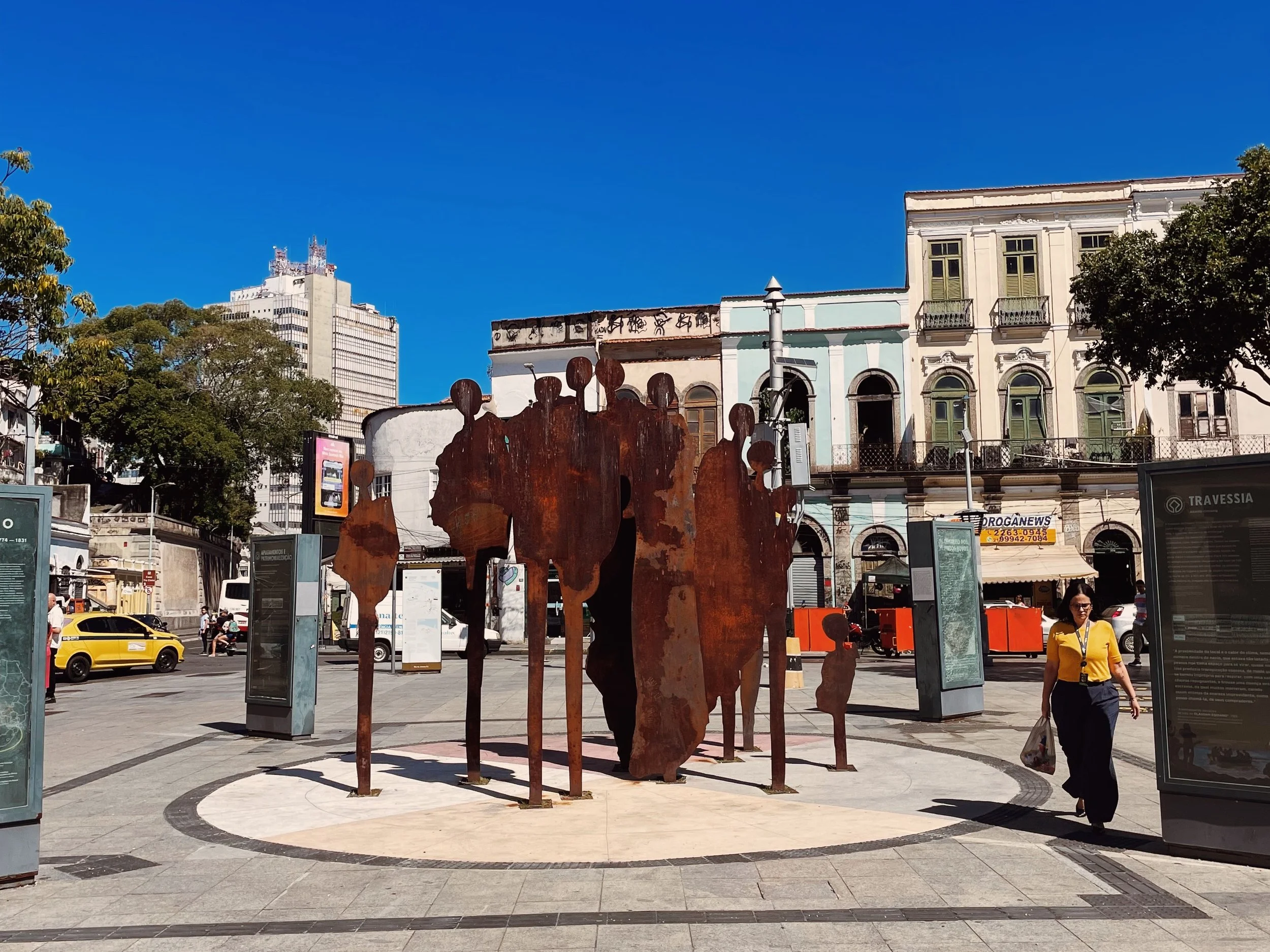
Located in the Port Zone of Rio’s Centro, Little Africa is the place to begin your Rio experience. It’s where, for two and a half centuries from 1597 to 1851, the Portuguese received more than 900,000 enslaved Africans. And it’s where after slavery was abolished in Brazil in 1888, the seeds of traditions like roda de samba, Carnaval, and urban quilombo culture started to take form.
While you can certainly explore Little Africa on your own, I recommend doing a free walking tour to get you oriented. GuruWalk has a Little Africa tour that will give you the lay of the land and the story behind every statue, street mural, and important landmark that stands as a symbol of the resilience and artistic triumph of the Afro-Brazilian community in Rio. It’s an affordable way to dive into Rio’s story in the place that, I’d argue, is the very foundation of this city and its culture.
Best Historic Places to Visit in Little Africa
If you do choose to explore the area at your own pace, prioritize these specific locations to make the most of your visit:
Cais do Valongo (Valongo Wharf) & The Sacred Baobab
Start here. The exposed stone ruins of Cais do Valongo are a UNESCO World Heritage site and served as the primary entry point for enslaved people arriving in South America. Directly next to it stands a living monument: a massive Baobab tree grown from a seed brought from Gorée Island in Senegal.
Pedra do Sal (Salt Stone) & Largo de São Francisco da Prainha
Walk to Pedra do Sal next. This historic rock formation at the base of Conceição Hill is the undisputed birthplace of urban samba. Long before it became a bustling nightlife hub, this massive stone slope was a primary gathering point for enslaved Africans, freed laborers, and dockworkers. In the 1600s and 1700s, enslaved workers manually carved the very steps you walk on today out of the mountainside, utilizing the flat stone terrain to unload, dry, and stack heavy sacks of salt arriving from incoming ships.
Best Way to Experience It: Attend Pedra do Sal’s Monday or Friday Samba Circle with a local. If you want to dive deep into the complex history of roda de samba in Rio, book a guided Pedra do Sal Samba Tour on GetYourGuide. An expert local guide will navigate the massive crowds for you, providing invaluable cultural context on the lyrics, the location, the instruments, and the social movements tied to the rhythm while keeping you safe and oriented.
Safety Tip: Do not keep your phone in your pocket. That’s a sure way to get it swiped. Instead, wear a hidden money belt (like this one) under your clothes or tuck your phone inside your waistband for a better bet of walking out of Pedro do Sal with it. Another way is to do as the locals do and get yourself a phone lanyard (like this one) that you can tuck under your shirt.
Instituto dos Pretos Novos (IPN)
The Instituto dos Pretos Novos Museum is one of the most emotionally heavy, yet vital stops in Little Africa. It is a research institute built directly over an unearthed 19th-century mass grave, discovered accidentally during a private home renovation in 1996. It honors the thousands of captive Africans who did not survive the middle passage.
What to Know: You cannot just walk in. You must buy your R$20 ticket online in advance. They have a strict no-large-bags policy. It is open Tuesday–Friday (10 AM–4 PM) and Saturday mornings (10 AM–1 PM). Tuesdays are free entry.
MUHCAB & MAR Museums
For deep historical context, visit the Museum of Afro-Brazilian History and Culture (MUHCAB), which houses over 2,500 artifacts tracking Black contribution to Brazil (completely free and wheelchair accessible, open Tue–Sun 10 AM–5 PM). Pair it with the Museu de Arte do Rio (MAR) on the Olympic Boulevard, which features incredible contemporary Afro-Brazilian art. Note: MAR is closed on Wednesdays.
The "Ethnicities" Mural by Eduardo Kobra
After exiting MAR, take a short, 5-minute stroll further down the Olympic Boulevard to view this breathtaking, massive warehouse wall. Painted for the 2016 Olympics, the “Ethnicities” mural depicts five distinct Indigenous faces from across the globe, serving as a towering visual tribute to global ancestral heritage.
2. Experience Bossa Nova in its Birthplace of Copacabana & Ipanema
📌 Bossa Nova At A Glance
Location: South Zone (Copacabana & Ipanema)
Top Experience: The Rio Bossa Experience with Gui (Live guitar walking tour)
Historic Venues: Garota de Ipanema (Ipanema) & Beco das Garrafas (Copacabana)
Crucial Local Rule: At Bip Bip Bar no clapping allowed! Snap fingers silently instead.
Tall and tan and young and lovely
The girl from Ipanema goes walking
And when she passes
Each one she passes goes “ah”
You know the tune. “The Girl From Ipanema” is bossa nova and Ipanema isn’t just in the song for its cadence. Ipanema, along with Copacabana, is where this seductive and smooth musical genre was birthed into being in the late 1950s. João Gilberto, Tom Jobim, Vinícius de Moraes, and others worked on some of the most famous bossa nova hits right in the apartment blocks and bars that still stand in the South Zone today.
The Ultimate Bossa Nova Walking Tour in Rio
Besides being sure to listen to some live bossa nova while in Rio, one of the absolute best ways to immerse yourself in it while you’re in its birthplace is to follow the bossa nova circuit through Ipanema and Copacabana alongside a local bossa nova musician. The Rio Bossa Experience with Gui is just that, but even better than you could imagine.
As you walk and learn about the music and the musical icons that made it world-famous, Gui plays the songs on his acoustic guitar right in the very places where they were originally written. He’ll point up to an apartment, for example, on Rua Nascimento Silva where Tom Jobim and Vinícius de Moraes sat down to collaborate on the historic 1958 track "Chega de Saudade” and then he’ll play it or he’ll strum the chords for “The Girl from Ipanema” while you’re standing in Parque Garota de Ipanema (Girl from Ipanema Park) or he’ll point at a mural depicting Elis Regina and in the same breathe of introducing you to her, he’ll slide into “Águas de Março,” her most famous duet with Tom Jobim.
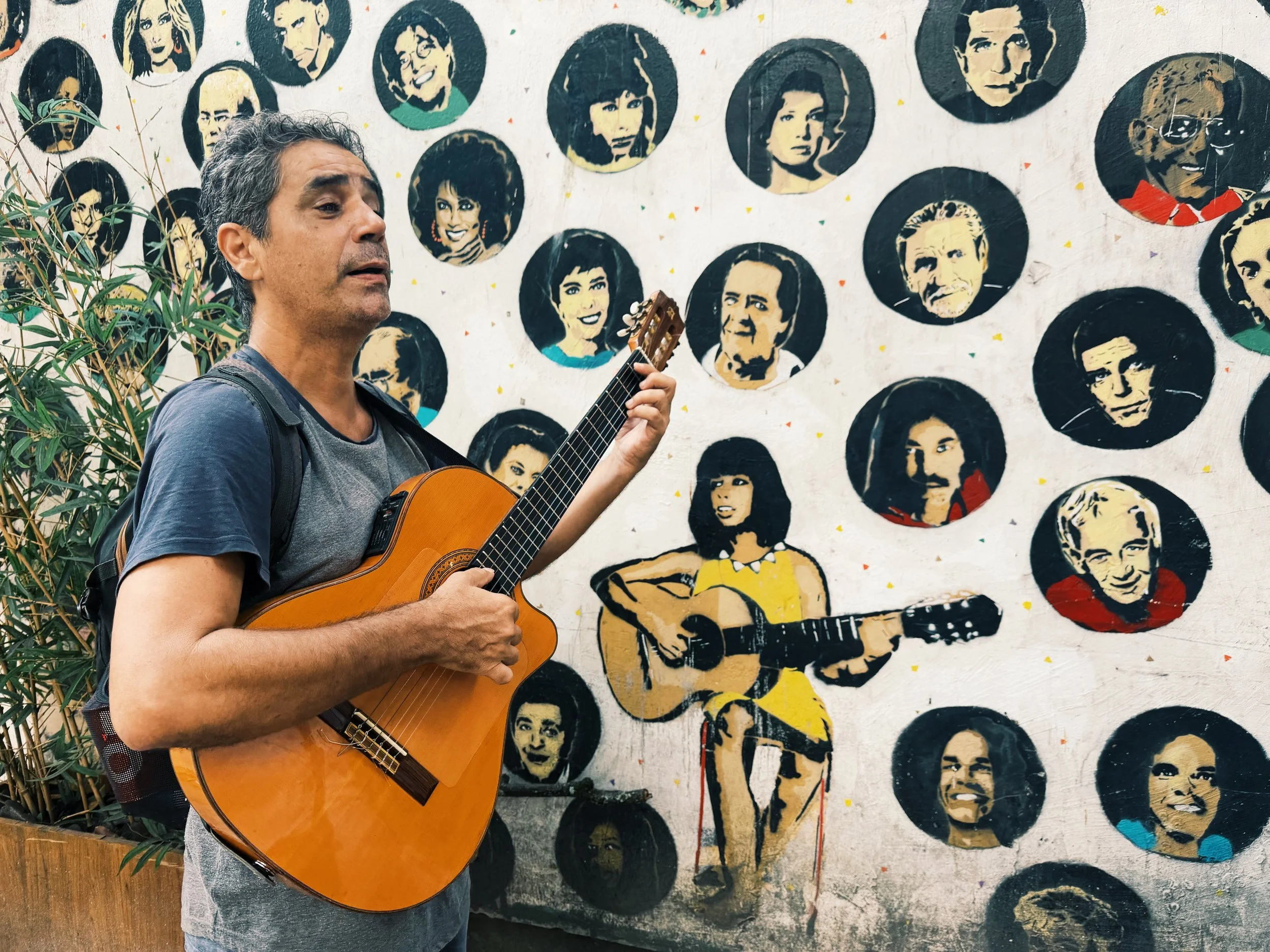
For me, it was a deeply multi-dimensional experience. There is nothing quite like learning about the genre in its exact birthplace while your guide provides a live soundtrack alongside each song and icon’s story and you’re surrounded by the scenes that inspired each one.
Where to Hear Live Bossa Nova in Rio
Whether you take the tour or not (and I really recommend you do!), these are the bossa nova bars to go spend some time at:
Garota de Ipanema (Ipanema)
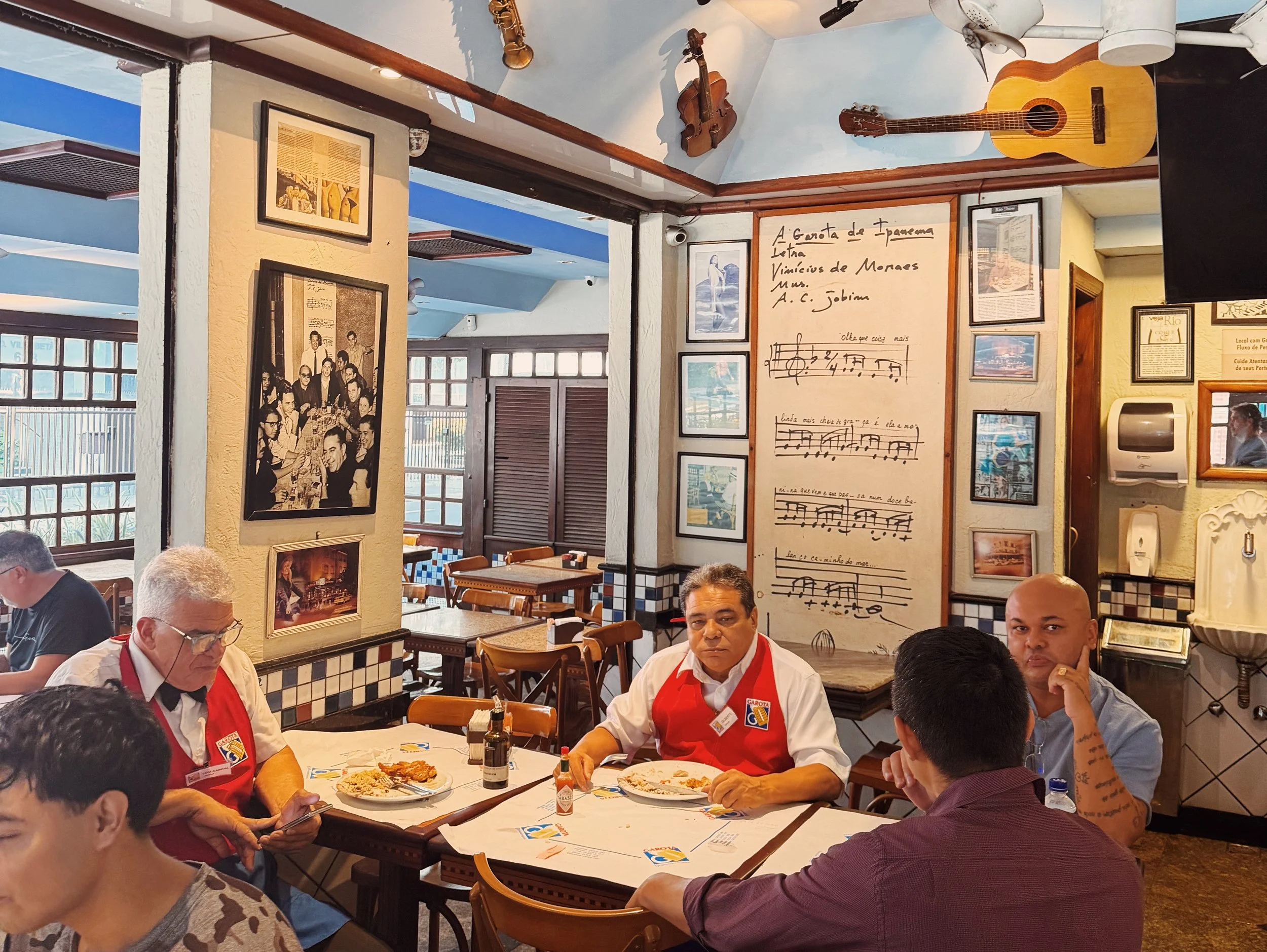
Originally named Veloso, Garota de Ipanema is the absolute holy grail of bossa nova history. Sitting at a corner table here in 1962, Tom Jobim and Vinícius de Moraes watched a young Helô Pinheiro walk past on her way to the beach, inspiring them to pen "The Girl from Ipanema." Today, it functions as a lively traditional restaurant plastered with historic photos and sheet music, serving cold beer and classic Brazilian picanha (Brazil's most prized cut of beef).
Beco das Garrafas (Copacabana)
Translating to "Bottles' Alley," this narrow cul-de-sac on Rua Duvivier is the literal cradle where bossa nova grew up. In the late 1950s and 60s, pocket clubs on Beco das Garrafas like Little Club and Beco hosted the earliest, experimental performances of Elis Regina and Baden Powell. The alley has been fully revitalized, and you can catch incredible, intimate live bossa nova and jazz performances here nearly every night of the week.
Bip Bip (Copacabana)
This legendary, no-frills sidewalk bar is a cultural institution and where I personally spent my last night in Rio. Bip Bip is tiny, casual, and fiercely traditional, right down to the way you order beer (grab it yourself from the fridge behind the bar and let the guy with the notepad at the front know you’re adding one to your tab). The musicians gather around a central table that practically consumes the entire interior of this pocket-sized pub to play acoustic bossa nova, choro, and samba while patrons crowd the sidewalk and plaster themselves against the wall inside.
Custom Worth Noting: To keep from drowning out the acoustic instruments, clapping is strictly forbidden at Bip Bip—applause is shown by snapping your fingers silently instead. Talking is also discouraged and you will get glares if your private conversations are interrupting the music and ambiance. Check their weekly schedule, as bossa nova nights typically cycle with traditional samba days.
Blue Note Rio (Copacabana)
For a more upscale, world-class listening room experience, head to this global jazz franchise located right on the Copacabana beachfront. While Blue Note hosts international jazz acts, it consistently features high-end tribute nights dedicated to bossa nova legends, complete with premium acoustics, excellent cocktails, and stunning ocean views.
Vinicius Bar (Ipanema)
Named in honor of the great lyricist Vinícius de Moraes, this cozy, second-story piano bar and restaurant sits just a block away from the beach and across the street from Garota de Ipanema Restaurant. It is heavily dedicated to preserving the classic repertoire, offering live acoustic guitar, piano, and vocal acts every weekend that focus almost exclusively on 1960s bossa nova.
3. Chase the Rhythm of an Authentic Street Roda de Samba
📌 Samba Circles At A Glance
Top Local Venue: Samba do Trabalhador (Mondays at Clube Renascença)
Indoor / Rainy Pick: Beco do Rato (Lapa Nightlife District)
Birthplace of Pagode: Cacique de Ramos (Sundays in the North Zone)
Cost: Street events are Free | Enclosed venues average R$20–R$40
Origins and History of Rio's Roda de Samba
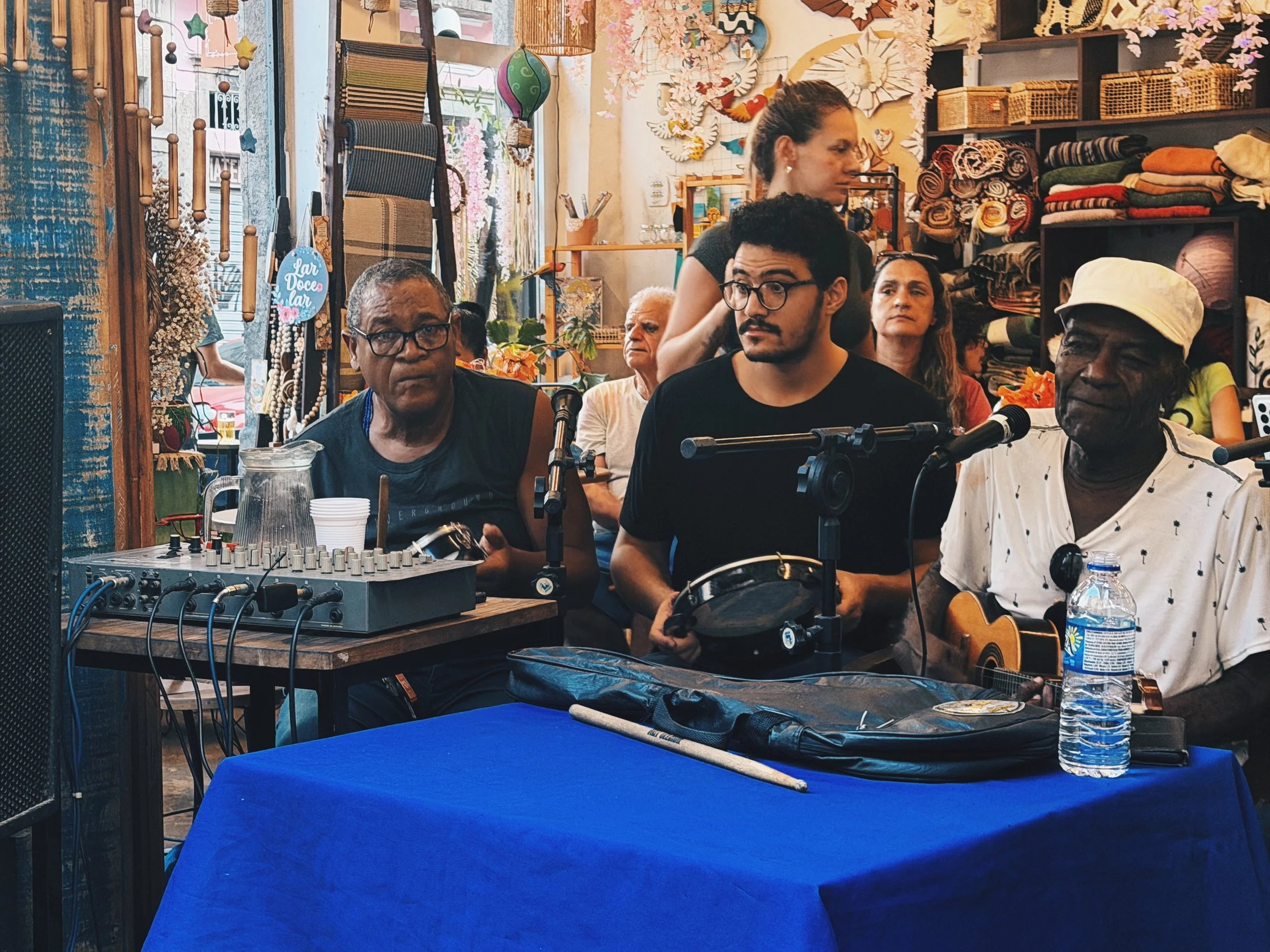
Having come from Bahia before landing in Rio, I’d already been introduced to the roda de samba, or samba circle. Yet, Rio has a way of turning these energizing singalongs into a cultural phenomenon that draws the masses nearly every night of the week. Pedra do Sal in Little Africa is perhaps Rio’s most famous roda de samba—taking place every Monday and Friday—but it is just one of many that pop up all over the city.
The origins of the genre run deep. While samba's roots trace back to West African musical traditions brought to Brazil by enslaved people, the specific urban roda style was pioneered by working-class Afro-Brazilians in Rio during the late 19th and early 20th centuries. It blended religious drumbeats with local street marches.
Because of its Afro-Brazilian origins, samba faced intense criminalization and state repression for decades. The reason you and I can experience it today is thanks to iconic community matriarchs like Tia Ciata, who resourcefully hosted secret gatherings inside their homes until the music could safely burst back onto the streets to become the globally celebrated art form it is today.
Where to Find the Best Samba Circles in Rio
During your stay in Rio, promise me you’ll attend at least one roda de samba on this list. There is absolutely nothing like the energy of the instruments, the dancing, and the passionate, eyes-closed singing and dancing that takes hold of the crowd. Even now, I still get chills just recalling my own experiences inside those rhythm-fueled circles.
Samba do Trabalhador (Andaraí)
Taking place every Monday afternoon at the historic Clube Renascença, this "Worker's Samba" was created by legendary musician Moacyr Luz. Because professional musicians usually work late weekend gigs, Monday is their day off—making this the roda where Rio's finest artists gather to play just for the joy of it.
When: Every Monday (5:00 PM – 9:30 PM)
Where: Clube Renascença (Rua Barão de São Francisco, 53)
What to Know: Enclosed and safe neighborhood club. Entry is R$20–R$30 at the gate. Take an Uber directly to the venue entrance.
Beco do Rato (Lapa)
If you are looking for an incredible indoor acoustic experience, Beco do Rato in the bohemian nightlife district of Lapa is frequently voted the best samba circle venue in Rio. This gritty cultural patio hosts soul-stirring live bands nearly every night of the week, surrounded by vibrant murals of samba icons, offering an energetic alternative to the massive street parties.
When: Tuesday to Sunday (Starts 7:00 PM – 8:00 PM).
Where: Rua Joaquim Silva, 11
What to Know: Entry cover is R$20–R$40. The enclosed venue makes it a highly secure, stress-free option for travelers. Dress in light, breathable clothing as it gets very hot and packed inside.
Samba da Ouvidor (Centro)
Spilling out onto the colonial cobblestones of historic Rua do Ouvidor on Saturday afternoons, this is one of Rio’s most beloved street rodas. It is completely free, intensely packed with locals, and strictly dedicated to samba de raiz (traditional root samba).
When: Alternating Saturdays (4:00 PM – 10:00 PM)
What to Know: Completely free open-air street crowd. Arrive early by 3:30 PM to claim a standing spot near the musicians' table, and buy your beers from the local street vendors.
Armazém Senado (Centro)
Operating continuously out of a gorgeous, high-ceilinged dry goods warehouse built in 1907, Armazém Senadohosts an unforgettable bi-weekly Saturday afternoon roda. Musicians crowd around a small table right by the entrance while the neighborhood dances out onto the sidewalk.
When: First and third Saturday of the month (2:00 PM – 8:00 PM)
Where: Av. Gomes Freire, 256
What to Know: Free street access with a small R$15 cover added to your tab if sitting inside. It feels incredibly safe in the broad daylight. Grab a cold draft beer at the historic wood counter.
Cacique de Ramos (Olaria)
Located deeper in Rio's northern suburbs under a sacred tamarind tree, this Cultural and Intangible Heritage site is the absolute birthplace of modern pagode (a backyard offshoot of samba). Icons like Zeca Pagodinho were discovered here. Their Sunday evening roda is completely free, incredibly family-friendly, and often paired with a massive afternoon plate of traditional feijoada (bean and pork stew).
When: Every Sunday (Starts at 5:00 PM)
Where: Rua Uranos, 1326
What to Know: Free entry to a deeply authentic, multi-generational family event. It is located deep in the North Zone, so take a direct taxi or Uber straight to the gate and be sure to order their famous feijoada stew.
A Guided Way To Experience Roda de Samba: Attend Pedro do Sal’s Monday or Friday Samba Circle With a Local on GetYourGuide
If you want to dive deep into the complex history of roda de samba in Rio, book this guided Pedra do Sal Samba Tour on GetYourGuide. An expert local guide will navigate the massive crowds for you, providing invaluable cultural context on the lyrics, the location, the instruments, and the social movements tied to the rhythm while keeping you safe and oriented.
4. Delve Into the Multicultural Flavors of Rio’s Food Scene

📌 Rio Food Scene At A Glance
Top Culinary Experience: Culinary Backstreets Food Tour (Centro & Port Zone)
Definitive Steakhouse: Churrascaria Palace (Copacabana — Classic tableside picanha)
Historic Belle Époque Cafe: Confeitaria Colombo (Centro — Built in 1894)
Beachfront Staples: Queijo Coalho & Biscoito Globo paired with cold Mate Limão
Guide to Gastronomia Carioca and Local Food Culture
Slow-cooked black bean stew, crispy golden croquettes stuffed with shredded salted cod, and the airy, slightly salty crunch of Biscoito Globo on the beach. These are just a few of the mouthwatering items on the menu in Rio, a city with culinary influences that stretch as vast as the historic bakeries of Sintra in Portugal, the vibrant street food of Lebanon, and the traditional caipira kitchens of Brazil’s backcountry.
The local food culture—known as gastronomia carioca—is a vibrant, informal melting pot of all of these regional flavors and more. In fact, it was the working-class communities that truly gave carioca cuisine its color, its unique spice, and its legendary botequim social life.
When in Rio, be sure to find your way to one of these unpretentious botequims (no-frills neighborhood tavern), do as the locals do, and order yourself an ice-cold draft beer (chopp) alongside some savory fried snacks (petiscos). Alternatively, you can visit a ubiquitous restaurante a quilo (pay-by-weight buffet) for a diverse lunch, or hit a 24-hour street-corner juice bar (casa de suco) for a refreshing bowl of açaí after a long day at the beach.
But to truly understand how these flavors and customs tie into the city's complex social history, I highly recommend following in my foot tracks by booking Culinary Backstreets’ "Discovering the Culinary Soul of Old Rio" food tour. Their immersive walking tour curated and led by local foodie historian Marco winds through the historic backstreets of Centro and the Port Zone, tracing how enslaved Africans, working-class communities, and waves of global immigrants directly shaped Rio’s modern menus.
During the tour, you’ll stop by historic botequims that have completely reinvented how Brazilian classics like pão de queijo (cheese bread) are eaten, chow down on Middle Eastern-inspired esfihas at the city’s largest open-air market, and visit a historic Belle Époque-style bakery serving up Portuguese delicacies like pastéis de nata and travesseiro that rival what’s found in the bakeries of Lisbon and Sintra across the pond.
Traditional Dishes to Try in Rio de Janeiro
If you simply want a definitive list of the dishes to target during your time in Rio, here are the absolute most iconic and historic carioca food staples and exactly where I recommend you try them:
Feijoada Carioca
A rich, slow-cooked stew of black beans, beef, and pork sausage. It comes with a traditional spread of white rice, garlicky collard greens (couve), toasted cassava flour (farofa), and orange slices.
Where to Try It: Casa da Feijoada (Ipanema) — While most places only serve it on weekends, this historic Ipanema spot serves Rio's definitive, multi-pot feijoada experience every single day of the week, complete with a traditional lineup of starters and local cachaças.
Filé Oswaldo Aranha
A thick, juicy filet mignon steak topped with a mountain of crispy fried garlic, served alongside white rice, Portuguese-style potato chips, and farofa.
Where to Try It: Filé de Ouro (Jardim Botânico) — While the historic Cosmopolita in Lapa (the original birthplace of the dish) has sadly closed its doors, this traditional neighborhood institution keeps the flame alive. They serve up Rio's undisputed best, most authentic version of the dish—done to absolute perfection with massive portions easily shared between two people. It makes for the perfect lunch stop right before or after you explore the neighbouring Botanical Garden.
Churrasco Picanha (Steakhouse Style)
Brazil's most prized cut of beef, taken from the top cap of the rump. It features a thick, flavorful layer of fat that melts into the meat as it is grilled over open flames on massive skewers and carved directly onto your plate.
Where to try it: Churrascaria Palace (Copacabana) — Operating continuously since 1951 just a block from the beach, this upscale, old-school establishment is legendary for its charcoal-grilled cuts, serving picanha in the ultimate, traditional rodízio style surrounded by historic art-deco charm.
Bolinho de Bacalhau
Crispy, golden potato croquettes packed with shredded salted cod and fresh herbs. Best enjoyed hot with a fresh squeeze of lime juice.
Where to Try It: Nova Capela(Lapa) — Founded in 1903, this late-night bohemian temple is universally famous for serving the crispest, most traditional salted cod croquettes in Rio, delivered by waiters in classic white tuxedo jackets.
Coxinha
The king of Brazilian street food—a teardrop-shaped pastry dough stuffed with shredded seasoned chicken and creamy Catupiry cheese, coated in breadcrumbs and deep-fried to a golden crisp.
Where to try it: Confeitaria Colombo (Centro) — While found on every corner, eating a coxinha inside this jaw-dropping, Belle Époque historic cafe built in 1894 is a true Rio rite of passage.
Caldinho de Feijão
A thick, savory black bean soup served steaming hot in a small shot glass or mug, heavily seasoned with garlic, bacon, and crispy pork rinds (torresmo).
Where to Try It: Bar do Mineiro (Santa Teresa) — This legendary, tile-walled neighborhood bar nestled high up the hills of Santa Teresa serves Rio's most deeply savory black bean soup shots, surrounded by historic black-and-white photos of Brazilian artists.
Pastéis
Deep-fried, flaky pastry envelopes filled to the brim with melted cheese, minced beef, or creamy hearts of palm (palmito).
Where to Try It: Bar Urca (Urca) — Established in 1939, the ritual here is to order your crispy pastéis at the tiny ground-floor counter, walk across the street, and eat them while balancing your cold beer directly on the historic stone seawall (mureta) overlooking the bay.
Joelho (or Americano)
The ultimate, heavy-duty savory bakery pastry of Rio's working class—a soft, rolled bread dough stuffed with layers of ham and melted cheese, baked until golden.
Where to try it: Any traditional neighborhood corner padaria (bakery) in Copacabana or Centro. Order it at the counter alongside a fresh cup of sweet espresso (cafezinho).
Queijo Coalho
A firm, salty cheese skewer cooked on a handheld, charcoal-fired grill right on the sand, torched on the spot, and heavily dusted with dried oregano.
Where to Try It: Copacabana or Ipanema Beach — Keep your eyes peeled for the smoke and listen for the clinking metal grills and the street vendors shouting "Olha o queijo!" right by your beach chair.
Biscoito Globo & Mate
Airy, crunchy, ring-shaped starch biscuits (sweet or salty) paired with a cold Mate Limão—a refreshing blend of roasted yerba mate tea and lemonade.
Where to Try It: Copacabana Beach (Posto 2 to Posto 6) — You don't buy these at a store. Look for the iconic beach vendors wearing bright orange uniforms and carrying double metallic drums on their shoulders. Flag them down right from your beach towel.
Açaí na Tigela
Frozen Amazonian açaí berries blended into a thick, sweet, ice-cold purple smoothie bowl, heavily topped with fresh banana slices and crunchy granola.
Where to Try It: Bibi Sucos (Leblon / Copacabana) — Opening its first location in 1993, this classic Rio corner juice bar chain pioneered the modern beach-to-counter lifestyle, serving the thickest, highest-quality blended açaí bowls in the southern zone.
The Classic Caipirinha
Brazil’s iconic national cocktail made of muddled fresh lime wedges, white sugar, a mountain of crushed ice, and a heavy pour of high-quality cachaça (sugar cane hard liquor).
Where to Try It: Academia da Cachaça (Leblon) — This legendary bar has spent decades perfecting the exact balance of the classic lime drink, alongside versions featuring local Amazonian fruits.
5. Step Inside the World's Most Beautiful Library at Centro

📌 Royal Portuguese Reading Room At A Glance
Location: Rua Luís de Camões, 30 (Historic Centro)
Admission Fee: 100% Free (No advance tickets or reservations required)
Opening Hours: Monday to Friday (10:00 AM – 5:00 PM) | Closed Weekends
Best Way to See It: Guided Downtown Walking Tour
History and Architecture of the Royal Portuguese Reading Room
The Real Gabinete Português de Leitura (Royal Portuguese Reading Room) is the type of place that will have you gasping in awe. Tucked away on a quiet street in Rio's historic Centro, this architectural masterpiece was founded in 1837 by Portuguese immigrants looking to promote their homeland's culture in a newly independent Brazil. This stunning sanctuary is routinely voted one of the most beautiful libraries in the world. I even included it in my own global library roundup for Paradise, and it is a place you absolutely must see with your own eyes.
Stepping through its heavy doors instantly transports you out of modern Rio and into a cathedral-like hall of pure intellectual history. Because the library functions as a silent research center rather than a standard tourist attraction, visitors are restricted to a small central viewing corridor, but it’s plenty for your eyes to feast on.
For the ultimate experience, I highly recommend booking a guided downtown walking tour that includes a stop at the library. Your guide can add immense value, providing some historical context on the rare collections kept behind the locked gates while helping you navigate Rio's bustling Centro district safely. The tour will weave the library's breathtaking Neo-Manueline architecture into Rio's grander historical narrative and pair it with some of the city’s other iconic sites like the grand plazas of Cinelândia, the spectacular Municipal Theater, the glittering gold-leaf interior of the historic Mosteiro de São Bento, the colonial-era Arcos do Teles, and the indigenous handicrafts at Casa Tucum.
What to See Inside the Royal Portuguese Reading Room
If you do pop into the library on your own, here is where to let your eyes linger:
The Neo-Manueline Reading Room
This soaring, three-story central hall features immense dark wooden bookshelves wrapped in intricate ironwork holding more than 350,000 rare volumes, including a priceless 1572 first-edition copy of Luís de Camões's epic poem Os Lusíadas.
The Stained-Glass Skylight
Crowning the center of the three-story hall is a massive, multi-colored stained-glass dome. It was the very first architectural glass structure of its kind ever imported and assembled in Brazil, casting a stunning, jewel-toned glow over the entire room.
The Monumental Silver Chandelier
Suspended directly from the center of that stained-glass ceiling hangs a massive, ornate silver and bronze chandelier. Crafted specifically for the library's grand opening in 1887, it perfectly anchors the room's cathedral-like, dark-academia atmosphere.
The Altar of the Discoveries
Positioned at the far end of the room sits the grand Altar dos Descobrimentos. This monumental piece of carved wood and marble features a central statue of explorer Pedro Álvares Cabral and celebrates the historic maritime achievements of Portugal’s Age of Discovery.
The Neo-Manueline Exterior Façade
Before stepping inside, look up at the stunning limestone exterior imported directly from Lisbon. Inspired by the famous Jerónimos Monastery, it features four towering stone statues of iconic Portuguese figures, including writer Luís de Camões and explorer Vasco da Gama.
6. Explore the Bohemian Slopes and Historic Tram of Santa Teresa
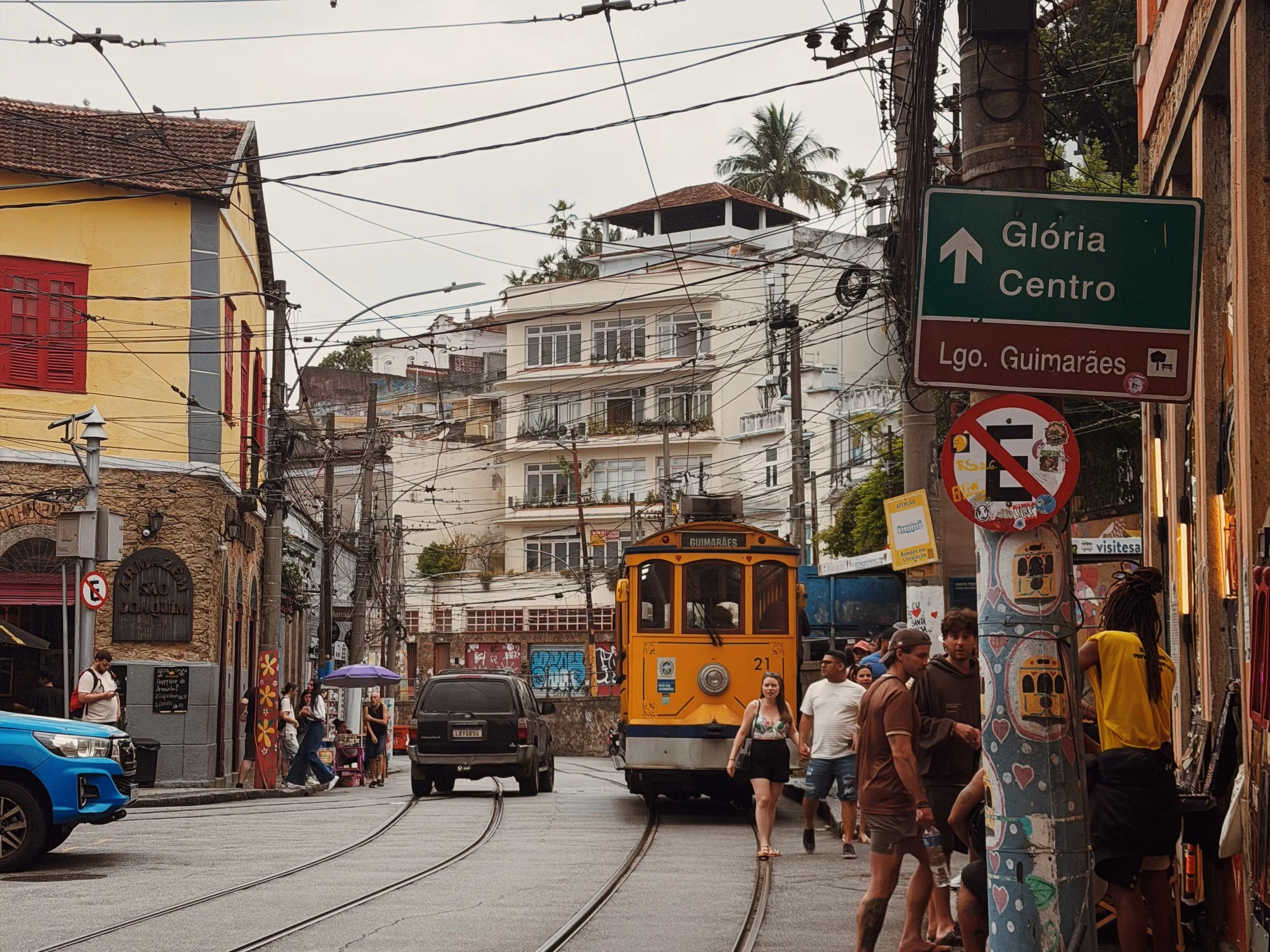
📌 Santa Teresa At A Glance
Top Stay Option: Panorama Inn (Charming, historic home-turned-family-run bed and breakfast)
Top Neighborhood Tour: GetYourGuide "Rio Artistry" Walking Tour
Transit Highlight: The Historic Yellow Tram (Board near Carioca Metro)
Can't-Miss Snack: Piping hot Pão de Queijo at Cultivar
Overview and Creative History of Santa Teresa
Perched high on a hill overlooking Rio’s Centro, Santa Teresa is the city's historic, artistic, and bohemian heart. It is a stunning maze of steep, winding cobblestone streets, lush overgrown gardens, hidden art studios, and colorful street murals. I spent nearly an entire week of my two-week stay in Rio in this neighborhood, basing myself at the lovely Panorama Inn. I absolutely loved stepping out into the neighborhood each day to experience its vibrant streets, creative atmosphere, and tight-knit community vibes.
Santa Teresa was originally built around a 17th-century convent before evolving into an exclusive enclave for wealthy industrial elites in the late 19th century. They erected the sprawling, eclectic mansions you see there today, including Panorama Inn that once belonged to a Portuguese coffee baron. As the wealthy eventually migrated toward southern beaches like Leblon and Ipanema, Santa Teresa was embraced by a wave of artists, intellectuals, and political activists. They passionately preserved its historic architecture while injecting the decaying colonial estates with a more progressive, creative energy that is very obviously felt and seen today.
Because its maze of hilltop streets can be tricky to navigate safely on your own and its finest treasures are often hidden from plain sight, a guided walking tour is the absolute best way to experience it. While I initially did a tip-based tour via GuruWalk, there are a few incredible options on GetYourGuide that truly unlock the neighborhood’s bohemian soul. They take you past standard tourist traps and directly into secret local viewpoints, independent artist ateliers, and alleyways packed with underground street art.
The top-rated GetYourGuide "Rio Artistry" Tour perfectly bridges the gap between sightseeing and local immersion. It kicks off with iconic landmarks like the Lapa Arches and the vibrant Selarón Steps before diving deep into the hilltop colonial architecture, featuring stops at the historic Parque das Ruínas and the Chácara do Céu museum. Rather than just lecturing you on the history of the poets and musicians who shaped this creative enclave, the experience wraps up with a hands-on, mixed-media art workshop in a peaceful studio, allowing you to paint your own custom souvenir to take home.
My Essential Santa Teresa Self-Guided Stops
If you prefer to explore Santa Teresa on your own, here are a few essential stops and attractions I highly recommend targeting:
The Historic Bondinho (Santa Teresa Tram)
Operating since 1896, this iconic yellow open-air tram rattles across the breathtaking Arcos da Lapa aqueduct before climbing into the winding hills. Board at the station near Carioca Metro downtown and sit on the right side for the best views when crossing the arches.
The Selarón Steps (Escadaria Selarón)
This world-famous staircase features 215 steps completely covered in over 2,000 brightly colored tiles collected from over 60 countries by artist Jorge Selarón. Arrive before 8:30 AM to beat the massive crowds. And, avoid wandering into the quiet, unmarked side alleys branching off the stairs, as they can be unsafe for tourists.
Parque das Ruínas (Ruins Park)
Parque das Ruínasis the skeletal brick ruins of a Belle Époque mansion transformed into an avant-garde cultural center. It features a dramatic iron-and-glass structure offering unobstructed, 360-degree panoramic views of Guanabara Bay and downtown Rio. Admission is completely free, and it features an excellent outdoor cafe.
Largo dos Guimarães
Largo dos Guimarães is the vibrant commercial heart of the neighborhood, serving as the main tram stop. The square and its branching streets are tightly packed with independent artisan boutiques, local art ateliers, and old-school botecos (traditional bars).
Chácara do Céu Museum
Located via a direct, connected walkway right next to Parque das Ruínas, the Chácara do Céu Museum houses the incredible art collection of industrialist Raymundo Ottoni de Castro Maya. It seamlessly pairs masterpieces by European icons like Picasso and Matisse with celebrated Brazilian modernists like Di Cavalcanti and Portinari.
Pão de Queijo at Cultivar
Cultivar is a mandatory culinary ritual just off Largo dos Guimarães. This beloved local bakery is famous for serving Rio’s most authentic, piping-hot pão de queijo (Brazilian cheese bread made with wild yeast and cured cheese from Minas Gerais), which pairs perfectly with their artisanal coffee or fresh tropical juices.
Artisan Shopping & Local Boutiques
Unlike the high-end commercial malls of the South Zone, Santa Teresa is a haven for independent, slow-fashion brands and authentic Brazilian folk art. Wander the streets immediately branching off Largo dos Guimarães (especially Rua Paschoal Carlos Magno) to find gems like Favela Hype for unique Brazilian streetwear, La Vereda for hand-selected ceramics and textile crafts, and Nau Cultural for incredible woodblock prints and sculptures sourced directly from artists across rural Brazil.
7. Tour the Rocinha Favela Ethically with a Local Community Leader
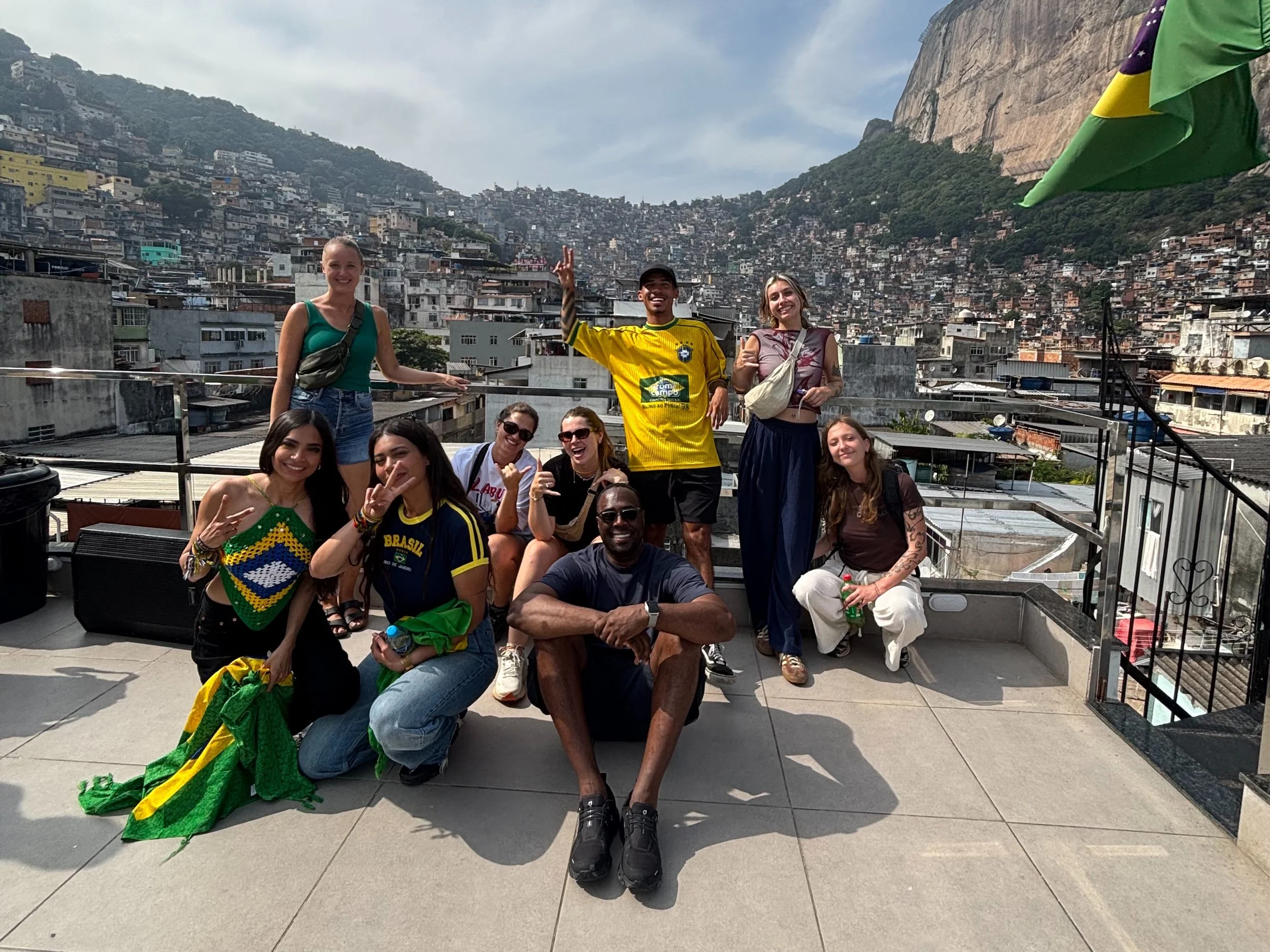
📌 Rocinha Ethical Tour At A Glance
Top Recommended Operator: Zé Tours Rocinha (Led by community leader Zé)
Tour Style: Immersive educational walking tour led by a Rocinha resident
Physical Intensity: High (Expect steep hills and hundreds of concrete steps)
Essential Gear: Sturdy walking sneakers with good grip & small cash notes for purchases and tips
Why You Should Choose an Ethical Rocinha Favela Walking Tour
I will be the first to admit I was hesitant to join one of Rio's viral favela tours. But that hesitation completely melted away the more I talked to other travelers who had actually gone into Rocinha. When you go with a trusted guide—someone born and raised right there in the community, whose actual mission is to support their neighborhood and show the human side of it—a walking tour through the favela is probably the most eye-opening, powerful way to truly understand Rio. Because let’s be honest, the city’s favelas are wildly misunderstood.
Home to roughly one-fifth of Rio's population, these complex, self-built hillside neighborhoods are the absolute beating heart of working-class culture, community organizing, and artistic expression. They are dense, innovative hubs of pure resilience where essential elements of Brazilian identity—like samba and baile funk—were actually born.
For decades, mainstream media has unfairly reduced favelas to flat caricatures of crime and poverty. In reality, they function as hyper-local, completely autonomous ecosystems packed with family-owned bakeries, bustling markets, and independent rooftop bars. Because these areas originally grew without any state support, they represent an incredible triumph of organic urban planning. Out of sheer resourcefulness, residents built their own multi-story homes and established intricate water and electricity networks from scratch.
When you're choosing how to experience this side of Rio, please promise me you'll avoid those exploitative, "safari-style" jeep tours run by corporate agencies that treat residents like a spectacle. Instead, opt for an educational, eye-to-eye walking experience. I booked my walk with a local named Zé—a widely respected local resident, community organizer, and activist. He had the best energy and I highly recommend booking your tour with him directly either by messaging him on Instagram or via WhatsApp at +55 21 99966-7722.
On his tour, I saw firsthand how opening their doors to travelers is both a bridge to understanding and a direct contribution to the neighborhood’s economic autonomy and safety. Any money you spend inside the favela goes right back to the community, while your presence there is playing a part in keeping the peace.
As Zé led us through the dense, vertical labyrinth of Rocinha’s steep stairways and overlapping brick homes built entirely by hand, he gave us an invaluable look into the sheer grit and structural mechanics of how this neighborhood was constructed. He took us right through vibrant commercial strips where buying snacks or local art directly supports neighborhood entrepreneurs. Best of all, Zé introduced us to inspiring social projects—including the local capoeira school Laje Cultural and a youth arts initiative founded by the Rio-based street artist Wark Rocinha—showing just how passionately these community leaders use education and the arts to empower their youth and resourcefully fill the gaps left by government neglect.
Favela Tourism: What You Still Might Be Wondering
Is it safe?
Yes, provided you are with a trusted local guide, like Zé, who is part of one of several local, resident-run tourism cooperatives and guide collectives. Communities have strict internal codes of conduct that protect visitors, making street crime or muggings inside a favela incredibly rare compared to the tourist beaches.
Is this ethical, or is it "poverty tourism"?
It is ethical only if you choose a walking tour led by a local resident. Jeep tours that peer down at people are exploitative; walking eye-to-eye and spending money at neighborhood shops turns your visit into direct economic support.
How do the locals feel about tourists visiting?
Over the past couple years, these favela tours have gone viral and take place multiple times a day. At this point, residents, especially in Rocinha, are accustomed to responsible tour groups visiting and are proud to show off their neighborhood's music, culture, and ingenuity.
Essential Safety Rules for Visiting a Rio Favela + What To Know, Prepare For, & Bring With You
Strict Camera Etiquette
Never point your camera at residents or into private windows without asking. Most importantly, never photograph local security dynamics, lookouts, or anyone holding a weapon. Your guide will tell you exactly when it is safe to take photos.
Intense Physical Demand
Favelas are vertical labyrinths. You will climb hundreds of steep, uneven stone steps and slick inclines. Leave the Havaianas behind; sturdy sneakers with excellent grip are a much better choice.
Bring Small Cash Notes
While formal stores take cards, the best street food vendors, local artisans, and social project donation boxes only take cash. Carry a pocket full of R$5, R$10, and R$20 notes.
Sensory Overload
It is incredibly loud and fast-paced. Expect the roar of motorbike taxis (mototaxis) flying around tight corners, loud funk music blasting from storefronts, and a level of sensory density that can be overwhelming at first.
8. Catch Sunrise from the Peak of Morro Dois Irmãos

📌 Morro Dois Irmãos At A Glance
Trail Difficulty: Moderate (Steep dirt path; very slick after rain)
Distance & Time: 1.6 km (1 mile) each way | 45-minute ascent
Getting to the Trailhead: Uber to Av. Niemeyer (specifically Praça do Vidigal) at the start of Vidgal, then hop on one of the waiting mototaxis to get you to the trailhead (it’s a wild ride, but really your only option unless the Kombo vans are running)
Essential Gear: Headlamp/flashlight, warm layers, insect repellent, and cash (R$20 for the mototaxi—R$10 up and R$10 down—and R$10 for the trail entrance fee)
Preparing for the Morro Dois Irmãos Sunrise Hike
You’ll spot the iconic, two-peaked mountain known as Morro Dois Irmãos (Two Brothers Hill) from the sand and surf of Ipanema and Leblon. But standing on top of its tallest peak as the sun rises over the high-rises of the South Zone, the glistening Guanabara Bay, and the jagged granite monoliths of Sugarloaf and Corcovado Mountain—with Christ the Redeemer keeping watch nearby—is a view that will be etched in your mind’s eye forever.
Getting there, however, is a bit of a process. It’s one that requires a 3:30 AM start (if you’re smart), a wild motorbike ride through the Vidigal favela, and ascending a very steep and slippery mountain path in the pitch black. For this reason, I don’t recommend tackling this particular Rio bucket-list item completely on your own. Go with someone who’s done it before, grab a group from your hostel, or book this well-reviewed guided hike on GetYourGuide.
I was lucky enough to be staying at the Mango Tree Hostel in Ipanema when they were hosting their weekly group ascent at sunrise. That gave me a nice cushion of experienced company and a built-in group to share the views, the trail, and the wild transportation logistics with.
I would also highly recommend bringing extra layers. It’s quite chilly up there before the sun breaks, and you’ll likely be sitting in the dark waiting for a while. If you have a thermos for hot chocolate or coffee, bring that too! I was incredibly jealous of a few groups who were smart enough to pack one. What an epic way and place to drink your morning cup of coffee while you wait for sun.
Regardless of how you choose to make the trek, here is everything you need to know:
Trail Stats & What to Expect
Difficulty: Moderate. It is a steep, dirt path that can become incredibly slick if it rained the night before.
Distance: Around 1.6 km (1 mile) each way.
Duration: It takes roughly 40 to 50 minutes to climb up, and 30 minutes to hike back down.
The Wake-Up Call: Depending on the season, sunrise in Rio happens between 5:00 AM and 6:30 AM. Expect a pre-dawn pickup around 3:30 AM to 4:30 AM, meaning you will hike the entire way up in the pitch dark using flashlights or headlamps.
Navigating the Vidigal Favela Mototaxi Logistics
(Something I wasn’t warned about, so I’m warning you)
Because the trailhead sits at the absolute highest point of Vidigal, you cannot take a standard Uber or taxi to the top. From the main coastal avenue (Av. Niemeyer) at the start of Vidigal (specifically at Praça do Vidigal), you’ll hop on the back of a local mototaxi or squeeze into a Kombi van (if they’re running). You will zip up the incredibly steep, winding, and narrow streets of Vidigal in the dark to reach the soccer field (Campo do Vidigal) where the trail officially begins.
Traveler Tip: Bring cash (about R$7–R$10 per person each way) for the mototaxi if it isn't already included in your guided tour price.
What to Pack for the Peak
Layers are Key: Even if Rio is scorching during the day, the summit of Dois Irmãos is incredibly windy and chilly before the sun breaks. Wear a light windbreaker or sweatshirt that you can peel off later.
Headlamp or Phone Light: This is essential for navigating exposed tree roots and loose rocks in the dark. Make sure your phone is at 100% battery.
Insect Repellent: The mosquitoes in the dense Atlantic rainforest canopy are ruthless during the early morning hours.
Sturdy Shoes: Leave running shoes with smooth soles at home. You absolutely need sneakers or hiking boots with deep traction to handle the steep and slick inclines. There were so many people slipping on the way down when I did it.
9. Venture Into the Reborn Urban Rainforest and Caves of Tijuca National Park

📌 Tijuca National Park At A Glance
Park Scale: Nearly 15 square miles right in the geographic heart of Rio
Best Way to Experience It: Jungle Me’s Small Group Hike
Key Historical Stops: Cascatinha Taunay Waterfall & The Pastel-Pink Mayrink Chapel
Essential Gear Check: bug spray, light layers, lunch/snacks, and a swimsuit/towel
The Reforestation History of Tijuca National Park
Visiting Tijuca National Park is an absolute must-do if you’re craving a retreat beyond the high-rises, music venues, and crowded sands of Copacabana and Ipanema. Spanning nearly 15 square miles right in the geographic heart of the city, Parque Nacional da Tijuca (Tijuca National Park) is the world’s largest man-made urban rainforest. What feels like an untouched, ancient paradise is actually one of history's greatest environmental rescue missions. Today, it stands as a thriving, secondary-growth wilderness that cradles Rio's unique climate and biodiversity.
In the 18th and 19th centuries, colonial powers completely decimated the native Atlantic forest to make way for intensive logging, charcoal production, and massive coffee monocultures. By the 1850s, this ecological destruction triggered severe land erosion, prolonged droughts, and a catastrophic water crisis.
In 1861, responding to the threat, Brazilian Emperor Pedro II ordered the complete removal of the plantations and commissioned a massive reforestation project. Over several decades, enslaved laborers and local workers manually replanted over 100,000 native trees, successfully reviving the water tables and cooling the city's temperatures.
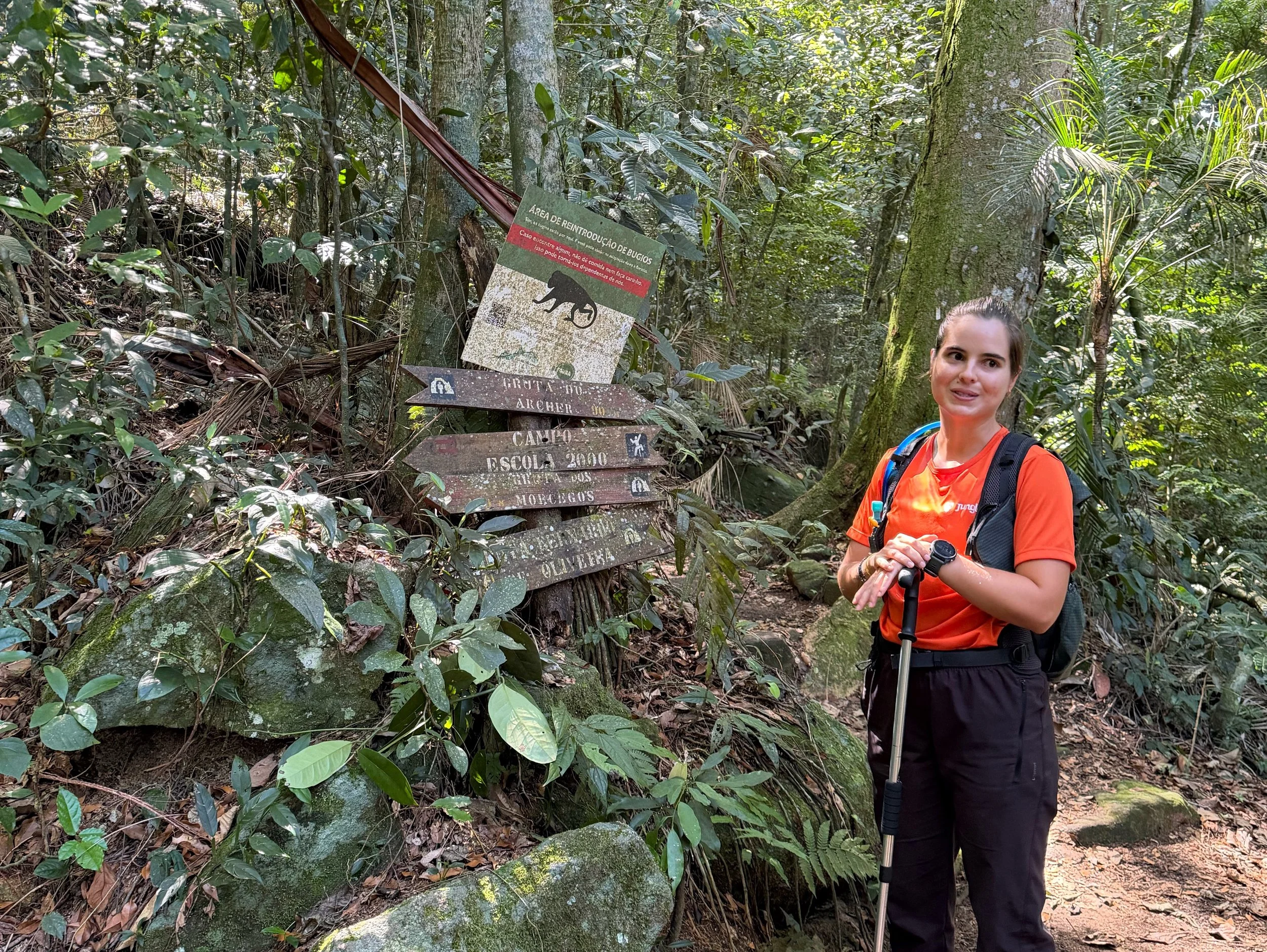
Because the park is a vast, complex maze of winding mountain roads and dense jungle single-tracks, exploring it with a guide—ideally a biologist—is the smartest way to immerse yourself in the terrain. I booked a small-group excursion with Jungle Me, a carbon-neutral agency that knows this forest inside and out. They led me and two others on a beautiful short circuit through the park that took us past ruins, caves we got to climb inside of, and grottoes with pools and waterfalls we could cool off in. Along the way, we learned about the park, its history, and rewilding programs while hardly glimpsing another hiker on the trail.
Wildlife & Historical Highlights to Keep an Eye Out For
When you go, here are the wildlife and historic highlights to keep an eye out for:
The Fauna
Watch the canopy for brightly colored toucans, neon-green parakeets, and mischievous capuchin monkeys, while raccoon-like coatis forage in the brush below.
The Rewilding Stars: If you are incredibly lucky, you might spot a red-rumped cacique bird or a howler monkey—species that went completely extinct in the area but were recently reintroduced by conservation biologists.
Cascatinha Taunay
Rio's highest waterfall is a roaring 30-meter (100-foot) cascade nestled right near the park’s main entrance, named after French painter Nicolas-Antoine Taunay.
Mayrink Chapel (Capela Mayrink)
Built in 1850, this tiny, striking pastel-pink chapel is hidden deep in the forest and features replicas of vibrant altar panels painted by the legendary Brazilian modernist artist Cândido Portinari.
The Cave Network
Ancient granite structures like the Gruta de Luís Fernandes and Gruta dos Morcegos (Bat Cave) offer a cool detour where you can step inside tunnels carved naturally out of mountain rock.
What to Pack for the Rio Jungle
Swimsuit & Quick-Dry Towel: Many interior trails wind past crystal-clear, refreshing jungle streams and natural pools where you can safely rinse off the tropical heat.
Bug Spray: The mosquitoes deep within the humid rainforest canopy are incredibly active; apply repellent heavily before stepping onto the trail.
Deep-Tread Footwear: The forest floor is thick with damp soil, slick moss-covered roots, and decaying leaves. Sturdy sneakers or hiking shoes are an absolute must.
Light Layers: The dense canopy blocks out a massive amount of direct sunlight, making the interior jungle paths surprisingly breezy and cooler than the city streets below.
10. Dive Into Rio’s High-Performance Surf Culture at Arpoador

📌 Rio de Janeiro Surfing At A Glance
Top Recommended School: Arpex Surf School (Book a lesson at least one day in advance or rent a board right at their tent on the sand at Arpoador Rock)
Peak Season Window: May to September (Heavy south swells) | October to March (Gentler beginner waves)
Standard Rental Rates: Average R$70 for one hour | R$100 for two hours
The Coastal Lifestyle and Surf Culture of Rio de Janeiro
Surfing is not just a recreational sport in Rio de Janeiro; it is a full-blown coastal lifestyle, a cultural religion, and a daily spiritual ritual. Try walking through the streets of Ipanema or Copacabana without bumping into a surfboard-toting carioca.
Stretching across miles of white-sand Atlantic coastline, Rio’s unique topography catches a variety of ocean swells, turning the city into one of Brazil's premier high-performance surf hubs. It is the training ground that shaped world-renowned big-wave icons like Maya Gabeira and Lucas Chumbo, and where local chargers can be found riding waves from sunrise until well after dusk.
Rio’s unique geography creates a dynamic arena for surfers of all levels. The legendary point at Arpoador and the shifting sandbars of Ipanema can pack a serious punch—especially during winter south swells between May and September. If you are just starting out, the smaller, gentler waves between October and March offer a much better window to get into the water.
If you are an advanced beginner or first-timer, booking a lesson with a seasoned local instructor is highly recommended. There are plenty of surf schools and boards for rent right on the sands of Arpoador, and Arpex Surf School is a fantastic place to start. That’s who I went with.
You don't need to book lessons or board rentals weeks in advance, either. You can either send them a WhatsApp message (ideally a day before you want to surf) or walk right up to their tent pitched on the beach. If you’re just looking to rent a board, standard board rental rates are R$70 for one hour or R$100 for two hours.
Guide to the Top Surf Breaks in Rio de Janeiro
Arpoador
Tucked safely between Copacabana and Ipanema, this rocky peninsula features a powerful, consistent left-hand semi-point break. The beach is illuminated by massive stadium spotlights at night, allowing locals to safely surf long after dark.
Ipanema & Leblon
Located further down the beach, these shifting sandbars produce incredibly fast, hollow, and heavy shore-break barrels. These spots are best suited for advanced surfers looking for a serious, fast-closing challenge.
Prainha
For a tranquil alternative an hour west of Centro, this protected, crescent-shaped reserve is cradled by lush green mountains. It serves up powerful, reliable beach-break peaks in a raw, untouched rainforest paradise.
Important Local Rules and Surfing Safety Tips
The Surf School "Madness" vs. The Open Break
The water directly next to Arpoador rock is heavily dominated by local surf schools, especially in the mornings. Because the rocks block the brutal rip currents, instructors claim this sheltered pocket for teaching. It gets incredibly crowded, so your best bet is to paddle out further down the sand. Just keep in mind that the open break is a bit faster, steeper, and hollower than the protected zone by the rock if you are still more of a beginner.
Sand Theft and Valuables Safeguards
There are absolutely no safe places to keep your phone, wallet, or passport on the open sand while you are paddling out. Leaving items unattended under a beach towel is an invitation for trouble in Rio. If you travel down to Arpoador alone with your phone and keys, pay a small fee to an on-the-sand surf tent or a nearby guarderia (board storage locker) to safely watch your gear while you surf. If you’re taking a lesson or renting a board, the surf school will keep it safe for you.
The "Ressaca" High-Surf Warnings
Rio's coast frequently encounters intense underwater swells known locally as ressacas. These systems create massive, highly chaotic breaking conditions, extreme shorebreaks, and brutal, rapidly moving rip currents.
The Rule: When the Brazilian Navy issues a high-surf alert (alerta de ressaca), the Fire Department and lifeguards heavily restrict water access. If the water looks churning and calm sections look like muddy rivers flowing backwards, it is a rip current—do not paddle out. Always look for red warning flags or confirm safety with lifeguards before entering the water.
11. Escape the Heat in the Imperial Haven of Jardim Botânico
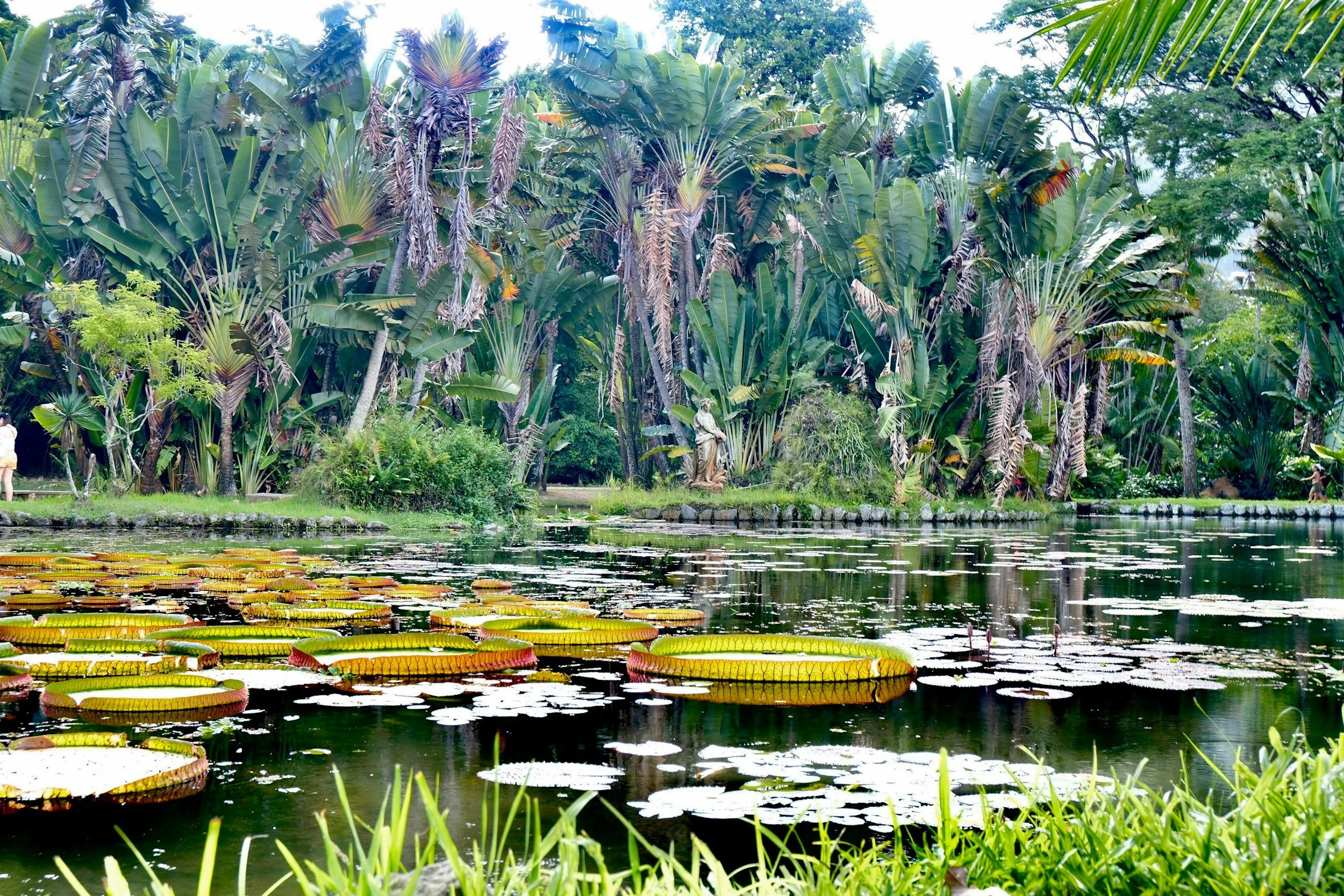
📌 Jardim Botânico At A Glance
Admission Fees: Standard International Ticket is roughly R$80 (Discounts apply for Mercosul residents); Children under 5 are free
Opening Hours: Mondays: 12:00 PM – 5:00 PM | Tuesday to Sunday: 8:00 AM – 5:00 PM
Best Way to Navigate: Guided golf cart tours available directly through the official visitor center
The Imperial History and Conservation Mission of Rio's Botanical Garden
Spanning over 340 acres at the base of Corcovado Mountain, Rio’s Jardim Botânico (Botanical Garden) is one of the world’s greatest ecological sanctuaries. Founded in 1808 by Prince Regent Dom João VI of Portugal, the garden was originally built to acclimatize valuable spices brought over from the West Indies, such as nutmeg, cinnamon, and pepper. Over the last two centuries, it evolved into a world-class scientific research institution and a protected UNESCO Biosphere Reserve. Today, it serves as a lush, hyper-sensory escape from the city’s concrete heat, housing more than 6,500 species of rare tropical flora, ancient Amazonian water lilies, and a thriving wildlife sanctuary where wild toucans and capuchin monkeys swing freely through the canopy.
The grounds represent a living timeline of Brazil's ecological and imperial history. Walking its shaded paths reveals how this 19th-century royal spice plantation transformed over generations into a crucial scientific fortress. It now functions as a primary global hub for tropical plant conservation, dedicated entirely to cataloging and preserving the endangered biodiversity of the native Brazilian Atlantic forest.
To comfortably absorb this vast history and navigate the massive acreage without missing hidden, tucked-away greenhouses, there are guided golf cart tours you can book through the official visitor center at the main entrance. Led by an expert naturalist, this experience connects the garden’s imperial origins directly to its modern conservation efforts.
Best Places to Visit Inside the Rio Botanical Garden
The Avenue of Royal Palms (Aléia das Palmeiras)
This breathtaking, 750-meter-long corridor serves as the garden's grand signature entrance. It is perfectly lined with 134 monumental palm trees, all descended from a single seed planted by Dom João VI in 1809.
The Sensory Greenhouses (Orchids & Bromeliads)
Hidden deep within the grounds, the Orchidarium (Orquidário) houses over 3,000 delicate, fragrant species, while the nearby bromeliad greenhouse features thousands of brightly colored tropical air plants.
The Japanese Garden & Victoria Amazonica Pond
A tranquil sanctuary featuring traditional wooden bridges, koi ponds, and a spectacular display of massive Victoria amazonica water lilies, which float like giant, green platters on the water's surface.
The Eco-Museum (Museu do Meio Ambiente)
A fascinating historical space mapping out the garden’s 19th-century evolution and highlighting modern initiatives to combat global deforestation.
Tip: If Tijuca National Park caught your eye too, you can actually combine a visit to the Tijuca National Park with a guided visit to the Jardim Botânico on this popular GetYourGuide 4-hour tour of the gardens and park.
12. Experience Gilded Romance and Contemporary Art at Parque Lage

📌 Parque Lage At A Glance
Admission Cost: 100% Free for general park grounds and caves
Mansion Courtyard Rule: Mandatory advance online booking required to step inside the pool area (currently closed for renovation)
Top Dining Feature: Plage Café (Located directly inside the inner palace courtyard, currently closed for renovation but slated to reopen in July 2026)
Top Excursion: Christ the Redeemer Guided Hike from Parque Lage
The Romantic History and Artistic Rebirth of Parque Lage
Located just a short walk down the road from the Botanical Garden, Parque Lage is a public park that feels like a hidden, fairy-tale estate swallowed up by the Atlantic rainforest. Winding stone pathways lead you through dense, overgrown English gardens, hand-built artificial caves, and moss-covered grottoes. Today, the park acts as a vibrant cultural intersection where historic architecture, tropical wilderness, and contemporary Brazilian art collide.
Quick Tip: While park admission is entirely free, advance online registration is mandatory to step inside the central mansion courtyard (currently closed for renovations). If you cannot secure a time slot on the official site, you will have to wait in a lengthy standby queue or book a table directly at the Plage Café to gain entry.
Originally a private sugar mill during the colonial era, the land was purchased in the 1920s by Henrique Lage, a wealthy Brazilian industrialist. To prove his devotion to his wife, the famous Italian opera singer Gabriella Besanzoni, Lage commissioned Italian architect Mario Vodret to completely redesign the estate. Vodret erected an opulent, eclectic Roman-style palace wrapped around an inner courtyard pool. Today, the stunning mansion serves as the home of the School of Visual Arts (Escola de Artes Visuais do Parque Lage), injecting the historic estate with a progressive, creative energy.
For extreme adventure seekers, the wilderness behind the mansion houses the entrance to the Corcovado Trail—a steep, intense single-track that climbs straight up through the vertical jungle canopy to the feet of the statue.
Crucial Trail Safety Warning: While the trail is a thrilling challenge, it is highly isolated and has a documented history of targeted security incidents and robberies. Do not hike this trail alone or carry visible valuables. If you choose to tackle it, only go in a large group or hire an experienced local guide.
Guided Tour Option: GetYourGuide has a well-reviewed Christ the Redeemer Guided Hike. Starting from Parque Lage, you’ll ascend Corcovado Mountain through the dense rainforest of Tijuca National Park. Your guide will keep you on track, while offering some insight into the forest, local history, and the importance of conservation in this unique environment. The hike takes about two hours up and an hour and a half down — Book the Experience
Top Places to Visit Within the Parque Lage Grounds
The Courtyard Pool & Plage Café
The literal centerpiece of the estate is the mansion's open-air courtyard pool, which aligns perfectly with the jagged peak of Corcovado Mountain towering directly overhead in the clouds.
The Moss-Covered Artificial Caves
Deep within the English gardens sits a maze of hand-built stone grottoes featuring built-in aquariums where you can spot exotic freshwater fish swimming right in the middle of the jungle.
The Contemporary Art Galleries
Because the mansion functions as an active art school, visitors can wander through the public ground-floor galleries to view avant-garde paintings, sculptures, and raw exhibitions created by Rio's emerging student artists.
13. Cycle, Jog, or Walk Around the Waterfront Vista of Rodrigo de Freitas Lagoon

📌 Lagoa Rodrigo de Freitas At A Glance
Trail Length: 4.5 miles (7.2 km) flat, fully paved loop path
Top Recreational Activities: Cycling, jogging, rowing, and swan pedal boats
Best Sunset Vantage Point: Parque do Cantagalo (Eastern shore near the Ipanema side of the lagoon looking toward Morro Dois Irmãos)
Top Dining Feature: Open-air lakeside kiosks (Like Arab for sunset caipirinhas and small plates)
The History and Scenic Appeal of Rio's Saltwater Lagoon
Known locally as the Lagoa Rodrigo de Freitas (or simply Lagoa), this massive, tranquil saltwater lagoon is the literal geographic heart of Rio’s South Zone. Encircled by the jagged peaks of Corcovado and Morro Dois Irmãos, the lake and its paved path serves as a vibrant, car-free hub for local fitness enthusiasts, rowers, and families looking to escape the chaotic beach crowds and soak in the city's most spectacular, mirror-like sunset reflections.
The lagoon has a deep history that mirrors Rio's urban evolution. Originally considered sacred by indigenous carioca tribes, the land was later transformed into a royal agricultural estate by Portuguese colonists. In the mid-20th century, as Rio rapidly expanded, the lagoon evolved into the city’s premier open-air backyard and a protected environmental sanctuary. Today, its 4.5-mile (7.2 km) shoreline offers a peaceful urban oasis that seamlessly connects the upscale neighborhoods of Ipanema, Leblon, and Lagoa.
To experience the shoreline at its best, I recommend renting a bicycle at the lagoon's edge from any vendor you see at either Parque dos Patins or Parque do Contagalo. It allows you to cruise the flat, palm-lined perimeter trail at your own pace while stopping at your leisure. Alternatively, you could just sign up for and use Rio’s bikeshare (Bike Itaú). These orange bikes are lined up at stations around the lake, including at Parque dos Pedalinhos, Parque da Catacumba, and Parque dos Patins.
For a nostalgic, family-friendly classic, you can also head to Parque do Contagalo or Parque dos Pedalinhos to rent one of the iconic, oversized pink swan pedal boats to drift out onto the calm, glassy water.
Best Sights and Sunset Views Around the Lagoa Waterfront
The Perimeter Cycle Path
Navigate the paved, 7.2-kilometer loop by renting a cruiser bike to coast past manicured lawns, open-air sports courts, skate parks, and lively local dog parks.
The Lakeside Kiosks & Boardwalk Bars
The scenic banks are lined with open-air kiosks like Arab, offering breezy outdoor decks where you can sip fresh caipirinhas, sample delicious small plates, and watch the illuminated silhouette of Christ the Redeemer mirror across the water.
The Rowing Clubs & Golden Hour Vistas
As the historic training ground for Rio's premier rowing clubs (Flamengo and Vasco da Gama), heading to Parque do Contagalo on the eastern shore gives you a front-row seat to watch sleek sculls slice through the water as the sun dips directly behind the cleft of the Two Brothers mountain.
The Perfect 3-Day Rio Itinerary
If you’re overwhelmed over how to string these 13 things to do together, here’s a solid three-day Rio itinerary that groups many of them by theme and location so you’re not spending most of your day in transit from site to site.
Day 1: The Historic Core and Afro-Brazilian Roots
Morning (8:30 AM): Start your day in the historic Port Zone of Centro to uncover #1 (Little Africa). Begin with the heavy history at the UNESCO-listed Cais do Valongo (Valongo Wharf) and the Sacred Baobab Tree, before heading to the deeply moving Instituto dos Pretos Novos (IPN) museum.
Mid-Day (11:30 AM): Take a short, 15-minute walk inland into Centro to marvel at the soaring, dark-academia architecture of #5 (The Royal Portuguese Reading Room). From there, head straight to the jaw-dropping, Belle Époque mirrors of #4 (Confeitaria Colombo) to fuel up on a classic, crispy coxinha and a cafezinho for a light lunch.
Afternoon (2:00 PM): Walk off lunch by heading to Praça Mauá to tour the contemporary art galleries inside the Museu de Arte do Rio (MAR). Finish your daylight hours with a spectacular stroll along the waterfront pedestrian path of the Olympic Boulevard to view the massive, colorful “Ethnicities” Mural by Eduardo Kobra.
Evening (6:30 PM): If it’s a Monday or Friday night, head straight back to the base of Conceição Hill to catch the legendary free outdoor samba circles at Pedra do Sal. Grab savory snacks at the traditional bars lining Largo de São Francisco da Prainha and keep your phone safely in a money belt under your clothes!
Day 2: Hilltop Slopes, Imperial Forests, and Palace Ruins
Morning (8:30 AM): Beat the heavy tourist crowds by arriving early at the vibrant, tile-covered Selarón Steps (Escadaria Selarón) on the border of Lapa. Once you've snapped your photos, walk over to the Carioca station to board the historic, bright yellow open-air tram for #6 (Santa Teresa). Ride across the arches, explore the skeletal brick architecture at Parque das Ruínas, and order a piping-hot pão de queijo made with wild yeast at Cultivar.
Mid-Day (1:00 PM): Settle into an Uber from Santa Teresa for a direct, scenic drive down the hill to the fairy-tale estate of #12 (Parque Lage). Grab a romantic lunch table directly next to the iconic courtyard pool at the Plage Café, and view the avant-garde student galleries inside the mansion.
Afternoon (2:30 PM): After wrapping up your time at Parque Lage, take a short, 5-minute taxi ride down the street to the sprawling 340-acre oasis of #11 (Jardim Botânico). Stepping into these deeply shaded paths is the ultimate way to escape the intense afternoon concrete heat. Walk down the breathtaking, 750-meter-long Avenue of Royal Palms, hunt for wild toucans and capuchin monkeys swinging through the canopy, and marvel at the massive floating lilies inside the Japanese Garden.
Evening (7:00 PM): Head down to the bohemian nightlife hub of Lapa for an incredible, secure indoor acoustic samba experience. Buy a cover ticket at the gritty cultural patio of Beco do Rato to watch soul-stirring live bands surround you with vibrant murals of music icons.
*This is the day you could also attempt to summit #8 (Morro Dois Irmãos) at sunrise and still be at the Selarón Steps before the crowds build.
Day 3: Coastal Rhythms, Ocean Surf, and Golden Hour Vistas
Morning (8:00 AM): Head down to the South Zone sands to experience Rio's high-performance coastal lifestyle. Walk right up to any of the surf school tents on the sand at #10 (Surfing at Arpoador Rock) for a lesson (best to have arranged this the day before) or to rent a board. Catch consistent left-hand point breaks right next to the rocky peninsula.
Mid-Day (12:00 PM): Spend your midday hours drying off and relaxing on the world-famous sand of Ipanema. When hunger strikes, flag down some queijo coalho or walk a block inland into the neighborhood for Rio's definitive, multi-pot traditional feijoada spread at Casa da Feijoada.
Late Afternoon (4:00 PM): As the scorching midday heat begins to drop, make your way to the edge of #13 (Rodrigo de Freitas Lagoon). Rent a cruiser bicycle to coast along the flat, palm-lined 4.5-mile trail, or rent a nostalgic pink swan pedal boat at the Parque dos Patins docks. Make sure you are stationed on the eastern shore at Parque do Cantagalo right at golden hour to watch the sun sink directly behind the cleft of the Two Brothers mountain.
Evening (8:00 PM): Wrap up your final night in Rio immersing yourself in the smooth sounds of #2 (Bossa Nova). Design your own historic crawl: grab a cold beer and picanha at the iconic corner tables of Garota de Ipanema, catch an upscale beachfront tribute set at Blue Note Rio, or practice silent finger-snapping at the legendary Bip Bip sidewalk bar.
A Practical Guide to Safe Transit and Logistics in Rio
📌 Rio Transportation At A Glance
Safest Day Transit: Metro Rio (Clean, heavily air-conditioned, lines 1, 2, & 4)
Safest Night Transit: In-app rideshares (Uber / 99) called directly to venue doors
Payment Method: Tap-to-pay credit cards or phones at all Metro and VLT turnstiles
Public Transit to Avoid: Standard municipal city buses late at night or when carrying gear
Navigating Rio Safely, Economically, and Efficiently
Navigating a massive metropolis like Rio de Janeiro does take some getting used to, but once you are adjusted it’s very easy to get around. Because the city's dramatic mountain topography splits urban zones into isolated pockets, choosing the wrong method of transit can plunge you into gridlocked traffic or lead you onto unfamiliar streets. Here’s a quick guide to Rio’s public transport and ridesharing.
Your Transportation Options in Rio
The Metro Rio Network (Lines 1, 2, and 4)
The underground train system is universally recognized as the cleanest, safest, and most efficient method of transit for connecting major tourist hubs. Line 1/4 runs smoothly from Barra da Tijuca, cuts directly through the South Zone beach neighborhoods (Leblon, Ipanema, Copacabana), and heads straight into the historic core of Centro. There’s even a women’s only car at the back of the train, which I really appreciated.
How to Pay: You do not need to buy paper cards or wait in station kiosk lines. All turnstiles are fully equipped with tap-and-go contactless payment technology, allowing you to scan your credit card, debit card, or smartphone directly at the gate. You pay on the way in and you’re good to go.
The Safety Factor: Metro stations and train cars are intensely well-policed, well-lit, and highly secure during operating hours.
Rideshares: Uber vs. 99 vs. Taxi
Rideshare applications are widely popular across the city and offer an exceptionally safe, door-to-door transportation method, especially after dark or when traveling with luggage.
Rideshare Apps: Uber is highly reliable and operates thousands of cars across the southern zone. 99 is a dominant local alternative app that allows you to hail standard cars as well as official city taxis (amarelinhos). I found that 99 is sometimes cheaper, but not by much.
App Over Taxi: Always prioritize rideshare apps over waving down an un-hailed yellow cab on the street. The apps lock in a set price before you enter the car, completely protecting you from common tourist scams, meter manipulation, or drivers taking intentionally long routes.
VLT Carioca (Light Rail Vehicle)
The overground light rail system is part of a massive urban renewal initiative and is the single best way to glide through the business district of Centro. It seamlessly connects Santos Dumont Airport directly to the Olympic Boulevard waterfront path and the main intercity bus station (Rodoviária).
The Rule: Like the Metro, the VLT operates on contactless payments. However, you must tap your card or pass at the validation pillars inside the tram cars or on the platform immediately after boarding. Ticket inspectors routinely check cars, and failing to validate carries a steep fine.
Metrô na Superfície (Metro-Linked Buses)
Do not confuse these with standard municipal buses. The Metrô na Superfície is an official, dedicated bus extension run directly by the Metro network. These clean, safe buses extend transit corridors into neighborhoods that lack underground tracks, primarily connecting the Antero de Quental metro station in Leblon and the Botafogo station directly to the perimeter of the Rodrigo de Freitas Lagoon and Gávea. Your standard metro tap includes a free seamless transfer onto these buses within a set time window.
The Santa Teresa Bondinho (Historic Tramway)
This iconic, bright-yellow open-air tramway is not just a tourist attraction; it is a vital public transit link that connects the high hills of Santa Teresa down to the Carioca Metro station downtown.
How to Ride: Unlike the Metro and the VLT, the Santa Teresa Tram does not accept contactless credit cards or cell phone tap payments at the gate. You must buy a physical paper ticket at the main station box office near the Carioca Metro station before boarding. The ticket costs a flat rate (around R$20) and includes a guaranteed round-trip return journey. The tram operates daily from 8:00 AM to 5:00 PM.
Essential Transit Safety Rules to Follow
The Nighttime Door-to-Door Rule
While the Metro is excellent in the broad daylight, your safety strategy must change after the sun sets. When leaving late-night street samba circles like Pedra do Sal, crowded nightlife blocks in Lapa, or restaurants in Copacabana, never walk down dark, isolated side streets to reach a transit station. Open your rideshare app while still safely inside the venue, wait until the vehicle arrives directly outside the doors, and step straight from the building into the car.
Avoid Standard Municipal City Buses
While cheap, standard public street buses are not recommended for tourists. They frequently move at chaotic speeds, follow complicated routing networks, and are statistically recognized as common hotspots for opportunistic pickpocketing and street holdups. Stick to the Metro, VLT, and rideshare apps to keep your valuables completely secure.
Small Request if You Found This Guide Helpful
If you have found this Rio guide helpful in any way, one of the best ways to say thanks is by doing one (or all) of the following:
1) Share this guide with the next traveler you meet headed to Rio de Janeiro.
2) Give me a follow at @nomapsorfoottracks on Instragram and say hi! I love connecting with those who find my content.
3) Book your next hotel, tour, or transfer using my links below or on my Travel Resources page. They’re affiliate links which means they send a small amount back my way at no additional cost to you.
Booking.com or HostelWorld for hotels and hostels
Viator or GetYourGuide for guided experiences
Bookaway and BusBud for private transfers and booking long-distance buses
Thank you for your support!
Rio de Janeiro Travel FAQs: What to Know Before You Go
Is Rio de Janeiro safe for tourists right now?
Yes, Rio de Janeiro is generally safe for tourists if you maintain high situational awareness. To minimize risks, leave flashy jewelry and designer apparel at home, stick to well-lit areas at night, and use rideshare apps rather than hailing street cabs. When visiting crowded street spaces like the Pedra do Sal samba circles, keep your phone securely tucked away and carry only the card or cash you need for the evening.
Do I need to carry cash in Rio, or are credit cards widely accepted?
Credit and debit cards are accepted across virtually all of Rio de Janeiro, including by beach vendors and street kiosks. However, it is highly recommended to keep a small amount of cash (Brazilian Reais) on hand for tipping local tour guides, paying for mototaxis when accessing trailheads like Morro Dois Irmãos, or buying snacks at open-air neighborhood markets.
Can you get by with only English when traveling in Rio?
Only a small percentage of Brazilians speak fluent English, so navigating the city without any Portuguese can be challenging. While major hotel staffs speak English, learning a few basic Portuguese phrases or utilizing offline translation apps will significantly improve your interactions. Booking guided experiences on GuruWalk or GetYourGuide is an excellent way to navigate the language barrier with a bilingual local guide.
What is the best way to get around Rio de Janeiro safely?
The safest and most reliable way for tourists to travel long distances in Rio is by using Uber or the local Metro system. The Rio Metro is modern, air-conditioned, and safely connects major hubs in the South Zone to Centro. There’s even a women-only car. For unique neighborhood transit, take the historic Bondinho electric tram when exploring the slopes of Santa Teresa and test fate on the back of a mototaxi for short-distance trips in the city and up to the trailhead for the Two Brothers hike.
What are the local tipping customs and unwritten rules in Brazil?
Tipping is highly appreciated in Brazil but functions differently than in North America. Sit-down restaurants automatically include a 10% to 13% service charge on the final bill, meaning an additional tip is not required unless the service was exceptional. Taxi and Uber drivers do not expect a tip, but it is customary to round up the fare. For private or free walking tour guides, a direct tip is standard etiquette to support the local creators.
Do I need a visa to visit Brazil as a tourist right now?
Yes, if you hold a passport from the United States, Canada, or Australia, you are now legally required to obtain a visa prior to your trip. The Brazilian government has officially reinstated mandatory visa rules, providing an electronic portal to secure your travel papers online. Do not try to obtain this at the airport. You must apply well in advance through the Official VFS Global Brazil E-Visa Portal. Be prepared to show your passport data, flight itineraries, and proof of available funds. I share full instructions in my Brazil Travel Tips post.
Can I drink the tap water in Rio de Janeiro?
While tap water in Rio de Janeiro undergoes heavy municipal treatment, the distribution infrastructure and old building pipes can compromise its quality, making it not safe for tourists to drink directly. Stick strictly to bottled or filtered water for drinking and brushing your teeth. Bottled water is cheap and sold at every neighborhood suco bar, pharmacy, and supermarket. Ice served in reputable restaurants and bars in the South Zone is almost always made from purified commercial ice machines and is safe.
Or pack a water bottle with a built-in filtration system, like a LifeStraw.
What is the best time of year to visit Rio de Janeiro?
The ideal window to visit depends entirely on your tolerance for intense weather and massive holiday crowds.
Peak Summer & Carnival (December to March): This is Rio at its loudest, most vibrant, and hottest. Temperatures regularly top 100°F (38°C). It is perfect if you want to experience the massive street festivals, but you will pay premium high-season accommodation rates.
Shoulder Season (May to September): This window offers much cooler, highly comfortable weather averaging 75°F (24°C). It is the premier season for hikers tackling Morro Dois Irmãos or surfers chasing big Atlantic swells, with significantly fewer tourist crowds.
Check out my other Brazil travel guides and content:
Brazil Travel Tips: What To Know Before You Land (SIMs, Visa, Money & More)
How to Get a SIM Card in Brazil (and why an eSIM is the way to go)
Boipeba Travel Guide: What to Do, Where to Stay, & How to Visit This Car-free Paradise Responsibly
Itacaré Travel Guide: The Tips I Wish I’d Had, Best Beaches, & Where to Stay for Peace or the Party
The Ultimate Maraú Peninsula Guide: Algodoes, Taipu de Fora, Cassange & Barra Grande
Surfing Bahia: My Stay at the New Surf & Yoga Retreats on Bahia’s Dende Coast
Vale do Pati Trek: What It’s Like to Trek One of Brazil’s Most Beautiful National Parks
Before You Go to Bahia: A Contextual Introduction to Brazil’s Afro-Brazilian Heart
Headed to Bahia next? I’ve got guides for you:

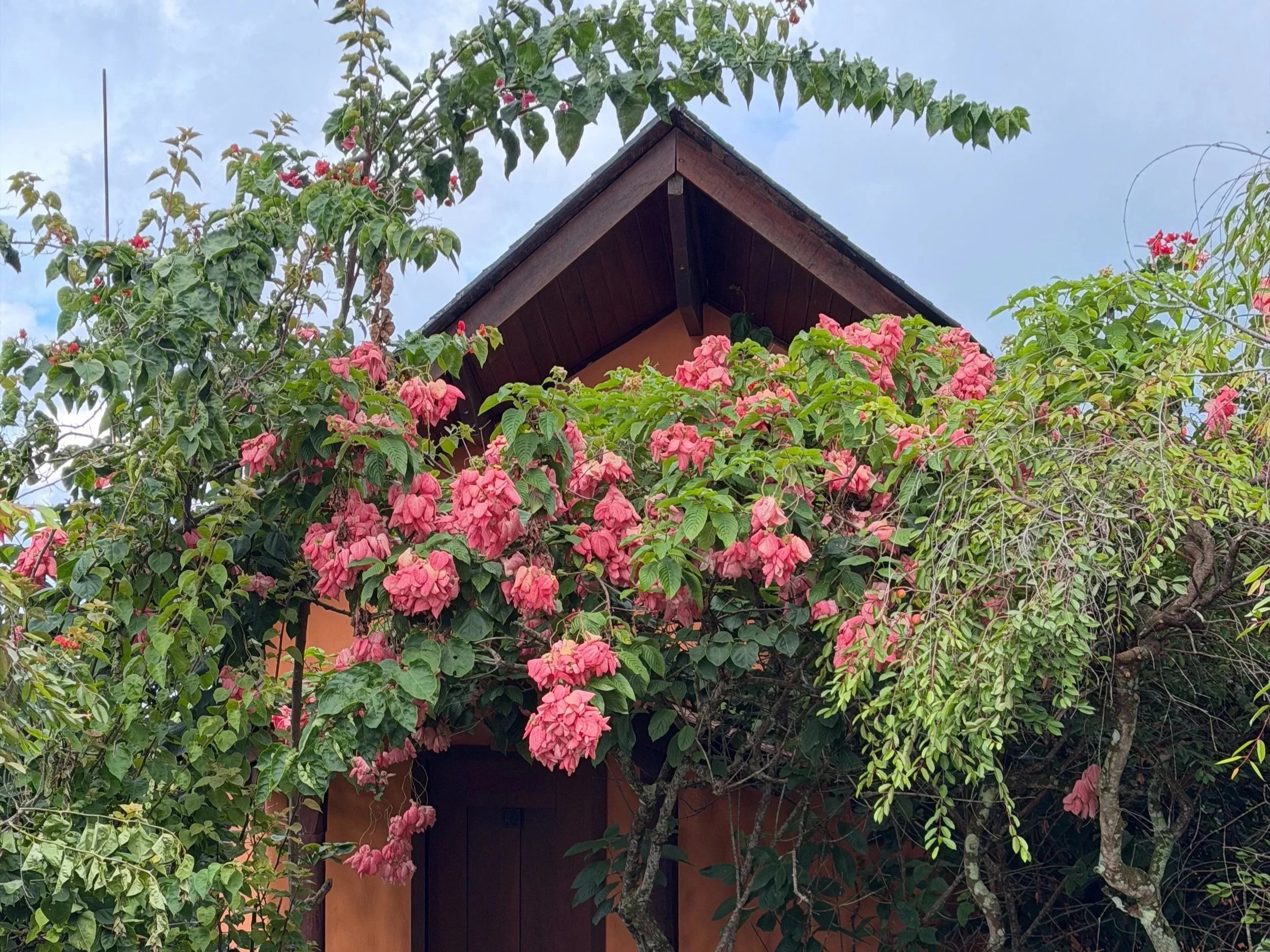

The Vale do Pati trek in Chapada Diamantina National Park is one of the most spectacular treks no one’s ever heard of. In this guide, I share what it’s like to do the four-day trek, everything you need to know to do it yourself, and why it’s worth every blister and back ache.